Incumbent Ryoo Sang-dai's term expires Aug. 20.
Other senior BOK officials including Kwon Min-soo, and former BOK executives Lee Hwan-seok, Chung Kyu-il, Lim Hyung-jun and Cho Hong-kyun are also among the potential candidates.
The deputy governor, the BOK's No. 2 official, is appointed by the president upon the governor's recommendation for a three-year term and serves as one of the seven members of its monetary policy board.
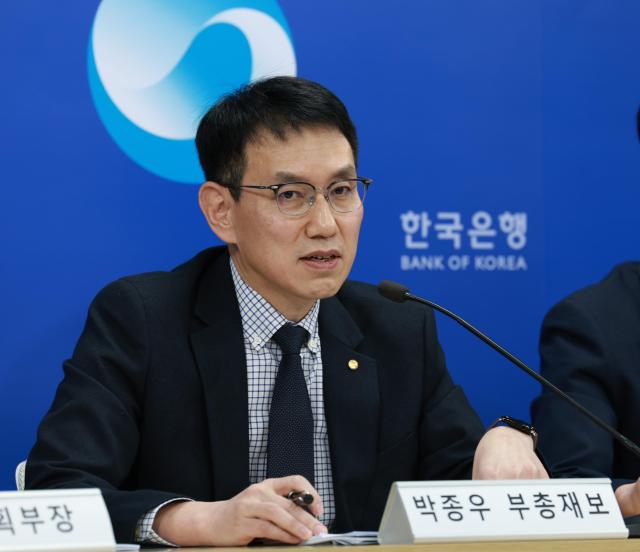
Park is considered a strong candidate because he currently oversees monetary policy and financial markets, giving him direct experience in the two areas at the center of the BOK's response to inflation, household debt and global market volatility.
He joined the BOK in 1996 and served in several of the central bank's key departments.
Park’s often restrained public remarks suggest a cautious, data-dependent approach that places considerable weight on inflation, household debt and financial-market stability, rather than positioning him firmly as either hawkish or dovish.
In September 2024, he said market expectations for two or more rate cuts had moved too far ahead of the central bank and argued that policymakers should first assess whether government measures were slowing housing prices and household borrowing.
Park later rejected interpretations that the BOK had abruptly shifted toward rate increases, saying in November 2025 that the direction of monetary policy could not change so quickly, suggesting a moderately hawkish but pragmatic bias that resists both premature easing and sudden policy reversals.
He has no public interest-rate voting record, making it difficult to predict his policy preferences.
Meanwhile, Kwon offers a different set of strengths centered on foreign-exchange and international financial policy, having worked in key areas of the BOK and been seconded to both the foreign and finance ministries since joining the central bank in 1995.
Lee, currently executive vice president of the Korea Housing Finance Corp., previously served as a BOK deputy governor and held senior positions in monetary policy, economic research, financial markets and the secretariat supporting the monetary policy board.
Other candidates reportedly include Chung, a former BOK deputy governor and economic-statistics specialist; Lim, whose experience spans monetary policy and organizational management; and Cho, who has worked in policy planning, regulation and institutional affairs.
The BOK raised its base rate by 25 basis points to 2.75 percent on July 16 and has kept the possibility of further tightening open as core inflation, housing prices and household-credit risks persist.
The appointment will be closely watched ahead of the Aug. 27 rate-setting meeting because a new deputy governor taking office before then could immediately participate as a voting board member.
Once appointed, Park would signal continuity in the BOK's cautious, financial-stability-focused approach, but his appointment alone would not determine whether the board delivers a second consecutive hike or leaves rates unchanged while retaining a hawkish signal.
AJP Takeaways
• Park Jong-woo has emerged as a leading candidate to succeed Ryoo Sang-dai as the central bank's senior deputy governor.
• Park's remarks suggest a data-dependent but moderately hawkish stance focused on inflation, household debt and preventing market expectations from moving ahead of policy.
• Kwon Min-soo, Lee Hwan-seok and several former BOK executives are also in the reported field for a post that carries one of seven monetary policy board votes.
Copyright ⓒ Aju Press All rights reserved.