


Latest by
-
 Oasis Market Reports 95% Surge in Q2 Operating Profit Amid Cost Reductions Oasis Market nearly doubled its operating profit in the second quarter of this year, driven by an enhanced product portfolio and improved cost competitiveness.On August 13, Oasis Market reported that its operating profit for the second quarter reached 6.95 billion won, a 95.5% increase compared to the same period last year. The cumulative operating profit for the first half of the year also rose by 55.3% year-on-year, with an operating profit margin of 5.5%.The company explained that its focus on profitability over expansion has led to improved performance. It also noted that by directly sourcing high-quality products, it reduced its cost of goods sold ratio from 70.54% in the second quarter of last year to 67.04% in the same period this year.Additionally, the use of its logistics solution, 'Oasis Route,' has resulted in cost savings. The company enhanced operational efficiency through automated inventory management and optimized logistics routes, reducing selling and administrative expenses by 5.1% compared to the previous year.Looking ahead, Oasis Market plans to continue investing in logistics automation and retail technology, including AI-driven unmanned stores, to maintain its profitability. A company representative stated, "The second quarter was a time to strengthen our fundamentals through focused management. We will solidify our profitability through innovative retail technology based on our unique logistics automation solutions and the expansion of AI unmanned stores."Meanwhile, Oasis Market is also working to attract customers through its membership program. In June, it launched a subscription membership called 'Club Oasis' for a monthly fee of 2,000 won, offering a 20% points reward on grocery purchases and up to 30% on beauty products.* This article has been translated by AI. 2026-08-13 16:48:00
 -
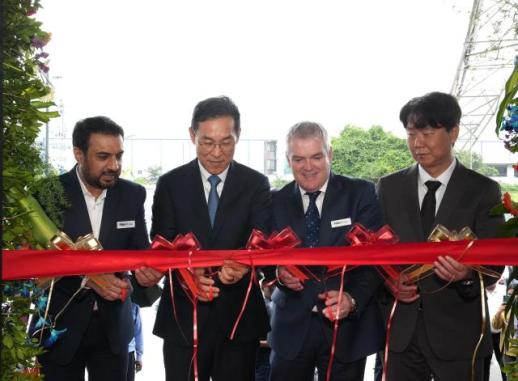 Korea takes AI race from chips to chillers SEOUL, August 13 (AJP) - An AI agent on a laptop or smartphone may appear almost weightless. Behind every prompt, however, sit warehouses of processors and memory running around the clock — consuming enormous amounts of electricity and generating heat that must be removed before the machines can keep thinking. For South Korea, already a powerhouse in the memory chips feeding those machines, that physical burden is becoming the next AI opportunity. Samsung Electronics has already put money behind that opportunity, betting that cooling will become a major business alongside the chips powering AI. The company put that strategy on display Thursday with the completion of a new production line for FläktGroup, its heating, ventilation and air-conditioning business, in Pune, India, as data-center investment accelerates across India and the wider Asia-Pacific region. The 13,826-square-meter facility can produce as many as 6,500 HVAC units a year when fully operational, including air handling units, fan wall units and computer room air handlers used to manage temperature and airflow in data centers and large commercial buildings. The plant reached mass-production readiness about six months after equipment installation began early this year. FläktGroup said in May it was investing 5.7 million euros ($6.7 million) in the Pune facility, with more than 12,000 square meters devoted to production. Pune was chosen partly for its location near industrial corridors and ports serving one of India's fastest-growing data-center markets. The expansion comes nine months after Samsung completed its acquisition of FläktGroup, Europe's largest HVAC company, giving the Korean technology giant a foothold in a business becoming increasingly important to AI infrastructure. Samsung agreed in May 2025 to acquire the company for 1.5 billion euros and completed the transaction in November. Samsung said when it announced the deal that the global data-center cooling market was projected to grow about 18 percent annually through 2030, significantly faster than the broader applied HVAC market. The bet reflects a broader change in the economics of AI. As more powerful graphics processors and other accelerators are packed into server racks, the infrastructure surrounding those chips — memory, storage, electricity and cooling — is becoming a constraint on how quickly additional AI computing capacity can be deployed. Moon Song-chun, professor emeritus at the Korea Advanced Institute of Science and Technology, said the growing importance of cooling stems from the enormous increase in computing and data-processing power required by AI workloads. "Without proper cooling, a data center simply cannot process the data," Moon told AJP. "Cooling technology is one of the most critical elements." AI data centers are not fundamentally separate from conventional data centers, Moon said. What has changed is the intensity of computing. Vast clusters of GPUs process far larger workloads while users still expect rapid responses, putting heavier demands on electricity supply and thermal management. The technology is already forcing a change in how servers are cooled. TrendForce estimates that liquid-cooling penetration in AI server racks will reach 47 percent in 2026 as the thermal design power of individual AI processors rises above 1,000 watts. The research firm says next-generation AI architectures are moving liquid cooling from an optional configuration toward an essential specification. For Korea, that creates an opportunity to stretch an existing advantage in AI memory across more of the infrastructure stack. SK links memory with data centers SK Group is pursuing that integration from another direction, seeking to connect memory production with the data centers that consume it. SK Telecom last month outlined plans for as much as 15 gigawatts of AI data-center capacity in South Korea, with the goal of turning the country into an Asian AI infrastructure hub. The company has since established SK Hyper, a dedicated data-center development subsidiary, and committed 750 billion won through 2030 for groundwork including site acquisition and substations. The scale illustrates how capital-intensive the next stage of AI could become. SK Telecom estimates that building a typical 1-GW AI data center could require about 70 trillion won because of the computing hardware, memory and supporting infrastructure involved. The group plans to combine its own capital with strategic investors, long-term customer contracts and project financing. SK Telecom is also working with Nvidia on a gigawatt-scale AI cloud in Korea using Nvidia's DSX architecture, with the first AI factory planned to begin operations in 2027. That data-center push gives SK an opportunity to link computing infrastructure with another business in which the group already holds a commanding position: memory. SK hynix's board last week approved 54.3 trillion won ($38.4 billion) of investment through 2031 in new semiconductor production facilities in Yongin and Cheongju. The dollar conversion is based on the won trading at about 1,414.4 per dollar Thursday. Of that, 35.2 trillion won will go toward Y2, the second of four fabs planned for SK hynix's Yongin Semiconductor Cluster. Construction is scheduled to begin in July next year, with the first cleanroom opening targeted for June 2029 to produce HBM and other advanced DRAM products. Another 19.1 trillion won will fund the M17 fab in Cheongju, where construction is scheduled to begin in February 2027 and the first cleanroom is targeted for December 2028. M17 will produce NAND flash, including products serving the rapidly expanding enterprise solid-state-drive market for AI servers. The investment illustrates how the AI infrastructure boom is spreading beyond processors. AI accelerators depend on HBM to continuously feed them data. Server DRAM provides working memory, while enterprise SSDs hold the expanding volumes of information required for training and inference. Packing those components into increasingly dense server racks, in turn, creates more heat that must be removed. SK hynix expects both DRAM and NAND demand to grow at a compound annual rate of 19 percent through 2030, citing Omdia estimates, and argues that memory is becoming part of the core infrastructure determining AI performance rather than merely another component. NAND demand in particular is expanding as AI shifts toward inference, where storage is increasingly used for techniques such as key-value caching to avoid repeatedly calculating the same information. Samsung and LG chase the heat Samsung is positioning itself at two ends of that same infrastructure chain. Its semiconductor business supplies DRAM, HBM and storage products for AI servers, while FläktGroup gives it a business supplying the systems that keep data-center equipment operating within safe temperatures. FläktGroup operates 13 production sites globally and provides systems ranging from conventional air handling and computer-room air conditioning to liquid cooling and fan-wall solutions for hyperscale and enterprise data centers. Samsung said last year that FläktGroup had worked on large hyperscale projects, including the Stargate AI infrastructure initiative, giving the Korean company access to customers already building some of the world's biggest computing facilities. The new Pune line extends that manufacturing network closer to Asian customers and will operate alongside FläktGroup's existing Noida facility in India. "The completion of this production line in Pune marks an important milestone in expanding HVAC supply beyond India to the Asia-Pacific region," said Kim Cheol-gi, executive vice president and head of Samsung Electronics' Digital Appliances business. Kim said Samsung plans to combine its AI and platform technologies with FläktGroup's HVAC capabilities to target customers including AI data centers. Samsung is not alone in chasing the heat. LG Electronics has made AI data-center cooling a strategic growth business, building what it calls a "chip-to-chiller" portfolio that stretches from cold plates attached close to processors to coolant distribution units and large chillers that remove heat from the facility. In July, LG's 600-kilowatt coolant distribution unit received Nvidia AI-infrastructure validation after meeting more than 100 technical requirements, making LG a validated supplier for Nvidia-based AI data-center infrastructure. The unit uses direct-to-chip liquid cooling, circulating coolant close to heat-generating components including GPUs and CPUs while working alongside air-cooling systems. LG plans to extend the technology into larger systems as server-rack power density continues to increase. The appeal of such systems is becoming clearer as processors grow hotter. TrendForce says thermal design power has risen from about 700 watts for Nvidia's H100 and H200 processors to more than 1,000 watts for newer generations, helping drive wider adoption of liquid cooling. The challenge is not simply preventing a server from overheating. Higher power density determines how many processors can be deployed in a rack, how closely those racks can be packed and ultimately how much computing output operators can extract from a data-center site constrained by electricity and cooling capacity. Moon cautioned against treating the AI data center as an entirely new type of infrastructure. Data centers have always underpinned computing, he said. What AI has changed is the scale of the workload and the concentration of processing power, placing much greater demands on the infrastructure surrounding the servers. Korean companies have so far been measured largely by their chips in the global AI race. Samsung, SK and LG are now trying to expand that role into storing, housing and cooling the computing power those chips enable. For Korea, the bigger opportunity may be not just to supply the memory inside the AI machine, but to capture a larger share of everything required to keep it running. AJP Takeaways • South Korean technology groups are moving beyond AI memory into the physical infrastructure surrounding it, targeting data centers, storage and cooling as global AI spending spreads across the supply chain. • Samsung's FläktGroup has opened a Pune production line capable of making up to 6,500 HVAC units annually, extending Samsung's AI exposure from memory chips to the systems needed to keep data centers cool. • SK is linking massive memory investment with plans for as much as 15 GW of AI data-center capacity, while SK hynix is spending 54.3 trillion won on new DRAM and NAND fabs in Yongin and Cheongju. 2026-08-13 16:47:27
 -
Chinese Stock Market Declines Amid Profit-Taking; CRO Stocks Surge The Chinese stock market, which had risen the previous day, fell on August 13. After starting the morning session with gains, the market reversed course in the afternoon as profit-taking surged. The Shanghai Composite Index closed down 0.50% at 3,926.96, the Shenzhen Component Index fell 0.87% to 14,288.44, and the ChiNext Index dropped 0.45% to 3,586.04.Overnight, the U.S. Consumer Price Index (CPI) for July met market expectations. While the U.S. CPI showed an increase compared to the previous year, it did not deviate significantly from forecasts. This led to a decrease in the likelihood of a Federal Reserve interest rate hike in September. The probability of a rate increase in the U.S. futures market dropped from about 54% to around 40%. As concerns over Fed tightening eased, Asian markets, including China's, initially turned upward. However, the afternoon session saw selling orders emerge, resulting in a market decline.Within the Chinese market, profit-taking was concentrated in sectors facing high valuation pressures. As buying momentum weakened in the afternoon, the market continued its downward trend.In a report released on the same day, CITIC Securities stated, "The U.S. CPI for July met expectations, and core inflation continues to show a moderate trend, alleviating market concerns about inflation." They predicted that the Federal Reserve would likely keep U.S. interest rates unchanged for the remainder of the year, with potential adjustments in the following year depending on the CPI situation in the fourth quarter.Notably, CRO (Contract Research Organization) stocks surged, with companies like Nanmo Biological and Boji Medical hitting their upper price limits. According to a report from Cailian, Chinese CRO firms possess competitive advantages in cost, response speed, and global delivery capabilities, with ongoing orders from overseas pharmaceutical companies. Additionally, as investments in domestic biotech ventures recover, the CRO industry is expected to thrive.Food and beverage companies also performed well, with Huangshi Group and Yiming Food reaching their upper price limits. Reports of soaring milk tea sales from Chinese beverage franchises Luckin Coffee and Mixue Ice City contributed to this positive trend. On August 7, Luckin Coffee sold 25 million cups of milk tea in a single day, marking a record high. This surge is expected to drive up wholesale milk prices and improve the performance of dairy-related companies.Meanwhile, the People's Bank of China set the yuan's central parity rate against the dollar at 6.7888 yuan, an increase of 0.0006 yuan from the previous day, reflecting a 0.01% decline in the yuan's value.* This article has been translated by AI. 2026-08-13 16:44:00
-
Hanwha Life Insurance Implements Generative AI Solutions for Employees Hanwha Life Insurance is introducing generative artificial intelligence (AI) solutions for all employees as part of its initiative to innovate work processes.The company announced on August 13 that it will implement Microsoft's generative AI solution, M365 Copilot, for its 2,728 employees. This move follows improvements in regulatory measures regarding network separation, which have expanded the scope for financial companies to utilize generative AI.Since May, Hanwha Life has conducted a two-month adaptation period for Copilot, during which 54.5% of employees actively used the tool in their work, demonstrating a high utilization rate. Approximately 150,000 prompts were submitted, and around 1,200 AI agents were created by employees.Over 2,000 employees participated in AI training sessions. A total of 34 online and offline training sessions were held, and a survey of participants revealed that 90% believe they can effectively use AI in their work.Additionally, Hanwha Life has formed the AX Project Team, composed of outstanding talents selected from internal coding competitions and hackathons. This team is involved in developing AI models that support core insurance functions, such as product development, risk calculation, and contract margin and profitability management, which were traditionally handled by the IT department.Recently, 58 projects focused on work innovation using Copilot have been selected, with plans to implement them sequentially in collaboration with the IT department starting this month.A Hanwha Life representative stated, "We have been conducting training and sharing best practices to foster a culture that effectively utilizes AI. We aim to expand our internal pool of AI talent and enhance our AI competitiveness through the innovations they lead."* This article has been translated by AI. 2026-08-13 16:36:10
-
Kim Se-hee Denies Spreading False Information About YouTuber Tzuyang Kim Se-hee, the head of the Garoseyro Research Institute, has categorically denied allegations of spreading false information about popular YouTuber Tzuyang (real name Park Jeong-won) during his first court appearance. He is also facing a defamation case involving actor Kim Soo-hyun.On August 13, Judge Jeong Ah-young of the Seoul Central District Court presided over the hearing concerning Kim's alleged violations of the Information and Communications Network Act, the Stalking Punishment Act, and threats. A previous hearing on June 25 was postponed due to Kim's absence.Dressed in a yellow prison uniform, Kim rejected the prosecution's claims, asserting that they misrepresented his statements."The prosecutor broadly claimed that I made false statements," he said. "They forced in things I did not say regarding the Tzuyang case."He further explained that his broadcasts aimed to expose crimes committed by YouTubers Jujakgambeolsa (real name Jeon Guk-jin) and Gujae-yeok (real name Lee Jun-hee), who allegedly extorted money from Tzuyang.Kim's attorney also denied the defamation charges, arguing that there was no intent to slander. Regarding the stalking allegations, the defense contended that the YouTube broadcasts were public and did not constitute direct contact with Tzuyang.Kim's team requested three witnesses to confirm facts related to Tzuyang's private life. The court accepted this request but cautioned about the potential for secondary harm.Judge Jeong stated, "If there is a belief that secondary harm exists, I will prohibit certain questions," and advised the defense to consider withdrawing some inquiries if they could lead to significant harm.According to prosecutors, Kim is accused of continuously producing and distributing content related to Tzuyang's private life for profit through fundraising accounts. He is also alleged to have repeatedly threatened Tzuyang by demanding a clarification broadcast and warning of further revelations. Kim was indicted without detention in March.The court also heard cases related to Democratic Party lawmaker Ko Min-jeong and defamation incidents involving the late Pyo Ye-rim, who had reported on a group sexual assault case in Miryang and school violence. Kim's defense claimed that these broadcasts were made for public interest and denied all related charges.The next hearing for the Tzuyang case is scheduled for October 15, where the court will examine evidence related to Kim's broadcasts.On August 14, the Seoul Central District Court will hold the first hearing regarding Kim's defamation charges against Kim Soo-hyun, which include violations of the Sexual Violence Punishment Act and the Stalking Punishment Act. Kim is accused of spreading false information suggesting that Kim Soo-hyun had a relationship with the late Kim Sae-ron since her minor years. Prosecutors allege that Kim used edited KakaoTalk conversations and false audio recordings to broadcast related content on YouTube.* This article has been translated by AI. 2026-08-13 16:36:10
-
KakaoBank to Strike Again on August 14, Demanding Improved Compensation 인터넷전문은행 카카오뱅크 노동조합이 성과 보상 개선 등을 요구하며 오는 14일 하루 동안 전면 파업에 나선다. 지난달 31일 첫 전일 파업 이후 약 보름 만이다.13일 전국화학섬유식품산업노동조합 카카오지회에 따르면 카카오뱅크 노조는 전날 준법투쟁에 돌입한 데 이어 14일 전일 파업을 진행한다.카카오뱅크 노조는 지난달 31일 인터넷전문은행 가운데 처음으로 전일 파업을 벌였다. 이후에도 임금 및 성과 보상을 둘러싼 노사 간 입장 차가 좁혀지지 않으면서 추가 파업에 나선 것이다.노조는 지난 12일부터 연장·야간·휴일근무 등을 거부하는 준법투쟁도 진행하고 있다.이번 파업에 따라 오는 14일 열리는 '코드러너'의 정상운영도 어려울 것으로 보인다. 코드러너는 카카오뱅크가 매년 개최해온 사내 기술 콘퍼런스다.노조 측은 "회사는 코드러너 행사를 통해 구성원들의 기술적 경험과 지식, 협업의 성과를 기술 문화로 홍보해왔다"며 "그러나 그러한 성과를 만들어 온 구성원들이 합리적이고 투명한 성과 보상과 임금 인상을 요구하자 책임 있는 해결책을 제시하지 못하고 있다"고 주장했다.노조는 14일 파업 이후에도 회사 측이 요구안을 수용하지 않을 경우 준법투쟁과 추가 파업을 이어간다는 방침이다. 특히 은행 업무에 직접적인 영향을 줄 수 있는 연속 파업 등 쟁의 수위를 높이는 방안도 검토하고 있다.노조 측은 "은행 업무에 직접적인 영향을 줄 수 있는 연속 파업을 포함한 강도 높은 쟁의 행위를 준비하고 있다"고 밝혔다.서승욱 카카오지회장은 "지난달 31일 파업은 끝이 아니라 시작이었다"며 "회사가 구성원의 노동과 성과를 정당하게 존중하고 실질적인 교섭안을 제시할 때까지 행동을 멈추지 않을 것"이라고 강조했다.* This article has been translated by AI. 2026-08-13 16:36:10
-
SK Chemicals Reports 2nd Quarter Operating Profit of 31.9 Billion Won, Up 26.8% Year-on-Year SK Chemicals announced on August 13 that it recorded a second-quarter revenue of 479.1 billion won and an operating profit of 31.9 billion won, according to its separate financial statements.The revenue represents a 24.8% increase compared to the same period last year, marking the highest quarterly sales since the company was split into a business entity following the launch of SK Discovery in 2017. Operating profit also rose by 26.8% from the second quarter of last year, driven by stable demand for Green Chemicals and strong sales in the pharmaceutical sector, resulting in balanced growth across all business divisions.SK Chemicals focuses on the development, production, and sales of copolyesters and high-performance materials, as well as synthetic drugs, natural products, and biopharmaceuticals.An SK Chemicals official stated, "Despite ongoing uncertainties both domestically and internationally, we continue to maintain a steady growth trajectory centered on our core businesses. In the second half of the year, we plan to expand sales of high-value products in the Green Chemicals sector and enhance our product pipeline in pharmaceuticals while diversifying treatment areas."Meanwhile, including its subsidiary SK Bioscience, SK Chemicals reported consolidated revenue of 745.1 billion won and an operating profit of 32.3 billion won for the second quarter, marking a return to profitability.* This article has been translated by AI. 2026-08-13 16:36:00
-
TWICE's Chaeyoung Announces Departure from JYP Entertainment Chaeyoung of the group TWICE has announced her departure from JYP Entertainment to embark on a new journey. On August 13, Chaeyoung shared on her social media that she wanted to inform her fans, known as ONCE, first about her decision. She stated, "I plan to create music in my own 'LIL FANTASY' world." She expressed gratitude to the JYP staff and her TWICE team for their support over the past 14 years, saying, "I want to thank the people at JYP who have supported and believed in the mischievous me, and I love and appreciate my members who have always been there for me." Chaeyoung emphasized that she will continue to participate in TWICE activities, stating, "I want to say that I will continue my activities as TWICE. I believe the reason I have been loved this much is because of the time I spent as a member of TWICE." Finally, she expressed her hope to be someone who can provide valuable music in both her roles as Chaeyoung of TWICE and Chaeyoung of 'LIL FANTASY.' She promised to become a better person through new challenges and asked fans to keep an eye on her future endeavors. Meanwhile, Chaeyoung is expected to showcase a new side as a solo artist, with discussions ongoing regarding her new agency.* This article has been translated by AI. 2026-08-13 16:32:10
-
GKL Recognized for Environmental Efforts with Seoul Mayor's Award at 2026 ESG Awards Grand Korea Leisure (GKL), a quasi-public corporation operating the foreigner-only casino Seven Luck, is actively pursuing environmental, social, and governance (ESG) management. The company has been recognized for its eco-friendly initiatives and is consistently engaged in community service activities for marginalized groups.On August 13, GKL announced that it received the 'Seoul Mayor's Award' in the environmental category at the 21st '2026 Korea ESG Awards' ceremony held at the Korea Press Center.The 'Korea ESG Awards' is an event sponsored by the National Assembly, the Ministry of Economy and Finance, and the Seoul Metropolitan Government, and organized by the Korea Service Industry Promotion Agency. It selects companies and institutions that play a leading role in ESG management based on comprehensive evaluations of their environmental, social, and transparent management activities.This award acknowledges GKL's ongoing efforts in eco-friendly activities. The company has implemented various initiatives, including recycling waste plastics and bottle caps generated at its casino facilities, upcycling discarded umbrellas, and operating a clothing donation program. Additionally, the 'GKL Dream Hope Volunteer Group,' composed of GKL employees, has engaged in community activities such as beach and river clean-ups, plogging, urban gardening, and donating acorn trees to preserve local ecosystems and biodiversity.Through these initiatives, GKL has reduced a total of 59,812.44 kg of carbon emissions. According to the National Institute of Forest Science's standard carbon absorption rates, this is equivalent to planting approximately 6,955 thirty-year-old pine trees.Yoon Doo-hyun, CEO of GKL, stated, "We will continue to fulfill our social responsibilities as a public enterprise through ESG management activities aligned with our organizational purpose and management strategy. We aim to become a model public enterprise that leads ESG co-growth by promoting environmental sustainability in local communities and cleaning urban tourist sites."In addition to its environmental efforts, GKL is actively expanding its social contribution activities for the community.On August 12, GKL collaborated with the Busanjin Center for Independent Living for the Disabled to conduct a volunteer activity called 'A Meal Filled with Affection' for socially isolated households. This program fosters connections between marginalized neighbors and volunteers by cooking together, and it is part of GKL's flagship public support initiative, the 'Three Goods Project.'Now in its fifth year, the Three Goods Project aims to identify and support crisis households that fall outside the welfare system through public-private partnerships. It operates in three areas: 'Find and Support' for households facing economic crises, 'Visit and Support' for socially isolated individuals, and 'Provide Tailored Support.' During this volunteer activity, seven disabled households participated, and the meals prepared by the GKL Dream Hope Volunteer Group were delivered directly to other isolated households.Meanwhile, GKL was internationally recognized last year, receiving the Platinum Award in the customer service category for its ESG report at the '2024/25 LACP Vision Awards' organized by the U.S. Communication Alliance (LACP).* This article has been translated by AI. 2026-08-13 16:32:00
-
Daewoo Engineering Selected as Preferred Negotiator for Papua New Guinea LNG Plant Daewoo Engineering has been selected as the preferred negotiator for the core plant project of the Papua New Guinea LNG project. This marks the company's acquisition of the main EPC contractor status nearly four years after securing the basic design contract in 2022.On August 13, Daewoo Engineering announced that it was chosen as the EPC preferred negotiator for the 'Papua CPF and Wellpads EPSCC' project by TotalEnergies, the main project owner of the Papua New Guinea LNG project.Daewoo Engineering had previously disclosed this information on August 4. This achievement follows its selection as the successful bidder for the FEED 1 and 2 basic design in July 2022, leading to the current EPC phase.The Papua LNG project is one of the largest resource development projects in Papua New Guinea, extracting natural gas from the Elk-Antelope gas field to produce approximately 6 million tons of LNG annually.Daewoo Engineering will independently handle the entire process of designing, procuring, constructing, and commissioning the central gas processing facility (CPF) and associated facilities, which will process and refine the natural gas produced at the gas field for supply to the liquefaction plant near the capital, Port Moresby.The CPF is a critical facility that removes impurities from the natural gas produced at the gas field and prepares it for liquefaction, making it essential for the efficiency and stability of the entire LNG production process. This requires advanced design and construction capabilities.With this selection as the preferred negotiator, Daewoo Engineering has reaffirmed its global competitiveness in the LNG plant sector. Notably, its experience in executing the first phase of the Papua New Guinea LNG project has enabled it to secure the main contractor status for subsequent projects.This development is significant as domestic construction companies expand their overseas projects beyond simple civil and architectural contracts to include high-value LNG and energy infrastructure plant contracts.If this project leads to a formal contract, it is expected to enhance Daewoo Engineering's overseas order performance and strengthen its plant sector portfolio. The company has recently diversified its business portfolio, focusing on high-value sectors such as nuclear power, LNG, data centers, and overseas urban development projects.A representative from Daewoo Engineering stated, “We achieved this preferred negotiator selection based on our successful experience in the first phase of the Papua New Guinea LNG project and our capabilities in executing FEED. We will do our utmost to secure the main contract and ensure successful execution of the project.”* This article has been translated by AI. 2026-08-13 16:32:00