


Latest by
-
 Researchers' hacking dataset wins best artifact award at VehicleSec SEOUL, August 13 (AJP) - A record of real cyberattacks carried out on a moving car has won the best artifact award at the USENIX Symposium on Vehicle Security and Privacy, the main international meeting on the subject, held in Baltimore on Monday and Tuesday alongside the 35th USENIX Security Symposium, Kookmin University said Thursday. The winning submission cleared all three checks the symposium applies to research materials. Reviewers confirmed that the data was publicly available, that the accompanying software ran as described, and that an outside party could reproduce the results in the paper. Awards at the event went to two entries, one for the best paper and one for the best artifact, the term the field uses for the data, code and documentation that sit behind a published result. The dataset came out of a joint project between the Mobility Cybersecurity Lab at Kookmin University, led by Jeon Sang-hoon, and the Hacking and Countermeasure Research Lab at Korea University, led by Kim Huy-kang. Ahn Se-jun of Kookmin and Song Yu-chan of Korea University share first authorship on the paper, with Kim Hyeon-seong and Baek Seung-jin as co-authors. Jeon and Kim are joint corresponding authors. Their paper, titled "AutoHack: A Physically Verified Multi-Bus CAN Dataset for Intrusion Detection System Evaluation," argues that the field has been grading itself on an easy test. Systems designed to spot hacking inside a car have been reporting near-perfect accuracy for years, but most were measured against data recorded in simulations or on a workbench, where messages arrive at tidy intervals. A detector trained on that kind of traffic learns to flag anything irregular, which works until it meets a real car, where a great deal of perfectly normal communication is irregular. Cars carry an internal network called a Controller Area Network, which lets the dozens of small computers inside a vehicle send instructions to one another. The Controller Area Network (CAN) standard dates to the 1980s and was never built with security in mind, so it has no way to verify that a message came from where it claims. Modern vehicles run several CAN lines at once, divided by function into powertrain, chassis, and body, linked through a central gateway. Almost every public dataset covers only one of them. The Kookmin and Korea University team recorded three at the same time. Using a single two-channel capture device so that both channels shared one internal clock, they logged the chassis, powertrain and body lines with the traffic aligned to within a millionth of a second, which lets a researcher see how a message on one line relates to activity on another. The car was a 2023 Hyundai vehicle, and the researchers ran it on internal roads on a university campus, closed to public traffic. They stripped out interior components to reach the wiring behind the central gateway, then injected attacks from a laptop while the vehicle was being driven. The paper does not identify the model, and the vulnerabilities exploited are structural features of the CAN standard rather than defects specific to one manufacturer. What separates the dataset from earlier ones is that the team confirmed each attack by watching what the car actually did. Flooding the powertrain and body lines with randomized messages stopped the vehicle while it was in Drive and, on another run, placed an automatic call to an emergency call center with no crash having occurred. Impersonating the diagnostic tool a mechanic would plug in allowed the researchers to switch off the forward-facing camera and restrict power steering assistance while the car was moving. Lesser attacks triggered parking brake warnings, false fuel alerts and unrequested operation of the turn signals and windows. The finished dataset runs to roughly 9.6 million messages drawn from about 33 minutes of driving, covering 2,048 distinct message identifiers, with attack and normal traffic labeled at the moment each injected frame finished transmitting rather than when the attack script started. The team then handed it to 10 teams of undergraduates at a three-day competition Kookmin ran last year, giving each team five submission attempts against a live leaderboard. Final scores ranged from 39 percent to 66 percent on a combined measure of how many attacks a system caught and how often it cried wolf. The strongest entry in the room missed roughly a third of the attacks. The researchers' own reference models fared similarly. A standard machine learning classifier handled denial-of-service flooding perfectly and caught most randomized injections, but scored 0.68 on replayed traffic and 0.79 on impersonated messages, the two attack types that most closely resemble ordinary driving data. The paper is direct about what the results do not show. All of it comes from one vehicle model over a limited set of driving conditions, so the benchmark cannot be read as evidence that a detector will generalize across manufacturers, and message identifiers, payload meanings and gateway routing differ from car to car. The attacks covered representative categories rather than every known technique, and all of them required physical access to wiring inside the car. The researchers describe the risk of the work being turned to vehicle theft or worse as negligible, because the weaknesses involved are already documented properties of the protocol. The dataset and the benchmark code are archived on Zenodo under a Creative Commons Attribution license, with the code released separately under the MIT license, and the team disclosed the targeted message identifiers only for the chassis line to avoid publishing more of the manufacturer's internal specifications than the paper required. The work was funded through the Convergence and Open Sharing System program run by the Ministry of Education and the National Research Foundation of Korea, under which Kookmin leads the future mobility field and says it stages the attack and defense competition annually. Jeon said he hopes the published data becomes "a shared asset for automotive cybersecurity research and for training people in the field, in South Korea and abroad." 2026-08-13 16:30:56
 -
 Bank of Korea Invests in Gold for First Time in 13 Years, Acquires 350 Billion Won in Gold ETFs The Bank of Korea announced it holds 350 billion won worth of gold exchange-traded funds (ETFs) as of the second quarter of this year.On August 12, the bank disclosed through a filing with the U.S. Securities and Exchange Commission (SEC) that it owns 679,765 shares of the gold ETF 'SPDR GOLD TR' listed on the local stock market.As of the end of the second quarter, the valuation stood at $250.41 million (approximately 355 billion won). While the specific timing of the purchases was not mentioned, the bank confirmed it began acquiring overseas gold spot ETFs in the second quarter of this year.This marks the first time the Bank of Korea has invested in gold since purchasing 20 tons of physical gold in 2013. Gold ETFs are classified as securities separate from physical gold and are included in the foreign reserves.The bank also plans to purchase physical gold in addition to the gold ETFs. The Bank of Korea's foreign asset management division announced on August 3 that it intends to buy gold produced domestically for export.This decision comes as central banks in major countries have been increasing their gold reserves amid rising geopolitical risks, highlighting the need to bolster holdings of safe-haven assets. However, the timeline for resuming physical gold purchases remains undecided.According to the World Gold Council, the Bank of Korea currently ranks 39th among global central banks in terms of gold reserves. Since acquiring 40 tons in 2011, 30 tons in 2012, and 20 tons in 2013, the total gold reserves have remained at 104.4 tons up to this year.* This article has been translated by AI. 2026-08-13 16:28:00
 -
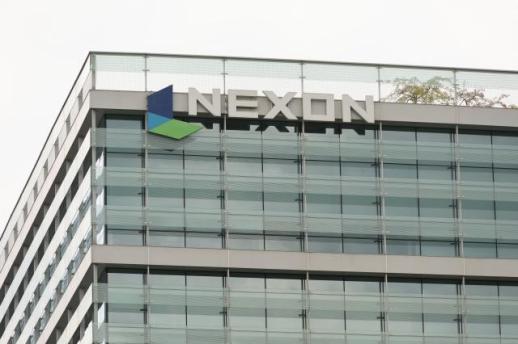 Nexon Q2 profit slips even as MapleStory powers record first half SEOUL, August 13 (AJP) - Nexon revealed that its second-quarter operating profit fell 17 percent from a year earlier, a decline that underscored tough comparisons for the Tokyo-listed South Korean game maker even as booming demand for its MapleStory franchise drove record first-half sales. Quarterly revenue edged up 2 percent to 121.1 billion yen ($759 million), while operating income slipped to 31.3 billion yen from 37.7 billion yen a year earlier. Net income jumped 77 percent to 29.6 billion yen. The half-year picture was stronger. First-half revenue climbed 17 percent to 273.3 billion yen and net income more than doubled, rising 102 percent to ¥86.9 billion — both records for the company, which reports on a consolidated basis through its Japanese parent. The firm attributed its flagship RPG MapleStory for much of the heavy lifting. Revenue across the franchise surged 63 percent year on year to a quarterly high, lifted by summer updates to the 22-year-old PC original in Korea and the West and by the overseas rollout of mobile spin-off MapleStory: Idle RPG. The sandbox platform MapleStory Worlds saw sales jump 123 percent, buoyed by strong reception in Korea and Taiwan. ARC Raiders, the extraction shooter from Nexon's Swedish studio Embark, marked cumulative sales passing 16.3 million units nine months after its October debut. Overseas and PC-console revenue rose 44 percent and 27 percent respectively in the first half, both half-year records. "We posted solid results in the second quarter on the strong momentum of the MapleStory franchise and the steady contribution from ARC Raiders," said Chief Executive Lee Jung-hun, adding that Nexon would broaden its lineup in the second half with new titles including a mobile version of Dave the Diver and the Japan launch of Mabinogi Mobile. AJP Takeaways • Nexon's second-quarter operating profit fell 17 percent year-on-year to 31.3 billion yen (294.3 billion won), as the 2 percent revenue gain to 121.1 billion yen was outpaced by tougher comparisons, even though all three headline figures beat the company's guidance. • On a first-half basis, revenue rose 17 percent to 273.3 billion yen and net profit more than doubled, up 102 percent to 86.9 billion yen — both company records — with the MapleStory franchise surging 63 percent in the quarter and ARC Raiders passing 16.3 million cumulative units. • Nexon is banking on a second-half pipeline to sustain momentum, including the global rollout of Dave the Diver's mobile version in September and the Japan launch of Mabinogi Mobile in the fourth quarter, as growth stays concentrated in its two flagship IPs. 2026-08-13 16:24:23
 -
South Korea to Convert Uncontracted Private Housing into Public Rentals The South Korean government is moving to purchase uncontracted private housing in regulated areas of the metropolitan region, commonly referred to as 'lotto subscriptions,' and convert them into public rental units. The initiative aims to increase the availability of high-quality public rental housing for the middle class in desirable locations.On August 13, the Ministry of Land, Infrastructure and Transport announced the establishment of a new type of 'universal public rental housing' that will cater to various income levels for long-term residency.This plan follows President Lee Jae-myung's remarks at a national forum on real estate policy, where he suggested that constructing high-quality rental apartments near transit hubs would benefit many people.The government plans to supply universal public rental housing primarily in preferred locations, including the third-phase new towns and central Seoul. The projected supply includes 883 units in the S-10 block of Namyangju's Wangsil, 793 units in the AC2-1 block of Incheon's Gyeyang, and 364 units in the public complex site of Hanam's Gyosan.The quality of these units will be elevated to match that of private housing. The design will shift from the existing two-bay layout to a three-bay layout, and the finishing materials will be upgraded to enhance the appeal of rental housing.The target demographic will be divided into two groups: young people without homes and the general population of non-homeowners. More than 50% of the total units will be allocated to young people, who have a high demand for rental housing, while the remainder will be assigned to the general non-homeowner population.The initial residency period will be set at six years, with extensions granted for each childbirth. Families with three or more minor children will be allowed to stay for up to 20 years.A new long-term rental type will also be introduced for public-supported private rentals, allowing for leases of 20 years or more in addition to the existing 10-year rental model.To facilitate this, the Korea Housing and Urban Guarantee Corporation (HUG) will introduce a guaranteed 'long-term mortgage product for rental housing.' This initiative aims to support financing for businesses participating in long-term rentals.Notably, the government plans to utilize uncontracted private housing from non-priority subscriptions for public rentals. By the end of the year, the government will push for legal amendments to allow the Korea Land and Housing Corporation (LH) to purchase some of the uncontracted units from private sales in regulated areas.There are plans to grant LH the right of first refusal. Previously, uncontracted subscription units often attracted demand due to price differences with surrounding market rates, but now some of these units may be converted into public rental resources.However, purchasing uncontracted units in popular areas may raise concerns about fairness in the housing market, along with potential issues regarding LH's purchasing criteria, pricing methods, and financial burdens.An industry insider noted, 'The so-called 'lotto' units that LH acquires are expected to be primarily located in desirable areas.' 2026-08-13 16:24:10
-
Why Colombia Accepts U.S. Aid but Not China's After Earthquake Colombia, which suffered damage from a 7.4 magnitude earthquake, has remained silent on China's offer for disaster recovery assistance while accepting rescue teams from right-leaning countries such as the United States, Israel, Ecuador, and El Salvador. This has drawn attention to the diplomatic context, as the new Colombian government appears to be moving away from the pro-China policies of former President Gustavo Petro and is seeking to strengthen ties with the U.S.According to the South China Morning Post (SCMP), China expressed its willingness to assist with recovery efforts following the earthquake that struck western Colombia on August 11. Chinese Foreign Ministry spokesperson Mao Ning stated on August 12 that "China wishes to provide support in a manner appropriate to Colombia's needs and within our capabilities." The China International Development Cooperation Agency (CIDCA) also indicated it would offer assistance as requested by Colombia. However, SCMP reported that the Chinese ambassador to Colombia, Liu Jianchao, requested to be the official contact for coordinating international support but received no response from the Colombian government for over a day.In contrast, the Colombian Foreign Ministry has activated diplomatic channels with allied nations and established a command center for international cooperation. Rescue teams from the U.S., Israel, Ecuador, and El Salvador are expected to arrive on August 12. The U.S. has announced it will provide $15.5 million for disaster response and emergency shelters.SCMP noted that the Colombian government's contrasting responses to U.S. and Chinese aid signals a shift under President Abelardo de la Espriella away from the pro-China stance of the Petro administration. Since taking office, de la Espriella has indicated a desire to prioritize strengthening relations with the U.S.A notable example of this shift is the potential withdrawal from China's Belt and Road Initiative. Nate Morris, the U.S. ambassador nominee to Colombia, stated during his Senate confirmation hearing on August 5 that President de la Espriella has committed to exiting the Belt and Road Initiative. However, de la Espriella has not officially confirmed this, and the Colombian Foreign Ministry has not made any formal announcement regarding the withdrawal since his inauguration.Recent controversies have also emerged surrounding Chinese companies involved in local infrastructure projects. The China Harbour Engineering Company, part of a consortium constructing the Bogotá Metro Line 1, is currently under investigation by local prosecutors for allegedly demanding cash from subcontractors.During the Petro administration, economic and diplomatic relations between China and Colombia significantly strengthened. As trade increased, China became Colombia's second-largest trading partner, with Chinese companies heavily involved in major infrastructure projects, including the construction of the Bogotá Metro.Meanwhile, the impact of the earthquake in Colombia continues to grow. As of the evening of August 12, President de la Espriella reported at least 265 confirmed fatalities three days after the quake. Nearly 500 people are reported missing, and approximately 25,800 households have been affected. Civil organizations estimate that the number of missing persons could be as high as 4,100.As the situation worsens, President de la Espriella has declared a state of economic emergency for recovery efforts and a national period of mourning.* This article has been translated by AI. 2026-08-13 16:24:10
-
KOSPI Rises Over 3% as Foreign Investors Buy 2.1 Trillion Won Amid Strong Semiconductor Stocks The KOSPI and KOSDAQ both closed higher for the fourth consecutive trading day. The KOSPI rose more than 3% as foreign and institutional investors bought shares, particularly in major semiconductor stocks like Samsung Electronics and SK Hynix. The KOSDAQ also ended on a positive note, recovering above the 860 mark.According to the Korea Exchange, the KOSPI closed at 6,813.34, up 234.30 points (3.56%) from the previous trading day. The index opened at 6,773.92, up 194.88 points (2.96%), and expanded its gains throughout the day, reaching as high as 6,895.63 before giving back some of its gains.Individuals sold a net 27.348 billion won worth of stocks, while foreign and institutional investors bought a net 21.060 billion won and 6.815 billion won, respectively.Most of the top market capitalization stocks saw gains. Samsung Electronics rose 4.89%, SK Hynix increased by 5.92%, Samsung Electronics preferred shares were up 0.91%, SK Square climbed 9.08%, Samsung Electro-Mechanics surged 12.58%, Hyundai Motor rose 2.20%, LG Energy Solution increased by 1.95%, Samsung Biologics was up 0.97%, Hanwha Aerospace rose 2.51%, KB Financial gained 1.27%, and Samsung C&T increased by 2.10%.The strength of major semiconductor stocks drove the index higher. The U.S. stock market saw the July Consumer Price Index (CPI) meet market expectations, and AI-related semiconductor stocks performed well. Samsung Electronics and SK Hynix continued their upward trend, with companies involved in semiconductor materials, parts, and equipment, such as Wonik IPS, also benefiting with a 7.62% increase.Samsung Electro-Mechanics surged 12.58% as expectations grew for increased demand for multilayer ceramic capacitors (MLCCs) due to expanded investments in AI data centers, leading to a broader buying trend in related stocks.On the same day, the KOSDAQ closed at 861.37, up 2.46 points (0.29%). The index opened at 863.15, up 4.24 points (0.49%), and briefly rose to 870.96 but gave back some gains in the afternoon, finishing in positive territory.Individuals bought a net 25.71 billion won worth of stocks, while foreign and institutional investors sold a net 13.63 billion won and 11.58 billion won, respectively.Among the top KOSDAQ stocks, Alteogen closed flat, while EcoPro rose 0.88%, EcoPro BM increased by 0.09%, Rainbow Robotics was up 1.43%, Juseong Engineering gained 3.05%, Wonik IPS rose 7.62%, and HLB increased by 2.76%. Conversely, Rino Industrial fell 0.14%, and IOTechniques dropped 1.82%. ABL Bio closed flat.Lim Jeong-eun, a researcher at KB Securities, stated, "The U.S. stock market's July CPI meeting market expectations and the strong performance of AI semiconductor stocks have contributed to the ongoing rally of Samsung Electronics and SK Hynix in the domestic market. With large-cap stocks attracting attention, the semiconductor materials and parts sector is also benefiting from positive expectations."He added, "Attention should be paid to the U.S. Producer Price Index (PPI) set to be announced tonight. Following the CPI release, the outlook for a rate freeze in September has risen to about 60%, and it is essential to see if the market maintains a favorable interpretation of inflation."Meanwhile, in the Seoul foreign exchange market, the weekly closing exchange rate for the won against the dollar was recorded at 1,419.4 won, up 3.7 won from the previous day.* This article has been translated by AI. 2026-08-13 16:24:00
-
[[Me]] Samsung C&T Unveils 'A Part of ' Exhibit at Raemian Gallery Samsung C&T's construction division is showcasing its second season exhibition, 'A Part of is an exhibition where visitors can directly experience the small yet meaningful spaces within their homes. We aim to offer diverse lifestyle experiences to customers and create a space where the brand and customers can connect more closely through personal tastes.'* This article has been translated by AI. 2026-08-13 16:20:20
-
SK Ecoplant Establishes AI Data Center Division to Strengthen AI Infrastructure Business SK Ecoplant has established a new AI Data Center division to accelerate its expansion in semiconductor and artificial intelligence infrastructure. This move aims to respond to the surging demand for AI data center construction and to enhance business competitiveness by integrating previously dispersed organizations and functions.On August 13, SK Ecoplant announced the creation of the AI Data Center division as part of a recent organizational restructuring.AI data centers require higher power density and system complexity than standard buildings, making it challenging to secure competitiveness with mere construction capabilities. To address this, SK Ecoplant is enhancing the design quality of mechanical, electrical, and plumbing systems and is developing standardized models for AI data centers to ensure stable quality.The organizational restructuring has integrated the business, technology, and EPC (engineering, procurement, and construction) teams related to AI data centers under the new division. This aims to improve project execution efficiency and strengthen core competencies such as design capability and construction method standardization, enabling the stable execution of multiple AI data center projects.In line with the growing global demand for AI, SK Group is accelerating its investments in AI data centers. SK Ecoplant is involved in a project with Amazon Web Services for an AI data center in Ulsan and plans to establish a total of 15 GW of AI data centers across major locations nationwide.SK Ecoplant intends to expand its role in the EPC and infrastructure sectors, aligning with SK Group's 'AI Full Stack' strategy, which includes semiconductor materials and manufacturing plants, as well as AI data centers.As the AI data center market grows, construction companies' competitiveness increasingly relies not only on construction capabilities but also on their expertise in power, cooling, and standardized design.A representative from SK Ecoplant stated, "We will strive to establish a sustainable growth foundation centered on advanced industries such as semiconductors and AI data centers."* This article has been translated by AI. 2026-08-13 16:20:00
-
Nexon Reports Record 2.56 Trillion Won in First Half Revenue Driven by MapleStory and Arc Raiders Nexon achieved a record revenue of 2.56 trillion won in the first half of 2026, marking its highest performance for a half-year period. Both revenue and operating profit exceeded expectations in the second quarter, following a strong first quarter. The growth was driven by the expansion of the MapleStory franchise and the global success of Arc Raiders.Nexon reported a revenue of 2.56 trillion won (273.3 billion yen, with an average exchange rate of 936.8 won per 100 yen) for the first half of 2026, along with an operating profit of 837.9 billion won (89.4 billion yen) and a net profit of 813.7 billion won (86.9 billion yen). Compared to the same period last year, revenue and operating profit increased by 17% and 13%, respectively, while net profit surged by 102%. All figures represent the highest performance for a half-year period.In the second quarter, revenue reached 1.139 trillion won (121.1 billion yen, with an exchange rate of 940.7 won per 100 yen), with an operating profit of 294.3 billion won (31.3 billion yen) and a net profit of 278.8 billion won (29.6 billion yen).MapleStory Expansion and Arc Raiders SuccessIn the second quarter, the MapleStory franchise achieved its highest quarterly revenue to date. Nexon is enhancing the competitiveness of the PC original while broadening the genres and user base of its intellectual property (IP) through user-generated content (UGC) and mobile casual role-playing games (RPGs).The PC version of MapleStory saw balanced growth in South Korea, North America, and Europe, bolstered by a major summer update in June. Domestic revenue increased by 7% year-on-year, driven by the popularity of new jobs and seasonal servers. In North America and Europe, content tailored to local user preferences also performed well.Revenue from the UGC platform MapleStory World surged by 123% compared to the previous year. Content reinterpreted by creators from past gaming experiences, such as Maple Planet in South Korea and Maple Star in Taiwan, contributed to this growth. The mobile casual RPG Maple Growing also maintained solid performance in North America, Europe, and Southeast Asia, ahead of its six-month anniversary update.Targeting the Western market, Arc Raiders surpassed 16.3 million copies sold within nine months of its release. Nexon plans to introduce the largest update to date, Frozen Trail, in October to enhance engagement among existing users and attract new players.Thanks to the success of these two games, Nexon's revenue from Western markets more than tripled compared to the same period last year. Revenue from other regions, including Southeast Asia, also increased by 76%, resulting in record overseas revenue for the half-year period. Revenue from the PC and console segments rose by 27%.Expanding Long-Term IPs and Increasing New ReleasesNexon aims to sustain its growth in the second half by enhancing the competitiveness of its long-standing IPs and adding new titles. The expansion of Nexon's enduring IPs is part of its mid- to long-term IP growth strategy announced in 2024. The company plans to extend proven franchises like MapleStory, Dungeon & Fighter, and FC to new platforms and regions, using the revenue generated to invest in next-generation IPs. In March, Nexon also outlined a blueprint to apply the expansion successes of MapleStory to other long-standing IPs.In China, Dungeon & Fighter Mobile achieved results exceeding second-quarter forecasts following its two-year anniversary update in May. The Chinese PC version of Dungeon & Fighter also saw improved engagement metrics among its core user base after a June update.Dungeon & Fighter Growing is set to launch within the year, while Dungeon & Fighter Classic is scheduled for release in 2027. Mabinogi Eternity will enter domestic alpha testing in September, and Mabinogi Mobile will begin services in Japan in the fourth quarter. The mobile version of Dave the Diver is also set to launch globally in September.Additionally, Nexon plans to release Tempball: Overgeared and Azure Promilia within the year, along with several self-developed titles including Paradise: LAST PARADISE, Project RX, Durango World, and Uchi the Wayfarer.Lee Jung-hun, CEO of Nexon Japan, stated, "The strong growth of the MapleStory franchise and the steady contribution of Arc Raiders led to solid results in the second quarter. Starting in the second half, we will diversify our pipeline with new titles across various genres and expand our steady-selling IPs, while strengthening growth drivers through major updates of key titles."* This article has been translated by AI. 2026-08-13 16:16:10
-
Appeals Court to Revisit Evidence in Yoon Suk Yeol Coup Case The special prosecutor team investigating the coup allegations against former President Yoon Suk Yeol is set to challenge the first trial's dismissal of claims regarding preparations for emergency martial law prior to October 2023. To support their case, they have introduced a document concerning 80 military personnel obtained from the residence of former Army Intelligence Commander Noh Sang-won.According to legal sources on August 13, the special prosecutors recently submitted a 14-page document seized from Noh's residence as additional evidence to the appeals court handling Yoon's coup case.A special prosecutor representative stated, "The document related to the 80 individuals has been submitted as new evidence in the appeals process."The document, titled 'Moon Jae-in Administration BH,' categorizes military personnel who worked in the Blue House during the Moon Jae-in administration or were involved in defense policy. It details the career paths and positions of a total of 80 individuals, including six retired officers.The special prosecutors believe that the document was created after April 2023 and before October of the same year. They are particularly focused on the connections between the so-called 'targets for collection' noted in Noh's notebook and the individuals listed in the document.Noh's notebook includes references to 'Moon Jae-in and his associates,' 'Moon's administrative officials (active, reserve, and police included),' and 'policy advisors from Moon's administration.' The special prosecutors assert that this indicates a preemptive effort to identify military personnel who could obstruct the execution of martial law as early as October 2023.The significance of the 80-person document in the appeals court stems from the first trial's rejection of the credibility of Noh's notebook. The first trial court, led by Judge Ji Gwi-yeon, accepted the notebook as valid evidence but deemed its contents unreliable due to the circumstances of its storage. Consequently, the court did not acknowledge the special prosecutors' claims regarding preparations for martial law prior to October 2023.In contrast, the Seoul Central District Court's Criminal Division 33, presided over by Judge Lee Jin-gwan, reached a different conclusion regarding the notebook in the case against former Justice Minister Park Sung-jae. The court recognized the notebook's evidentiary value and determined that many of the actions recorded as follow-up measures after the declaration of martial law had indeed occurred.The special prosecutors no longer consider the identity of the notebook's author a key issue. A representative stated that Noh has acknowledged that he authored the notebook, and other evidence has confirmed that he is indeed the writer.As a result, the special prosecutors believe that conducting a separate handwriting analysis would not yield significant benefits. Prior to the establishment of the special prosecutors, an analysis of the handwriting in the notebook was conducted, not to identify the author but to accurately interpret the handwriting of Noh, who is known for his poor penmanship, and that analysis has already been completed.What the special prosecutors find more critical is establishing a link between the individual plans noted in the notebook and the actual preparations and execution of martial law.They argue that having specific plans recorded in the notebook and the subsequent occurrence of similar events does not automatically imply that Noh was directly involved in those actions. To establish Noh's involvement, additional evidence, such as testimonies from military personnel or those involved in the martial law, is necessary.The special prosecutors have indicated that some contents of the notebook lack sufficient corroborating evidence to support Noh's actual involvement. They maintain that it is difficult to ascertain whether he was not involved at all or if he was involved but no testimonies have emerged.Conversely, there are aspects that the special prosecutors believe are connected to the actual preparations for martial law. A notable example is the plan for 'securing detention space.'Noh's notebook includes notes on 'forming a collection team,' 'creating a list of targets for collection,' and considerations for where to disperse over 500 individuals. On the day of the martial law declaration, former Minister Park identified additional space for 3,600 detainees through the Ministry of Justice's Correctional Headquarters, and a memo written by former Counterintelligence Agency Chief Yeo In-hyung two days before the martial law also contained information related to detention facilities, including military prisons.The special prosecutors believe that the initial plans recorded in the notebook evolved into a more concrete martial law strategy that involved utilizing correctional facilities and military prisons.Recent developments have also revealed that Noh had specific documents related to military personnel since the early days of the Yoon Suk Yeol administration. According to JTBC, a document titled 'Strategic Direction for Defense Personnel,' believed to have been created during the presidential transition period in 2022, was found in a safe at Noh's residence. Some of the future assignments for certain generals indicated in the document reportedly align with actual military personnel decisions made under the Yoon administration.However, the authorship of the document and the means by which it reached Noh have not been confirmed. There is also no evidence to suggest that the document was created for the purpose of preparing for emergency martial law.The first search of Noh's residence was conducted by police in mid-December 2024, according to additional reporting. It is understood that several searches have taken place since then, but it remains unclear during which search the 80-person document was obtained.The verification of facts surrounding Noh's notebook is currently ongoing with the second comprehensive special prosecutor team, led by Special Prosecutor Kwon Chang-young. This team is reportedly examining the connections between some allegations noted in the notebook and actual actions through on-site verifications and visits to Noh's residence.In the appeals court, it is expected that the new 80-person document submitted by the coup special prosecutors will be a key point of contention regarding the credibility of the notebook and whether it can be accepted as evidence to advance the timeline of martial law preparations. Additionally, there is anticipation that the ongoing comprehensive special prosecutor investigation may reveal connections between the plans in the notebook and actual executions that have yet to be confirmed.* This article has been translated by AI. 2026-08-13 16:16:10