


Latest by
-
 13 Residents of Yanggu Publish Their First Books Using Generative AI Thirteen residents of Yanggu, Gangwon Province, have published their first books using generative artificial intelligence (AI) to write personal essays. This initiative showcases how digital technology education can lead to personal life documentation and publishing.According to Yanggu County, a book concert titled 'Debut Process of Life Writers Using Generative AI' will be held at 6 p.m. on the 17th in the cafeteria on the first floor of the Lifelong Learning Center.This event aims to share the results of a digital humanities lifelong education program that began in June with the community.The 13 participants utilized generative AI as a writing tool to complete essays based on their experiences and thoughts. Each finished work has been published as an official book.Generative AI suggests topics, structure, and sentences based on user prompts and instructions, assisting those unfamiliar with writing in organizing their thoughts and refining drafts.However, content generated by AI may include inaccuracies, necessitating verification and editing by the authors. The quality of the final work is also influenced by the authors' specific memories, judgments, and the editing process.This program is significant as it connects generative AI education not just to technical experience but also to the tangible outcomes of personal life documentation and publishing. It expands the realm of lifelong learning from digital skills training to creative activities.About 30 people, including nine participants involved in the publishing, will attend the book concert, which will be hosted by Professor Jeong Yu-jeong.In the first part of the event, participants will share their experiences from the education program and present their books. In the second part, Professor Kim Yang-soo from Kyung Hee University will give a special lecture on 'AI and Humanities,' discussing the value of creative work in the age of artificial intelligence and methods for documenting life using digital technology.Park In-sook, head of the Lifelong Education Department in Yanggu County, stated, 'It is meaningful that the lives and stories of individual residents have culminated in a book through the use of generative AI. We will expand lifelong learning programs that teach digital skills and their application in daily life.'* This article has been translated by AI. 2026-09-17 10:20:00
 -
Jongno 3-ga Named World's Coolest Neighborhood by Time Out for 2026 Seoul's Jongno 3-ga has been named the world's coolest neighborhood for 2026 by the British travel publication Time Out, according to CNN. This area, which ranked third in 2021, has moved up two spots due to its reputation as a culinary hotspot filled with street food and distinctive shops.Grace Beard, a travel editor at Time Out, explained to CNN, "Jongno 3-ga has risen in the rankings thanks to the recent increase in outdoor dining and unique shops." Portuguese tourist Anna Barah expressed her thoughts to CNN, saying, "It’s attractive because culture and food mix, and the old and new coexist." A staff member at the cafe 'Miltoast' in Jongno 3-ga remarked, "This neighborhood has a rich history and excellent food," noting that long lines form outside the establishment every morning.According to CNN, the second place went to the 'Lotion' district in Rabat, Morocco, which maintains its local culture and independent shops despite the presence of a Four Seasons hotel. The third spot was claimed by 'Neos Cosmos' in Athens, Greece, a hub for young artists.Los Angeles' 'Chinatown' ranked fourth, noted for its ability to preserve history while continually reinventing itself. Amy Ballinger, a bookstore owner in Glasgow's 'Govan Hill,' which took fifth place, told CNN, "It’s the friendliest and most culturally rich place I’ve lived." The list also includes over 30 locations worldwide, such as Kitakagaya in Osaka, Chapinero Alto in Bogotá, Koenji in Tokyo, downtown St. Catharines in Canada, Esquilino in Rome, Russafa in Valencia, Tân Định in Ho Chi Minh City, and São Bento in Lisbon.Beard added, "This year's list features many urban areas, unlike previous years, showcasing the revival of city centers that were ghost towns during the COVID-19 pandemic."* This article has been translated by AI. 2026-09-17 10:20:00
-
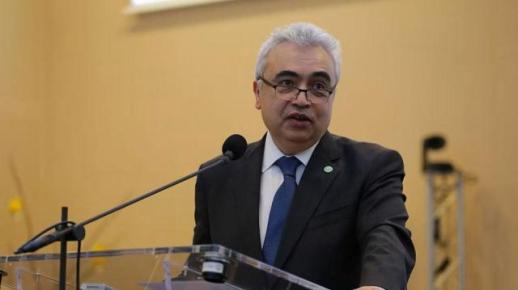 Lee set to meet IEA chief to discuss Asia-Pacific energy cooperation SEOUL, September 17 (AJP) - President Lee Jae Myung is set to meet International Energy Agency (IEA)'s executive director Fatih Birol on Thursday, according to Cheong Wa Dae. At a meeting scheduled for 2 p.m. at Cheong Wa Dae in central Seoul, the two are expected to discuss ways to make energy supplies more stable and strengthen regional cooperation in the Asia-Pacific. They will also discuss other topics including trends in global energy markets, recent developments in the prolonged conflict in the Middle East, and the severe flooding in Nepal that struck last month, leaving thousands of people still missing. Birol recently led a coordinated release of 400 million barrels from strategic oil reserves held by IEA member countries to help ease pressure on global oil supplies following disruptions in the Strait of Hormuz. South Korea has also worked closely with the IEA on energy security and climate change by co-hosting the World Climate Industry Expo since 2024. Established in 1974 following the 1973~1974 oil shock, the IEA is an autonomous organization within the Organisation for Economic Cooperation and Development (OECD). It was created to coordinate international responses to energy supply disruptions and has since expanded its work beyond oil to include electricity, natural gas, renewable energy, critical minerals and climate change. South Korea joined the IEA in 2002. AJP Takeaways - President Lee Jae Myung will meet International Energy Agency Executive Director Fatih Birol at Cheong Wa Dae to discuss Asia-Pacific energy cooperation and supply stability. - The talks will cover global energy markets, the Middle East conflict and Nepal's recent flooding. - The meeting follows the International Energy Agency's release of 400 million barrels from strategic oil reserves amid disruptions in the Strait of Hormuz. 2026-09-17 10:17:31
 -
Jang Dong-hyuk Announces Task Force for College Admissions Fairness In response to the recent failure of the college admissions application system, Jang Dong-hyuk, leader of the People Power Party, announced on September 17 that he will establish a task force dedicated to college admissions fairness. During a Supreme Council meeting held at the National Assembly, Jang stated, "The worst server error in college admissions history has occurred. It is a disaster for students and their parents." He revealed plans for the task force's formation. He added, "Only those who followed the rules and submitted their applications on time have suffered. It is estimated that around 1,200 students were unable to submit their applications." He criticized the incident as a clear case of human error that could have been prevented. Regarding the college admissions fairness task force, Jang emphasized the need for a comprehensive investigation to determine the causes and responsibilities, stating, "We will work with experts from various fields to investigate cases of harm and find practical solutions to assist affected students." Calls for the resignation of Education Minister Choi Kyo-jin have also emerged in light of the situation. Jeong Jeom-sik, the party's floor leader, criticized, "All responsible parties, including Minister Choi, should resign over this admissions crisis." Meanwhile, Jang urged President Lee Jae-myung to provide answers during a press conference scheduled for September 18 regarding a shift in national policy and how to improve relations with the United States. He stated, "A public apology and a declaration of a complete policy shift are necessary. If he cannot address issues such as 'no reappointment or cancellation of charges' and 'withdrawal of the nomination of Kim Seung-won (the candidate for Minister of Justice)' and 'a complete review of real estate policies,' it would be better to cancel the press conference now."* This article has been translated by AI. 2026-09-17 10:16:10
-
Hyundai Pharmaceutical Shares Surge Amid Expectations for Abortion Drug Introduction As the government pushes for the introduction of abortion medication in South Korea, shares of Hyundai Pharmaceutical have surged.According to the Korea Exchange, as of 9:35 a.m. on September 17, Hyundai Pharmaceutical's stock was trading at 10,960 won, up 990 won (9.93%) from the previous trading day. The stock opened at 10,280 won and soared to 11,750 won early in the session.The rise in Hyundai Pharmaceutical's stock is attributed to its emergence as a key player in the market for abortion medication following the government's initiative.Shin Jun-soo, director of the Drug Safety Bureau at the Ministry of Food and Drug Safety, stated in a briefing the day before, "Assuming that all procedures related to the introduction of abortion medication are thoroughly followed, our goal is to introduce it by the first quarter of next year."Hyundai Pharmaceutical is among the companies working to introduce abortion medication in the country. The company has signed a contract with the UK-based pharmaceutical firm Linepharma International to secure exclusive domestic rights for the oral abortion drug Mifepristone.Since 2021, Hyundai Pharmaceutical has submitted three applications for the approval of Mifepristone to the Ministry of Food and Drug Safety. The first application was submitted in July 2021, but the company withdrew it after the ministry requested additional safety, efficacy, and quality data.In March 2023, the company reapplied for approval, but the review was temporarily halted as some required documents needed amendments to the Criminal Code and the Mother and Child Health Act. Hyundai Pharmaceutical submitted its third application for Mifepristone in December 2024, seeking approval for use within 63 days (9 weeks) of pregnancy. The approval is still pending.Meanwhile, the specific timeline for the domestic introduction of Mifepristone will depend on the approval process and whether it will be covered by health insurance. Director Shin noted, "The review has progressed significantly, and we still have to complete the risk management plan approval process. After approval, we will need to go through safety and quality inspections and import procedures, but we will do our best to ensure it can be introduced by the first quarter of next year."* This article has been translated by AI. 2026-09-17 10:16:00
-
Chief Justice Cho Hee-dae Emphasizes Judicial Independence Amid Challenges Chief Justice Cho Hee-dae stated on September 17 that "judicial independence must be upheld regardless of the challenges faced."During his opening remarks at the 20th Asia-Pacific Chief Justices Conference held at the Grand Hyatt Seoul, Cho emphasized that "the independence of the judiciary is essential for the judiciary to fulfill its role in safeguarding democracy and the rule of law."He also highlighted the importance of adjudicating based on law and principles. "In many countries, increasingly complex political and social disputes are being directed to the courts, and the public is placing greater expectations on the judiciary," he said. "In such circumstances, the courts must steadfastly uphold the law and principles."Furthermore, he urged judges to have the courage to adjudicate solely based on law and principles, without fear, regardless of the obstacles they may encounter.Cho also addressed the principle of separation of powers, stating that "effective judicial functions require mutual respect and cooperation among the judiciary, legislature, and executive branches, which aids in resolving conflicts in modern society." He added that this cooperation must respect the unique responsibilities of each institution while ensuring the independence of the judiciary.The Asia-Pacific Chief Justices Conference is an international event where judicial leaders from the Asia-Pacific region gather to discuss their respective judicial systems and key issues. It is held every two years, and this marks South Korea's third time hosting the conference, following events in 1999 and 2011.* This article has been translated by AI. 2026-09-17 10:16:00
-
Hanwha Engine Shares Rise Over 6% on AIDC Engine Expansion Hopes Hanwha Engine is experiencing a strong early trading session, with shares rising over 6% amid expectations for expansion in the artificial intelligence data center (AIDC) power engine business.According to the Korea Exchange, as of 10:04 a.m. on September 17, Hanwha Engine's stock was trading at 51,000 won, up 2,950 won (6.14%) from the previous trading day.On this day, SK Securities projected that Hanwha Engine is likely to secure demand for power engines not only for AIDC but also for floating data centers (FDC). The company, a licensee of Everllence (formerly MAN Energy Solutions), is expected to successfully finalize a licensing production contract for the 10-megawatt (MW) four-stroke medium-speed gas engine 'MAN 35/44G.'SK Securities anticipates that the supply of power engines to North American data centers managed by Hanwha Energy will begin in earnest from 2028. They also analyzed that the 60MW FDC recently unveiled by Hanwha Ocean at 'Gastech 2026' is likely to be equipped with the same series of four-stroke medium-speed gas engines.Production capacity expansion is also nearing completion. Hanwha Engine has secured an annual production capacity of 900MW for four-stroke medium-speed engines. This production line can manufacture engines for both marine applications and data centers. More than half of the available slots for 2027 have already been reserved for marine engines, with some of the remaining slots potentially filled with engines for AIDC.Given that a single data center requires a power capacity of 250-400MW, it is believed that one large project could significantly deplete the remaining production capacity. If additional expansions are made to meet global demand for data center power engines, structural growth is also expected.Han Seung-han, a researcher at SK Securities, stated, "The momentum for land power engines has not yet been reflected in the stock price," and recommended Hanwha Engine as the top pick in the shipbuilding equipment sector, maintaining a 'buy' rating and a target price of 90,000 won.* This article has been translated by AI. 2026-09-17 10:16:00
-
GKL Promotes Community Support and Vulnerable Group Assistance Ahead of Chuseok Grand Korea Leisure (GKL), a quasi-public enterprise operating the foreigner-only casino Seven Luck, is engaging in community support and assistance for vulnerable groups ahead of the Chuseok holiday.From September 22 to 26, GKL will host the 'K-Traditional Market Dessert Festival' at the Seven Luck Casino in Gangnam COEX. This event, organized in collaboration with over ten vendors from the Yeongdong Traditional Market in Nonhyeon-dong, aims to introduce foreign tourists to the culinary culture of Korean traditional markets.During the festival, foreign visitors to the Gangnam COEX location will have the opportunity to sample a variety of traditional Korean snacks, including rice cakes, fried chicken, twisted doughnuts, and steamed buns. A special promotion will also offer 200 sets of domestically produced sesame oil to actively promote the unique charm and flavors of traditional markets.GKL President Yoon Doo-hyun stated, "I hope this unique experience will enhance tourist satisfaction for foreign visitors to Seven Luck and contribute to revitalizing the local economy."Support for local businesses also took place on September 16, when GKL employees from the Seoul Dragon City location visited the Yongsan Yongmun Market to donate counterfeit detection devices and firefighting supplies. They also provided training on counterfeit detection methods for Onnuri gift certificates and emergency firefighting.In addition to supporting local businesses, GKL is focusing on assisting vulnerable groups during the holiday season. On September 16, they delivered holiday food and essential goods to over 180 households, including grandparent-headed families, low-income seniors, and individuals with disabilities in the Busanjin District, where the Seven Luck Casino is located.The 'GKL Dream Hope Volunteer Group,' consisting of more than 20 employees, donated 180 holiday food packages purchased from traditional markets to the Busanjin Comprehensive Social Welfare Center. They also visited some homes of neighbors with mobility challenges to share warmth.On September 23, GKL will continue its outreach by partnering with the Suseo Myunghwa Comprehensive Social Welfare Center in Gangnam to assist 325 underprivileged households in the area. They plan to deliver essential goods packages sourced from local traditional markets and provide home delivery for those unable to travel.President Yoon expressed, "Although it is a small gesture, I hope it conveys warmth to those in need. GKL will continue to fulfill its responsibility as a public enterprise that brightens the shadows and coexists with the community."* This article has been translated by AI. 2026-09-17 10:12:00
-
Citizens of Gwacheon Demand Government Withdraw Housing Plans for Racecourse On September 17, citizen representatives from Gwacheon gathered at the Sejong Government Complex to demand the withdrawal of housing supply and relocation plans for the Gwacheon Racecourse. According to the city of Gwacheon, about 20 citizen representatives held a launch ceremony in the lobby of the city hall in the morning, expressing their opposition to the government's unilateral push for housing supply and the relocation of the racecourse, before moving to the Ministry of Land, Infrastructure and Transport in Sejong City for a rally. During the launch ceremony, former Gwacheon City Council Chair Ha Young-joo and former Gwacheon Association Chair Kim Seong-hoon presented a statement on behalf of the citizen representatives. The representatives stated, "It is unacceptable for the government to promote the racecourse and surrounding areas as large-scale housing supply sites without sufficient consultation with the citizens of Gwacheon," demanding a comprehensive review of the plans. They particularly emphasized that, with large-scale development projects like the Gwacheon Knowledge Information Town and Gwacheon District ongoing, it is more important to enhance the currently lacking transportation, education, and living infrastructure before pursuing additional housing supply. The government previously announced plans to supply 9,800 housing units in the area around the Gwacheon Racecourse and the Defense Security Command, with construction expected to begin by December 2029 after the relocation and permitting processes. In response, the citizen representatives argued that the racecourse has served as a space for relaxation and culture for both Gwacheon residents and those in the metropolitan area, and they oppose its relocation or development for housing supply. They also pointed out that existing development projects have not delivered the promised transportation and living infrastructure, leading to inconveniences for citizens. They warned that introducing large-scale housing supply could exacerbate traffic congestion and the lack of educational and living infrastructure in Gwacheon. Citizen representative Kim Hang-sik stated in a separate statement, "Over the past five years, as a representative of residents in the Gwacheon Knowledge Information Town, I repeatedly heard responses like 'it's already decided' and 'there's no choice' while discussing issues with the Korea Land and Housing Corporation." Kim added, "While the completion of infrastructure, including the Information Town Station, has been delayed, residents continue to move in, causing suffering for citizens as people arrive while facilities lag behind." He continued, "Even after the government's plan to supply 4,000 housing units on the Gwacheon government site was scrapped due to citizen opposition, new development zones have emerged in Gwacheon Galhyeon-dong. The government must stop changing housing supply sites within Gwacheon." Kim emphasized, "No one has asked us. Instead of promises to improve infrastructure later, the government must fulfill the commitments already made regarding basic facilities." During the rally, the citizen representatives planned to present their main demands, which include the withdrawal of housing supply plans without the consent of Gwacheon citizens, the cancellation of the racecourse relocation plan, and the cessation of unilateral housing supply while engaging in discussions with Gwacheon citizens. After the rally, they also planned to visit the Ministry of Land, Infrastructure and Transport and the Ministry of Agriculture, Food and Rural Affairs to deliver a petition outlining the demands of Gwacheon citizens. The citizen representatives intend to call for a comprehensive review of the large-scale housing supply plans for the racecourse and the Defense Security Command site, and to ensure that the ongoing development projects' transportation, education, and living infrastructure are responsibly completed before any new housing supply. Additionally, they will urge that sufficient consultation with Gwacheon citizens be conducted before making decisions on major development plans in the city. Meanwhile, the citizen representatives have stated that they will continue to respond to the government's unilateral policy initiatives and will remain active until their demands are met.* This article has been translated by AI. 2026-09-17 10:08:10
-
Government to Gather Public Input for National Sustainable Development Report 국무조정실이 내년 유엔에 제출할 ‘지속가능발전 국가보고서(VNR)’에 국민 의견을 반영하기 위한 공론화 절차에 나선다.국무조정실 지속가능발전추진단은 오는 30일부터 11월 16일까지 지역·청년·주요 이해관계자 등을 대상으로 한 숙의공론과 온라인 대국민 의견수렴을 진행한다고 17일 밝혔다.VNR은 유엔 회원국이 지속가능발전목표(SDGs) 이행 현황과 성과, 향후 과제를 자발적으로 점검해 국제사회와 공유하는 보고서다. 국무조정실은 전문가와 시민사회, 학계 등이 참여한 협의회와 자문회의를 거쳐 보고서 초안을 마련해 왔다.숙의공론은 지역과 청년, 주요그룹 및 기타 이해관계자 등 3개 트랙으로 운영된다. 지역 트랙에서는 수도권과 충청·강원, 호남·제주, 대구·경북, 부산·울산·경남 등 5개 권역의 전문가와 활동가, 지방정부 관계자들이 지역별 정책 과제와 우수사례를 논의한다.청년 트랙에서는 관련 단체들이 참여해 지속가능발전 정책에 대한 미래세대의 의견을 제시한다. 이해관계자 트랙에서는 ‘그 누구도 소외되지 않는다’는 원칙에 따라 여성과 장애인, 산업계 등 다양한 사회 구성원의 목소리를 듣는다. 참여 희망자는 이날부터 오는 30일까지 국가 지속가능발전포털에서 신청할 수 있다.일반 국민은 국가 지속가능발전포털 내 ‘VNR 참여마당’을 통해 온라인으로 의견을 낼 수 있다. 추진단은 접수된 의견을 검토하고 관계부처·기관과 협의해 보고서에 반영할 계획이다.최종 보고서는 2027년 상반기 유엔에 제출되며, 같은 해 7월 유엔 지속가능발전 고위급 정치포럼에서 발표된다.* This article has been translated by AI. 2026-09-17 10:08:00