


Latest by
-
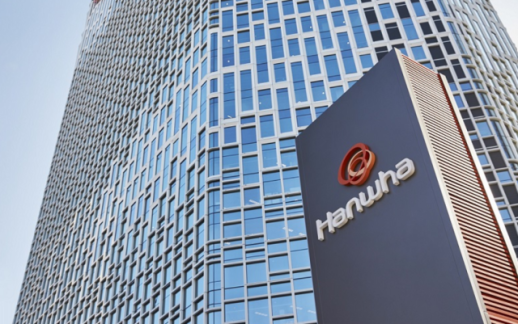 Hanwha Solutions and OCI shares benefit from U.S. solar curbs SEOUL, August 07 (AJP) —Shares of South Korean solar producers gained upside momentum after the United States erected new price and tariff barriers against low-cost polysilicon and solar imports, raising expectations that Korean producers could gain ground as Washington pushes more of the solar supply chain onto U.S. soil. As of 10:56 a.m., Hanwha Solutions was trading at 32,750 won, up 7.73 percent from the previous session. The stock had surged as much as 26.81 percent to an intraday high of 38,550 won shortly after the opening bell before trimming gains. OCI Holdings, another South Korean solar-materials producer seen as a potential beneficiary, rose 2.66 percent to 250,500 won after jumping as much as 18.24 percent to 288,500 won earlier in the session. The rally came after U.S. President Donald Trump signed a proclamation Thursday imposing minimum import prices on polysilicon and major solar products alongside a 15 percent tariff on downstream polysilicon derivatives under Section 232 of the Trade Expansion Act. The measures take effect Dec. 4. Washington set minimum import prices at $21 per kilogram for polysilicon, $100 per kilogram for ingots and wafers, 22 cents per watt for solar cells and 38 cents per watt for solar modules. Imports entering below those levels will face an additional charge equal to the gap between their declared value and the minimum price. In addition, ingots and downstream polysilicon derivatives will face a 15 percent tariff. The measures apply broadly rather than exclusively to China, but their biggest competitive impact is expected to fall on low-cost Chinese and China-linked supply chains that have come to dominate global solar manufacturing. The White House said global polysilicon production has increased more than 270 percent since 2020, while the U.S. share of global production capacity plunged from 50 percent in 2005 to less than 2 percent in 2024. For Hanwha Solutions, the advantage lies increasingly inside the United States. Its solar unit Hanwha Qcells is building out a vertically integrated manufacturing chain at its Cartersville complex in Georgia, covering ingots, wafers, cells and finished modules. Qcells began producing solar cells at the facility in June and expects the plant to reach annual capacity of 3.3 gigawatts each for ingots, wafers and cells and 3.5 GW for modules when fully operational. Together with its Dalton plant, Qcells expects its U.S. module capacity to reach 8.6 GW. That domestic footprint leaves Hanwha less exposed to import barriers than solar manufacturers dependent on bringing finished cells and modules into the United States and could give it greater pricing power as Washington raises the floor for imported products. The Trump administration is also offering incentives to companies willing to expand U.S. production of polysilicon, ingots, wafers and cells, potentially giving Hanwha another route to offset tariff costs as it deepens investment in its American supply chain. OCI Holdings stands to benefit from a different part of the new regime. Its Malaysian subsidiary OCI TerraSus produces polysilicon, which will be subject to the new $21-per-kilogram minimum import price but not the additional 15 percent tariff imposed on downstream products such as ingots, wafers, cells and modules. The price floor could help narrow the cost disadvantage faced by non-Chinese polysilicon makers against heavily discounted supply in the global market, increasing the relative appeal of OCI's Malaysian output to U.S. solar manufacturers seeking non-Chinese supply. The proclamation also gives special treatment to products from major U.S. trade partners including South Korea, Japan and the European Union. For covered Korean products, the combined existing U.S. tariff and additional Section 232 duty will be capped at 15 percent. Washington left room for further relief as well, allowing the Commerce Department and U.S. Trade Representative to modify the minimum-price and tariff measures for trading partners that adopt substantially equivalent import restrictions. The latest action marks a sharp turn from the uncertainty Korean solar companies faced before the Section 232 decision, when Seoul had urged Washington to avoid sweeping restrictions that could penalize Korean investment in the U.S. AJP Takeaways • Hanwha Solutions shares rose 7.73 percent to 32,750 won as of 10:56 a.m. on Aug. 7, 2026, after surging as much as 26.81 percent earlier in the session. • The United States will introduce minimum prices for polysilicon and key solar components and impose a 15 percent tariff on certain solar products starting Dec. 4, 2026. • Hanwha Solutions could benefit because its solar unit, Hanwha Qcells, produces key solar components in Georgia, reducing its exposure to U.S. import barriers. • OCI Holdings could also benefit because polysilicon produced by its Malaysian subsidiary Terasys will not face the new 15 percent tariff and will instead be subject to the minimum-price rule. • The measures could weaken the price advantage of Chinese solar suppliers in the U.S. market, improving the competitive position of Korean and other non-Chinese producers. 2026-08-07 11:47:45
 -
 Joint Investigation Team Expands Search into Election Fraud Allegations The Joint Investigation Team probing allegations of voter count manipulation during the June 3 local elections has expanded its search to nine election offices, including the National Election Commission and those in Seoul, Gyeonggi, and Chungbuk provinces. Following earlier investigations in Gimpo, Uiwang, and Jincheon, indications of irregularities in voter counts have also emerged in Seoul's Gangnam and Seocho districts, raising the possibility of a nationwide inquiry.Led by Kim Tae-hoon, Deputy Chief Prosecutor of the Seoul Central District Prosecutors' Office, the Joint Investigation Team conducted searches on August 7 at the National Election Commission and local election offices in Gimpo, Uiwang, Jincheon, Gangnam, and Seocho.The search warrants reportedly cite charges of falsifying public electronic records and obstructing official duties. It is understood that one official from the National Election Commission, who sent guidelines regarding vote management to local election offices on election day, has also been implicated.The investigation suggests that election officials may have adjusted voter counts without formally reporting or obtaining approval from superiors. So far, confirmed instances of data manipulation have been identified in five locations: Gimpo, Uiwang, Jincheon, Gangnam, and Seocho.The inquiry intensified after discrepancies in voter counts were discovered in Gyeonggi Province. In one polling station, the number of voters was incorrectly recorded in the thousands instead of the hundreds, leading to adjustments in the reported figures across other polling stations.Typically, any errors in voter counts or turnout rates must be reported to the National Election Commission for approval before corrections can be made. However, the Joint Investigation Team believes some officials bypassed this process, adjusting subsequent voter counts to reconcile the final figures.The team is also examining whether directives from the National Election Commission influenced these actions. Reports indicate that at around 8:30 a.m. on election day, the Election Management Division sent an email to local officials stating that corrections should not be made after that time. The email also suggested that if there were no significant errors in previous reports, adjustments could be made in subsequent reports.At approximately 2:30 p.m., another message was sent indicating that if discrepancies were discovered late, it would be difficult to make corrections due to the growing differences.The Joint Investigation Team is investigating whether these directives contradict the 'Comprehensive Management Guidelines for the 9th Nationwide Simultaneous Local Elections' established prior to the elections. They are also looking into whether the National Election Commission went beyond merely advising on error correction to actively participating in specific data adjustments. Records indicate that when inquiries about voter count discrepancies arose in Gimpo, the National Election Commission provided an Excel file detailing specific adjustment methods.Previously, the Joint Investigation Team secured messenger conversations among election officials discussing how to adjust voter counts without reporting discrepancies to superiors while investigating a shortage of ballots. This led to the initial searches of the National Election Commission on July 23, focusing on allegations of false data entry in voter statistics.Following the analysis of seized materials and interviews with related parties, similar irregularities were confirmed in Gangnam and Seocho. The team has also summoned individuals involved for questioning on July 30-31 and August 5.The scope of the investigation may broaden further. According to data on 'Voter Counts by Time for the 9th Local Elections,' among 14,288 polling stations nationwide, 51 showed no change in cumulative voter counts for over three hours. Similar patterns have been observed in various regions, including 10 locations in Gyeonggi and eight in Jeonnam.The Joint Investigation Team plans to analyze materials obtained from the additional searches to clarify the origins of the National Election Commission's directives and how local election offices processed voter counts. They aim to determine whether the false entries were the result of individual actions or widespread practices influenced by the National Election Commission's guidelines.* This article has been translated by AI. 2026-08-07 11:40:00
 -
Im Sung-geun Sentenced to Three Years in Appeal Over Corporal Cha's Death Im Sung-geun, the former commander of the Marine Corps 1st Division, and other Marine commanders have received heavy guilty verdicts in their appeal related to the death of Corporal Cha Soo-geun. The court determined that the responsibility of failing to protect the lives and safety of the troops as a senior commander was serious.On August 7, the Seoul High Court's Criminal Division 4-3 (Judges Jeon Ji-won, Kim In-gyeom, and Seong Ji-yong) sentenced Im to three years in prison, the same as the first trial, for charges of negligent homicide and violation of military law. The special investigation team for the deceased Marine had previously sought a five-year sentence for Im during the closing arguments.Other field commanders who were also tried received the same sentences as in the first trial. Park Sang-hyun, the former commander of the 7th Brigade, and Choi Jin-kyu, the former commander of the 11th Artillery Battalion, were each sentenced to 18 months in prison. Lee Yong-min, who was Cha's direct superior, received a 10-month prison sentence, while Jang Mo, the former commander of the 7th Artillery Headquarters Company, was sentenced to eight months in prison with a two-year probation.The court found that Im failed to fulfill his duty as a commander to protect the lives and physical safety of the troops who were deployed for a search operation without even the minimum safety equipment, such as life jackets, on July 19, 2023, at a flood site in Yecheon, North Gyeongsang Province.Specifically, the court noted that Im harshly criticized the artillery battalion for poor search results and directed them to conduct an aggressive search, stating, "Do not look from the road; go down to the water's edge and search through the bushes." This directive was deemed disconnected from the actual situation on the ground.Additionally, the court found that Im tolerated some troops conducting dangerous underwater searches in violation of safety guidelines and failed to disseminate necessary safety instructions or provide essential safety equipment, such as life jackets, beyond chest waders.The court upheld the special investigation team's assertion that these unreasonable orders and negligence from senior commanders ultimately led to the tragic death of Corporal Cha.Moreover, despite a brief order transferring operational control to the Army at the time of the incident, the court ruled that Im violated military law by not adhering to this directive and unlawfully exercising command over the search methods and on-site guidance.However, the appellate court did issue a 'not guilty' ruling on some specific factual details previously deemed guilty in the first trial. This legal interpretation means that while the overall guilty verdict remains, certain aspects of the reasoning were found to be not guilty.The first trial had cited Im's instruction to continue operations despite the Army's withdrawal order as a basis for guilt. In contrast, the appellate court noted that it could not definitively conclude that the continuation of operations by Park was solely due to Im's exercise of operational control.Despite these changes in some judgments, the appellate court maintained that the negligence of the commanders and the causal relationship with Corporal Cha's death, as well as the core charges of violating military command structure, were all recognized, thus upholding the sentences from the first trial.* This article has been translated by AI. 2026-08-07 11:36:10
-
Choo Mi-ae Takes on Lee Jae-myung's Debt Amid Rising Gyeonggi Province Liabilities Gyeonggi Province has declared a financial emergency as past trends in its debt levels gain attention online.Choo Mi-ae, the Governor of Gyeonggi Province, held a press conference on August 5, announcing the financial emergency. The province cited a decline in acquisition tax revenue due to a sluggish real estate market and increased welfare spending as contributing factors to its financial burden.Following this announcement, documents detailing changes in Gyeonggi's debt began circulating online, sparking debate over the financial management during Lee Jae-myung's tenure as governor.According to shared documents, Gyeonggi Province reduced its debt from 2016 to 2020, as the amount repaid exceeded the amount issued in local bonds. However, the situation reversed starting in 2021.The data shows that from 2021 to 2025, the amount of local bonds issued exceeded the repayment amount for five consecutive years. The total bond issuance from 2021 to 2025 was 6.1564 trillion won, while the repayment amount was 1.790 trillion won. The annual difference between repayments and issuances also recorded a net increase each year: -1.1419 trillion won in 2021, -924.9 billion won in 2022, -670.6 billion won in 2023, -478.1 billion won in 2024, and -1.1509 trillion won in 2025.Another document indicated that Gyeonggi's debt balance has increased for five consecutive years since reaching a low in 2020.Some online users also discussed Gyeonggi's financial structure. They noted that while the province's financial independence is about 45%, one of the highest among local governments in the country, a significant portion of its revenue comes from acquisition taxes, which have sharply declined due to reduced real estate transactions, exacerbating the financial strain.Additionally, past promotional budgets for Gyeonggi Province were revisited online. According to shared data, the promotional budget was 6.439 billion won in 2016, 7.792 billion won in 2017, 10.724 billion won in 2018, and 11.72 billion won in 2019, increasing to 12.614 billion won in 2020.This has led to various interpretations among online users. Some commented, "The residents of Gyeonggi already know who mismanaged the finances," and "The debt reduced during Nam Kyung-pil's administration has significantly increased since Lee Jae-myung took office," suggesting that Lee's achievements may have contributed to the rising debt.Others attributed the increase in debt to political advertising and welfare expansion policies, questioning, "Isn't this spending for populism in an attempt to become president?" and noting the significant rise in advertising expenses. However, such assessments cannot be definitively concluded based solely on the data presented in the article.Amid this controversy, the supplementary budget of Sinan County in Jeollanam-do was also mentioned. Some users questioned, "With a financial independence of only 8%, how can they propose a 1 trillion won supplementary budget? Did they discover oil or something?" raising concerns about overall financial management.* This article has been translated by AI. 2026-08-07 11:36:00
-
Special Prosecutor Committee to Recommend Candidates by August 14 The Special Prosecutor Recommendation Committee, established to investigate the voting paper shortage during the June 3 local elections, has decided to recommend two candidates to President Lee Jae-myung by August 14.Cho Gi-yeon, a member of the committee, spoke to reporters after the committee's first meeting at the National Assembly, stating, "Given the unprecedented situation of infringing on citizens' voting rights, we discussed the importance of selecting a special prosecutor that can uncover the truth and prevent future occurrences, regardless of political affiliations."He added that the committee unanimously elected Kim Yong-gwan, a lawyer recommended by the People Power Party, as its chair. He further noted, "We will finalize the two candidates to recommend to President Lee during our meeting on the 14th."The recommendation committee consists of six members, with three appointed by the Democratic Party (Cho Du-hyun, Cho Gi-yeon, and Ha Sang-eung, an associate professor at Sogang University) and three by the People Power Party (Kim Yong-gwan, Choi Chang-ho, and Cha Jin-ah, a professor at Korea University School of Law). The committee will receive three candidate recommendations each from the Korean Bar Association and the Law School Council, ultimately selecting two candidates. President Lee will then make the final decision on one candidate. 2026-08-07 11:36:00
-
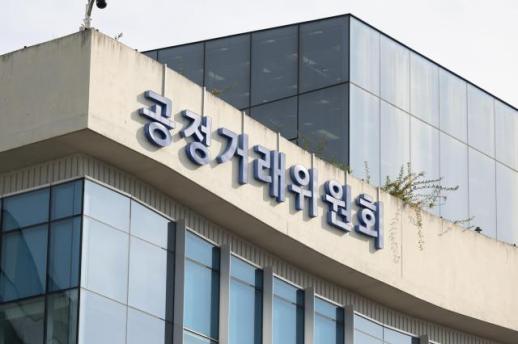 FTC weighs penalties over government bond bid collusion SEOUL, August 07 (AJP) -South Korea's antitrust regulator is preparing to rule on allegations that 15 banks and securities firms colluded in government bond auctions involving 76.2 trillion won ($53.6 billion), a case that could produce the largest cartel penalty ever imposed in the country. Examiners at the Fair Trade Commission (FTC) allege that the primary dealers, or PDs, coordinated bidding yields and exchanged detailed information ahead of Korean Treasury bond auctions between January 2020 and June 2023. The financial firms deny any rigging, arguing that discussions among dealers were part of routine efforts to gauge yields, supply and demand in a market where participants submit multiple bids at different prices and volumes. The FTC is expected to hold full-commission hearings on Aug. 19 and 20 to determine whether the conduct violated competition law and, if so, what sanctions should follow. The case involves 10 securities firms — Kyobo Securities, Daishin Securities, Meritz Securities, Mirae Asset Securities, Samsung Securities, Shinhan Securities, NH Investment & Securities, KB Securities, Korea Investment & Securities and Kiwoom Securities — as well as KB Kookmin Bank, NongHyup Bank, Industrial Bank of Korea, Hana Bank and Korea Development Bank. The FTC secretariat sent its examiner's report to the firms in March last year after an investigation that began in 2023, concluding that communications among dealers went beyond ordinary exchanges of market views and amounted to coordination over bidding yields and other auction information. That assessment remains subject to review by the full commission and does not constitute a final finding of wrongdoing. The financial firms argue that the structure of Korea's government bond auctions makes coordinated pricing difficult. Dealers can submit multiple bids at different yields and amounts, while each institution enters an auction with different inventories, client orders and trading strategies. The firms say exchanging views about market conditions therefore cannot by itself demonstrate an agreement to fix auction outcomes. The potentially bigger battle awaits. FTC examiners have calculated the relevant sales tied to the alleged conduct at about 76.23 trillion won, essentially using the value of bonds awarded through the auctions as the base for calculating possible penalties. The firms argue that treating the face value of government bonds as sales greatly exaggerates the economic benefit generated by the transactions. Unlike the sale of ordinary goods, they say, buying a 10 billion won government bond does not mean a dealer earned 10 billion won in revenue. They contend that the calculation should instead reflect actual income from interest, trading spreads, commissions or other revenue generated by the bond business. The firms are also pressing the FTC to exclude bonds purchased purely on behalf of clients. A substantial portion of PD auction participation involves dealers submitting orders requested by customers rather than buying securities for their own books. Financial firms argue that where a dealer simply executes a client's order and earns a commission, the entire value of the bond should not be counted as the dealer's own sales. Excluding such agency transactions could substantially reduce the amount on which penalties are calculated. The FTC, however, has publicly denied that it is considering abandoning bond award values in favor of operating revenue as the penalty base. In a July 29 clarification responding to a Korean media report, the regulator said it had not considered calculating penalties on the basis of operating revenue instead of the amount of government bonds awarded. That leaves the definition of "relevant sales" as one of the most consequential questions before the full commission. Applying the statutory maximum cartel penalty of 20 percent to 76.2 trillion won would produce a purely theoretical ceiling of about 15.2 trillion won. The actual figure would be far lower than that ceiling and will depend on how the commission defines relevant sales, judges the seriousness of any violation and applies increases or reductions to individual firms. Korean media reports have put preliminary penalty calculations anywhere from around 5 trillion won to more than 11 trillion won depending on the assumed base rate, underscoring how much remains unsettled before the commission's ruling. Even the lower end would dwarf previous FTC cartel penalties. Another variable is leniency. Daishin Securities, Samsung Securities and Shinhan Securities have been reported to have applied under the FTC's cartel leniency program, although the commission has not publicly confirmed their status. Under the system, a qualifying first self-reporter can receive full exemption from an administrative fine, while the second can receive a 50 percent reduction, subject to requirements including cooperation with the investigation. Beyond the size of any penalty, the case carries broader implications for the functioning of Korea's sovereign debt market. Primary dealers form the backbone of the government bond distribution system. In return for preferential access to auctions and other benefits, they are required to participate regularly in government debt sales, underwrite issuance and provide liquidity in the secondary market. The Ministry of Economy and Finance provided auction-related data to the FTC during the investigation while stressing both the need to prevent collusion and the importance of considering the potential impact of sanctions on the PD system and the broader government bond market. Heavy penalties could strain the capital positions of affected financial institutions, while restrictions on major dealers could disrupt liquidity at a time when foreign participation in Korean government bonds is growing. The commission must ultimately decide not only whether dealers crossed the line from exchanging market views into illegal coordination, but also how the economics of a government bond auction should translate into a competition-law penalty. After reviewing the firms' responses and evidence, the FTC may issue corrective orders and financial penalties and decide whether any of the firms or individuals involved should be referred for criminal prosecution. _________________________________________________________________________________ AJP Takeaways South Korea's Fair Trade Commission is preparing to rule on alleged bid collusion involving 15 primary dealers in Korean government bond auctions between January 2020 and June 2023. FTC examiners say the affected bond purchases totaled 76.2 trillion won ($53.6 billion), while the banks and securities firms deny collusion and describe their communications as routine market information-sharing. A key dispute is whether the full value of the government bonds can be used to calculate antitrust fines, with the eventual ruling potentially carrying implications for Korea's primary-dealer system and government bond market. 2026-08-07 11:35:42
 -
Daewoo Engineering to Lead Mozambique's Rovuma LNG Phase 1 Project Daewoo Engineering & Construction will participate as the main contractor in a large-scale liquefied natural gas (LNG) project in Mozambique.On August 7, Daewoo announced that it has officially received a Letter of Intent (LOI) for the construction of an LNG liquefaction plant from ExxonMobil Mozambique, the lead company for the Rovuma LNG Phase 1 project.Daewoo has formed a global consortium called 'SMDC JV' with Italy's Saipem, the U.S. firm McDermott, and China's CPECC to participate as the main contractor for this project.The issuance of the LOI is a procedural step to carry out initial design refinement, procurement of key equipment, and construction feasibility reviews ahead of the final investment decision (FID).The project is commissioned by Rovuma Venture S.p.A, a joint venture led by ExxonMobil, Italy's ENI, and China's CNPC, which holds a 70% stake, along with Korea Gas Corporation (10%), Mozambique's state-owned oil company ENH (10%), and Abu Dhabi's state-owned oil company XRG (10%).The Rovuma LNG Phase 1 project aims to develop gas fields in the Area 4 block offshore northern Mozambique.It will involve the construction of an eco-friendly LNG liquefaction plant capable of producing 18.6 million tons of LNG annually, along with a large gas combined cycle power plant powered by electric motors instead of gas turbines, and associated facilities. The first trial run and commercial operation are targeted for 2031.Historically, the overseas LNG liquefaction market has been dominated by a small number of global construction firms due to the high-level technical expertise required for cryogenic process control. While domestic construction companies have primarily participated as subcontractors, Daewoo secured a main contractor position for the first time in South Korea during the 'Nigeria LNG Train 7' project in 2020, and is now recognized for standing alongside global EPC leaders in this Mozambique project.A Daewoo representative stated, "The receipt of this LOI is a recognition of our capability to lead projects, breaking away from the limitations of domestic construction companies that have remained at the subcontractor level. We will fully support the initial design and procurement stages to ensure the FID scheduled for the end of this year proceeds smoothly, and we aim to solidify our long-term growth momentum through the transition to the main EPC contract."Meanwhile, Bae Se-ho, a researcher at iM Securities, noted, "Daewoo has raised its new order guidance for this year from 18 trillion won to 27 trillion won, an increase of 9 trillion won. This includes 9 trillion won from five major projects totaling 18 trillion won, such as the Czech Dukovany nuclear power plant, Papua New Guinea CPF LNG, Nigeria Indorama, and Mozambique Rovuma LNG, as the basis for the guidance increase. If these orders are realized, it will significantly enhance the scale of the plant and civil engineering sectors."* This article has been translated by AI. 2026-08-07 11:32:00
-
 Op-ed: Evening with Space Poetry Reading Society Editor's Note: The following opinion article is contributed by Choe Chong-dae, a longstanding member of the Royal Asiatic Society Korea and an enthusiast of international cultural and historical affairs. My longstanding interest in literature led me to attend the monthly gathering of the Space Poetry Reading Society on July 2, 2026, at the gracious invitation of Choi Chong-ko, Emeritus Professor of Law at Seoul National University. During the event, I had the privilege of introducing my recently published book, Bridging Cultures: The Korea Times Columns of a Citizen Diplomat (1979–2025). By a happy coincidence, the Space Poetry Reading Society was founded in April 1979—the same year I began contributing articles to The Korea Times in June. The parallel between the society's history and my own writing journey made the occasion especially meaningful. Although literature is often regarded as an art rooted in the printed page, poetry transcends the boundaries of both medium and time. At its heart, poetry is meant to be heard. Long before the invention of printing, poems were passed down through the spoken word, preserving both memory and emotion across generations. When poetry is recited aloud, listeners experience its meaning through the cadence, rhythm and emotion of the human voice. Each reading is unique, shaped by the reader's breath, interpretation and feeling. This is the enduring appeal of poetry recitation. It lifts literature from the printed page and brings it vividly to life, transforming words into a shared human experience. During the 1970s, poetry flourished alongside the vibrant cultural life of Seoul's Myeong-dong and Jongno districts. Poets gathered in quiet tea houses and intimate cafés, reciting their works before attentive audiences who came simply to listen. Those evenings reflected an era when literature occupied a cherished place in everyday life. Among Korea's poetry recital organizations, the Space Poetry Reading Society (공간시낭독회) is widely recognized as one of the country's longest-running and most respected. It was founded in April 1979 by the distinguished poets Ku Sang, Park Hee-jin and Sung Chan-kyung. Since then, the society has maintained a proud tradition of presenting monthly poetry readings. Its regular sessions were first held on the last Wednesday of each month at the renowned cultural venue "Space Love." In June 1986, the gatherings moved to the Batangol Art Center before eventually settling at their current venue, North Terrace in Seoul's Jongno District, near Anguk Station. Attendance has naturally fluctuated over the decades. The society attracted particularly large audiences during its early years at Space Love, while gatherings at the Batangol Art Center generally welcomed between 20 and 60 participants. The meeting I attended, however, was exceptionally well attended, reflecting the society's enduring appeal despite an era in which poetry readership has steadily declined. The late poet Ku Sang envisioned the society not simply as a literary gathering but as a means of preserving, refining and celebrating the beauty of the Korean language. Although nearly five decades have passed, that vision continues to resonate. The society's origins are closely connected with one of Ku Sang's overseas experiences. While teaching at the University of Hawaii in the early 1970s, he visited San Francisco during a vacation. Near the Golden Gate Bridge, he stopped at a café in an artists' village where he witnessed poets and musicians performing together in an atmosphere that blended literature, music and conversation. Some performers recited poems accompanied by stringed instruments, while others spoke informally with the audience between readings. The experience left a lasting impression on him. After returning to Korea in the mid-1970s, Ku Sang visited a well-known café on Toegye-ro that featured live orchestral performances. During a conversation with the conductor, he suggested that poetry readings might be presented during the musical intermissions. The idea was enthusiastically received. Encouraged by the audience, Ku Sang stepped onto the stage and recited Jeong Cheol's famous Seongju-ga("A Drinking Song"), followed by one of his own poems. The audience responded warmly. Yet after several weekly gatherings, he concluded that poetry deserved a quieter and more contemplative setting than a drinking establishment could provide. A more enduring opportunity soon emerged. At the end of 1978, during a gathering of senior artists, Ku Sang happened to be seated beside the renowned architect Kim Soo-geun. Kim shared his plans for a new cultural complex known as the Space Art Museum and invited Ku Sang to organize regular literary events there. That meeting led directly to the founding of the Space Poetry Reading Society in April 1979. Operating on a modest budget supported largely by small admission fees and the generosity of cultural patrons, the society has continued its monthly gatherings for nearly half a century—a remarkable achievement in Korea's literary history. Standing before the audience that evening to introduce my book was both a privilege and a deeply personal experience. It brought together my own 46-year journey as a newspaper columnist with the society's equally long commitment to preserving the tradition of poetry recitation. I could think of no more fitting place to present a book devoted to fostering cultural understanding. As I looked around the room, I was encouraged to see that the society's spirit remains vibrant. I sincerely hope that a new generation of Korean writers, students and lovers of literature will continue to join the Space Poetry Reading Society and carry its tradition into the future. By preserving this unique cultural institution, they will help ensure that poetry continues to enrich Korean society for many years to come. With its unwavering dedication to literature and the spoken word, I am confident that the Space Poetry Reading Society will continue to nurture future generations of writers—and perhaps inspire another Korean recipient of the Nobel Prize in Literature. 2026-08-07 11:23:20
 -
 Crest, ROBROS to test hot-swappable battery system for humanoid robots SEOUL, August 07 (AJP) - Crest, a South Korean developer of battery systems for industrial robots, has been selected to lead a government-backed project to test domestically developed components for humanoid robots, the company said Friday. Under the 2026 Demonstration Project for Humanoid Robot Components overseen by the Korea Institute for Robot Industry Advancement, Crest will work with AI humanoid developer ROBROS to demonstrate a hot-swappable battery system and charging station for the IGRIS-C industrial humanoid robot. The IGRIS-C stands 154 centimeters tall and weighs 56 kilograms. It uses a vision-language-action, or VLA, model to recognize its surroundings and perform assigned tasks. The robot is designed for use in laboratories and offices as well as confined industrial environments. Hot-swapping allows a robot’s battery to be replaced without shutting down the machine. Crest said the technology could reduce downtime to nearly zero and support around-the-clock operation at factories and logistics facilities. The project is intended to raise the localization rate of key humanoid components and accelerate their commercialization through testing in real operating environments. The demonstration will continue through the end of this year. Crest and ROBROS signed a development and supply agreement for the battery system in June. After completing the demonstration, the companies plan to pursue commercialization during a three-year project utilization period. Continuous operation and mass production are emerging as key challenges for the humanoid industry as global technology companies and automakers move beyond prototype demonstrations toward the deployment of robots in industrial workplaces. “Through this demonstration, we will strengthen the competitiveness of domestically developed humanoid components and establish a foundation for entering the global market,” Crest CEO Lee Jung-hwi said. AJP Takeaways △ Crest Co., Ltd. was selected to lead a 2026 government-backed project testing domestically developed components for humanoid robots. △ Crest and ROBROS will test a hot-swappable battery system and charging station for the IGRIS-C humanoid robot through December 2026. △ The system allows batteries to be replaced without shutting down the robot, supporting continuous operation in factories and logistics facilities. △ Crest and ROBROS plan to commercialize the technology after the demonstration and expand its use to construction sites and smart buildings. 2026-08-07 11:21:37
 -
 Air Premia to resume route to Ho Chi Minh City in November SEOUL, August 7 (AJP) - Air Premia will resume its route to Ho Chi Minh City in November, the short-haul carrier said on Friday. The resumption of round-trip flights between Incheon and Viet Nam's most populous city, slated for Nov. 5, comes about three years and two months after the carrier suspended the route in September 2023. Flights will operate five times a week except on Tuesdays and Fridays, with schedules subject to change depending on government approval. Passengers are advised to confirm flight details before departure. The airline said it expects the resumption to help expand connections to its U.S. routes via Incheon and boost both passenger and cargo services by taking advantage of strong air freight demand in Ho Chi Minh City. Air Premia will use Boeing 787-9 Dreamliners for the route, allowing passengers to enjoy more spacious seats along with enhanced in-flight meals and other onboard amenities. Tickets will go on sale starting next Monday, along with several discounts and promotional offers. "Ho Chi Minh City is a strategic route with strong demand for both business and tourism, as well as excellent connectivity to U.S. routes," an Air Premia spokesperson said. "We will continue to improve customer convenience and competitiveness by operating routes that reflect customer demand." AJP Takeaways: - Air Premia announced on Aug. 7, 2026 that it will resume round-trip flights between Incheon and Ho Chi Minh City, Vietnam starting November 5, 2026. - The Nov. 5, 2026 resumption comes roughly three years and two months after Air Premia suspended the Incheon–Ho Chi Minh City route in September 2023. - Air Premia will operate the Incheon–Ho Chi Minh City route five times a week, excluding Tuesdays and Fridays, with the schedule subject to change pending government approval. - Air Premia will use Boeing 787-9 Dreamliner aircraft on the Incheon–Ho Chi Minh City route, offering passengers more spacious seating along with enhanced in-flight meals and other onboard amenities. - Air Premia said the resumed Ho Chi Minh City route is expected to expand connections to its U.S. routes via Incheon and boost passenger and cargo services by leveraging strong air freight demand in Ho Chi Minh City. 2026-08-07 11:18:10