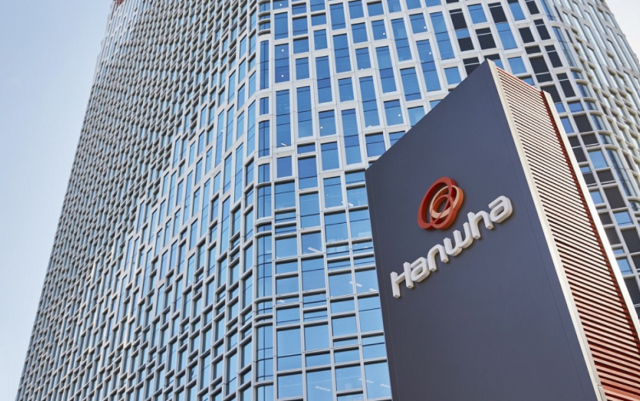
As of 10:56 a.m., Hanwha Solutions was trading at 32,750 won, up 7.73 percent from the previous session. The stock had surged as much as 26.81 percent to an intraday high of 38,550 won shortly after the opening bell before trimming gains.
OCI Holdings, another South Korean solar-materials producer seen as a potential beneficiary, rose 2.66 percent to 250,500 won after jumping as much as 18.24 percent to 288,500 won earlier in the session.
The rally came after U.S. President Donald Trump signed a proclamation Thursday imposing minimum import prices on polysilicon and major solar products alongside a 15 percent tariff on downstream polysilicon derivatives under Section 232 of the Trade Expansion Act. The measures take effect Dec. 4.
Washington set minimum import prices at $21 per kilogram for polysilicon, $100 per kilogram for ingots and wafers, 22 cents per watt for solar cells and 38 cents per watt for solar modules.
Imports entering below those levels will face an additional charge equal to the gap between their declared value and the minimum price. In addition, ingots and downstream polysilicon derivatives will face a 15 percent tariff.
The measures apply broadly rather than exclusively to China, but their biggest competitive impact is expected to fall on low-cost Chinese and China-linked supply chains that have come to dominate global solar manufacturing.
The White House said global polysilicon production has increased more than 270 percent since 2020, while the U.S. share of global production capacity plunged from 50 percent in 2005 to less than 2 percent in 2024.
For Hanwha Solutions, the advantage lies increasingly inside the United States.
Its solar unit Hanwha Qcells is building out a vertically integrated manufacturing chain at its Cartersville complex in Georgia, covering ingots, wafers, cells and finished modules.
Qcells began producing solar cells at the facility in June and expects the plant to reach annual capacity of 3.3 gigawatts each for ingots, wafers and cells and 3.5 GW for modules when fully operational. Together with its Dalton plant, Qcells expects its U.S. module capacity to reach 8.6 GW.
That domestic footprint leaves Hanwha less exposed to import barriers than solar manufacturers dependent on bringing finished cells and modules into the United States and could give it greater pricing power as Washington raises the floor for imported products.
The Trump administration is also offering incentives to companies willing to expand U.S. production of polysilicon, ingots, wafers and cells, potentially giving Hanwha another route to offset tariff costs as it deepens investment in its American supply chain.
OCI Holdings stands to benefit from a different part of the new regime.
Its Malaysian subsidiary OCI TerraSus produces polysilicon, which will be subject to the new $21-per-kilogram minimum import price but not the additional 15 percent tariff imposed on downstream products such as ingots, wafers, cells and modules.
The price floor could help narrow the cost disadvantage faced by non-Chinese polysilicon makers against heavily discounted supply in the global market, increasing the relative appeal of OCI's Malaysian output to U.S. solar manufacturers seeking non-Chinese supply.
The proclamation also gives special treatment to products from major U.S. trade partners including South Korea, Japan and the European Union. For covered Korean products, the combined existing U.S. tariff and additional Section 232 duty will be capped at 15 percent.
Washington left room for further relief as well, allowing the Commerce Department and U.S. Trade Representative to modify the minimum-price and tariff measures for trading partners that adopt substantially equivalent import restrictions.
The latest action marks a sharp turn from the uncertainty Korean solar companies faced before the Section 232 decision, when Seoul had urged Washington to avoid sweeping restrictions that could penalize Korean investment in the U.S.
AJP Takeaways
• Hanwha Solutions shares rose 7.73 percent to 32,750 won as of 10:56 a.m. on Aug. 7, 2026, after surging as much as 26.81 percent earlier in the session.
• The United States will introduce minimum prices for polysilicon and key solar components and impose a 15 percent tariff on certain solar products starting Dec. 4, 2026.
• Hanwha Solutions could benefit because its solar unit, Hanwha Qcells, produces key solar components in Georgia, reducing its exposure to U.S. import barriers.
• OCI Holdings could also benefit because polysilicon produced by its Malaysian subsidiary Terasys will not face the new 15 percent tariff and will instead be subject to the minimum-price rule.
• The measures could weaken the price advantage of Chinese solar suppliers in the U.S. market, improving the competitive position of Korean and other non-Chinese producers.

Copyright ⓒ Aju Press All rights reserved.