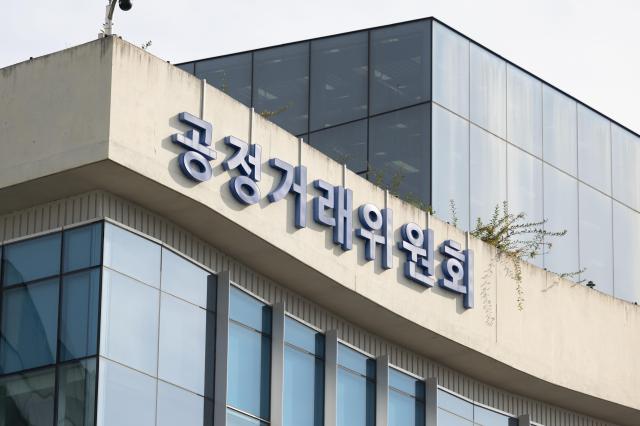
Examiners at the Fair Trade Commission (FTC) allege that the primary dealers, or PDs, coordinated bidding yields and exchanged detailed information ahead of Korean Treasury bond auctions between January 2020 and June 2023.
The financial firms deny any rigging, arguing that discussions among dealers were part of routine efforts to gauge yields, supply and demand in a market where participants submit multiple bids at different prices and volumes.
The FTC is expected to hold full-commission hearings on Aug. 19 and 20 to determine whether the conduct violated competition law and, if so, what sanctions should follow.
The case involves 10 securities firms — Kyobo Securities, Daishin Securities, Meritz Securities, Mirae Asset Securities, Samsung Securities, Shinhan Securities, NH Investment & Securities, KB Securities, Korea Investment & Securities and Kiwoom Securities — as well as KB Kookmin Bank, NongHyup Bank, Industrial Bank of Korea, Hana Bank and Korea Development Bank.
The FTC secretariat sent its examiner's report to the firms in March last year after an investigation that began in 2023, concluding that communications among dealers went beyond ordinary exchanges of market views and amounted to coordination over bidding yields and other auction information.
That assessment remains subject to review by the full commission and does not constitute a final finding of wrongdoing.
The financial firms argue that the structure of Korea's government bond auctions makes coordinated pricing difficult.
Dealers can submit multiple bids at different yields and amounts, while each institution enters an auction with different inventories, client orders and trading strategies. The firms say exchanging views about market conditions therefore cannot by itself demonstrate an agreement to fix auction outcomes.
The potentially bigger battle awaits.
FTC examiners have calculated the relevant sales tied to the alleged conduct at about 76.23 trillion won, essentially using the value of bonds awarded through the auctions as the base for calculating possible penalties.
The firms argue that treating the face value of government bonds as sales greatly exaggerates the economic benefit generated by the transactions. Unlike the sale of ordinary goods, they say, buying a 10 billion won government bond does not mean a dealer earned 10 billion won in revenue.
They contend that the calculation should instead reflect actual income from interest, trading spreads, commissions or other revenue generated by the bond business.
The firms are also pressing the FTC to exclude bonds purchased purely on behalf of clients.
A substantial portion of PD auction participation involves dealers submitting orders requested by customers rather than buying securities for their own books. Financial firms argue that where a dealer simply executes a client's order and earns a commission, the entire value of the bond should not be counted as the dealer's own sales.
Excluding such agency transactions could substantially reduce the amount on which penalties are calculated.
The FTC, however, has publicly denied that it is considering abandoning bond award values in favor of operating revenue as the penalty base.
In a July 29 clarification responding to a Korean media report, the regulator said it had not considered calculating penalties on the basis of operating revenue instead of the amount of government bonds awarded.
That leaves the definition of "relevant sales" as one of the most consequential questions before the full commission.
Applying the statutory maximum cartel penalty of 20 percent to 76.2 trillion won would produce a purely theoretical ceiling of about 15.2 trillion won.
The actual figure would be far lower than that ceiling and will depend on how the commission defines relevant sales, judges the seriousness of any violation and applies increases or reductions to individual firms.
Korean media reports have put preliminary penalty calculations anywhere from around 5 trillion won to more than 11 trillion won depending on the assumed base rate, underscoring how much remains unsettled before the commission's ruling.
Even the lower end would dwarf previous FTC cartel penalties.
Another variable is leniency. Daishin Securities, Samsung Securities and Shinhan Securities have been reported to have applied under the FTC's cartel leniency program, although the commission has not publicly confirmed their status.
Under the system, a qualifying first self-reporter can receive full exemption from an administrative fine, while the second can receive a 50 percent reduction, subject to requirements including cooperation with the investigation.
Beyond the size of any penalty, the case carries broader implications for the functioning of Korea's sovereign debt market.
Primary dealers form the backbone of the government bond distribution system. In return for preferential access to auctions and other benefits, they are required to participate regularly in government debt sales, underwrite issuance and provide liquidity in the secondary market.
The Ministry of Economy and Finance provided auction-related data to the FTC during the investigation while stressing both the need to prevent collusion and the importance of considering the potential impact of sanctions on the PD system and the broader government bond market.
Heavy penalties could strain the capital positions of affected financial institutions, while restrictions on major dealers could disrupt liquidity at a time when foreign participation in Korean government bonds is growing.
The commission must ultimately decide not only whether dealers crossed the line from exchanging market views into illegal coordination, but also how the economics of a government bond auction should translate into a competition-law penalty.
After reviewing the firms' responses and evidence, the FTC may issue corrective orders and financial penalties and decide whether any of the firms or individuals involved should be referred for criminal prosecution.
_________________________________________________________________________________
AJP Takeaways
South Korea's Fair Trade Commission is preparing to rule on alleged bid collusion involving 15 primary dealers in Korean government bond auctions between January 2020 and June 2023.
FTC examiners say the affected bond purchases totaled 76.2 trillion won ($53.6 billion), while the banks and securities firms deny collusion and describe their communications as routine market information-sharing.
A key dispute is whether the full value of the government bonds can be used to calculate antitrust fines, with the eventual ruling potentially carrying implications for Korea's primary-dealer system and government bond market.
Copyright ⓒ Aju Press All rights reserved.