


Latest by
-
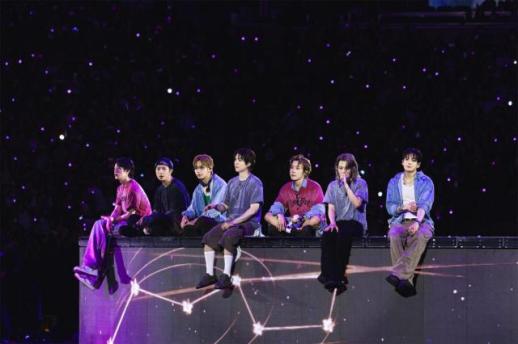 ARMY answers Grammys as BTS lets music speak Two sold-out nights at MetLife Stadium passed without a word from the stage about the group's Grammy withdrawal. The jumbotron told a different story. For two and a half hours at MetLife Stadium in East Rutherford, New Jersey, on Saturday night, the biggest band in the world played 23 songs and said nothing at all about the Grammy Awards. This was three days after the group had announced it would not submit its music to the 69th ceremony. The omission was noticeable enough that Billboard's reviewer flagged it, reporting that no direct extension of the statement came from the stage, and that RM instead told the crowd he wanted to stay positive and would never take their love for granted. The statement itself, posted on July 29 to all seven members' Instagram accounts, ran to three sentences. "We have decided not to submit to the Grammys this year," it read. "We hope that music can be heard and loved as music itself, rather than being divided by region or language. We thank ARMY and everyone who is always with us." No grievance was named, no condition set for returning, and no mention made of the new category that had prompted the decision. Whatever the group had to say on the subject, it had said, and evidently considered the matter closed. The audience did not consider it closed. Before the encore, when personalized signs from the floor went up on the stadium screens, the cameras lingered on messages that had nothing to do with love or gratitude. Fans held up placards and cardboards with messages written on them: "BTS Are Bigger Than the Grammys," "Who Needs a Grammy When You Have an ARMY?" and "ARMY's Winner Album of the Year, BTS, ARIRANG." One sign read, "Beyond categories, the music is ours." That last one is a more precise statement of the argument than anything produced by the institution it criticizes, and it was written by hand, on cardboard, by someone who paid for a ticket. Recording Academy CEO Harvey Mason Jr. needed considerably more words to make his case, and made a weaker one. Responding on July 29 to the group's withdrawal, he said he was saddened but understood and respected the decision, then moved to correct what he saw as a misreading of the new Best Asian Pop Music Performance category. It was created to celebrate the depth and diversity of Asian pop, he said, and more categories mean more artists recognized, never to divide but to expand who is recognized by the Recording Academy's 15,000 voters. He added that submitting in a genre category does not exclude an artist from the General Field, and that recognition in one and recognition in the other are not mutually exclusive. He was defending the rulebook against an objection that was never about the rulebook. Nobody has claimed the Recording Academy formally bars Asian artists from Record, Song, or Album of the Year. The claim is that those 15,000 voters considered BTS five times between 2021 and 2023, during the group's commercial peak, and declined five times, and that the sorting has already been happening without any rule requiring it. A homemade sign got to the heart of this in six words. The chief executive took several paragraphs and arrived somewhere adjacent. This is what has changed in the week since the announcement, and it is why the story has not settled. The refusal is no longer in the group's hands, and the argument is being carried by people who did not clear it with anyone. That distinction matters because of the criticism the withdrawal drew in Seoul. Korean commentators noted quickly that this might be strategy rather than principle, pointing out that most of ARIRANG is in English and would not have qualified for the Asian pop category anyway, and that the General Field was never a realistic prospect. The reasoning is sound and worth taking seriously. HYBE has a communications department, and communications departments do not issue statements from seven accounts simultaneously by accident. What HYBE does not have is control over what people write on cardboard. Nobody approved "Who Needs a Grammy When You Have an ARMY?" and the camera operator who put it on a screen the size of a house was making an editorial choice in real time. A corporate statement can be walked back, clarified, softened in a follow-up interview. A stadium cannot. The venue itself supplied the rest of the argument without anyone needing to make it. BTS had already played MetLife once this year before Saturday, performing "Dynamite" at the first World Cup final halftime show on July 19 alongside Madonna, Shakira, Coldplay and Justin Bieber, in front of the largest television audience available on the planet. "Dynamite" is the song that earned the group its first Grammy nomination in 2021, and it is performed entirely in English, meaning it would not qualify for the Asian pop category the Recording Academy has now built for artists like them. The song that opened the door in 2021 would be turned away at the new one. The show that followed was not the work of a group seeking anyone's approval. Reviewing Saturday night, NJ Arts described members who looked visibly older and harder, dressed in black behind dark sunglasses, with tattoos and weathered faces visible on the overhead screens. The famous precision had loosened into something easier, the members lingering with one another and wandering the stage rather than holding formation. Thirteen of the 23 songs came from ARIRANG, an album built around Korean culture, and at one point the stage was ringed in light arranged to evoke the taegeuk at the center of the South Korean flag. Six weeks after the Recording Academy announced a category for music that makes meaningful use of an Asian language, BTS filled an American football stadium twice with a show that centers Korea and asked nothing of anyone. Submissions for the 69th Grammy Awards close on August 28, and nominations arrive in November. Whoever is named in the Best Asian Pop Music Performance category will be named without the participation of the largest act the category was designed to attract, and the Recording Academy will have to explain the absence to an audience that has already stated its position in marker on cardboard. BTS plays Gillette Stadium in Foxborough on Wednesday and Thursday, then Baltimore, Arlington, Chicago, and four nights in the Los Angeles area in September, where the ceremony itself will be held in February. 2026-08-04 16:36:43
 -
 Regulatory Delays and Leverage Restrictions Increase Volatility in Major Stocks Concerns have been raised that the delay in policy implementation by financial authorities, combined with the asset allocation stance of national pension funds, has exacerbated the structural selling pressure on single stock leveraged exchange-traded funds (ETFs), contributing to increased downside volatility in the KOSPI index.According to the Korea Exchange, the KOSPI index recorded 8,228.70 on May 27, the day single stock leveraged ETFs were launched, and continued to rise, peaking at 9,114.55 on June 22. However, it then entered a sharp correction phase, plummeting approximately 31.34% to 6,257.45 within a month and a half. The index experienced a dramatic rollercoaster, dropping 10.84% in a single day on July 28, then surging 17.91% on July 31, only to fall again by 5.12% the following day.Market analysts point out that while authorities approved the launch of single stock leveraged ETFs during a period of index overheating, they later introduced stringent regulations as the market entered a downturn, thereby increasing volatility.As of July 30, the total assets under management (AUM) of single stock leveraged ETFs had plummeted by 66.7% (11.746 trillion won) to 5.8533 trillion won, down from a peak of 17.5993 trillion won on June 25, due to the market decline and regulatory pressures.During the same period, despite an influx of investors increasing the trust principal from 11.6153 trillion won to 18.6428 trillion won, the value of the underlying assets fell sharply, leading to a vicious cycle where liquidity providers and asset management firms were forced to liquidate and redeem physical stocks for risk management. Rather than curbing individual speculation, the regulations have triggered a secondary sell-off of large-cap stocks due to the inability to maintain ETF setups.This situation has led to significant fluctuations in the large-cap stock market, with institutions engaging in massive trading of stocks like Samsung Electronics and SK Hynix. For instance, on July 2, SK Hynix saw a net selling of 3.6044 trillion won by institutions, only to reverse to a net buying of 2.5235 trillion won the next day. Similarly, Samsung Electronics shifted from a net buying of 1.2863 trillion won on July 29 to a net selling of 1.2192 trillion won by August 3.There are also concerns regarding the role of pension funds. Critics argue that while the National Pension Service has been active in buying during market upswings, it has failed to act as a stabilizing force during downturns due to procedural constraints and target allocation limits.A financial industry insider stated, "Even if there is a short-term rebound in buying due to strong earnings from U.S. tech giants, the structural supply-demand distortions caused by policy delays will likely keep downside volatility risks in the KOSPI persistent for the time being." 2026-08-04 16:36:00
 -
Concerns Raised Over Oversight in $17 Million Muan International Language and Culture Center Project The Muan Office of Education has come under scrutiny for proceeding with a 17 billion won ($13 million) construction project for the Muan International Language and Culture Center without the required environmental notifications, raising concerns about oversight and management.Notably, construction continued on Sundays, a fact the contracting agency, the Office of Education, claimed it was unaware of, highlighting significant gaps in the project’s oversight system.According to the Muan Office of Education, the project involves remodeling the main building and dormitory, as well as reconstructing parking lots and playgrounds at the Glocal Education Center in Gojol-ri, Muan-eup, with a total budget of approximately 17.7 billion won. The construction began on March 4 and is scheduled to be completed by August 30.However, an investigation revealed that the relevant environmental department had not received any notifications regarding dust emissions or specific construction activities related to this project.A representative from the Muan County Environmental Department stated, "As of now, there have been no reports submitted regarding dust emissions or specific construction activities related to this project."Despite the lack of notifications, construction has continued, including work on Sundays. Furthermore, the construction supervisor from the Muan Office of Education claimed to be visiting the site frequently but failed to recognize that essential environmental notifications had not been completed prior to the start of construction.The construction supervisor is responsible for ensuring the quality and safety of the work, as well as compliance with contractual obligations and relevant laws. The fact that the failure to report was not identified until after construction began raises questions about whether the review of construction documents and site management were conducted adequately.The head of the facilities team at the Muan Office of Education stated, "We determined that there are no residential areas within 300 meters, so we considered it exempt. If it needs to be corrected in consultation with the county, we will take immediate action."Reporting dust emissions and specific construction activities is a legal requirement that must be fulfilled before starting construction for projects of a certain scale. The relevant administrative agency will investigate whether the project falls under the reporting requirements and whether any legal violations occurred before deciding on administrative actions.In light of this situation, local construction industry representatives have pointed out that the failure to confirm basic legal notifications in a public project worth 17 billion won is not solely the contractor's issue but also raises concerns about whether the oversight system of the contracting agency is functioning properly. 2026-08-04 16:28:10
-
Dongyang Life to Proceed with Stock Exchange with Woori Financial Group as Planned Dongyang Life will proceed with the comprehensive stock exchange process with Woori Financial Group as scheduled.On August 4, Dongyang Life held a board meeting and announced that it has approved the decision not to exercise the termination right related to the comprehensive stock exchange agreement with Woori Financial Group, proceeding according to the planned schedule.Previously, the two companies signed a comprehensive stock exchange agreement in April, which included a condition allowing for contract termination if the buyback amount exceeded 200 billion won.Although the final results of the stock buyback slightly exceeded 200 billion won, Dongyang Life decided not to exercise the termination right, considering that the clause was an option rather than a mandatory condition. The company aims to protect the rights of shareholders opposed to the stock exchange while minimizing uncertainty and confusion for shareholders who anticipated the exchange.A Dongyang Life official stated, "The decision not to exercise the termination right prioritizes the protection of minority shareholders' interests and trust in the market. We will do our best to successfully complete the scheduled stock exchange process and enhance sustainable growth and value for all shareholders based on synergy with Woori Financial Group."* This article has been translated by AI. 2026-08-04 16:28:10
-
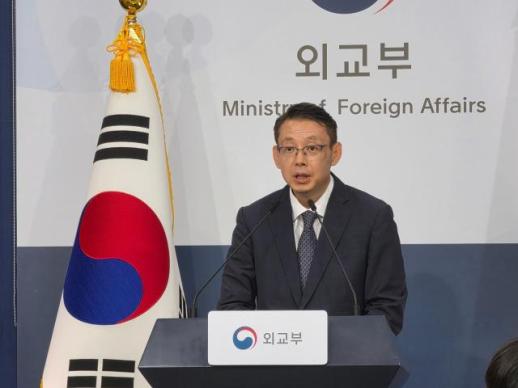 Japan calls South Korea partner, claims Dokdo again SEOUL, August 04 (AJP) - Japan's annual defense white paper describes South Korea as an important neighbor and a partner it should work with on shared international challenges. The same document, published Tuesday, again calls Dokdo, an islet located in the East Sea, Japanese territory. The government lodged a formal protest and demanded immediate withdrawal of the claim, which has appeared in the white paper every year since 2005, now 22 years running. Dokdo consists of two main islets, Dongdo and Seodo, and 89 smaller rocks, covering roughly 187,554 square meters in the East Sea. It sits 87.4 kilometers (54.3 miles) from Ulleungdo and 157.5 kilometers from Japan's Oki Islands. On a clear day, it is visible from Ulleungdo. It is not visible from Oki. The islets carry a South Korean address, Dokdo-ri, Ulleung-eup, Ulleung County, North Gyeongsang Province. A police detachment has been stationed there since 1954, when a lighthouse also began operating, and a small number of civilians are registered as residents. The Foreign Ministry issued a spokesperson's commentary saying the government strongly protests the repetition of an unjust territorial claim over what it called historically, geographically and legally South Korean territory. "The government makes clear once again that Japan's unjust claim has no effect whatsoever on our sovereignty over Dokdo," foreign ministry spokesperson park Doo-soon said. He added that South Korea will respond firmly to any Japanese provocation regarding Dokdo. Japan's cabinet approved the 2026 white paper earlier the same day. The text says territorial issues remain unresolved over what it calls Japan's inherent territory in the Northern Territories, meaning the four southernmost Kuril Islands held by Russia, and Takeshima, the Japanese name for Dokdo. The wording matched previous editions. So did the maps. A chart of the security environment around Japan again marked the islets as a territorial dispute, a surveillance map drew the surrounding waters as Japanese territorial sea, and a diagram explaining South Korea's air defense identification zone labeled the islets Takeshima. The partner language has now run for three years. Material on South Korea took up less space than last year. This was the first defense white paper issued under Prime Minister Takaichi Sanae. The Dokdo passage survived the change of government intact. Japan's Foreign Ministry made the same claim in its diplomatic bluebook on April 10, prompting the ministry to summon Matsuo Hirotaka, the Japanese Embassy's minister-counselor, to hear a protest in person. In July last year, deputy chief of mission Iseki Yoshiyasu was called in over the previous defense white paper. That difference in sight lines between Ulleungdo and Oki runs through the historical record. The earliest reference appears in the Samguk Sagi, the 12th-century history of the Three Kingdoms, which records that the Silla general Isabu subjugated the island polity of Usan-guk in 512. Usan-guk was centered on Ulleungdo and its territory included the smaller islets to the southeast. The Sejong Sillok Jiriji, a geographical survey completed in 1454, states that Usan and Mureung lie in the sea due east of Uljin County, and that the two are close enough for one to be seen from the other when the weather is clear. Mureung is Ulleungdo. Usan is Dokdo. Only Dokdo satisfies the visibility condition. The Sinjeung Dongguk Yeoji Seungnam, an expanded national gazetteer published in 1531, repeated the description and included Usando on its maps. Japan's own records point in the same direction. In 1877, the Meiji government's Grand Council of State, the Dajokan, responded to an inquiry from the Home Ministry about whether Ulleungdo and one other island should be entered into Shimane Prefecture's land registry. The directive instructed officials to bear in mind that Ulleungdo and the other island had nothing to do with Japan. The Dajokan was the highest organ of state at the time, with authority over legislation, administration and the judiciary. Its ruling on a question of territorial extent bound the entire government, not just the ministry that asked. An attached map, the Gijukdo Yakdo, identifies the second island as Dokdo. That directive followed decades of earlier settlement. After the Joseon fisherman An Yong-bok crossed to Ulleungdo and was seized by Japanese fishermen in 1693, the two governments spent three years arguing over access. In 1696 the Tokugawa shogunate banned Japanese vessels from sailing to Ulleungdo, closing the dispute. In October 1900, the Korean Empire issued Imperial Decree No. 41, elevating Ulleungdo to Uldo County and defining the county magistrate's jurisdiction as Ulleungdo, Jukdo and Seokdo. Seokdo means rocky island, a rendering of the local name for Dokdo. The decree was promulgated in the official gazette on Oct. 27, five years before Japan acted. Japan's incorporation came on Feb. 22, 1905, through Shimane Prefecture Public Notice No. 40. It was issued during the Russo-Japanese War, was never published in Japan's national gazette, and was not communicated to the Korean government. By then Korea's capacity to object had already been cut away. The Japan-Korea Protocol of February 1904 permitted Japanese forces to use Korean territory for military purposes, and the first Japan-Korea Agreement of August 1904 installed Japanese advisers inside the Korean government. Japan built a naval watchtower on the islets in 1905 to track the Russian fleet. Uldo County magistrate Sim Heung-taek learned of the incorporation only in March 1906, from a Shimane survey party that landed on Ulleungdo. He reported to his superiors that an island belonging to his county had been declared Japanese. The State Council responded through Directive No. 3 that the claim was entirely without foundation and ordered a further investigation. After Japan's defeat in World War II, the Allied powers took the islets out of Japanese hands. Supreme Commander for the Allied Powers Instruction No. 677, issued on Jan. 29, 1946, suspended Japanese administrative authority over Ulleungdo, Dokdo and Jeju Island. A follow-up instruction that June placed Dokdo outside the area open to Japanese fishing. Japan rests its modern case on the 1951 Treaty of San Francisco. Article 2 names Jeju, Geomundo and Ulleungdo among the territories Japan renounced, and does not name Dokdo. Tokyo reads that omission as recognition of Japanese title. Seoul reads the list as illustrative rather than exhaustive, covering three of the roughly 3,000 islands surrounding the peninsula, and argues that the treaty did not reverse SCAPIN 677 or the Cairo Declaration of 1943, which committed the Allies to stripping Japan of territory taken by violence and greed. Japan also argues that its sovereignty was established in the 17th century, when the Oya and Murakawa merchant houses of Yonago received shogunal licenses to sail to Ulleungdo and used Dokdo as a waypoint. South Korea points out that the same shogunate banned those voyages in 1696, and that a navigation license is not a claim of title. South Korea declared sovereignty over the adjacent seas including Dokdo in January 1952, in what became known as the Peace Line. Japan protested that month. In 1954, Tokyo proposed taking the question to the International Court of Justice, and Seoul refused. Japan renewed the proposal in 1962 and again in 2012, and was refused both times. The South Korean position has not moved since. There is no territorial dispute to adjudicate, because the islets are South Korean territory under effective administration. 2026-08-04 16:21:27
 -
Shifts in Investment Trends: Retail Investors Favor Semiconductors, Foreign Investors Opt for Autos The KOSPI has experienced a significant decline over the past month, leading to stark differences in investment choices among market participants. Retail investors have focused heavily on semiconductor stocks, while foreign investors have increased their stakes in automotive, defense, and financial sectors.According to the Korea Exchange, from July 3 to August 3, the KOSPI fell by 18.18%, dropping from 7,648.09 to 6,257.45. During the same period, trading volume reached approximately 747.69 trillion won.Retail investors made substantial net purchases of SK Hynix, Samsung Electronics, and Samsung Electro-Mechanics. This trend reflects ongoing optimism regarding the demand for high-bandwidth memory (HBM) driven by growth in the artificial intelligence (AI) sector. Additional buying interest was noted in stocks like JUSUNG Engineering, Rainbow Robotics, and Hanwha Solutions.In contrast, foreign investors concentrated on automotive, defense, and holding company stocks. Among the top net purchases by foreign investors were SK Square, LG Innotek, Hyundai Motor, Hyundai Rotem, and Mirae Asset Securities. This shift indicates a movement of funds toward stocks with relatively stable earnings.Institutional investors maintained a balanced approach, investing across semiconductor, financial, telecommunications, and energy sectors. Notable stocks in their portfolios included Samsung Electronics, SK Hynix, KB Financial, SK Innovation, and SK Telecom. This diversification suggests a strategy to prepare for potential sector rotations.The performance of various sectors also highlighted investor preferences. The information technology sector fell by 26.52%, while the semiconductor sector dropped by 24.09%. Consumer discretionary and securities sectors also saw declines of 15.12% and 12.24%, respectively. Conversely, the banking sector rose by 2.76%, marking the only positive return.A securities industry official commented, "With changes in U.S. tariff policies, concerns over economic slowdown, and increased uncertainty in earnings, investors appear to be adopting different strategies between growth stocks and defensive stocks."* This article has been translated by AI. 2026-08-04 16:20:00
-
KOSDAQ Sees Positive Momentum Amid Single-Stock Leverage Regulations KOSDAQ is experiencing a rare positive trend. While the KOSPI index struggles, KOSDAQ has seen three consecutive days of gains. Analysts suggest this may be linked to the recent implementation of two rounds of supplementary regulations on single-stock leveraged exchange-traded funds (ETFs) by financial authorities last month. As trading volume and value have sharply decreased, short-term funds that were previously concentrated in large semiconductor stocks are showing signs of diversifying into KOSDAQ. Market observers believe this could be an early indication of a regulatory 'balloon effect' taking shape.According to the Korea Exchange, the trading volume for 16 single-stock leveraged and inverse ETFs based on Samsung Electronics and SK Hynix reached 138.99 million shares on August 4. This represents a 6.3% decrease from the previous trading day on August 3, which saw 148.30 million shares traded. Compared to the trading volume of 1.23 billion shares on July 30, just before the regulations took effect, this marks a staggering 88.7% drop. The trading value also fell to 1.25 trillion won, less than half of the 3 trillion won recorded on the first day of the increased deposit requirement on July 31.The decline in trading activity is particularly evident in major products. The 'KODEX SK Hynix Single-Stock Leverage' ETF saw its trading volume plummet from 488.90 million shares on July 30 to just 49.72 million shares on August 4, a decrease of 89.8%. Similarly, the 'KODEX Samsung Electronics Single-Stock Leverage' ETF dropped from 162 million shares to 19.58 million shares, a decline of 87.9%. On this day, no single-stock leveraged ETF exceeded 1 trillion won in trading value.This trading slowdown is attributed to the tightening of regulations by financial authorities. Starting July 31, the authorities raised the minimum deposit requirement for single-stock leveraged ETFs from 10 million won to 30 million won and eliminated the previous practice of recognizing substitute securities such as stocks, ETFs, and bonds when calculating the deposit. This has raised the entry barrier for investors, leading to a decrease in short-term trading demand.As a result, there are changes in the flow of funds in the stock market. Funds that were previously concentrated in large semiconductor stocks through single-stock leveraged ETFs are now shifting towards KOSDAQ and growth stocks, which have been relatively overlooked. Lee Jae-won, a researcher at Yuanta Securities, noted, "The anticipated 'spillover effect from the easing of concentration in large semiconductors to smaller growth stocks' is becoming a reality following the implementation of the single-stock leveraged ETF regulations last week. This indicates a period of warming across the broader market."Indeed, KOSDAQ closed at 780.72, up 43.37 points (5.88%) from the previous trading day. This marks three consecutive days of gains since the implementation of the single-stock leverage regulations. Notably, the biotechnology sector led the rise, with stocks like Alteogen (up 9.29%), ABL Bio (up 13.24%), and LigaChem Bio (up 15.20%) showing strong performance.Analysts also point to the increased price attractiveness of KOSDAQ, which had previously underperformed compared to KOSPI, as a factor stimulating buying interest. Lee Jae-won added, "During the sharp decline, stocks whose earnings estimates did not drop as much as their prices have become attractive due to excessive valuation declines. Additionally, policies such as the announcement of pension fund benchmarks and premium index launches are moving from announcement to actual implementation." 2026-08-04 16:20:00
-
Surge in AI-Driven Memory Prices Hits Public Security Equipment Market The surge in memory prices due to increased investment in artificial intelligence (AI) servers is impacting the public procurement market. Domestic security companies supplying firewalls and intrusion prevention systems (IPS) through the Multi-Agency Supply Contract (MAS) with the Public Procurement Service are facing significant cost burdens as memory prices have soared since contract signing, yet they are unable to adjust delivery prices.According to the Public Procurement Service and the security industry on August 4, companies such as AhnLab, Xgate, and SecuI have been supplying firewalls and IPS to public institutions through the MAS. IPS devices analyze network traffic in real-time to block malicious activities and require higher-performance memory compared to standard IT equipment to handle large volumes of data.The registered IPS products range from several million won to nearly 50 million won. Xgate's products are priced between 18.92 million and 40.15 million won, AhnLab's range from 25.21 million to 49.50 million won, and SecuI offers products priced up to 49.83 million won. The industry explains that higher-end equipment, which typically has a greater memory capacity, is more significantly affected by the recent surge in memory prices.The challenge lies in the inability to reflect the increased costs in delivery prices after contracts are signed. MAS contracts for firewall equipment are typically established on an annual basis, making it difficult to adjust prices even when component costs rise sharply.According to market research firm DRAM Exchange, the fixed transaction price for general-purpose DRAM (DDR4 8Gb 1Gx8) has been on the rise since the end of last year. The average fixed transaction price in July was $24, up 14.3% from the previous month’s $21, marking the highest level on a monthly average basis. The significant increase in DRAM prices since late last year has also raised the manufacturing costs for servers and security equipment.A security industry representative stated, "Compared to the contract prices from last year, memory prices have risen significantly, and the cost burden is considerable. Public projects cannot easily adjust contract prices, so we are continuing deliveries at the expense of profitability."Another industry source noted, "While the cost is burdensome, it is also difficult to secure the necessary memory in a timely manner. In some cases, companies are paying extra to ensure supply to fulfill contracts."The industry believes that as the volatility of memory prices increases due to the spread of AI, there is a need for institutional improvements that can reflect rapid cost increases in public procurement contracts. The Public Procurement Service has also recognized the burden on companies due to rising raw material prices and is exploring various ways to improve contract systems in response to the semiconductor price surge, including requesting cost breakdowns from some suppliers. 2026-08-04 16:16:00
-
 Offshore NDF trading behind a third of won's March decline: BOK SEOUL, August 04 (AJP) - Offshore non-deliverable forward trading accounted for an estimated one-third of the won’s depreciation in March, highlighting the influence overseas positions over Korea’s domestic FX market. The impact was about four times greater overnight than during Seoul trading hours, when deeper liquidity and a broader range of transactions diluted the effect of NDF flows. The Bank of Korea on Tuesday released estimates of the impact of NDF trading on the dollar-won exchange rate, based on a vector autoregression model that accounted for factors including interest-rate differentials and broad movements in the US dollar. Since the beginning of 2024, foreign investors’ net NDF purchases were estimated to have lifted the dollar-won rate by an average of about 2 won a month, with every $100 million in net purchases adding roughly 0.1 won. In March, the transactions added an estimated 26 won to the dollar-won rate, equivalent to 33 per cent of the currency pair’s 79-won monthly increase. In May, they contributed about 7 won, or 26 per cent of that month’s 27-won rise. Foreign investors’ net NDF purchases reached $53.9 billion in the first half of the year, the largest amount recorded for any six-month period. NDFs allow investors to agree on a future exchange rate without exchanging the underlying currencies, with only the difference between the contracted and settlement rates paid in dollars at maturity. Although the contracts are settled offshore, they can affect the domestic spot market when financial institutions hedge their exposure, with large NDF purchases by investors betting on a weaker won generating additional dollar demand and placing upward pressure on the exchange rate. Governor Shin Hyun-song had previously identified the same transmission mechanism as a factor behind the won’s weakness, describing it at his April confirmation hearing as a case in which “the tail wags the dog” and explaining at a May press conference that offshore positions could spill into the domestic market through financial institutions’ hedging. Across the 10 months with the largest NDF net purchases since 2024, the trades added an average of about 12 won to the exchange rate overnight, compared with roughly 3 won during daytime trading. Global developments were typically priced first through offshore NDFs while the Seoul market was closed, with thinner volumes and lower liquidity magnifying their impact, while deeper daytime liquidity and simultaneous activity in spot and other foreign-exchange markets reduced their influence. The BOK said Korea’s shift to round-the-clock foreign-exchange trading on July 6 could draw won transactions away from the offshore NDF market by allowing global developments to be reflected in onshore dollar-won trading in real time. The central bank cautioned that NDFs were only one of several forces driving the exchange rate, alongside the global dollar, interest-rate differentials, cross-border capital flows and market sentiment. A gradual shift towards onshore spot and deliverable forward transactions could deepen the market, improve transparency and reduce the extent to which concentrated offshore positions amplify short-term movements in the won, the BOK said. 2026-08-04 16:12:37
 -
Chinese Stock Market Rises on Oil Stability and Nvidia Boost The Chinese stock market rebounded on August 4 after a decline the previous day. Analysts attribute the rise to improved investor sentiment following stabilization in international oil prices.On this day, the Shanghai Composite Index closed up 0.33% at 3,822.28, the Shenzhen Component Index rose 3.25% to 13,885.71, and the ChiNext Index increased by 5.64% to 3,488.97.The easing of Middle Eastern risks, as the United States postponed attacks on Iran, contributed to the positive market sentiment. Although international oil prices saw a significant drop the day before, they experienced a partial rebound. Market participants interpreted this as a reduction in fears of worst-case scenarios, such as a blockade of the Strait of Hormuz. As the world's largest oil importer, China's economy, which has a high manufacturing sector, benefits from stable oil prices.Additionally, the U.S. stock market showed strength the previous day, particularly in the big tech and AI sectors, which helped restore some investor confidence. This led to increased buying in Chinese stocks related to AI servers, semiconductor equipment, optical modules, and data centers.China's major financial institution, Zhongjin Securities, noted in a report that since late July, the index has fluctuated and entered a consolidation phase. They suggested that the Chinese stock market could enter a recovery phase in August after this adjustment, stating, "As more sectors show signs of rebounding from the bottom of the economic cycle, there will be an increasing number of areas with improved performance and supply-demand dynamics."Among the notable performers, the AI computing power rental sector saw significant gains. Companies such as Hangyun Technology, Hongjing Technology, and Qingyun Technology hit their daily price limits. According to a report from the China Data Communication Center, demand for AI computing power in the first quarter of this year surged by 417% compared to the previous year, while the effective supply growth rate was only 128%. This disparity has led to rising rental prices for data center computing power.Stocks related to optical modules also experienced gains. Dongshan Precision and Huilv Ecological Technology reached their daily price limits. Nvidia has begun shipping its next-generation Spectrum X CPO (optical module) switches to partner companies, and Broadcom has reportedly shipped a small quantity of CPO switches as well. This has led to evaluations that CPO production has officially entered the mass production stage.Meanwhile, the People's Bank of China set the yuan's central parity rate against the dollar at 6.7894 yuan, an increase of 0.0002 yuan from the previous day, reflecting a 0.003% decline in the yuan's value.* This article has been translated by AI. 2026-08-04 16:12:00