


Latest by
-
 KOSPI Falls Below 6,700 Amid Global Risk Aversion Geopolitical tensions in the Middle East have led to a surge in international oil prices, triggering a wave of risk aversion in global markets. Following a decline in the New York stock market, South Korea's stock exchanges experienced significant sell-offs, with both the KOSPI and KOSDAQ dropping more than 5%.On July 24, the Korea Exchange reported that the KOSPI closed at 6,690.02, down 406.87 points (5.73%) from the previous trading day. The index opened at 7,000.78, down 96.11 points (1.35%), and continued to decline throughout the session.The drop in the New York market was attributed to rising oil prices amid escalating tensions in the Middle East, raising concerns about a resurgence of inflation. Market participants feared that higher oil prices could delay the Federal Reserve's interest rate cuts, leading to increased selling pressure, particularly in technology stocks. This risk-averse sentiment carried over to the domestic market, where foreign investors focused their selling on large-cap stocks, including semiconductors.In the securities market, foreign investors sold a net 3.2685 trillion won, while institutions sold 1.9513 trillion won. In contrast, individual investors purchased a net 5.1783 trillion won.As volatility increased early in the session, both markets triggered sell-side circuit breakers. The Korea Exchange halted the effectiveness of sell orders in the securities market for five minutes at 11:23 a.m. A similar circuit breaker was activated in the KOSDAQ at 11:47 a.m.Among the top market capitalization stocks, SK Square fell 9.17%, Samsung Electro-Mechanics dropped 8.43%, SK Hynix declined 8.34%, Samsung Electronics fell 7.59%, Hyundai Motor decreased 7.18%, LG Energy Solution dropped 5.32%, Samsung C&T fell 5.00%, Samsung Life Insurance decreased 3.49%, and KB Financial Group fell 2.72%. In contrast, Samsung Biologics rose 10.08%, buoyed by strong second-quarter results.The KOSDAQ closed at 785.00, down 46.23 points (5.56%). The index opened at 816.39, down 14.84 points (1.79%), and continued to decline.In the KOSDAQ market, foreign and institutional investors sold a net 130.4 billion won and 358.7 billion won, respectively, while individual investors bought a net 488.8 billion won.Among the top KOSDAQ stocks, Rainbow Robotics fell 16.73%, Juseong Engineering dropped 13.97%, Wonik IPS declined 11.30%, IOTechniques fell 9.13%, PSK dropped 8.73%, EcoPro BM fell 8.29%, EcoPro decreased 7.12%, Rino Industry dropped 7.04%, ABL Bio fell 2.42%, Alteogen decreased 2.28%, and Pharma Research dropped 1.67%. Meanwhile, HLB rose 4.00% amid expectations for FDA approval of its bile duct cancer treatment.Lee Kyung-min, a researcher at Daishin Securities, stated, "The domestic market retreated as risk appetite waned due to heightened tensions in the Middle East. This week, both the KOSPI and KOSDAQ have experienced extreme volatility, triggering circuit breakers for five consecutive trading days."* This article has been translated by AI. 2026-07-24 16:04:00
 -
 Korean leaders meet Nvidia at San Francisco AI summit SEOUL, July 24 (AJP) - President Lee Jae Myung and a delegation of South Korea's leading executives and researchers are meeting Nvidia and its ecosystem partners at an AI summit in San Francisco this week to map out the country's push into artificial intelligence, the chipmaker said. The gathering builds on Nvidia founder and chief executive Jensen Huang's visit to Seoul last month, advancing what the company describes as a full-stack drive to widen Korea's AI infrastructure and expertise as the country angles to become a global hub for AI innovation. Huang is scheduled to meet Lee on the sidelines of the summit, alongside separate sessions with Korean and American business leaders. Lee departed Seoul for San Francisco on Friday at the start of a multi-nation overseas trip. On the eve of the summit, Huang hosted SK Group Chairman Chey Tae-won and teams from SK hynix, SK Telecom and Nvidia for dinner in Woodside, California — a warm-weather welcome to Silicon Valley for the visiting Korean executives. The two companies, longtime partners, said in June they would broaden their collaboration to jointly develop memory for Nvidia platforms spanning AI infrastructure, personal AI and physical AI. SK Telecom separately unveiled plans that month to build AI infrastructure supporting Korean innovation in physical AI and robotics. Nvidia and the Korea Advanced Institute of Science and Technology (KAIST) also announced a joint AI research lab in Seoul dedicated to agentic AI, the first such laboratory between a Korean university and a global technology company. 2026-07-24 16:03:16
 -
Global Inflation Concerns Rise as Oil Prices Hit $100 and U.S. Imposes New Tariffs As international oil prices surpassed $100 per barrel, the United States has imposed new tariffs on key trading partners, reigniting global inflation concerns. Rising oil prices are increasing production and transportation costs, while U.S. tariffs could elevate the prices of imported goods. This situation raises the possibility that central banks in major economies may delay interest rate cuts or consider further hikes.Brent Crude Surpasses $100 Amid Middle East Shipping ConcernsOn July 23, Brent crude for September delivery closed at $100.69 per barrel, a 7.04% increase, marking the first time it has exceeded $100 since May 22. West Texas Intermediate (WTI) also rose by 6.17%, finishing at $92.19 per barrel. Both oil benchmarks have seen gains for five consecutive trading days.Concerns over potential disruptions in oil transportation due to military conflicts in the Middle East have driven prices higher. The ongoing U.S.-Iran tensions have significantly reduced shipping traffic through the Strait of Hormuz, while Yemen's Iran-aligned Houthi group reported attacks on two Saudi oil tankers in the Red Sea.If both the Strait of Hormuz and the Bab el-Mandeb Strait are blocked, two major oil transport routes from the Middle East would be simultaneously threatened. Goldman Sachs has projected that if disruptions in the Strait of Hormuz persist, Brent crude could exceed $120 per barrel in the fourth quarter of this year. They also noted that if the Bab el-Mandeb Strait and the Suez Canal experience disruptions, prices could rise further.The surge in oil prices has also impacted the global bond market. With rising energy costs potentially driving inflation higher, concerns have grown that central banks may need to maintain elevated interest rates for longer or implement additional hikes, leading to a rise in government bond yields across major economies.The yield on the U.S. 10-year Treasury note rose to 4.703% on July 23 and climbed to 4.7135% during Asian trading on July 24, the highest level in 18 months. Germany's 10-year bond yield reached 3.205%, the highest since 2011, while the U.K.'s 10-year yield rose to 5.096%, marking a two-month high.U.S. Imposes New Tariffs on 60 Countries, Including South KoreaAdditionally, the U.S. has introduced a new tariff policy that could further increase inflationary pressures. The Office of the U.S. Trade Representative (USTR) announced on July 24 that it would impose tariffs of 10-12.5% on 60 trading partners, including South Korea, under Section 301 of the Trade Act. These countries account for 99.4% of total U.S. imports.The application of tariffs varies by country. For South Korea, Japan, and Switzerland, the combined tariff rate of the existing most-favored-nation (MFN) tariff and the new tariff will be set at a minimum of 12.5%. If the existing rate is below 12.5%, the additional tariff will be adjusted accordingly; if it is already above 12.5%, no new tariff will be applied.The same method will apply to the European Union and Taiwan, but the combined tariff rate will be set at 10%. In contrast, 17 countries, including the U.K., Canada, India, and Mexico, will see an additional 10% tariff added to existing rates, while the remaining countries will face a 12.5% additional tariff.The new tariffs took effect at 12:01 a.m. Eastern Time on July 24. Notably, crude oil, key petroleum products, natural gas, and some fertilizer materials are excluded from this tariff list.Market analysts believe that high oil prices will increase global energy and transportation costs, while the new tariffs will pressure the prices of imported goods entering the U.S., contributing to inflationary burdens in different ways.The decisions of major central banks regarding interest rates have also become more complicated. The European Central Bank (ECB) held its deposit rate steady at 2.25% on July 23, cautioning that the impact of rising energy prices on inflation has not yet fully materialized. If oil prices continue to rise, there are discussions about the ECB potentially raising rates further.The Federal Reserve and the Bank of England are also expected to keep rates unchanged at their upcoming monetary policy meetings next week. However, if oil prices continue to climb, the possibility of additional rate hikes cannot be ruled out.According to Reuters, financial markets estimate about a one-third chance that the Fed will raise rates next week, with expectations for two rate hikes by January 2024 already priced in.* This article has been translated by AI. 2026-07-24 15:56:00
-
Nongshim, Dunkin', and Tous Les Jours Announce Price Increases Nongshim, B.R. Korea, and CJ Foodville are set to increase prices on key products.According to industry sources on July 24, Nongshim will raise the ex-factory prices of its popular cup noodles, snacks, and beverages by an average of 5.8% starting August 1. The price adjustment will affect a total of 43 brands, including 18 types of cup noodles, 23 snacks, and 2 beverages. The average increase by category is 6.0% for cup noodles, 5.5% for snacks, and 7.7% for beverages.As a result, the recommended retail prices for major products will also rise. The price of the flagship cup noodle 'Shin Ramyeon Cup' is expected to increase from 1,100 won to 1,200 won, while the popular snack 'Shrimp Chips (90g)' will go from 1,500 won to 1,600 won. The actual selling prices of key products such as Shin Ramyeon Cup, Honey Twist Snack, Capri Sun, and Welch's will also be adjusted across various distribution channels. This price adjustment marks the first increase for noodles in 1 year and 5 months since March 2025, and for Shrimp Chips, it follows a price increase in September 2022, a reduction in 2023, and another reduction before 2025. Nongshim explained that this is effectively the first increase in 3 years and 11 months.Nongshim stated that the accumulated cost burden has exceeded its capacity to absorb it. A Nongshim representative said, "Due to the impact of high exchange rates and oil prices stemming from international circumstances, the costs of packaging materials and other supplies have surged, significantly deteriorating the profitability of our domestic operations. We have endured this through management efficiency and cost-cutting, but the increase in supplier prices has made this adjustment unavoidable." However, Nongshim has decided to freeze the prices of all items in the bag noodle category, which accounts for 63% of its noodle sales, to minimize the burden on consumers amid rising living costs and to align with the government's price stabilization efforts. Additionally, the company plans to expand discounts and promotional offers at large supermarkets, convenience stores, and e-commerce platforms to reduce the perceived impact of the price increase on consumers. B.R. Korea will raise the prices of 39 varieties of Dunkin' donuts by an average of 6.5% starting August 2.Key items seeing price increases include the Famous Glazed and Cocoa Honey Dip donuts, which will rise from 1,700 won to 1,900 won, and the Crème Brûlée donut, which will go from 4,100 won to 4,200 won.Some product prices have been reduced. Since July 22, Dunkin' has lowered the prices of three varieties of 'Dubai Style Chocolate Donuts' by 300 to 400 won.A Dunkin' representative stated, "Due to rising costs across various sectors, we have had to adjust prices." CJ Foodville announced on July 24 that Tous Les Jours will adjust prices on certain products, including bread and cakes, starting July 31. This decision comes in response to soaring international raw material prices, including eggs, wheat, sugar, palm oil, and packaging materials due to recent changes in domestic and international circumstances. CJ Foodville emphasized that rising exchange rates and oil prices have continued to increase overall costs, making this adjustment unavoidable. As a result of this price adjustment, the recommended consumer prices for 76 products, including Tous Les Jours' Daily Milk Bread and Egg Toast, will increase by an average of 8.2%, with specific items rising by 200 won and 300 won, respectively. A CJ Foodville representative stated, "Considering consumer burden, we have excluded popular items such as 'Red Bean Bread,' 'Soboro Bread,' and 'Castella' from this price adjustment to help stabilize perceived prices. CJ Foodville will continue to strive to provide better quality and service to our customers."Recently, the food industry has seen a series of price adjustments due to rising costs of packaging materials, raw materials, and logistics. Lotte Chilsung Beverage raised the ex-factory prices of 44 items, including Chilsung Cider and Pepsi Cola, by an average of 5.3% in June, and Ottogi increased prices on 29 items, including curry, noodles, ketchup, and pepper products this month. * This article has been translated by AI. 2026-07-24 15:52:00
-
Navy Conducts First Combat Experiment with Robot Crew Member On July 23, the South Korean Navy conducted its first combat experiment using a robot crew member at the Naval Education Command's training facility in Changwon, South Gyeongsang Province, in collaboration with KAIST.The experiment is part of the Navy's initiative to develop a smart military force based on advanced science and technology, exploring the operational use of robots in naval vessels as part of the 'Navy Sea GHOST' program.During the experiment, the humanoid robot 'PIBOT,' developed by a research team led by KAIST Professor Shim Hyun-cheol, was tasked with the role of a helmsman. The combat experiment was divided into four phases: 1) land-based simulation, 2) docked vessel testing, 3) daytime navigation at sea, and 4) long-term navigation at sea during both day and night. The experiment conducted on this day was the first phase.Prior to the combat experiment, the Navy and the KAIST research team designed PIBOT to execute the ship's steering procedures using a large language model (LLM) AI technology that understands the meaning of commands and generates appropriate responses.As the experiment began, the officer on duty issued a steering command to PIBOT, saying, 'Turn left 5 degrees, hold 330 degrees!' PIBOT repeated the command and adjusted the helm accordingly. Once the vessel maintained a course of 330 degrees, PIBOT reported back to the officer, 'Holding 330 degrees complete!'This procedure mirrors the confirmation process used by human crew members to ensure clear command execution, and PIBOT performed its tasks in the same manner as a human helmsman would.Notably, the combat experiment simulated various challenging conditions, including frequent course changes in narrow straits and rough seas, where the vessel's course needed to be maintained. PIBOT faithfully executed the officer's commands throughout these scenarios.The Navy and KAIST research team plan to analyze and evaluate data from the first phase, including PIBOT's response times and the appropriateness of helm adjustments, to identify areas for improvement. This information will be applied in subsequent phases of the experiment to ensure reliability in safety for actual maritime operations.Through this combat experiment, the Navy aims to identify the range and potential of tasks that robots can perform, including steering, thereby alleviating the workload of current crew members and proactively addressing future security challenges, such as a decrease in military personnel due to demographic changes.Brigadier General Kim Hyung-jun, head of the Navy's Force Analysis and Evaluation Division, stated, 'This combat experiment is a first step in analyzing and evaluating whether robots can perform the helmsman's duties, which have traditionally been the domain of human crew members. Based on the results of this experiment, the Navy will explore ways to operate robots on vessels, reducing the workload of crew members while actively responding to changes in the defense environment, including a sharp decline in military personnel and rapid advancements in technology.'Professor Shim Hyun-cheol, the lead researcher at KAIST, expressed, 'It is very meaningful to be able to experiment with the potential of a physical AI-based humanoid robot to perform the helmsman's duties on naval vessels.'Meanwhile, the development of PIBOT is part of a future defense technology research and development project funded by the Defense Acquisition Program Administration, with 5.7 billion won allocated for research led by KAIST since 2022.* This article has been translated by AI. 2026-07-24 15:52:00
-
Severe Heat Warning Issued for Pohang and Gyeongju as Government Responds The government has issued a severe heat warning for Pohang and Gyeongju in North Gyeongsang Province, prompting the dispatch of on-site situation managers to assess safety measures.On July 24, the Ministry of the Interior and Safety held a meeting led by Kim Yong-kyun, head of the Natural Disaster Management Division, with participation from relevant ministries and local governments to review the response to the heat wave.As of 2 p.m. that day, temperatures in Pohang and other areas of North Gyeongsang Province reached 39 degrees Celsius. The heat wave is expected to persist, with temperatures forecasted to exceed 38 degrees from July 25 to 26, leading to the issuance of the severe heat warning.The ministry has instructed the deployment of on-site situation managers to monitor the implementation of heat wave response measures and assess safety conditions in the field.Additionally, the ministry is enhancing surveillance activities for vulnerable groups, including the elderly, farmers, and outdoor workers, and has directed local governments to advise residents to limit outdoor activities and prepare for potential heat-related illnesses.Furthermore, cooling centers and heat mitigation facilities will be operated for extended hours. Plans are in place to guide vulnerable residents to these cooling centers using local disaster response teams.Kim emphasized, "The severe heat warning indicates a situation that could cause serious harm to the lives and health of citizens. We will utilize all available means, including disaster alerts and broadcasts, to respond, and we urge the public to refrain from outdoor activities."* This article has been translated by AI. 2026-07-24 15:48:00
-
 Seoul Arts Center chief Chang reports over $1 million cello collection SEOUL, July 24 (AJP) -A prized cello, bow and Steinway piano worth nearly $1 million appeared among the assets disclosed by internationally acclaimed cellist Han-Na Chang after she joined South Korea's mandatory wealth disclosure system as president of the Seoul Arts Center. Han-Na Chang, president of the Seoul Arts Center and an internationally acclaimed cellist, reported assets totaling 7.82 billion won ($5.6 million), according to a public asset disclosure released Friday by the Government Public Ethics Committee. The disclosure showed that Chang owns an apartment in Seoul's Gangnam District valued at 1.28 billion won and a detached house in California worth 653.5 million won. She reported 2.78 billion won in deposits and 1.74 billion won in securities. Her declared assets also included musical instruments valued at about 1.5 billion won, including a cello and bow worth 1.37 billion won and a Steinway piano valued at 133.7 million won. Chang reported the largest asset holdings among the heads of organizations under the Ministry of Culture, Sports and Tourism included in the latest disclosure. Kim Kyung-bae, president of the Korea Craft & Design Foundation, reported assets of 2.24 billion won, followed by Jeon Woo-yong, chairman of the King Sejong Institute Foundation, with 1.94 billion won. Yoo Mi-jung, chief executive of the National Symphony Orchestra, reported assets of 1.46 billion won, while Kim Seung-soo, president of the Korea Publishing Industry Promotion Agency, reported 612.6 million won. Hwang Kyo-ik, president of the Korea Culture & Tourism Institute, reported assets of 56.7 million won despite owning an apartment valued at 830.2 million won, with debts totaling 1.33 billion won. 2026-07-24 15:46:49
 -
Samsung Heavy Industries Reports 59% Increase in Q2 Operating Profit Samsung Heavy Industries continued its performance improvement in the second quarter of 2026, driven by an expansion in high-value shipbuilding.On July 24, Samsung Heavy Industries announced its preliminary results for the second quarter, reporting sales of 3.23 trillion won and an operating profit of 325 billion won. The second quarter sales increased by 20% compared to the same period last year (2.68 trillion won), while operating profit rose by 59%.For the first half of the year, the company reported sales of 6.13 trillion won and an operating profit of 598.1 billion won, marking increases of 19% and 82%, respectively, compared to the first half of last year. Given this sales growth, the company expects to comfortably achieve its annual sales target of 12.8 trillion won set at the beginning of the year.This year’s order performance is also noteworthy. From January to July, new orders reached $10 billion, achieving 98% of the annual target in the shipbuilding sector, primarily focused on liquefied natural gas (LNG) carriers. The offshore sector is also in discussions for orders related to the Delfin (No. 2) and Western FLNG projects, raising expectations for meeting the annual order target of $13.9 billion.A representative from Samsung Heavy Industries stated, "In the second half of the year, we will enhance productivity and profitability by utilizing 3X (DX, AX, RX) and aim to achieve visible results in various U.S. projects, including the recently highlighted floating data centers (FDC)."* This article has been translated by AI. 2026-07-24 15:44:00
-
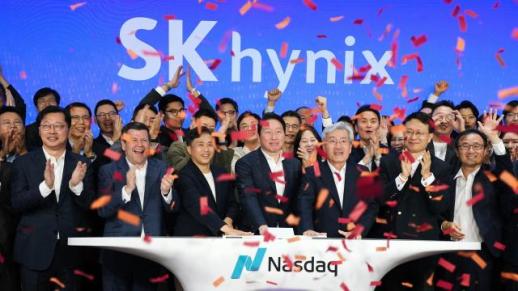 Won breaks from yen as SK hynix dollar flows reshape FX outlook SEOUL, July 24 (AJP) - "Excess volatility is undesirable." That identical message from the U.S. Treasury Department applied to both the South Korean won and Japanese yen in its latest semiannual currency report to Congress, even as it kept both countries on its monitoring list. Treasury said recent depreciation pressures were not in line with South Korea's strong economic fundamentals and reiterated that foreign-exchange intervention should be reserved only for episodes of excessive volatility or disorderly market conditions. Yet the two Asian currencies are now telling markedly different stories. Despite both remaining weaker than their economic fundamentals would suggest, the won has staged a sharp rebound while the yen continues to languish near multi-decade lows, creating one of the widest divergences between the two currencies in years. The U.S. dollar traded around 1,465 won and ¥163.4 on Friday. The won has strengthened more than 5 percent this month, while the yen has slipped about 0.5 percent. For the year, the won is still down roughly 1.9 percent against the dollar, but the yen has fallen more than 4 percent. The key difference lies not in monetary policy but in capital flows. ADR windfall changes the equation The catalyst was SK hynix's record $26.5 billion American depositary receipt offering on Nasdaq, one of the largest overseas equity offerings ever by an Asian company. The won briefly weakened into the 1,470 range in offshore non-deliverable forward trading after Houthi attacks on Saudi vessels renewed concerns over Middle East shipping risks. The move proved short-lived as expectations resurfaced that a sizeable portion of SK hynix's dollar proceeds would eventually be converted into won. The company plans to use part of the funds to finance domestic projects, including its Yongin semiconductor cluster and advanced chip-packaging facility in Cheongju. Construction costs, wages and local procurement will ultimately require won funding, creating what analysts see as a sizeable new source of dollar supply. "The actual dollar-supply effect could continue through August or September," said Kwon Ah-min, an FX analyst at NH Investment & Securities. Kwon expects conversions to begin gradually rather than all at once, as SK hynix will retain part of the proceeds in dollars to pay overseas equipment suppliers such as ASML. That suggests the ADR proceeds are more likely to cap rebounds in the dollar-won exchange rate than trigger a one-way appreciation of the Korean currency. Stronger domestic backdrop The capital-flow effect has coincided with improving domestic fundamentals. The Bank of Korea resumed monetary tightening this month, raising its benchmark interest rate for the first time since January 2023. South Korea's economy has also continued to outperform expectations, while foreign investors have returned aggressively to local equities. Overseas investors purchased a net 2.136 trillion won ($1.46 billion) of Kospi shares on July 23 alone, adding another source of dollar inflows. Park Sang-hyun, an economist at iM Securities, said the combination of stronger economic data, higher interest rates and sustained foreign equity purchases could give the won a firmer foundation than in recent months. "There is now considerably greater scope for the exchange rate to decline on a sustained basis," Park said. If expectations for further won appreciation become entrenched, exporters and shipbuilders could accelerate dollar sales and forward hedging, reinforcing downward pressure on the dollar-won rate. Breaking away from the yen The stronger won has produced an increasingly unusual divergence from the Japanese yen, which has historically moved closely alongside Korea's currency because both economies share export-driven industrial structures. The won-yen cross fell below 900 won per ¥100 on July 23 for the first time in roughly 20 months as the Korean currency appreciated while the yen remained trapped near ¥163 per dollar. Park expects the decoupling to continue in the near term because the won is benefiting from a uniquely Korean factor — SK hynix's impending dollar conversions. Over the longer run, however, he believes the traditional correlation between the two currencies is likely to re-emerge once the temporary supply effect fades. That would again make the yen's direction an important determinant of the won. Not everyone is convinced Some economists caution that markets may be overestimating the immediate impact of the ADR proceeds. "Companies are strategic actors as well," said Baek Seok-hyun, an economist at Shinhan Bank's S&T Center. He argued that SK hynix has little incentive to convert large amounts of dollars before the funds are actually needed because its domestic investment programme will unfold over several years. If conversions are spread across a longer period, additional dollar supply could be largely absorbed by import demand and continued overseas investment by Korean households. Another offsetting factor could emerge if foreign shareholders reduce their holdings of Seoul-listed SK hynix shares, convert the proceeds into dollars and shift their exposure into the newly listed U.S. ADRs. Bank of Korea officials said they are closely monitoring how the ADR proceeds could affect foreign-exchange supply and demand. For now, the inflows appear sufficient to restrain any renewed rise in the dollar-won rate through the third quarter. Beyond September, however, the won's trajectory is likely to depend less on one-off corporate flows and more on broader market drivers — the Bank of Korea's policy path, foreign demand for Korean equities, corporate dollar selling, outbound investment by Korean residents and, perhaps most importantly, whether the long-standing relationship between the won and the yen ultimately reasserts itself. 2026-07-24 15:40:27
 -
Italian Embassy Hosts Second 'Italia? C'è!' Event in Seoul The Italian Embassy in South Korea, led by Ambassador Emilia Gatto, held the second 'Italia? C'è!' event on July 23 at the Italian Residence in Hannam-dong, Yongsan, Seoul, showcasing the works of three Italian experts based in Korea.During the event, speakers included Cho Hang-jun, a professor at Ajou University and a licensed architect in Italy; Moon Kwang-hoon, a professor of German language and culture at Chungbuk National University; and Chef Lee Hyun-seung, an expert in Italian cuisine, who introduced their respective books related to Italy.Ambassador Emilia Gatto emphasized the significance of the event in her welcoming remarks, noting that the relationship between Korea and Italy has strengthened following the 140th anniversary of diplomatic ties in 2024, along with the recent visits of Italian Prime Minister Giorgia Meloni to Korea and South Korean President Lee Jae-myung to Italy.Cho Hang-jun was the first speaker, presenting his book 'Milan Architectural Journey: A City Walk with Italian Architects,' which reexamines Milan as a global travel destination from an architectural perspective. Having lived in Milan for over 30 years after being born in Rome, Cho described the city as an 'architectural laboratory,' highlighting its famous structures like the Duomo and its rich array of buildings from ancient to modern times.Moon Kwang-hoon followed with his book 'Florence Rain: A Renaissance City Travelogue,' where he discussed the allure of Florence, a key birthplace of the Renaissance. He explored various artistic and literary works, including Masaccio's 'Holy Trinity,' the tombstone of San Miniato al Monte, and Dante Alighieri's 'Divine Comedy,' emphasizing Florence's humanistic values.Lastly, Chef Lee Hyun-seung introduced his book 'Vegetable-Filled Italian Home Cooking,' showcasing the charm of Italian home cooking beyond the well-known pizza and pasta. He shared his experiences studying in Italy, where he was impressed by the flavors of tomatoes and mozzarella. Lee presented dishes such as Tortilla di Patate e Prosciutto (Italian potato pie) and Zuppa di Asparagi con Nudi (asparagus soup with gnudi), stating, 'The true appeal of Italian home cooking lies in maximizing the natural flavors of seasonal vegetables and quality ingredients with just a bit of olive oil, salt, and fresh herbs.'The Italian Embassy has been actively promoting mutual understanding between the two countries, hosting the 'Italia? C'è!' event for the second time this year, following a similar event in April. An embassy official stated, 'We plan to continue hosting the Italia? C'è! events in the future.'* This article has been translated by AI. 2026-07-24 15:40:00