


Latest by
-
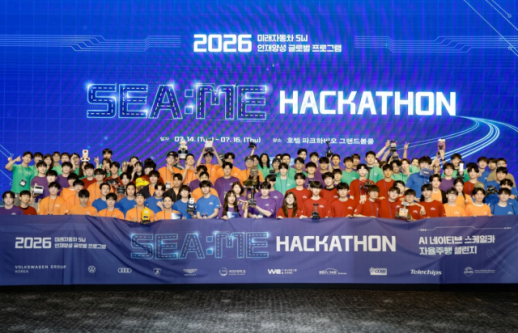 Kookmin University students win AI self-driving hackathon SEOUL, July 24 (AJP) - Undergraduates programmed scale-model cars to judge forks in the road and dodge moving obstacles by describing what they wanted in plain language and letting generative AI write the code, at a three-day autonomous driving hackathon that ended with Kookmin University teams sweeping the top three prizes. The 2026 SEA:ME Hackathon drew 117 undergraduates in 27 teams from seven universities nationwide to Park Habio in Seoul's Songpa district from July 14 to 16, Kookmin University said Friday. The university's SMT team took the grand prize for stable driving performance and a polished algorithm, with fellow Kookmin teams SKY and KUUVe claiming the top excellence prize and the gold prize. Teams from Keimyung University, Chungbuk National University, and Sunmoon University took silver, bronze, technology, and design awards. Now in its fourth year, the competition is jointly organized by the future automobile project group at Kookmin University's Convergence and Open Sharing System (COSS) and the intelligent robotics project group at Hanyang University ERICA, with backing from the Volkswagen Group WE: Foundation, a nonprofit funded by Volkswagen Group Korea and its four brands, Volkswagen, Audi, Lamborghini, and Bentley. SEA:ME, short for Software Engineering in Automotive and Mobility Ecosystems, is the foundation's flagship program for training automotive software talent. This year's contest ran under the theme of an AI-native scale-car autonomous driving challenge, built to let students experience how mobility software is developed when AI sits at the center of the process. Telechips, a leading South Korean fabless chip designer, joined as technology partner and supplied scale cars built on its high-performance TOPST single-board computer platform. Each participant also received access to Claude Code Max 20x, a generative AI tool specialized for coding. Students worked in the style known as vibe coding, issuing instructions in natural language and letting the AI generate the code, then refining the results. Their missions simulated demanding urban driving conditions, including deciding which way to go at forks and avoiding obstacles that moved. "Every team practiced on the track late into the night," members of the winning SMT team said. "We learned a great deal turning ideas into working results with AI, and it was a valuable experience." Shin Sung-hwan, who heads Kookmin University's future automobile project group, said the event lifted students' mobility software skills a full step in a short time, and thanked the foundation, Telechips, and the faculty and staff who ran the competition. Kim Jong-chan, deputy head of the project group and the hackathon's director, said this year's event was designed around two ideas, applying AI-native development methods and using domestically produced automotive semiconductors. "It was a valuable opportunity for students to tackle the kind of advanced autonomous driving problems that carmakers are actually wrestling with," he said. The hackathon adds to a strong year for the SEA:ME program. A South Korean university coalition team trained through the program won the Bosch Future Mobility Challenge 2026, an international autonomous driving and connectivity competition held in Cluj-Napoca, Romania, in May, beating 57 teams from around the world. Kookmin University, marking its 80th anniversary this year, has designated mobility as one of eight specialization fields under its long-term development strategy, KMU VISION 2035: EDGE, and says it will continue expanding industry partnerships with automakers at home and abroad. 2026-07-24 15:00:26
-
 Oh Se-hoon Criticizes Lee Jae-myung's Views on Real Estate Policy Oh Se-hoon, the Mayor of Seoul, sharply criticized President Lee Jae-myung's comments regarding redevelopment and reconstruction, calling them "misguided perceptions." He particularly pointed out the contradiction in acknowledging the difficulty of developing new land in Seoul while denying the supply effects of urban renewal projects. On July 24, Oh posted on his Facebook page an article titled, "If you take a test with the answers hidden, the result will be a failure," where he strongly criticized the President's views expressed at the previous day's "National Forum on Real Estate Policy." Oh stated, "The President lamented that it is nearly impossible to find land for development in Seoul, yet he claimed that reconstruction does not significantly increase supply and that redevelopment actually reduces the total number of households. This is a denial of the supply effects of redevelopment and reconstruction, which are essentially the only large-scale supply methods available in Seoul, despite acknowledging the reality that there is no more land to build homes." He questioned, "Where is the greater contradiction than this?" "Seoul's Urban Renewal Will Add 87,000 Units... 2.7 Times the Government's Plan" Oh argued that the President's statements do not align with objective figures. He explained that the city aims to start construction on over 310,000 units through ongoing urban renewal projects by 2031, expecting a net increase of about 87,000 housing units. This figure is approximately 2.7 times greater than the expected net increase of 32,000 units in the Seoul area from the government's "1·29 Real Estate Policy." He emphasized that reconstruction typically yields an average supply increase of about 40%, while redevelopment achieves an average increase of about 15% through zoning changes and relaxed floor area ratios. Oh noted, "The Seoul city government has continuously requested the national government to relax the legal upper limit on private urban renewal projects by 1.2 times precisely because of these supply effects." "Generalizing Specific Cases Misleads the Facts" Oh also pointed out that the President's interpretation of certain redevelopment cases as representative of all urban renewal projects is problematic. He acknowledged that in some redevelopment projects in areas with dense multi-family housing, the number of units may decrease based on existing household calculations. However, he criticized the notion that this is a general phenomenon across all redevelopment efforts, stating, "This is limited to specific projects, and to present it as a common occurrence misrepresents the facts." He added, "If there is a supply shortage in some projects, we can increase housing supply through institutional improvements, such as separating housing units." "Redevelopment Represents Hope for Life... Misleading Signals Increase Market Anxiety" Oh stressed that the significance of redevelopment and reconstruction should not be viewed solely through the lens of housing supply numbers. He remarked, "In areas like Changsin-dong in Jongno, where redevelopment is imminent, the steep and dilapidated environment makes it difficult for elderly residents to even go outside, and fire trucks cannot access these areas. For these residents, redevelopment is not just a real estate project; it is a hope for a better life." He continued, "It is a basic desire for everyone to want to live in a safer and more comfortable home, and ensuring a sufficient supply of desirable housing is the most important policy for improving quality of life." Oh argued that every time the President expresses such views, the public interprets it as a signal that supply through urban renewal projects will become more difficult under this administration, which exacerbates anxiety and prompts people to feel they need to buy homes immediately, further destabilizing the market. He concluded, "Recognizing the supply effects of urban renewal projects is the only way to solve the problem. If we continue to repeat the mistakes revealed in the last test, such as the flawed tax policy, the outcome will inevitably be another failure." Oh announced that the Seoul city government plans to submit a detailed report on urban renewal projects to the presidential office soon, stating, "We will do our utmost to alleviate citizens' housing anxiety without wavering under any circumstances."* This article has been translated by AI. 2026-07-24 15:00:00
-
Coupang Fulfillment Service Offers Health Checks and Support to Residents Affected by Incheon Warehouse Fire Coupang Fulfillment Service (CFS) is providing free health check-ups, medical expenses, and cleaning and car wash costs to residents affected by the fire at its warehouse in Seongnam-dong, Incheon. The company will also offer free services from professional assessors to verify damages and plans to support factories and small businesses struggling due to vehicle restrictions. CFS announced on July 24 that it will operate an 'Emergency Medical Support Center' at the first floor of the Shin-hyeon Elementary School auditorium from July 25 to August 7. Over 20 medical professionals, including doctors, traditional medicine practitioners, nurses, pharmacists, and psychological counselors from the Korean Central Medical Volunteer Corps, will participate. The health check center will be open from 9 a.m. to 10 p.m. to accommodate working residents. They can receive basic tests, including respiratory assessments for symptoms like coughing and shortness of breath, as well as blood sugar and oxygen saturation measurements. Stress counseling, nebulizer treatments, and prescriptions for over-the-counter medications will also be available. Residents who sought medical treatment or purchased medications due to the fire will receive support for their medical and prescription costs. A separate damage reporting channel will be established. CFS will operate a 'Coupang Incheon Fire Damage Support Call Center' from July 27 to November 30. Residents can report fire-related damages, including medical expenses, prescription costs, cleaning fees, and car wash costs, every day from 9 a.m. to 6 p.m., including weekends. After verifying the reported damages, the company will decide on the support eligibility. For residents unfamiliar with the damage verification and compensation process, professional assessors will be available for free. Support will also extend to factories and small businesses affected by vehicle restrictions near the warehouse. The fire occurred on the morning of July 18 at the Coupang warehouse in Seongnam-dong. The Incheon Fire Department reported that the fire was extinguished at 8:35 p.m. on July 22, approximately 109 hours and 40 minutes after it started. CFS announced on July 22 that it would fully compensate sellers for inventory losses at the warehouse, including those in areas affected by smoke and dust due to the fire. The company plans to inform sellers of the compensation amounts and payment schedules by mid-August. Previously, CFS distributed over 13,500 masks to students and staff at eight elementary schools near the warehouse. It also provided 400 sets of relief supplies to temporary shelters and deployed nurses, along with operating a shuttle bus for residents needing medical care. CFS CEO Jeong Jong-cheol expressed sincere apologies to local residents for the inconvenience caused by the fire, stating, "We have prepared various recovery support measures, including health check-ups and financial assistance, to help residents regain their health and daily lives, and we will continue to provide necessary support to help the community stabilize as soon as possible."* This article has been translated by AI. 2026-07-24 14:56:00
-
Jogbo.com Launches Summer Event Targeting Academic Preparation As summer vacation approaches, the education sector is rolling out promotions aimed at preparing students for the second semester. This period serves as a time to reinforce learning from the previous semester and prepare for the upcoming one, leading to a surge in events that combine educational content with various benefits.Jogbo.com, a platform specializing in academic support under Education Zone Co., has announced its summer promotion event titled 'Full Course Shot.' The event is centered around the concept of 'full course for both study and benefits.' All customers who purchase a 12-month Z-PASS will receive 30,000 won in Naver Pay points. This ensures that every buyer receives the same benefit, alleviating the burden of summer study.Additionally, a lottery-based experiential event is planned. Winners will receive tickets to attend LCK matches, along with pre-game meals and signed uniforms from BNK players. This event is designed to offer a complete experience that combines e-sports viewing, dining, and merchandise.The 12-month Z-PASS is a premium product that provides access to various academic preparation content aligned with the annual academic calendar, including midterm and final exams. Exclusive event participation benefits for paid members are also included.In the education sector, there is a growing trend of combining content with cultural experiences to enhance student motivation. Jogbo.com has explained that it aims to increase the competitiveness of its summer promotion by incorporating experiential benefits that reflect students' interests alongside academic support.A representative from Jogbo.com stated, "We prepared this event so that students can maintain their motivation for learning while also enjoying their vacation. We hope that the practical benefits provided to all purchasers will encourage more students to start preparing for the second semester without stress."* This article has been translated by AI. 2026-07-24 14:48:00
-
SK Telecom's Jeong Jae-hun Aims to Lead AI Infrastructure with SK Hyper Jeong Jae-hun, CEO of SK Telecom (SKT), has expressed his commitment to accelerating the expansion of the artificial intelligence data center (AIDC) business. He aims to establish SK Hyper as a hub for AI infrastructure in Asia.According to industry sources on July 24, Jeong told employees the day before, "We launched SK Hyper to ensure rapid execution and tangible results for AIDC, which is a core growth business for the company. Now is the golden time for action as competition for AI infrastructure is intensifying."He added, "In line with the government's 'Korea Mega Leap Project,' we will focus on accelerating the development of the AIDC business. We will prioritize securing key bottlenecks such as land and power, and lead the attraction of global customers and commercialization efforts." He emphasized, "Our goal is to expand our business into key areas of the AI infrastructure value chain and leap forward as an AI infrastructure hub in Asia. From now on, we must act boldly and strengthen our capabilities to secure competitiveness."Earlier, on July 23, SKT held a board meeting and established SK Hyper, a new company dedicated to AIDC business development. The company plans to invest a total of 750 billion won by 2030 to lay the groundwork for its operations. SK Hyper will be responsible for securing sites for AIDC construction, building and operating substations, attracting global customers, and commercialization.Specifically, SK Hyper plans to gradually establish a 5-gigawatt (GW) AIDC by 2029, with plans to expand to 15 GW by 2035 based on market demand.To achieve this, the company is also pursuing plans to build GW-level AIDCs starting in Ulsan, as well as in the Chungcheong and southwestern regions.* This article has been translated by AI. 2026-07-24 14:48:00
-
Hana Financial Reports Record Half-Year Profit of 2.4 Trillion Won Hana Financial Group reported a record half-year profit exceeding 2.4 trillion won, driven by a significant increase in non-interest income from its securities subsidiary. Building on this strong performance, the company plans to expand shareholder returns by repurchasing and retiring 250 billion won worth of its own shares in the third quarter.On July 24, Hana Financial announced that its net profit for the second quarter reached 1.1928 trillion won, a 1.67% increase from the same period last year.For the first half of the year, the profit totaled 2.4029 trillion won, up 4.4% compared to the previous year. Despite one-time costs such as decreased insurance profits, increased provisions, and foreign exchange losses, non-interest income supported the overall results.Commission income for the first half surged to 1.4874 trillion won, a 37.7% increase year-on-year, driven by growth in trust fees, securities brokerage fees, and investment management fees.Interest income for the first half was 4.8082 trillion won, reflecting a 7.06% increase from the same period last year. The common equity tier 1 (CET1) capital ratio stood at 13.21%, while the Basel III capital adequacy ratio was 15.26%.By subsidiary, Hana Bank reported a net profit of 1.0169 trillion won for the second quarter, a 6.9% decrease from the previous year. However, commission income rose to 614.3 billion won, up 22.4% year-on-year.Hana Securities showed the most significant growth, with a net profit of 273.1 billion won, a 155.7% increase from the previous year. Additionally, Hana Card reported a net profit of 125.9 billion won, Hana Capital 104.5 billion won, and Hana Life 14.6 billion won.With this record performance, Hana Financial has also announced plans for value enhancement. The return on equity (ROE) target has been raised from over 10% to 12%, and the shareholder return rate target is set at over 50%. A new shareholder return framework linking ROE and risk-weighted asset (RWA) growth will also be introduced. The CET1 target has been adjusted to over 13%, with excess capital to be used for shareholder returns.The board of directors has resolved to expand shareholder returns by repurchasing and retiring 250 billion won worth of shares in the third quarter and declaring a quarterly cash dividend of 1,155 won per share, a 26.5% increase from the same period last year.* This article has been translated by AI. 2026-07-24 14:48:00
-
 KAIST, NVIDIA open joint lab to build AI for Korean industry SEOUL, July 24 (AJP) - NVIDIA will pour $300 million into a joint research laboratory with the Korea Advanced Institute of Science and Technology to develop artificial intelligence built specifically for the Korean language and South Korea's industries, in one of the largest corporate commitments to AI research at a Korean university. The NVIDIA-KAIST Joint AI Research Lab will be housed at the Kim Jaechul Graduate School of AI on the Seoul campus of the Korea Advanced Institute of Science and Technology (KAIST), the university said Friday. The collaboration runs for an initial five years and includes AI computing resources worth $50 million a year, supplied through NVIDIA's cloud partners in South Korea. KAIST's announcement on Friday came as NVIDIA moves to finalize a separate joint research lab with Seoul National University, a sign that the world's dominant AI chipmaker is anchoring its Asian research strategy in South Korea's two leading research universities at once. The KAIST lab will focus on agentic AI, systems that go beyond answering questions to planning and carrying out multi-step tasks on their own, such as analyzing information, selecting tools, and executing work with little human supervision. Researchers will build agentic models and agent systems tuned to the Korean language and to domestic industries including manufacturing, semiconductors, biotechnology, and services. The work will draw on NVIDIA's full-stack AI technology, the company's integrated platform spanning chips, computing systems, software, and models, along with Nemotron, a family of open AI models NVIDIA has released for companies and research institutions to adapt freely. The lab plans to use Nemotron as a base for models with stronger Korean-language capability. Beyond infrastructure, the partnership targets talent. The lab will fund at least 10 KAIST researchers each year and provide each of them with an internship at NVIDIA. The company also plans to hire top Korean AI researchers into full-time research positions, linking funding, internships, and permanent jobs into a single pipeline intended to keep ambitious researchers building careers in South Korea. "Korea is home to world-class AI researchers and one of the most advanced technology ecosystems in the world," said Bill Dally, NVIDIA's chief scientist and senior vice president of research. "The NVIDIA-KAIST joint lab will accelerate the development of AI models and agent systems for Korea's industries, language, and future, and serve as a foundation for pioneering next-generation AI research." Kim Hyun-woo, an NVIDIA researcher who joins the Kim Jaechul Graduate School of AI as an assistant professor next month, will direct the lab, setting its research agenda and coordinating joint work between KAIST teams and NVIDIA's global research organization. Kim, currently a postdoctoral researcher at NVIDIA working with AI researcher Yejin Choi and NVIDIA vice president Jan Kautz, won the Outstanding Paper Award at the EMNLP 2023 natural language processing conference for research on knowledge distillation, a technique for transferring capabilities between AI models. He recently released Nemotron-Personas-Korea, the first large-scale Korean persona dataset, which topped Hugging Face's trending dataset rankings for 10 days. KAIST president Bae Choong-sik called the partnership "the starting point of a strategic partnership combining world-class AI research capability with cutting-edge AI infrastructure," and said the university would build "a global AI research hub representing the Republic of Korea." Research topics will include large AI models optimized for Korean, industry-specific models, next-generation AI with reasoning and planning capability, and cooperation and verification among multiple AI agents. Both sides said they intend research results to flow into companies, public institutions, and national AI systems rather than remain academic. The two organizations are still finalizing details of research selection, researcher support, and infrastructure provision, and said the lab's start date and operating plan will be announced once negotiations conclude. The lab at Seoul National University (SNU) is taking shape on a separate track. The university and NVIDIA plan to sign a memorandum of understanding this month covering joint research in physical AI and AI semiconductors, Aju Press has learned, with 10 to 20 research teams to be selected for an initial term of about three years. The plan includes NVIDIA internships for top students, a dedicated collaboration space on campus for visiting NVIDIA researchers, and jointly developed curricula, with SNU courses to be shared worldwide through NVIDIA's Deep Learning Institute education platform. A joint steering committee and a symposium in September are expected to follow the signing. The agreement follows months of contact between the two sides, capped by Jensen Huang's visit to the university in June, when the NVIDIA chief executive toured its AI research center and robotics lab and met with students. NVIDIA has run joint research labs with major universities in Singapore and Hong Kong. The Seoul push is widely seen in the industry as an effort to make South Korea a core Asian research base, secure AI talent, and counterbalance China's AI industry. 2026-07-24 14:47:09
-
WSJ: AI is a Growth Business, Not a Fad; Investments Lay Foundation for Future Performance The Wall Street Journal reported on July 23, citing James Oi, a market strategist at Tiger Brokers, that recent performance from technology companies indicates that demand for artificial intelligence (AI) is translating into actual revenue growth. Intel's AI-related business grew by more than 70% in the second quarter compared to the same period last year. Alphabet's Google Cloud revenue surged by 82% due to AI demand. Oi described AI as "not just a trend or exaggerated expectations," but rather a "rapidly growing business." However, investors reacted more sensitively to rising investment costs than to the growth of AI businesses. Alphabet's stock fell by 6.9%, while Intel's dropped by 2.3%. Nevertheless, Intel rebounded by over 5% in after-hours trading following its earnings announcement. Oi analyzed that the decline in stock prices for companies expanding AI investments may have been excessive due to concerns over cost burdens. He added that current investments could serve as a foundation for greater performance growth in the future.* This article has been translated by AI. 2026-07-24 14:36:00
-
Unauthorized Access to Military Medical Imaging System Raises Security Concerns Last year, an unauthorized individual accessed the mobile Picture Archiving and Communication System (PACS) operated by the Republic of Korea's Medical Command, gaining access to personal medical information of military personnel.According to the Ministry of National Defense, the unauthorized access was confirmed during a central security audit conducted by the Military Counterintelligence Command in April.PACS is a system that stores medical images such as X-rays, CT scans, and MRIs, allowing medical staff to retrieve them. The system was operational in the military since July of last year.In June, a joint investigation team from the Ministry of National Defense, Cyber Operations Command, Counterintelligence Command, and Medical Command examined the incident and found that approximately 8GB of data had been accessed improperly between November and December of last year. This amount is equivalent to about 1,000 X-ray images.A Ministry official stated to reporters, "While there are indications of a potential leak, we have not confirmed any actual data breaches," adding that it is difficult to determine whether the incident was a deliberate attack.The unauthorized individual was able to access PACS through open communication ports. It was also revealed that these ports had remained open from November of last year until March of this year.The official explained, "The system is relatively new, and it appears that inadequate management allowed the communication ports to operate in a vulnerable state." Upon realizing the unauthorized access, the Ministry of National Defense immediately suspended operations of the mobile PACS system and notified individuals whose contact information was stored in the system about the breach. Additionally, measures to prevent recurrence will be implemented based on the investigation's findings.* This article has been translated by AI. 2026-07-24 14:36:00
-
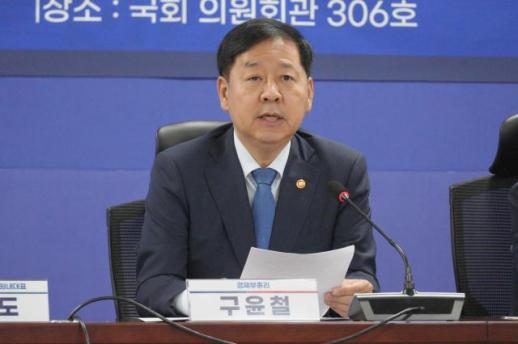 Finance chief raises growth outlook as South Korea nears $40,000 per-capita income SEOUL, July 24 (AJP) - Deputy Prime Minister and Finance Minister Koo Yun-cheol said Friday that stronger-than-expected economic growth has put South Korea on track for annual growth of around 3 percent and per-capita income of US$40,000, although many households have yet to feel the effects of the stronger economy. The finance chief said the economy had sustained its growth momentum after a robust first quarter. "The likelihood of achieving 3 percent annual growth and per-capita national income of $40,000 this year has increased significantly," Koo said at a meeting in Seoul. He then pledged to advance the government's so-called "3-4-5 vision," which targets potential growth of 3 percent, a place among the world's four largest exporters and per-capita income of $50,000. South Korea's gross domestic product expanded 0.6 percent in the second quarter from the previous three months and 3.7 percent from a year earlier, according to preliminary data released by the Bank of Korea (BOK). Growth slowed from the first quarter's 1.8 percent pace but remained firm as semiconductor-led exports and private consumption offset continued weakness in construction. Exports increased 1.4 percent from the previous quarter and private consumption rose 0.4 percent, while construction investment declined 0.2 percent. Real gross domestic income, which reflects changes in purchasing power caused by shifts in trade prices, rose 3.6 percent from the previous quarter and 15.6 percent from a year earlier. Koo also pledged to contain inflation as renewed tensions in the Middle East threaten to raise oil prices and disrupt supply chains. The government will extend fuel-tax reductions through the end of September and maintain restrictions against the hoarding of urea and urea solution through August. It will ease inventory and sales restrictions on syringes and needles as supplies improve and introduce legislation next month to strengthen penalties for hoarding and allow confiscated goods to be released into the market. Despite the stronger headline figures, annual growth of 3 percent would not necessarily indicate robust momentum through the second half. The BOK has said the economy could still grow 3 percent this year even if GDP contracted by an average of 0.1 percent in each of the third and fourth quarters, reflecting the unusually strong expansion already recorded in the first half. Construction weakness and an uneven recovery outside the semiconductor industry therefore remain potential drags even if the annual target is reached. The prospect of per-capita gross national income reaching $40,000 is also heavily dependent on the exchange rate. Per-capita GNI rose 4.6 percent in won terms last year but increased only 0.3 percent in dollar terms to $36,855 as the currency weakened. Crossing the $40,000 threshold this year would require an increase of about 8.5 percent in dollar terms, meaning continued won weakness could offset growth in domestic nominal income. The central bank said in March that, assuming no exchange-rate effect and annual GNI growth of 4.4 percent, the average since 2014, South Korea would surpass $40,000 in 2027 rather than this year. Even reaching the threshold would not necessarily translate into comparable gains for middle- and lower-income households because GNI includes income earned by companies and the government and divides the total by the population. Average monthly household income rose 2.4 percent from a year earlier in the first quarter but increased only 0.4 percent after inflation, while earned income grew just 0.3 percent in nominal terms. Disposable income increased 2.7 percent, but consumption spending climbed 5.3 percent, reducing the average household surplus by 3.1 percent. Income-distribution indicators also deteriorated in 2024, with the Gini coefficient rising to 0.325 and the income ratio between the richest and poorest fifths widening to 5.78. The relative poverty rate, which measures the share of people living on less than half the median income, rose 0.4 percentage point to 15.3 percent. Annual growth of 3 percent and per-capita GNI of $40,000 would mark significant milestones for the size of the Korean economy, but broader improvements in living standards will depend on whether export and corporate income spreads into wages and household disposable income. 2026-07-24 14:34:14