


Latest by
-
 Supreme Court Delays Kim Geon-hee's Stock Manipulation Case Hearing The Supreme Court has postponed the hearing for Kim Geon-hee's case involving stock manipulation related to Deutsche Motors and has decided to refer the case to the full court.On July 23, the Supreme Court announced, "The case against defendant Kim Geon-hee for violations of the Capital Markets Act has been rescheduled for referral to the full court."Originally set for a ruling on July 24 at 2 p.m. under the Second Division of the Supreme Court, led by Justice Park Young-jae, the case was sent to the full court just a day prior.If the four justices in the division cannot reach a consensus or deem the division's ruling inappropriate, the case will be elevated to the full court.The Supreme Court did not disclose the reasons for the referral. However, there are suggestions that conflicting lower court rulings related to the 'Myung Tae-kyun polling' allegations may have influenced this decision.Previously, Kim Geon-hee was acquitted in the first and second trials regarding allegations of receiving free polling services from Myung Tae-kyun. In contrast, former President Yoon Suk Yeol, who was separately indicted on similar charges, received a partial guilty verdict in the first trial.Seoul Mayor Oh Se-hoon was also indicted for receiving a total of ten polling services from Myung and having them paid for by a third party, with some guilt acknowledged in the first trial the day before.* This article has been translated by AI. 2026-07-23 16:32:00
 -
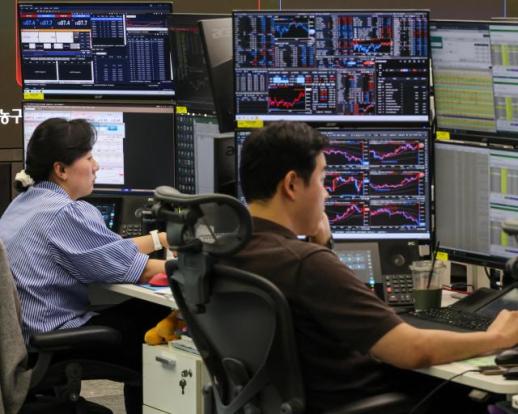 Reality bites as Korea's retail investors struggle to escape leverage trap SEOUL, July 23 (AJP) - Reality bites, and it takes a strong stomach to survive the KOSPI reality show, where billions of won in retail wealth disappear every trading day. Panic flashes across online stock forums. "Save me. I'm trapped at 22,000 won," one investor wrote, unsure whether to sell or keep holding a Samsung Electronics 2x leveraged exchange-traded fund bought near that price. The desperation reflects what is becoming a familiar pattern. According to the Korea Financial Investment Association, brokerages forcibly liquidated 59.6 billion won ($43 million) worth of shares purchased on margin Tuesday, the highest amount since July 10, when forced selling reached 81.6 billion won. It also marked the second consecutive session above 50 billion won after Monday's 52.8 billion won. Investor deposits — cash available in brokerage accounts for stock purchases — shrank by 5.83 trillion won in a single day to 106.69 trillion won. Outstanding margin loans, however, rose by 225.7 billion won to 33.56 trillion won, suggesting many retail investors remain willing to borrow despite mounting losses. The losers are leaving, but plenty more are waiting to buy the dip. Despite nearly 20 percent declines in both the KOSPI and KOSDAQ over the past month, speculative appetite remains remarkably resilient. Seoul's stock market, until recently the world's best-performing major equity market this year, has joined the ranks of the worst performers in July. The decline in investor deposits does not necessarily mean the speculative fever has broken. Deposits fall whenever investors buy stocks, withdraw cash or settle transactions. But when deposits decline while margin borrowing continues to rise, the pattern suggests demand is increasingly being financed with leverage rather than fresh cash. Yang Jun-sok, professor of economics at the Catholic University of Korea, said policymakers originally hoped to redirect speculative money away from real estate and into productive investment through the stock market. Instead, the rally exceeded expectations. "At first, the government encouraged people to invest in the stock market," Yang said. "Now it finds itself with another speculative force to calm." South Korea's benchmark KOSPI became the world's best-performing major stock index this year as the AI boom propelled Samsung Electronics and SK hynix sharply higher. At one point, the two chipmakers accounted for more than half of the benchmark's market capitalization, leaving the index unusually dependent on just two AI-related stocks while amplifying volatility through leveraged products tied to them. The government has since tightened controls on single-stock leveraged ETFs, suspending new listings and banning promotional campaigns until market conditions stabilize. Authorities also raised the minimum cash deposit for new or additional purchases to 30 million won from 10 million won and plan to increase the minimum trading unit from one share to 20 shares later this year while strengthening investor education, risk disclosures and safeguards against excessive price deviations. The measures are intended to slow new speculative demand rather than force existing investors to unwind their positions. Officials have also stopped short of delisting the products altogether, arguing that doing so could trigger another wave of selling. Presidential Policy Chief Kim Yong-beom said Sunday that delisting the funds was "hard to imagine" because of the market disruption it could cause. Instead, regulators are exploring ways to reduce volatility, including narrowing gaps between market prices and net asset values and easing selling pressure generated by ETF rebalancing near the market close. The government's challenge is to engineer what economists call an orderly deleveraging — reducing leverage gradually without triggering a disorderly cascade of forced liquidations. In theory, margin borrowing should slow, existing loans should be repaid over time and forced selling should steadily diminish. So far, the numbers suggest otherwise. Although outstanding margin loans remain below their June peak, they increased again in the latest session, indicating leveraged dip-buying remains alive. "There are still people saying stocks should be bought when they become cheaper," Yang said. "That means demand has not yet been suppressed." Evidence of investor distress is nevertheless mounting. The proportion of overdue margin purchases ending in forced liquidation climbed rapidly from 1.1 percent on July 16 to 4.6 percent Monday and 5.7 percent Tuesday. Under Korea's margin trading rules, investors who fail to settle purchases within two business days face automatic liquidation at the market opening, adding to selling pressure and increasing the likelihood of further margin calls. Yang said repeated warnings from regulators, academics and market professionals, along with mandatory investor education, have done little to curb speculative demand. "In the end, investors may have to learn the hard way," he said. "Unless they experience forced liquidations themselves, they will continue to view leveraged ETFs as useful and relatively safe. The market itself created that false sense of security." He recalled a legal dispute following the 1997 Asian financial crisis, when a Korean state-owned financial institution unsuccessfully sued a U.S. investment bank in New York after suffering losses on complex derivatives. The court rejected the institution's argument that it had not fully understood the products. "Fundamentally, investors have a responsibility to understand what they are buying, even if nobody explains it to them, especially when the product is complex," Yang said. "That is what Korean investors are now learning." Faster deleveraging before a bigger shock "Korea's market rose too far, too fast," Yang said. "Because the rally developed over such a short period, it may be better to reduce leverage quickly rather than drag the adjustment out." He argued Korea's AI-driven rally far outpaced comparable gains in the United States or Taiwan. While the S&P 500 reached repeated record highs over several years and Taiwan's benchmark remained broadly diversified despite TSMC's dominance, Korea's surge became unusually concentrated in a handful of AI-related shares. The Bank of Korea's first interest-rate increase since January 2023 — raising the policy rate to 2.75 percent on July 16 — is part of that effort to cool speculative excess. The government's dilemma is becoming increasingly clear. It wants to reduce leverage and curb speculation without triggering the kind of market collapse that would inflict heavy losses on millions of retail investors and undermine confidence in its broader capital-market agenda. 2026-07-23 16:31:23
 -
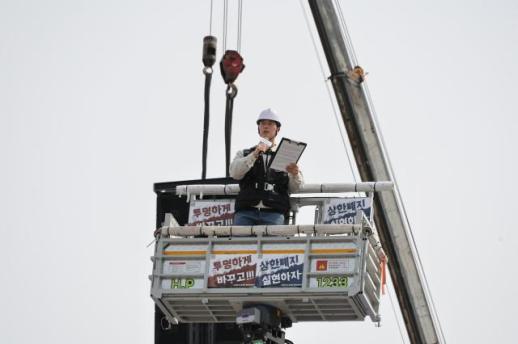 Samsung union weighs voluntary donation of bonus to social causes SEOUL, July 23 (AJP) - Samsung Electronics' largest labor union is considering a voluntary program allowing employees to donate a portion of their special performance bonuses to social causes, according to an internal union notice. The Samsung Group Super Enterprise Labor Union said the proposal, which was recently shared with its policy committee, is expected to be announced alongside guidance on special bonuses in the third or fourth quarter. Under the proposal, employees in the Device Solutions (DS) semiconductor division could choose to contribute between 0 percent and 1 percent of their special performance bonus. Participation would be entirely voluntary, with no upper limit on donations, the union said. The notice said the initiative is intended to address public criticism over large bonus payouts while supporting shareholder-friendly policies. Union executives and policy committee representatives also plan to participate in the program. The proposal follows discussions that began in June on encouraging employees to voluntarily donate part of their bonuses after Samsung agreed to a special performance bonus package with labor unions. The union said the timing and details of the program have yet to be finalized and would be announced once discussions are completed. 2026-07-23 16:30:40
 -
Coinone Reports Change in Major Shareholders Following Investment from Hanwha Investment & Securities and OKX Ventures 금융당국이 한국투자증권과 OKX벤처스의 전략적 투자에 따른 코인원의 대주주 변경신고를 수리했다. According to the virtual asset industry on July 23, the Financial Intelligence Unit (FIU) of the Financial Services Commission approved the change in major shareholders for Coinone the previous day. On June 26, it accepted a report on changes in executives. This report follows a contract signed on May 29, in which Hanwha Investment & Securities and OKX Ventures agreed to acquire 20% each of the shares held by Coinone's largest shareholder, CEO Cha Myung-hoon, and the second-largest shareholder, Com2us Holdings. As a result, Hanwha Investment & Securities and OKX Ventures have become joint third-largest shareholders, following CEO Cha Myung-hoon (30.36%) and Com2us Holdings (24.54%). A Coinone representative stated, "With this approval, we have established a stronger responsible management and a stable business foundation with our new and existing shareholders." * This article has been translated by AI. 2026-07-23 16:28:00
-
Jeong Dong-young Announces Shift from 'Denuclearization First' to 'Peace First' Approach Jeong Dong-young, the Minister of Unification, announced on July 23 that the current administration has effectively abandoned the previous government's 'denuclearization first' policy in favor of a 'peace first' approach. During a visit to the press room at the Government Seoul Building to mark his one-year anniversary in office, Jeong outlined the achievements of the past year. He stated, "While we have not abandoned the ultimate goal of denuclearization, we have discarded the denuclearization first approach," emphasizing that it has been replaced with a strategy focused on prioritizing peace. Jeong explained that the terminology has shifted from denuclearization of North Korea to the goal of achieving a nuclear-free Korean Peninsula, detailing a strategy that prioritizes peace and a halt to North Korea's nuclear activities. He noted, "Isn't it true that both the U.S. and China have effectively abandoned the denuclearization first theory? Even hardline scholar Victor Cha has defined it as a failure," pointing out that the denuclearization rhetoric of past administrations was largely for domestic political purposes. He added, "It has been seven years since inter-Korean dialogue ceased, and it is essential to resume communication first. The realization that placing denuclearization at the entrance hinders dialogue is what we mean by peace first." Regarding the possibility of dialogue between North Korea and the U.S., Jeong stated, "I believe there is still a strategic need on both sides for dialogue." He further emphasized, "We are not mere observers of this (U.S.-North Korea dialogue) but must play a role to facilitate it as much as possible," highlighting that the upcoming visit of Chinese President Xi Jinping to the U.S. in September, along with the U.S.-China summit, and former President Donald Trump's visit to China in November will be critical periods. Jeong remarked, "The President is diligently playing the role of a peacemaker, but we must reflect on whether the government is adequately supporting his efforts," adding, "The Ministry of Unification believes that nothing will happen if we do not take action." He reflected on his one-year tenure, stating, "When I took office a year ago, inter-Korean relations were in ruins, and I felt the Ministry of Unification was similarly in disarray. I focused on restoring the organization and recovering everyday peace." Jeong outlined seven major reforms undertaken in the past year, including organizational stability, restoring everyday peace, transitioning to a policy of peaceful coexistence, restructuring North Korea's nuclear and peace strategies, regulatory easing, reforming education on peaceful unification, and improving perceptions of North Korean defectors. He noted, "Researchers in North Korean studies are feeling quite repressed," pledging that the government will actively support the research ecosystem. He also urged a change in terminology from 'North Korean defectors,' which carries connotations of stigma and exclusion, to 'North Korean residents,' which reflects recognition and integration.* This article has been translated by AI. 2026-07-23 16:24:00
-
President Yoon's Real Estate Deal Raises Questions About Fairness The real estate market is difficult to navigate.The government’s policies on housing are equally challenging. This is where the difficulty in understanding the real estate market begins."We considered the buyer's circumstances." "The transaction was conducted transparently in accordance with civil law agreements." This is how the Blue House explained the mortgage transaction involving President Yoon Suk Yeol and his wife’s apartment in Bundang. The Democratic Party of Korea went further, stating that the mortgage established to secure unpaid balances is a "legal and normal transaction method" and that the loan regulations do not prohibit sellers from deferring payment. They also noted that the presidential couple accepted "unfavorable conditions" by delaying the receipt of the final payment.If we accept this explanation, the transaction cannot simply be dismissed as defensive. It is a model transaction that is legal, normal, and considerate of the buyer's circumstances, where the seller even accepted unfavorable conditions. It deserves more than to be left to the goodwill of the president; it could be formalized as 'good seller financing.'The presidential couple sold their apartment in Bundang, Seongnam, for 2.9 billion won, establishing a mortgage of 1.77 billion won with the buyer as the debtor. They transferred ownership before receiving the full payment and agreed not to charge interest on the unpaid amount. There was even an explanation that the transaction considered the issue of transferring reconstruction rights, showing consideration for the buyer.According to the Blue House's explanation, the ownership was transferred before the final payment was made, leaving open the possibility of transferring reconstruction rights, with the unpaid amount to be repaid interest-free months later. This level of consideration justifies the term 'good seller.' The final payment is reportedly due at the end of October. However, the specific unpaid balance and the terms of repayment and delinquency have not been disclosed. There are circumstances, but no system in placeLast year, the government reduced the housing mortgage loan limit to 200 million won for homes priced over 2.5 billion won in the metropolitan area and regulated zones. This was intended to strongly curb borrowing for high-priced homes. Even if one buys a house worth 2.9 billion won, the maximum mortgage available from financial institutions is 200 million won.However, if the seller defers the final payment and secures a mortgage on the property, the situation changes. The buyer receives ownership before paying the full price and later repays the seller. The debt owed to the financial institution simply shifts to the seller, but the economic function of the debt for purchasing the house remains the same.The Democratic Party's assertion that current laws do not prohibit this is correct. However, while legality is a legal answer, it is not a policy answer from the ruling party. The government has narrowed the front door for borrowing purchases, but it raises the question of whether it is acceptable for sellers to open a side door.The Blue House emphasized the 'buyer’s circumstances.' But who among the public lacks circumstances? There are those who cannot sell their homes on time or have not received their security deposits. Many face conflicting schedules for moving in, loans, and taxes.The issue is not about who is in a more difficult situation. It is about which circumstances the system will accommodate and whose circumstances will be left to individual resolution. If the government and ruling party intend to justify the transaction based on the need to maintain reconstruction membership, they must first clarify the criteria for recognizing which circumstances apply to whom. If it's 'common,' let's manage it with statistics.The Democratic Party stated that mortgages are commonly used in real estate transactions. However, saying that the mortgage as a collateral device is common is different from saying that it is typical for sellers to leave a significant portion of the high-priced home sale price interest-free for months.An analysis of housing financing plans from January to May this year by Kim Eun-hye's office revealed that transactions classified as having a mortgage established between buyers and sellers accounted for only 3.87% of all apartment transactions. For apartments priced between 2.5 billion won and 3 billion won, it was 5.96%. These figures make it difficult to call it a mainstream transaction in that price range.However, in Yangji Village, where the president's apartment is located, there have been numerous transactions where sellers have taken on the role of mortgagee ahead of reconstruction project procedures. This suggests that such transactions are concentrated in specific complexes rather than being a common method across the market.The commonality of the mortgage as a collateral tool and the unusual conditions of this transaction, where a significant portion of the high-priced home sale price is deferred interest-free for months, are separate issues. If the president is to be emphasized for accepting unfavorable conditions as a special consideration, it should not be lumped together with the notion of a typical transaction.The market is already seeing listings for high-priced homes with terms like 'owner loans,' 'seller mortgage options,' and 'final payment loans.' Homeowners are beginning to fill the gap left by tightened bank loans. If loan regulations have not eliminated debt but pushed it off the books of financial institutions, it is no longer a matter of relying solely on personal goodwill or informal private contracts. 'Good seller financing' should be formalized.The starting point for formalization is not support but reporting and management. If, as the Blue House and the Democratic Party explain, this is a legal and normal transaction, then standards should be established to distinguish seller financing from other private borrowing for reporting and management.The deferral of final payments between parties should be classified as a separate item in the financing plan, detailing the actual unpaid amount, interest rate, maturity, and repayment sources. It should also be determined whether to combine it with financial institution loans and how to manage repayment capacity.There should also be distinctions regarding policy support or special treatment. Criteria are needed to determine whether to limit it to actual residents without homes or to include delays in disposing of existing homes or transferring reconstruction rights. The taxation principles for economic benefits arising from interest-free or low-interest deferrals must also be clarified.Sellers also bear the risk of not receiving large final payments on time. This is why a standard contract that includes delinquency rates, collateral execution, and priority rights confirmation criteria is necessary.The government has labeled those who reduce rents as 'good landlords' and provided tax deductions. According to the government’s logic, there is no reason not to give the same name and benefits to those who wait interest-free for the sale price, considering the buyer's circumstances. A concrete example of a presidential transaction already exists.Of course, formalizing this will require acknowledging uncomfortable truths. The unpaid debts owed to sellers are also debts incurred to purchase a home. If managed alongside financial institution loans, those unpaid amounts would also fall under the housing acquisition debts the government intended to manage. If left unmanaged, it becomes a regulatory bypass available only to those with financial flexibility who find a trusting homeowner.This is not a matter to be neglected simply because it is not prohibited, nor should it end as a heartwarming story of presidential consideration. If the government and ruling party's explanations are correct, then the actual debt amounts and interest and maturity conditions should be reported, and rules for how to manage them should be made public. If exceptions cannot be made, they should not be packaged as presidential goodwill or exemplary behavior.No citizen is without circumstances. The important question is not who is in a more difficult situation, but how policies will accommodate which circumstances based on what criteria. 'Good seller' President, please consider the circumstances of the people as part of the system. 2026-07-23 16:24:00
-
Park Hyun-joo: Korbit Joins Mirae Asset as It Expands Digital Asset Business Mirae Asset Group is integrating the virtual asset exchange Korbit as a growth driver, ushering in the 'Mirae Asset 3.0' era. Korbit will change its name to 'Digital X' following the upcoming shareholders' meeting and other procedures.Park Hyun-joo, Global Strategist of Mirae Asset Group, informed employees in a letter on July 23 that "the virtual asset exchange Korbit has become a part of Mirae Asset," adding, "Korbit is starting anew today under the name 'Digital X.'" Park emphasized, "Our mission is to create a new investment paradigm by combining traditional assets and digital assets, leveraging Mirae Asset's expertise and Korbit's specialization. We are embarking on a joint journey to realize the significant trend of 'Mirae Asset 3.0.'" He further stated, "Digital X will be the strongest core pillar in realizing Mirae Asset 3.0," and expressed intentions to establish a new investment ecosystem where real-world assets (RWA) are tokenized, security token offerings (STO) are implemented, stablecoins are utilized, and traditional and digital assets coexist organically.Compliance was also a key focus. Park noted, "Compliance is our uncompromising absolute standard," urging adherence to all relevant laws and global standards in areas such as anti-money laundering (AML), know your customer (KYC), information protection, and fraud detection systems (FDS).He concluded by stating that the company should serve as a role model in the market by exemplary implementing regulatory authorities' guidelines during the enhancement of the Virtual Asset User Protection Act and the refinement of the STO system.To facilitate this, Mirae Asset Consulting, a non-financial subsidiary of Mirae Asset Group, will secure a total of 97.15% of Korbit's shares. Korbit announced that Mirae Asset Consulting will complete the acquisition of the remaining 5.42% of shares on July 24, following its acquisition of 91.7% of Korbit's shares on July 22.Previously, Mirae Asset Consulting disclosed on July 21 that it would acquire an additional 1,589,859 shares of Korbit. As a result, the total number of shares held by Mirae Asset Consulting will increase from 26,905,842 to 28,495,701. The anticipated shareholding percentage will rise from 92.06% by an additional 5.09 percentage points.* This article has been translated by AI. 2026-07-23 16:20:00
-
President Yoon Calls for Tax Reform to Address Housing Market Issues President Yoon Suk Yeol addressed the national discussion on real estate policy on July 23, labeling the phenomenon of 'one smart home' as a serious issue. He noted that policies aimed at protecting the one-household, one-home principle have failed to distinguish between housing prices and ownership purposes, leading to increased investment demand for the most expensive properties. President Yoon emphasized the need to discuss the tax burden on high-value homes. The upcoming tax reform proposal, set to be announced at the end of this month, will focus on how to tax high-value single homes, which has emerged as a key issue. While the direction is correct, poorly designed regulations could lead to further market distortions.Taxing based solely on the number of homes can result in individuals with multiple properties paying more taxes than those who own a single high-value home, despite having similar total asset values. As regulations on multiple homeownership tighten, demand shifts toward high-value properties that can evade these restrictions. The 'one smart home' phenomenon is not solely a result of weak regulations; it is also a consequence of investment patterns shaped by the focus on the number of homes. It is essential to reasonably reflect the value of ownership rather than just the number of homes and to tax high-value single homes in accordance with asset size.However, simply replacing the outdated boundary of home count with a new boundary based on high-value criteria is insufficient. If the tax burden increases sharply once a specific price threshold is crossed, demand may shift below that threshold, or long-term residents with lower incomes may be unable to bear the tax burden. President Yoon stated that the goal is not to artificially lower housing prices and that using tax policy to suppress demand should be considered an exceptional measure. His suggestion to replace 'actual residence' with 'residential use' reflects the need to consider both price and ownership purpose. Individuals temporarily away from their homes for work, education, or medical reasons should not be treated the same as speculative owners, but objective criteria for assessing residency history and other property ownership must be established. The aim should be to tax according to asset value and ownership purpose, rather than punishing expensive homes.The loopholes in capital gains tax exemptions also need to be addressed. During the discussion, a proposal was made to limit the capital gains tax exemption for single-home sales to once in a lifetime. President Yoon agreed that providing unlimited benefits is problematic and suggested considering reducing benefits based on the number of times or setting a cap on the total amount of benefits. If individuals repeatedly switch to high-value homes while receiving the same exemptions each time, the single-home capital gains tax exemption could be exploited as a means of asset accumulation. The long-term holding special deduction also needs to be adjusted to better reflect the purpose of residence rather than mere ownership.Limiting repeated exemptions and imposing excessive capital gains taxes on normal sales are different issues. Increasing the burden of ownership while blocking exit routes at the transaction stage may lead to more homeowners choosing to hold onto their properties rather than selling, exacerbating inventory shortages. President Yoon acknowledged the need to consider a proposal to recognize ownership taxes as necessary expenses when calculating capital gains. This would allow some of the burdens at the ownership stage to be reflected at the sale stage. It is crucial to design regulations that prevent the misuse of repeated exemptions while not obstructing normal sales and residential mobility.The government should not stop at merely presenting high-value criteria and ownership tax rates. It must provide a comprehensive framework that explains who bears the burden, why, and under what circumstances protections are offered, as well as how to limit repeated capital gains tax benefits while keeping exit routes open for sellers. The rise of the 'one smart home' phenomenon is not solely due to weak tax burdens but also because of poorly designed tax policies. The success of this reform will depend not on the intensity of the taxes but on how effectively it corrects distortions from ownership to sale.* This article has been translated by AI. 2026-07-23 16:20:00
-
Hyundai Faces Triple Challenges from Tariffs, Raw Material Costs, and Strikes Hyundai Motor's operating profit has dropped by more than 20% compared to the same period last year, primarily due to the ongoing impact of U.S. tariffs over the past four quarters. Lee Seung-jo, Hyundai's Chief Financial Officer, stated during a second-quarter earnings conference call on July 23, "In the first quarter, we paid 900 billion won in U.S. tariffs, and we expect a similar amount in the second quarter. However, we anticipate that the tariff impact will decrease in the second half compared to last year."Supply chain disruptions from parts suppliers have also contributed to declining profitability. Lee noted, "A fire at a safety equipment manufacturer caused production delays for some models, including Genesis. We shifted production to other models and completed the development of alternative engine valves in May, but the production shortfall mainly affected high-value models like Genesis, negatively impacting profitability."A fire at Hyundai Mobis' plant in India has further exacerbated the situation. The large fire in May at the facility in Tamil Nadu destroyed one production line for electronic components and chassis, resulting in an estimated production loss of about 14,000 vehicles. Lee explained, "To minimize the impact of production disruptions, we maximized the use of existing inventory in the second quarter, and we expect to recover a significant portion of the lost volume through increased production starting in the second half."The global business environment is also deteriorating Hyundai's profitability. The prolonged conflict in the Middle East has increased oil price volatility, while the costs of non-ferrous metals and other raw materials have surged, raising cost pressures. Lee added, "The war in the Middle East and inflation have led to a significant rise in the prices of key raw materials, resulting in an increase of about 400 billion won in costs during the second quarter. The potential repeal of the U.S. Inflation Reduction Act and the aggressive market entry of Chinese electric vehicles in Europe are also burdensome factors."Hyundai plans to regain growth momentum in the second half through new car launches. The company aims to accelerate the release of key models, including the New Grandeur HEV and the volume model Avante. In Europe, the Ioniq 3 and Tucson will also be launched.Lee stated, "The second half will see the launch of the Grandeur facelift HEV, a full change of the Avante, and new Genesis models. We expect profitability to improve significantly with the sales expansion from these new launches." He also mentioned that in the European market, "We are prioritizing price competitiveness for the Ioniq 3, aiming to sell over 20,000 units annually, and the new Tucson model will be launched in the fourth quarter, with growth expected from next year."The biggest variable for second-half performance is the strikes. The Hyundai union's third strike resolution over wage and collective bargaining issues has already led to production losses exceeding 1 trillion won.On the same day, the union decided during its fourth meeting of the Central Struggle Countermeasure Committee to conduct a third partial strike from July 29 to 31. Previously, the union held a first partial strike from July 13 to 15 and a second from July 20 to 22. The two previous partial strikes resulted in approximately 36 hours of halted production, leading to an estimated loss of about 16,000 vehicles and 700 billion won. If the upcoming third partial strike proceeds as planned, industry estimates suggest the damage could reach 1.12 trillion won.* This article has been translated by AI. 2026-07-23 16:20:00
-
 Seoul weighs separate crypto custody regime SEOUL, July 23 (AJP) - South Korea’s financial regulator is considering establishing cryptocurrency custody as a separate regulated business as it prepares to expand corporate access to the country’s digital asset market. The Financial Services Commission is reviewing licensing requirements and conduct rules for custody providers under the government’s planned second-phase digital asset legislation, Kim Sung-jin, director of the FSC’s Virtual Asset Division, said Thursday. “There is little room for disagreement over classifying custody as a separate business,” Kim told a conference at the National Assembly in Seoul. The regulator is examining several approaches to entry requirements and business conduct rules, he added. Crypto custody services hold and manage digital assets and the private keys needed to access them, while separating client holdings from a provider’s own assets. The FSC regards custody as an essential part of the financial infrastructure needed to protect customer assets and support transactions involving corporate and institutional investors. The regulator is also considering how crypto custodians should be positioned alongside traditional trust businesses, given that both safeguard client assets but custodians primarily manage private keys rather than conventional property. Kim said the commission was studying the European Union’s approach to assessing whether different regulatory systems provide functionally equivalent protections. The FSC, however, appeared cautious about requiring crypto exchanges to spin off their custody operations into separate companies. Few overseas jurisdictions have forcibly separated the two functions, Kim said, suggesting tighter conduct rules could better balance customer convenience against potential conflicts of interest within exchanges. The proposed framework comes as the government works on guidelines allowing listed companies and professional investors to buy and sell crypto assets. The FSC announced a phased roadmap in February 2025, initially opening the market to non-profit organisations and virtual asset service providers before allowing listed companies and professional investors to participate. Detailed rules for the later stages have yet to be released, with the regulator saying the timing is closely tied to legislation covering stablecoins and the broader digital asset market. Asked whether corporate trading could begin this year, Kim said he was personally positive about several aspects of the plan but stopped short of providing a timetable. The government is also preparing legislation governing stablecoins and other digital assets, although Kim said the submission schedule was still being discussed with the National Assembly and other government agencies. The FSC would seek to move “as quickly as possible,” he said, in line with the government’s economic policy agenda for the second half of the year. Kim said stablecoin regulation spanned several laws, with issuance expected to fall under the planned digital asset legislation, cross-border transfers under foreign exchange rules and payments under electronic financial transaction laws. Industry representatives urged the government to establish an independent custody framework before fully opening the market to companies, arguing that the current exchange-centred structure was insufficient to support taxation, anti-money laundering controls and external audits. Harry Ryoo, chief executive of digital asset custodian BDACS, estimated that the potential custody market involving domestic and overseas corporate clients could be worth at least 75 trillion won. Ahn Do-geol, a lawmaker from the Democratic Party of Korea, called for faster follow-up measures, saying corporate participation could improve liquidity and price discovery while supporting related industries including custody, asset management and digital payments. Ahn said the market should be opened alongside safeguards including custody systems, internal controls to prevent conflicts of interest and risk management standards. 2026-07-23 16:19:42