


Latest by
-
 IntelliVix to Implement Real-Time AI Detection System for Highway Emergencies IntelliVix, a safety AI deep tech company, is set to establish a real-time emergency detection and response system for highway tunnels, areas prone to icing, accident-prone zones, and frequently congested sections across the country. On July 23, IntelliVix announced that it has secured a contract for the 'Public AI CCTV Conversion Project,' which is overseen by the National Information Society Agency (NIA) and involves the Korea Expressway Corporation as a participating agency. The project aims to convert existing CCTV systems installed on highways into an intelligent AI CCTV system by utilizing domestic neural processing unit (NPU)-based video analysis servers and visual language model (VLM) servers. The project will cover a total of 4,000 channels, including 3,378 channels in highway tunnels, 422 channels in areas prone to icing, 200 channels in accident-prone zones, and 700 channels in frequently congested areas. The AI safety monitoring system being developed will analyze CCTV footage in real-time to detect emergencies on the road, such as traffic accidents, broken-down or parked vehicles, traffic congestion, wrong-way driving, pedestrian appearances, and falling objects. IntelliVix has applied a dual analysis structure that combines its self-developed video analysis core engine VIX2.0, which excels in rapid detection, with Vision AI and VLM, which understands the context of the footage. In the first phase, Vision AI will analyze CCTV footage to detect movements and anomalies involving vehicles, pedestrians, and falling objects. In the second phase, VLM will re-verify whether the detected footage represents an actual emergency by analyzing the surrounding road environment and the context of the footage. VLM will automatically generate situational reports that can be immediately utilized by monitoring personnel by interpreting various factors, including accident types, locations, vehicle and pedestrian movement directions, lane occupancy, and surrounding traffic flow. However, existing video analysis systems have faced challenges, such as misidentifying normal situations as accidents due to vehicle shadows, lighting changes, weather conditions, and stationary vehicles, or failing to detect actual accidents. IntelliVix explained that the use of VLM for secondary verification has improved these false positive and false negative issues. Previously, IntelliVix established a wildfire trajectory prediction system in Hadong and Sancheong counties using domestic NPUs. This system analyzes wildfire monitoring footage along with weather and terrain information using AI to predict the occurrence and spread of wildfires, supporting disaster response efforts. The highway AI CCTV conversion project represents an expansion of domestically verified NPU-based AI technology from the disaster and safety sector into the transportation field. Choi Eun-soo, CEO of IntelliVix, stated, "This project is significant both technically and industrially as it establishes a large-scale AI safety monitoring system using domestic NPUs without replacing existing CCTV infrastructure. We aim to contribute to creating safe highways where citizens can travel with peace of mind by preventing traffic accidents and secondary incidents through AI technology." 2026-07-23 16:40:00
-
Shinhan Financial Group Explores Acquisition of Lotte Insurance 신한금융그룹 is reviewing various merger and acquisition (M&A) opportunities, including Lotte Insurance. During a conference call following the second-quarter earnings announcement, Shinhan Financial's Chief Financial Officer (CFO) Jang Jeong-hoon stated, "We are examining not only Lotte Insurance but also various options that could benefit us. Nothing has been finalized yet." Jang noted that M&A involves negotiations with other parties, which may include various stakeholders, and that finding a delicate compromise could take time. He clarified that the potential acquisition would not lead to a reduction in shareholder returns, such as stock buybacks or dividends. "We will proceed with M&A within the principles of value-up 2.0 announced in April," Jang said, adding, "We will certainly maintain a stable common equity tier 1 (CET1) capital ratio. We will only pursue M&A when we are confident that earnings per share (EPS) or return on equity (ROE) can improve within our capacity." He urged stakeholders to remain optimistic, stating, "Please look forward to this with anticipation. If there are any developments, we will communicate with investors through immediate disclosures." Shinhan Financial's interest in acquiring Lotte Insurance primarily stems from a desire to enhance its competitiveness in the non-banking sector. Currently, the most significant gap between KB Financial and Shinhan Financial is in the property and casualty insurance sector. KB Insurance reported a profit of 478.8 billion won in the first half of the year, while Shinhan EZ Insurance posted a net loss of 18.2 billion won. Regarding shareholder returns, Shinhan Financial plans to adjust its approach this year due to market volatility, moving from a semi-annual to a quarterly distribution schedule. On the same day, the company’s board approved a 700 billion won stock buyback and cancellation plan. The decision on additional stock buybacks will be made at the board meeting scheduled for October 27, where the annual performance outlook and shareholder return rate will be comprehensively considered. Jang explained, "With increased volatility in interest rates, exchange rates, and stock prices this year, predicting profits before the half-year mark has been challenging. To manage shareholder returns more precisely, we have divided this into quarterly distributions this time." He added, "When we can stabilize profit volatility, we may revert to a six-month distribution, but if volatility remains high, we will execute our plans in a more precise and flexible manner."* This article has been translated by AI. 2026-07-23 16:36:00
-
 Chinese shipbuilder delivers world's first solar-powered carrier to Korea SEOUL, July 23 (AJP) - A Chinese shipbuilder has delivered what it says is the world’s first 10,000-car-class vehicle carrier equipped with a solar power system to South Korea, Chinese state media reported Thursday. Guangzhou Shipyard International (GSI) recently held an online signing ceremony with China Shipbuilding Trading Co. to deliver the vessel to Korea Ocean Business Corp. (KOBC), according to Chinese media outlets including the Global Times. The vessel is a liquefied natural gas dual-fuel pure car and truck carrier capable of carrying 10,800 vehicles. It can run on both fuel oil and LNG. Chinese media said it is the first 10,000-car-class vehicle carrier to be equipped with a solar power system. The vessel has a shaft generator and a solar power system with a maximum output of 200 kilowatts, designed to improve energy efficiency and reduce emissions. Based on 5.5 to 7 hours of sunlight per day, the system can generate about 1,000 kilowatt-hours of electricity daily. The ship was jointly designed by GSI and the Shanghai Merchant Ship Design and Research Institute. It measures 230 meters in length and 40 meters in width, with a maximum speed of 19 knots. The vessel is expected to be chartered by Hyundai Glovis and deployed on routes connecting Asia with Southeast Asia, North America and Europe. 2026-07-23 16:33:30
-
LUNATE Discusses New Album 'SNEAKERS' and Its Fresh Energy Returning with a more liberated energy, the group LUNATE is set to make their official comeback with their fourth mini-album, 'Off the Grid,' after a 10-month hiatus. 'Off the Grid' embodies the group's bold ambition to redefine their starting point, breaking free from established norms. Known for their distinct concepts and performances, LUNATE aims to showcase a fresh street vibe and vibrant energy with this album. “During the past 10 months, we traveled on a European tour and engaged in various activities while preparing for the album. My perspective has changed significantly during that time. Previously, I approached the stage with a mindset of presenting a polished performance, but this time, we focused on expressing our individual charms and desires, creating a stage that both performers and viewers can enjoy. I feel a strong attachment to this album because I participated in many aspects of it,” said Jinsu. The choice of a refreshing concept was heavily influenced by fan feedback. The members wanted to create a stage that fosters closer communication with their fans, rather than simply returning to a bright concept. “We haven’t only done chic concepts; we’ve explored various styles. However, our fans expressed a strong desire to see a refreshing concept. That was a significant factor. We thought it was important to show what our fans wanted this time. But we also wanted to differentiate ourselves from our debut by not just presenting a refreshing vibe. So, we aimed to create a stage where we could participate more and communicate with our fans,” said Kael. The free-spirited street mood is also reflected in the choreography. While maintaining a cohesive performance, the members infused their spontaneity and individuality into their expressions and gestures. “When you see street dance or freestyle, there’s a sense of freedom that comes from dancing to the music rather than adhering to a strict format. While we can’t go on stage completely unprepared, we aimed to express freedom within certain guidelines. In the choreography for 'SNEAKERS,' there are moments where the members face each other while dancing, and we didn’t set specific expressions or gestures. We tried to enhance the song’s appeal by changing it slightly each day. The members are quite free-spirited, which aligns well with the direction of this album,” said Junwoo. The title track 'SNEAKERS' captures LUNATE's bright and positive youthful energy as they walk their chosen path. Beginning with a rhythmic slap bass, the song adds enjoyment with drums and whistling sounds, while the explosive chorus delivers both addictiveness and a sense of liberation. Members Takuma, Junwoo, and Ian contributed to the choreography, enhancing the group's chemistry. “We all unanimously liked it. Personally, I wanted a catchy song, and when I heard it, I felt confident that we could take over this summer,” said Kael. “The title 'SNEAKERS' and the focus on the chorus made the concept clear. We thought a lot about how to present this title in a way that would engage the public positively. I had high expectations for this song from the start,” said Ian. “I think this refreshing concept suits us better than the darker concept we had last year, and I’m happy about that. I believe this song will do well for the members,” said Yuma. “The difference in appeal between just listening to the music and watching the dance will be significant. I hope everyone will enjoy both aspects on stage,” Ian added. Many moments on stage emerged naturally during the rehearsal process. Movements that started playfully became part of the choreography, and spontaneous actions became focal points of the song. “During the choreography, there was a moment when we all stopped and turned. We were thinking about fun and impactful choreography for 'SNEAKERS,' and Jinsu jokingly jumped into my arms. It turned out to be fun, and our choreographer liked it, so that moment made it into the final choreography,” said Junwoo. “In the outro, there was a section where we all jumped around, which wasn’t originally part of the choreography, but I thought of a breakdancing step and tried it out. It blended well with the choreography and was added spontaneously,” Kael explained. As LUNATE enters their third year since debut, they have also experienced changes in their lineup. While it has not been an easy time, the members agree that it has strengthened the group. They focused on enhancing their individual skills to ensure fans wouldn’t feel the absence on stage. “My life moment is 'Enjoy Life,' so I’ve had more joyful times than anxious ones. While the member changes are regrettable, when we six talk, we agree to enhance our skills so that our fans don’t notice the empty space on stage. We practiced a lot in dance, singing, and acting, and our skills have improved significantly. This period has actually made us six closer and stronger,” said Junwoo. “We already communicate a lot. Spending time together and practicing as a group allows us to understand each other’s emotions just by looking at each other’s expressions. Those moments of conversation created a stable atmosphere. We prepared for this comeback with a unified opinion, and our bond has strengthened both professionally and personally,” Jinsu added. “The reason we had to become stronger is ultimately for our fans. We didn’t want to show any signs of insecurity to our fans. By thinking of our fans and preparing for them, we became closer and more solid,” Kael said. “While the member changes are unfortunate, health issues are beyond our control. What we can do now is to minimize any worries or burdens for our fans. So, we’ve been working hard to show them our best,” Takuma stated. Individual activities of the members are also expanding the group’s reach. Kael recently completed his first acting project in the popular SBS drama 'Mr. Kim.' He expressed his gratitude for being part of such a significant work. “I think I should first say that it’s hard to believe. Everyone hopes for a big first project, but it’s not easy. Being able to join a major drama is an honor and a deeply moving experience. I’ve heard from many that it’s rare to shoot a first project in such a good and happy environment. When I first went to the set, it was a warm and joyful atmosphere, which surprised me and left me with happy memories,” Kael shared. The members have also shown support for Kael’s acting. Having witnessed his preparation in the practice room, they were pleased to see him naturally embody his character. “Kael’s character was very natural without any awkwardness. I watched him practice in the studio, and while he was initially awkward, he became more natural over time. Seeing the final product, he seemed to fit well into the character and looked great,” said Junwoo. LUNATE has clear goals for this album: to achieve a music show win, chart success, and participate in year-end performances and award ceremonies, thereby introducing their name and music to a broader audience. “Since we’re making a comeback in the second half of the year, our dream is to win a music show, enter the charts, and participate in year-end performances and award ceremonies. Personally, I would be happy to sing a Christmas carol at the year-end stage. I believe carols create a festive atmosphere and bring happiness to people,” Kael said. “Like the title 'SNEAKERS,' I want to collaborate with a shoe brand or store for an advertisement. I think it would be appealing to showcase our song while promoting shoes,” Takuma added. “I would feel happy if our song played while I was eating. Hearing our song in public would mean that people enjoy it, which would be a great feeling,” Junwoo said. “I hope this song does well, allowing us to gain more recognition and for other good songs to be recognized as well. I wish for many songs to chart and for the public to become familiar with our music,” Ian concluded. * This article has been translated by AI. 2026-07-23 16:32:00
-
Supreme Court Delays Kim Geon-hee's Stock Manipulation Case Hearing The Supreme Court has postponed the hearing for Kim Geon-hee's case involving stock manipulation related to Deutsche Motors and has decided to refer the case to the full court.On July 23, the Supreme Court announced, "The case against defendant Kim Geon-hee for violations of the Capital Markets Act has been rescheduled for referral to the full court."Originally set for a ruling on July 24 at 2 p.m. under the Second Division of the Supreme Court, led by Justice Park Young-jae, the case was sent to the full court just a day prior.If the four justices in the division cannot reach a consensus or deem the division's ruling inappropriate, the case will be elevated to the full court.The Supreme Court did not disclose the reasons for the referral. However, there are suggestions that conflicting lower court rulings related to the 'Myung Tae-kyun polling' allegations may have influenced this decision.Previously, Kim Geon-hee was acquitted in the first and second trials regarding allegations of receiving free polling services from Myung Tae-kyun. In contrast, former President Yoon Suk Yeol, who was separately indicted on similar charges, received a partial guilty verdict in the first trial.Seoul Mayor Oh Se-hoon was also indicted for receiving a total of ten polling services from Myung and having them paid for by a third party, with some guilt acknowledged in the first trial the day before.* This article has been translated by AI. 2026-07-23 16:32:00
-
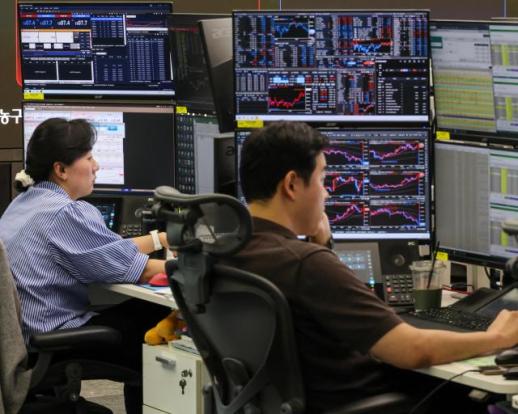 Reality bites as Korea's retail investors struggle to escape leverage trap SEOUL, July 23 (AJP) - Reality bites, and it takes a strong stomach to survive the KOSPI reality show, where billions of won in retail wealth disappear every trading day. Panic flashes across online stock forums. "Save me. I'm trapped at 22,000 won," one investor wrote, unsure whether to sell or keep holding a Samsung Electronics 2x leveraged exchange-traded fund bought near that price. The desperation reflects what is becoming a familiar pattern. According to the Korea Financial Investment Association, brokerages forcibly liquidated 59.6 billion won ($43 million) worth of shares purchased on margin Tuesday, the highest amount since July 10, when forced selling reached 81.6 billion won. It also marked the second consecutive session above 50 billion won after Monday's 52.8 billion won. Investor deposits — cash available in brokerage accounts for stock purchases — shrank by 5.83 trillion won in a single day to 106.69 trillion won. Outstanding margin loans, however, rose by 225.7 billion won to 33.56 trillion won, suggesting many retail investors remain willing to borrow despite mounting losses. The losers are leaving, but plenty more are waiting to buy the dip. Despite nearly 20 percent declines in both the KOSPI and KOSDAQ over the past month, speculative appetite remains remarkably resilient. Seoul's stock market, until recently the world's best-performing major equity market this year, has joined the ranks of the worst performers in July. The decline in investor deposits does not necessarily mean the speculative fever has broken. Deposits fall whenever investors buy stocks, withdraw cash or settle transactions. But when deposits decline while margin borrowing continues to rise, the pattern suggests demand is increasingly being financed with leverage rather than fresh cash. Yang Jun-sok, professor of economics at the Catholic University of Korea, said policymakers originally hoped to redirect speculative money away from real estate and into productive investment through the stock market. Instead, the rally exceeded expectations. "At first, the government encouraged people to invest in the stock market," Yang said. "Now it finds itself with another speculative force to calm." South Korea's benchmark KOSPI became the world's best-performing major stock index this year as the AI boom propelled Samsung Electronics and SK hynix sharply higher. At one point, the two chipmakers accounted for more than half of the benchmark's market capitalization, leaving the index unusually dependent on just two AI-related stocks while amplifying volatility through leveraged products tied to them. The government has since tightened controls on single-stock leveraged ETFs, suspending new listings and banning promotional campaigns until market conditions stabilize. Authorities also raised the minimum cash deposit for new or additional purchases to 30 million won from 10 million won and plan to increase the minimum trading unit from one share to 20 shares later this year while strengthening investor education, risk disclosures and safeguards against excessive price deviations. The measures are intended to slow new speculative demand rather than force existing investors to unwind their positions. Officials have also stopped short of delisting the products altogether, arguing that doing so could trigger another wave of selling. Presidential Policy Chief Kim Yong-beom said Sunday that delisting the funds was "hard to imagine" because of the market disruption it could cause. Instead, regulators are exploring ways to reduce volatility, including narrowing gaps between market prices and net asset values and easing selling pressure generated by ETF rebalancing near the market close. The government's challenge is to engineer what economists call an orderly deleveraging — reducing leverage gradually without triggering a disorderly cascade of forced liquidations. In theory, margin borrowing should slow, existing loans should be repaid over time and forced selling should steadily diminish. So far, the numbers suggest otherwise. Although outstanding margin loans remain below their June peak, they increased again in the latest session, indicating leveraged dip-buying remains alive. "There are still people saying stocks should be bought when they become cheaper," Yang said. "That means demand has not yet been suppressed." Evidence of investor distress is nevertheless mounting. The proportion of overdue margin purchases ending in forced liquidation climbed rapidly from 1.1 percent on July 16 to 4.6 percent Monday and 5.7 percent Tuesday. Under Korea's margin trading rules, investors who fail to settle purchases within two business days face automatic liquidation at the market opening, adding to selling pressure and increasing the likelihood of further margin calls. Yang said repeated warnings from regulators, academics and market professionals, along with mandatory investor education, have done little to curb speculative demand. "In the end, investors may have to learn the hard way," he said. "Unless they experience forced liquidations themselves, they will continue to view leveraged ETFs as useful and relatively safe. The market itself created that false sense of security." He recalled a legal dispute following the 1997 Asian financial crisis, when a Korean state-owned financial institution unsuccessfully sued a U.S. investment bank in New York after suffering losses on complex derivatives. The court rejected the institution's argument that it had not fully understood the products. "Fundamentally, investors have a responsibility to understand what they are buying, even if nobody explains it to them, especially when the product is complex," Yang said. "That is what Korean investors are now learning." Faster deleveraging before a bigger shock "Korea's market rose too far, too fast," Yang said. "Because the rally developed over such a short period, it may be better to reduce leverage quickly rather than drag the adjustment out." He argued Korea's AI-driven rally far outpaced comparable gains in the United States or Taiwan. While the S&P 500 reached repeated record highs over several years and Taiwan's benchmark remained broadly diversified despite TSMC's dominance, Korea's surge became unusually concentrated in a handful of AI-related shares. The Bank of Korea's first interest-rate increase since January 2023 — raising the policy rate to 2.75 percent on July 16 — is part of that effort to cool speculative excess. The government's dilemma is becoming increasingly clear. It wants to reduce leverage and curb speculation without triggering the kind of market collapse that would inflict heavy losses on millions of retail investors and undermine confidence in its broader capital-market agenda. 2026-07-23 16:31:23
-
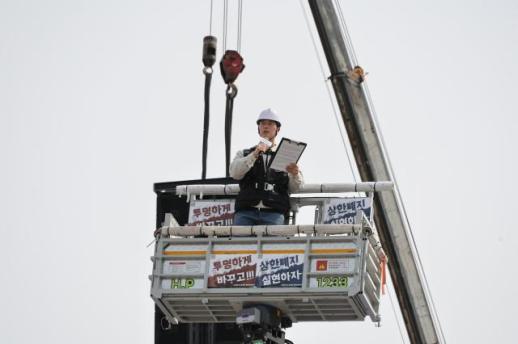 Samsung union weighs voluntary donation of bonus to social causes SEOUL, July 23 (AJP) - Samsung Electronics' largest labor union is considering a voluntary program allowing employees to donate a portion of their special performance bonuses to social causes, according to an internal union notice. The Samsung Group Super Enterprise Labor Union said the proposal, which was recently shared with its policy committee, is expected to be announced alongside guidance on special bonuses in the third or fourth quarter. Under the proposal, employees in the Device Solutions (DS) semiconductor division could choose to contribute between 0 percent and 1 percent of their special performance bonus. Participation would be entirely voluntary, with no upper limit on donations, the union said. The notice said the initiative is intended to address public criticism over large bonus payouts while supporting shareholder-friendly policies. Union executives and policy committee representatives also plan to participate in the program. The proposal follows discussions that began in June on encouraging employees to voluntarily donate part of their bonuses after Samsung agreed to a special performance bonus package with labor unions. The union said the timing and details of the program have yet to be finalized and would be announced once discussions are completed. 2026-07-23 16:30:40
-
Coinone Reports Change in Major Shareholders Following Investment from Hanwha Investment & Securities and OKX Ventures 금융당국이 한국투자증권과 OKX벤처스의 전략적 투자에 따른 코인원의 대주주 변경신고를 수리했다. According to the virtual asset industry on July 23, the Financial Intelligence Unit (FIU) of the Financial Services Commission approved the change in major shareholders for Coinone the previous day. On June 26, it accepted a report on changes in executives. This report follows a contract signed on May 29, in which Hanwha Investment & Securities and OKX Ventures agreed to acquire 20% each of the shares held by Coinone's largest shareholder, CEO Cha Myung-hoon, and the second-largest shareholder, Com2us Holdings. As a result, Hanwha Investment & Securities and OKX Ventures have become joint third-largest shareholders, following CEO Cha Myung-hoon (30.36%) and Com2us Holdings (24.54%). A Coinone representative stated, "With this approval, we have established a stronger responsible management and a stable business foundation with our new and existing shareholders." * This article has been translated by AI. 2026-07-23 16:28:00
-
Jeong Dong-young Announces Shift from 'Denuclearization First' to 'Peace First' Approach Jeong Dong-young, the Minister of Unification, announced on July 23 that the current administration has effectively abandoned the previous government's 'denuclearization first' policy in favor of a 'peace first' approach. During a visit to the press room at the Government Seoul Building to mark his one-year anniversary in office, Jeong outlined the achievements of the past year. He stated, "While we have not abandoned the ultimate goal of denuclearization, we have discarded the denuclearization first approach," emphasizing that it has been replaced with a strategy focused on prioritizing peace. Jeong explained that the terminology has shifted from denuclearization of North Korea to the goal of achieving a nuclear-free Korean Peninsula, detailing a strategy that prioritizes peace and a halt to North Korea's nuclear activities. He noted, "Isn't it true that both the U.S. and China have effectively abandoned the denuclearization first theory? Even hardline scholar Victor Cha has defined it as a failure," pointing out that the denuclearization rhetoric of past administrations was largely for domestic political purposes. He added, "It has been seven years since inter-Korean dialogue ceased, and it is essential to resume communication first. The realization that placing denuclearization at the entrance hinders dialogue is what we mean by peace first." Regarding the possibility of dialogue between North Korea and the U.S., Jeong stated, "I believe there is still a strategic need on both sides for dialogue." He further emphasized, "We are not mere observers of this (U.S.-North Korea dialogue) but must play a role to facilitate it as much as possible," highlighting that the upcoming visit of Chinese President Xi Jinping to the U.S. in September, along with the U.S.-China summit, and former President Donald Trump's visit to China in November will be critical periods. Jeong remarked, "The President is diligently playing the role of a peacemaker, but we must reflect on whether the government is adequately supporting his efforts," adding, "The Ministry of Unification believes that nothing will happen if we do not take action." He reflected on his one-year tenure, stating, "When I took office a year ago, inter-Korean relations were in ruins, and I felt the Ministry of Unification was similarly in disarray. I focused on restoring the organization and recovering everyday peace." Jeong outlined seven major reforms undertaken in the past year, including organizational stability, restoring everyday peace, transitioning to a policy of peaceful coexistence, restructuring North Korea's nuclear and peace strategies, regulatory easing, reforming education on peaceful unification, and improving perceptions of North Korean defectors. He noted, "Researchers in North Korean studies are feeling quite repressed," pledging that the government will actively support the research ecosystem. He also urged a change in terminology from 'North Korean defectors,' which carries connotations of stigma and exclusion, to 'North Korean residents,' which reflects recognition and integration.* This article has been translated by AI. 2026-07-23 16:24:00
-
President Yoon's Real Estate Deal Raises Questions About Fairness The real estate market is difficult to navigate.The government’s policies on housing are equally challenging. This is where the difficulty in understanding the real estate market begins."We considered the buyer's circumstances." "The transaction was conducted transparently in accordance with civil law agreements." This is how the Blue House explained the mortgage transaction involving President Yoon Suk Yeol and his wife’s apartment in Bundang. The Democratic Party of Korea went further, stating that the mortgage established to secure unpaid balances is a "legal and normal transaction method" and that the loan regulations do not prohibit sellers from deferring payment. They also noted that the presidential couple accepted "unfavorable conditions" by delaying the receipt of the final payment.If we accept this explanation, the transaction cannot simply be dismissed as defensive. It is a model transaction that is legal, normal, and considerate of the buyer's circumstances, where the seller even accepted unfavorable conditions. It deserves more than to be left to the goodwill of the president; it could be formalized as 'good seller financing.'The presidential couple sold their apartment in Bundang, Seongnam, for 2.9 billion won, establishing a mortgage of 1.77 billion won with the buyer as the debtor. They transferred ownership before receiving the full payment and agreed not to charge interest on the unpaid amount. There was even an explanation that the transaction considered the issue of transferring reconstruction rights, showing consideration for the buyer.According to the Blue House's explanation, the ownership was transferred before the final payment was made, leaving open the possibility of transferring reconstruction rights, with the unpaid amount to be repaid interest-free months later. This level of consideration justifies the term 'good seller.' The final payment is reportedly due at the end of October. However, the specific unpaid balance and the terms of repayment and delinquency have not been disclosed. There are circumstances, but no system in placeLast year, the government reduced the housing mortgage loan limit to 200 million won for homes priced over 2.5 billion won in the metropolitan area and regulated zones. This was intended to strongly curb borrowing for high-priced homes. Even if one buys a house worth 2.9 billion won, the maximum mortgage available from financial institutions is 200 million won.However, if the seller defers the final payment and secures a mortgage on the property, the situation changes. The buyer receives ownership before paying the full price and later repays the seller. The debt owed to the financial institution simply shifts to the seller, but the economic function of the debt for purchasing the house remains the same.The Democratic Party's assertion that current laws do not prohibit this is correct. However, while legality is a legal answer, it is not a policy answer from the ruling party. The government has narrowed the front door for borrowing purchases, but it raises the question of whether it is acceptable for sellers to open a side door.The Blue House emphasized the 'buyer’s circumstances.' But who among the public lacks circumstances? There are those who cannot sell their homes on time or have not received their security deposits. Many face conflicting schedules for moving in, loans, and taxes.The issue is not about who is in a more difficult situation. It is about which circumstances the system will accommodate and whose circumstances will be left to individual resolution. If the government and ruling party intend to justify the transaction based on the need to maintain reconstruction membership, they must first clarify the criteria for recognizing which circumstances apply to whom. If it's 'common,' let's manage it with statistics.The Democratic Party stated that mortgages are commonly used in real estate transactions. However, saying that the mortgage as a collateral device is common is different from saying that it is typical for sellers to leave a significant portion of the high-priced home sale price interest-free for months.An analysis of housing financing plans from January to May this year by Kim Eun-hye's office revealed that transactions classified as having a mortgage established between buyers and sellers accounted for only 3.87% of all apartment transactions. For apartments priced between 2.5 billion won and 3 billion won, it was 5.96%. These figures make it difficult to call it a mainstream transaction in that price range.However, in Yangji Village, where the president's apartment is located, there have been numerous transactions where sellers have taken on the role of mortgagee ahead of reconstruction project procedures. This suggests that such transactions are concentrated in specific complexes rather than being a common method across the market.The commonality of the mortgage as a collateral tool and the unusual conditions of this transaction, where a significant portion of the high-priced home sale price is deferred interest-free for months, are separate issues. If the president is to be emphasized for accepting unfavorable conditions as a special consideration, it should not be lumped together with the notion of a typical transaction.The market is already seeing listings for high-priced homes with terms like 'owner loans,' 'seller mortgage options,' and 'final payment loans.' Homeowners are beginning to fill the gap left by tightened bank loans. If loan regulations have not eliminated debt but pushed it off the books of financial institutions, it is no longer a matter of relying solely on personal goodwill or informal private contracts. 'Good seller financing' should be formalized.The starting point for formalization is not support but reporting and management. If, as the Blue House and the Democratic Party explain, this is a legal and normal transaction, then standards should be established to distinguish seller financing from other private borrowing for reporting and management.The deferral of final payments between parties should be classified as a separate item in the financing plan, detailing the actual unpaid amount, interest rate, maturity, and repayment sources. It should also be determined whether to combine it with financial institution loans and how to manage repayment capacity.There should also be distinctions regarding policy support or special treatment. Criteria are needed to determine whether to limit it to actual residents without homes or to include delays in disposing of existing homes or transferring reconstruction rights. The taxation principles for economic benefits arising from interest-free or low-interest deferrals must also be clarified.Sellers also bear the risk of not receiving large final payments on time. This is why a standard contract that includes delinquency rates, collateral execution, and priority rights confirmation criteria is necessary.The government has labeled those who reduce rents as 'good landlords' and provided tax deductions. According to the government’s logic, there is no reason not to give the same name and benefits to those who wait interest-free for the sale price, considering the buyer's circumstances. A concrete example of a presidential transaction already exists.Of course, formalizing this will require acknowledging uncomfortable truths. The unpaid debts owed to sellers are also debts incurred to purchase a home. If managed alongside financial institution loans, those unpaid amounts would also fall under the housing acquisition debts the government intended to manage. If left unmanaged, it becomes a regulatory bypass available only to those with financial flexibility who find a trusting homeowner.This is not a matter to be neglected simply because it is not prohibited, nor should it end as a heartwarming story of presidential consideration. If the government and ruling party's explanations are correct, then the actual debt amounts and interest and maturity conditions should be reported, and rules for how to manage them should be made public. If exceptions cannot be made, they should not be packaged as presidential goodwill or exemplary behavior.No citizen is without circumstances. The important question is not who is in a more difficult situation, but how policies will accommodate which circumstances based on what criteria. 'Good seller' President, please consider the circumstances of the people as part of the system. 2026-07-23 16:24:00