


Latest by
-
 Han River Prugio Riverfront: A New Luxury Residential Development Residential areas along the Han River have long been regarded as prime real estate in South Korea. Recently, a surge in high-value transactions has further increased the value of apartments along the river.According to the Ministry of Land, Infrastructure and Transport's real transaction disclosure system, an 84-square-meter unit at 'Acro River Park' in Banpo-dong, Seocho District, sold for 6.3 billion won in May, setting a new record. Based on supply area, this amounts to approximately 185 million won per 3.3 square meters. Previously, an 84-square-meter unit at 'Raemian One Bailey' sold for 7.2 billion won, surpassing 200 million won per 3.3 square meters, indicating a trend of high-value transactions along the Han River.This price competitiveness is not limited to the Gangnam area. In Heukseok-dong, Dongjak District, 'Acro Riverheim' and 'Heukseok Han River Centerville 1st' have established themselves as leading complexes in the local market. In the Gyeonggi Province, Hanam Misa River Prugio and Goyang Deok-eun District DMC Han River Samjeong Green Core The Best are also recognized as representative complexes.Industry experts cite the scarcity of supply as a key factor behind the rising residential values along the Han River. With limited land available for new housing developments, demand remains steady regardless of economic conditions, and it is expected that new supply will remain limited, further enhancing the area's scarcity value.In this context, a large-scale residential complex, 'Han River Prugio Riverfront,' is set to launch in Gimpo, leveraging its prime location along the Han River.Developed by Han River Cinepolis and constructed by Daewoo Engineering & Construction, the complex will consist of 12 buildings, ranging from four underground floors to 38 above ground. It will feature 2,432 apartments with sizes from 84 to 180 square meters, along with 250 residential office units and commercial facilities.The most notable feature of the complex is its proximity to the Han River. Most units, except for a few, are designed to offer river views, and the skyline will reach up to 38 stories, making it a landmark development in the Gimpo area.Transportation conditions are also expected to improve. The planned Gimpo Han River Road Pungok IC, along with access to National Route 48 and the Gimpo IC of the Seoul Metropolitan Expressway No. 1, will facilitate convenient vehicle movement. Additionally, the extension of Seoul Subway Line 5 has passed preliminary feasibility studies, and the Goyang extension of Incheon Metro Line 2 is also in progress. The extension of Line 2 is expected to enhance accessibility to Seoul by connecting to the KINTEX station, where the GTX-A line stops.The educational environment is another strong point. A planned kindergarten site is located in front of the complex, and an elementary school within the district is scheduled to open in March 2029, with a middle school also planned, ensuring walkable commuting conditions for students. Being classified as a rural area may also make it eligible for special admission programs.Living infrastructure is also well-established. Nearby, there are E-Mart Traders and Gimpo Premium Outlets, and plans are underway for the Inha University Medical Campus, expected to open in 2031, which will enhance medical infrastructure in the area.Meanwhile, the model home for 'Han River Prugio Riverfront' is set to be established in the Pungmu-dong area of Gimpo City.* This article has been translated by AI. 2026-07-22 16:48:00
-
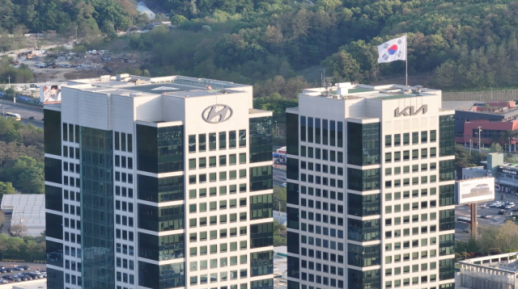 Hyundai Motor Q2 earnings seen down 17%, data due Thurs SEOUL, July 22 (AJP) - Hyundai Motor is expected to post a double-digit decline in second-quarter operating profit, as weaker vehicle sales combine with continued U.S. tariff costs and rising material and warranty expenses to squeeze margins despite favorable currency effects and a richer hybrid mix. According to consensus estimates compiled by FnGuide, the automaker’s operating profit is forecast at 2.99 trillion won ($2.03 billion), down about 17 percent from 3.60 trillion won a year earlier. Revenue is expected to edge up 0.7 percent to 48.6 trillion won. The company is set to report its results 2 p.m. Thursday. Hyundai Motor shares finished 4.76 percent higher at 418,000 won. The outlook weakened as the quarter progressed. Hyundai Motor’s second-quarter operating profit consensus fell 5.8 percent over the month through July 13, according to Kyobo Securities. The downgrade reflects a combination of lower production and rising costs. A supplier fire disrupted output in South Korea, while higher raw material prices, increased warranty expenses and lower factory utilization added pressure. The won’s weakening toward the end of the quarter cut both ways. It raised the won value of overseas sales but also increased foreign-currency-denominated warranty liabilities, adding to costs. Hana Securities is among the more cautious, projecting operating profit of 2.90 trillion won on revenue of 48.3 trillion won. Hanwha Investment & Securities expects operating profit of 3.04 trillion won and revenue of 48.5 trillion won. U.S. tariffs remain a major drag on profitability. Under a 15 percent tariff assumption, Hanwha estimates Hyundai Motor’s tariff-related expenses at about 998 billion won for the quarter, equivalent to roughly one-third of the company’s projected operating profit. The burden remains substantial even though the brokerage expects it to ease from its estimate of 1.82 trillion won a year earlier. Unlike the first quarter, when costs were the dominant drag on earnings, weaker volume is expected to play a larger role in the second quarter. Hyundai Motor’s global wholesale sales are estimated at about 990,000 to 1 million vehicles, down 6 to 7 percent from a year earlier, compared with a 2.5 percent decline in the first quarter. Production disruptions in South Korea and India, an aging domestic model lineup and intensifying competition overseas weighed on deliveries. Regional performance was mixed. U.S. wholesale sales rose 2 percent to 265,208 vehicles, supported by demand for models including the Palisade. European sales fell 9.8 percent to 145,549 vehicles, while domestic sales dropped 15.9 percent to 158,515. Production began returning to normal in June after the supplier disruption affected output in April and May. A more favorable product mix and exchange rate helped prevent a steeper decline. Hana Securities estimates Hyundai Motor’s average selling price rose about 4 percent from a year earlier, as the share of hybrid vehicles increased by 3.2 percentage points and the average won-dollar exchange rate climbed 7 percent. Those gains partly offset higher sales incentives and weaker overall volume. Brokerages expect earnings momentum to improve in the second half as production normalizes and new or updated models, including the Avante, Tucson, Santa Fe and Ioniq 3, support sales and product mix. Higher raw material costs and sales incentives, however, are expected to remain a burden on margins. 2026-07-22 16:40:21
-
Seoul Mayor Oh Se-hoon Fined 10 Million Won for Election Law Violation Seoul Mayor Oh Se-hoon has been sentenced to a fine of 10 million won for violating political funding laws after being charged with receiving polling results from political broker Myung Tae-kyun and having a supporter cover the costs. Oh expressed his intention to appeal the ruling, stating, "I cannot accept this judgment." The Seoul Central District Court's Criminal Division 22, presided over by Judge Jo Hyung-woo, issued the ruling on July 22. In addition to the fine, the court ordered a surcharge of 21 million won.Oh was charged for receiving unpublished polling results conducted by Myung ahead of the 2021 Seoul mayoral by-election and for having businessman Kim Han-jung, a supporter, pay for the polling.If the Supreme Court upholds the ruling, Oh will lose his position as mayor. According to the Public Official Election Act, elected officials lose their positions if they are convicted of violating political funding laws and receive a fine of 1 million won or more.The court also imposed fines on two others involved in the case: former Seoul Deputy Mayor for Political Affairs Kang Cheol-won received a fine of 3 million won, while Kim was fined 5 million won.After the verdict, Oh spoke to reporters outside the Seoul Central District Court, apologizing to the public for causing concern but also expressing disbelief that only five out of ten unpublished polls were deemed guilty.He added, "The conviction was based solely on the testimony of Myung Tae-kyun, a notorious liar, and indirect evidence, with no direct evidence presented. I will contest this in the appeals court."The special prosecutor's team, led by Kim Min-jung, stated, "The defendants have claimed that this was a politically motivated prosecution without any evidence, but this ruling proves that is not the case. We will analyze the verdict and decide whether to appeal." 2026-07-22 16:40:00
-
 Seoul mayor fined 10 million won for accepting illegal political funds SEOUL, July 22 (AJP) - Seoul Mayor Oh Se-hoon was fined 10 million South Korean won (US$7,200) on Wednesday after being found guilty of accepting illegal political support by having opinion polls conducted ahead of the 2021 mayoral by-election. The ruling by the Seoul Central District Court came after Oh was indicted in December last year on charges of receiving about a dozen opinion polls from self-proclaimed political broker Myung Tae-kyun ahead of the April 7, 2021 election and having his supporter and businessman Kim Han-jung pay about 33 million won to Myung for the polls on his behalf. The court handed down fines of 5 million won for Kim and 3 million won for Kang Chul-won, a former deputy mayor, in connection with the allegations. But Oh denied the allegations, arguing that he had already severed ties with Myung by around February 2021 and that Kim had paid Myung voluntarily without his knowledge, either to cover part of the polling costs or for personal reasons. But the court rejected his claims, finding that Oh had sufficient motive to commission the polls and that Kim would have had no reason to make the payments without Oh's request, as Kim appeared to have no direct relationship with either Myung or Kang. Immediately after the ruling, Oh said he would appeal, saying, "I cannot accept the ruling. I will challenge it in the appellate court." Prosecutors had earlier sought a prison term of one year and six months for Oh, along with the forfeiture of the 33 million won allegedly provided as illegal political funds. If upheld by a higher court, the ruling would cost Oh his post and bar him from running for elected office for five years, making him ineligible to run in the 2030 presidential election. Under relevant laws in South Korea, public officials who receive a fine of 1 million won or more are disqualified from public service. Oh had been considered one of the strong contenders for the 2030 presidential election from the main opposition People Power Party (PPP) after winning a fifth term as Seoul mayor in last June's local elections. 2026-07-22 16:39:39
-
IBK Bank Halts New Variable-Rate Home Loans Amid Lending Restrictions IBK Bank has stopped accepting new applications for variable-rate home mortgage loans at its branches nationwide. This move comes as financial authorities have indicated they will maintain strict household loan restrictions in the second half of the year, prompting proactive management measures.As of July 21, IBK Bank has ceased new applications and processing for variable-rate home loans across all branches. Additionally, the bank will limit the transfer of loans from other banks. There is no set date for when these services will resume.To prevent confusion among borrowers, loans submitted or consulted on by July 20 will still be processed until July 30. Borrowers can also switch to other banks through loan transfer services. Fixed-rate home loans with terms of five and ten years will continue to be offered.An IBK Bank official stated, "We are taking proactive measures to manage limits in compliance with overall household loan regulations."Recently, banks have been tightening lending practices to avoid exceeding the household loan growth target of 1.5% set by financial authorities. KB Kookmin Bank reduced its mortgage limit from 600 million won to 300 million won on July 10, while Woori Bank cut its monthly mortgage limit per branch from 3 billion won to 1 billion won. Shinhan Bank has also suspended its mortgage credit insurance and mortgage credit guarantee services since July 10.* This article has been translated by AI. 2026-07-22 16:36:00
-
Parties Remain Divided Over Recount Timing in National Assembly Inquiry The ruling and opposition parties are at an impasse over the timing of a recount of 2.47 million ballots from the June 3 local elections, currently stored at the handball stadium in Olympic Park, Songpa District, Seoul. The Democratic Party insists that the schedule for the recount should be determined by a vote, while the People Power Party advocates for extending the national inquiry period through bipartisan agreement.During the second hearing of the National Assembly's special committee on the investigation into the ballot shortage and election management reform on July 22, the Democratic Party's call for an immediate recount clashed with the People Power Party's proposal for a special investigation-led recount, mirroring the situation from July 14.The Democratic Party argues that the recount must occur before the committee's activities conclude on August 1, urging committee chairman Yoon Sang-hyun to put a schedule change proposal to a vote. Lawmaker Lee Hae-sik stated, "It seems impossible to reach a unanimous agreement, so I request that the principle of majority rule be applied to decide on the voting schedule change." Fellow lawmaker Lee Gi-heon emphasized, "No further debate is necessary. There are less than ten days left in the activity period, and we must set a schedule for the recount, even if it requires a vote."The ruling party's push for speed is interpreted as an effort to maintain control over the narrative surrounding the ballot shortage, with party leader Jang Dong-hyuk frequently visiting Olympic Park. Lawmaker Yoon Geon-young, the ruling party's secretary, remarked, "The National Election Commission has stated that a political agreement in the National Assembly could make it possible, and the joint investigation team has expressed respect for the national inquiry committee's recount. The People Power Party's claims appear to be mere stalling tactics, raising suspicions of a 'bedroom investigation.'"Conversely, the People Power Party emphasizes the need to wait for the special investigation to commence before proceeding with the recount. Lawmaker Joo Jin-woo argued, "If we conduct the recount primarily focused on the National Election Commission, which will be under investigation by the special prosecutor, can we ensure objectivity and gain public trust? It would not be too late to discuss this after an objective investigation by the special prosecutor." Lawmaker Choi Bo-yoon added, "There are still parts where data has not been submitted, and many issues remain unresolved regarding fact-finding and system improvement. We must acknowledge that a recount is impossible by August 1 and first discuss extending the national inquiry committee's period."Additionally, lawmakers Kim Eun-hye and Shin Dong-wook expressed skepticism about an immediate recount. This stance is seen as a strategy to create an environment where a trusted entity can take the lead, following the opposition's earlier achievement of a 'bipartisan agreement on special prosecutor recommendations.' Opposition secretary Seo Beom-soo stated, "Isn't the call for a special prosecutor due to distrust in investigative agencies? The national inquiry committee must publicly verify alongside the special prosecutor to secure public trust and achieve a clear fact-finding mission."In this standoff, Chairman Yoon stated, "A recount cannot replace the special investigation, nor can the special investigation replace the recount. Our duty is to open the ballot boxes and inform the public of the accurate facts. If the timing of the special investigation does not align with the national inquiry, we can consider working with the joint investigation team dispatched to the special prosecutor." In this context, Kang Dong-wan, acting secretary of the National Election Commission, indicated that if an agreement is reached between the parties, a recount could be possible as early as next week, contingent on the verification scope of the national inquiry committee and compliance with other legal requirements.* This article has been translated by AI. 2026-07-22 16:32:00
-
AI Reshapes News Ecosystem, Advocates for Media and Data Sovereignty Concerns have been raised that generative artificial intelligence (AI) is reshaping the entire process of news production, distribution, and consumption, potentially leading to media dependence on global AI platforms. To address this, experts suggest establishing a solidarity framework among media organizations and creating standards for the use of news data, distribution history, and compensation systems to ensure information and data sovereignty in the AI era.On July 22, a seminar titled 'Exploring Measures for Democratic Public Opinion Formation in the Age of AI Agents' was held at the National Assembly Hall in Yeouido, Seoul, co-hosted by the offices of Democratic Party lawmakers Hwang Hee and Lee Yeon-hee and the Korea Artificial Intelligence Association.Attendees included Lee Woo-tak, a professor at Sogang University, Kim Kyung-tae, vice president of the Korea Artificial Intelligence Association, Jeong Seung-kyung, head of the Data Trust Center at the Korea Artificial Intelligence Association, Kwon Oh-hyun, director of Nexin Technology, and Ha Sung-heun, head of the Korea Trade Information Communication.In his keynote address, Professor Lee Woo-tak emphasized that 'over the past 20 years, domestic media has ceded editorial control and news distribution leadership to portals, and now faces the risk of becoming dependent on generative AI platforms.' He urged that 'domestic media must unite around public media to redesign the order of news distribution.'However, he also noted that the generative AI era does not solely present challenges for the media. 'As AI services require reliable and up-to-date information, this presents an opportunity for media to establish a trustworthy news supply system.'Kim Kyung-tae, vice president of the Korea Artificial Intelligence Association, stated, 'In the age of AI, media must secure control over the standards and distribution of news data.' He described the relationship between media organizations and global AI companies like OpenAI as being on an 'uneven playing field,' where media outlets are inevitably influenced by the content provision methods and pricing conditions set by these companies.He proposed that media organizations should create a common standard for news usage. Citing the example of the media coalition 'SPUR,' which includes the BBC and The Guardian, he suggested that when AI companies utilize media content, they should adhere to formats and conditions set by the media, ensuring transparency in the purpose and volume of article usage.Additionally, he called for a pricing structure that varies based on the purpose of AI training, article citation, display, and reprocessing, along with a verification system to ensure compliance with contractual purposes.Kim also recommended forming a 'News Providers Association' centered on public media to establish standards for news data, usage records, verification, and compensation systems, while collaborating with international media coalitions to enhance negotiation power against global AI companies.Jeong Seung-kyung, head of the Data Trust Center at the Korea Artificial Intelligence Association, stressed the need to establish a data sovereignty system that guarantees ownership and control of media data in the AI era. He pointed out that high-quality data produced by media, including articles, columns, transcripts, photos, videos, and audio, is being used for AI training, yet the purposes and distribution channels remain opaque, and compensation for providers is inadequate.Jeong explained that a transaction structure is needed to standardize media data, gather it in a central hub, verify the identities and purposes of utilizing companies, and track the distribution history of the data. He also proposed various compensation methods, such as subscriptions, bulk purchases, pay-per-use, and royalty sharing, to reward based on the value and usage of the data.He concluded that to effectively utilize media data with technology, supportive policies and systems must be in place, advocating for the creation of a platform with transparent consumption pathways and compensation systems for providers. This would enable media organizations to exercise ownership and control over data, securing data sovereignty in the AI era.* This article has been translated by AI. 2026-07-22 16:28:00
-
Pro Gamer Faker Appointed Honorary Police Officer to Combat Cyber Gambling Pro gamer Faker, also known as Lee Sang-hyuk, has taken on the role of an honorary police officer to help prevent youth cyber gambling.On July 22, the National Police Agency appointed Lee as an honorary police officer and ambassador for cyber gambling prevention at a ceremony held in the Seodaemun District of Seoul. Lee was given the rank of sergeant, one step above a police officer, reflecting the nature of the cyber gambling prevention work, which aligns with the entry rank for police officers in cyber investigation roles.The police chose Lee due to his significant influence among young people. They noted that through his long career as a professional gamer, he has demonstrated values of self-discipline, focus, and restraint, which can positively impact youth both domestically and internationally.Lee will participate in creating promotional videos and posters to raise awareness about the self-reporting system for youth cyber gambling until August. During the appointment ceremony, he also presented a signed T1 uniform to be given to youths who have actively participated in recovery programs for gambling addiction.The National Police Agency has been operating a self-reporting system for youth cyber gambling since May 18, which will run until August 31. As of July 16, there have been 806 reports, an increase of 512 from the 294 reports received in the first month of the program.The reporting system is aimed at youths under 19 who have experienced cyber gambling, as well as their guardians. Reports can be submitted through the 117 School Violence Reporting and Counseling Center. Once a report is received, school liaison officers and specialized gambling counselors conduct initial consultations and screenings, connecting individuals to addiction treatment facilities based on the results.Self-reporting does not lead to criminal penalties. The police will consider the amount of money used for gambling, the individual's attitude of remorse, and the recovery process before determining whether to offer leniency through a review committee that includes external experts. If illegal financial activities, such as proxy deposits, are confirmed, support for victim recovery will be coordinated with the Financial Integration Support Center.This initiative was piloted in eight provincial police agencies starting in 2024, beginning with the Daejeon Police Agency. During that time, 512 youths who participated in cyber gambling were connected to recovery programs, with only four, or 0.8%, relapsing within three months. The government believes that the self-reporting system is effective in identifying and addressing gambling issues early, leading to its nationwide expansion.Lee expressed, "I feel a great sense of responsibility being appointed as an honorary police officer and ambassador. I will actively participate in raising awareness about the dangers of cyber gambling and the self-reporting system among youth."Acting Police Chief Yoo Jae-sung stated, "It is crucial to start counseling and treatment for youth gambling issues before they escalate. We hope Lee's influence will encourage young people to come forward and report their experiences."* This article has been translated by AI. 2026-07-22 16:28:00
-
Chinese AI Startup Moonshot AI Seeks $74 Billion Funding to Compete with U.S. Chinese artificial intelligence (AI) startup Moonshot AI is launching a major funding round aimed at achieving a valuation of up to $50 billion (approximately 74 trillion won). This move reflects the increasing competition among Chinese AI firms in what has been termed a 'war of funds' against the United States.According to reports from Chinese media on July 22, Moonshot AI plans to complete its current funding round, based on a valuation of $31.5 billion, within a few days and will immediately seek additional investments. The company is also considering a listing on the Hong Kong stock exchange within the next six months.Following the successful launch of its latest AI model, Kimi K3, on July 16, Moonshot AI is actively working to secure funding to bolster its technological capabilities.Industry experts believe that Kimi K3 has achieved performance levels competitive with top U.S. AI models from companies like OpenAI and Anthropic. In fact, the AI performance evaluation organization Artificial Analysis has reported that Kimi K3 outperformed Anthropic's advanced model, Claude Opus 4.8, in certain benchmarks.While U.S. closed AI models such as OpenAI's GPT, Google's Gemini, and Anthropic's Claude continue to lead the market, the recent releases of Kimi K3 and DeepSeek V4 in China are rapidly closing the performance gap with these top-tier models.Chinese AI companies are actively seeking funding to ensure they do not fall behind in the AI race with the U.S., focusing on securing resources for model development, computing infrastructure, and talent acquisition.The Wall Street Journal reported on July 22 that at least six Chinese AI startups are preparing for initial public offerings (IPOs) on the Chinese mainland or Hong Kong stock exchanges by 2027.DeepSeek, a competitor of Moonshot AI, is a notable example. The company has raised over 50 billion yuan (approximately 11 trillion won) in its first external funding round and is currently pursuing a second round of investment. DeepSeek is also planning to debut on the Shanghai stock exchange next year.Gary Tan, a portfolio manager at Allspring Global Investments, told the Wall Street Journal that the recent funding competition is driven by the substantial capital required for AI model development, computing infrastructure, and talent acquisition.There are also concerns about potential additional regulations from the U.S. Currently, Chinese AI companies are allowed to use advanced semiconductors from Nvidia in data centers outside China. However, to prepare for possible future restrictions, these companies need significant funding to secure computing resources through contracts with overseas cloud service providers.Earlier this year, the surge in interest in AI led to the successful listings of Chinese AI startups ZFWA and MiniMax on the Hong Kong stock exchange. Charu Chanana, a chief investment strategist at Saxo Markets, noted that AI supply chain-related companies raised over $10 billion in Hong Kong in the first half of this year.* This article has been translated by AI. 2026-07-22 16:28:00
-
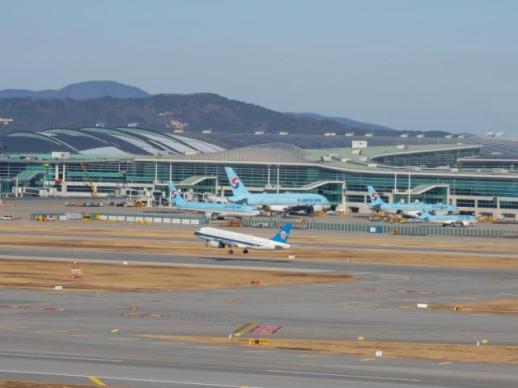 Incheon Airport to open departure gates early during summer peak SEOUL, July 22 (AJP) - South Korea will open some departure gates at Incheon International Airport earlier and increase immigration screening staff during the peak summer travel season, the Ministry of Justice said Wednesday. The special immigration measures will be in place from Thursday through Aug. 8, as the country enters one of the busiest periods for overseas travel. At Terminal 1, departure gate No. 2 will open at 5:30 a.m., while departure gate No. 4 will open at 6 a.m. At Terminal 2, departure gate No. 2 will open at 5 a.m. Immigration officers will also begin work earlier to ease passenger congestion. The number of screening staff at Terminal 1 will be increased to 32 from 24, while Terminal 2 will have 20 officers, up from 14. The ministry said personnel from other departments will also be assigned to support immigration screening during the peak period. Families traveling with minors will also be allowed to register for automated immigration clearance at departure gates during the summer season. Previously, minors had to visit an immigration service center outside the departure area to register for the service. Justice Minister Jung Sung-ho said the ministry would mobilize its screening capacity to ensure that Korean nationals using Incheon Airport during the summer peak season do not face inconvenience during immigration procedures. 2026-07-22 16:26:33