


Latest by
-
 Court Finds Oh Se-hoon Guilty of Political Fund Law Violations Seoul Mayor Oh Se-hoon has been found guilty by a first-instance court for receiving results from undisclosed opinion polls conducted by political broker Myung Tae-kyun and for requesting that a supporter cover the costs. The court determined that evidence, including Myung's testimony, call records, and the timeline of the polls, confirmed that Oh's camp commissioned the surveys and requested payment.The Seoul Central District Court's Criminal Division 22, led by Judge Jo Hyung-woo, sentenced Oh to a fine of 10 million won and ordered him to forfeit 21 million won. The special prosecutor's team, led by Kim Geon-hee, had sought a prison sentence of 18 months and a forfeiture of 33 million won.The court found that after commissioning the polls from Myung, Oh assigned former Deputy Mayor Kang Cheol-won to oversee the surveys and requested that businessman Kim Han-jeong cover the costs. The 21 million won paid to the Future Korea Research Institute was deemed political funding for Oh's campaign, with the court recognizing that Oh and Kang conspired to receive the donation.Specifically, five out of ten undisclosed and disclosed opinion polls conducted between January 22 and February 18, 2021, and three corresponding payments were found guilty. The court noted that Oh met directly with Myung to discuss election strategies and the polls, and that Kang raised concerns about the sample size, leading to adjustments. The timing of Kim's payment immediately after the surveys indicated that it was not a personal favor but rather a response to a request from Oh's camp.However, the court acquitted Oh of five other polls included in the indictment, stating it could not definitively conclude they were commissioned by his camp. The court explained that some undisclosed polls might have been conducted at the request of former People Power Party emergency committee chair Kim Jong-in or based on Myung's own judgment, and some payments could not be specifically tied to the alleged survey costs.In explaining the sentencing, the court stated, "Crimes involving the illegal receipt of political funds are serious as they undermine the integrity of politics." It pointed out that Oh, having served as mayor, should have been aware of the political fund law's intent but still led the crime and displayed a tendency to evade responsibility during the trial.Nonetheless, considering that the offenses occurred over about a month during an internal party primary and that Oh did not maintain a relationship with Myung afterward, the court opted for a fine rather than imprisonment, noting that it could not recognize active manipulation of public opinion and that Oh had no prior criminal record.If this ruling is upheld by the Supreme Court, Oh will lose his position as mayor under the Public Election Act. Political analysts suggest that if the trial proceeds under the expedited trial principle for election offenses, known as '6-3-3,' a Supreme Court decision could come as early as January next year, followed by a by-election for the Seoul mayoral position in April of the same year.* This article has been translated by AI. 2026-07-22 17:12:00
-
Samsung Bioepis and Intuscell Sign Agreement for ADC Drug Development 'SBE303' Samsung Bioepis and Intuscell have signed a formal agreement for the joint development and commercialization of the antibody-drug conjugate (ADC) candidate 'SBE303.' The two companies will begin follow-up development of the first candidate since their joint research contract in 2023.On July 22, Samsung Bioepis and Intuscell announced the signing of the formal contract for the first candidate in their ADC drug joint development project.In December 2023, the two companies entered into a joint research agreement to discover up to five ADC drug candidates. This latest contract focuses on the follow-up research and commercialization of SBE303, a candidate targeting the Nectin-4 protein, which is currently undergoing global Phase 1 clinical trials. The candidate combines Samsung Bioepis' antibody with Intuscell's linker technology and Frontline's payload from China, developed through open innovation.The contract includes development and sales milestones as well as royalty conditions based on revenue, but the total contract size and specific terms have not been disclosed by the companies.Kim Kyung-ah, CEO of Samsung Bioepis, stated, "This contract marks an important milestone in expanding our business into the next generation of cancer treatments through collaboration with domestic companies. We will continue to pursue innovative research and development to address various unmet medical needs." Meanwhile, Samsung Bioepis presented preclinical research results for SBE303 at the American Association for Cancer Research (AACR) annual meeting in April, confirming the potential for improved antibody-tumor cell binding specificity and intracellular drug delivery efficiency compared to existing Nectin-4 targeted cancer therapies.* This article has been translated by AI. 2026-07-22 17:08:00
-
Ministry of SMEs and Startups Holds Meeting on Startup Regulations The Ministry of SMEs and Startups announced that it held a meeting and a memorandum of understanding (MOU) signing ceremony on July 22 at the Startup Venture Campus (SVC) in Seogyo-dong, Seoul, to identify and alleviate regulations affecting startups in new industries.Seventeen organizations attended the event, including the Korea Startup Forum, the Venture Business Association, the Korea Autonomous Vehicle Industry Association, the Korea Smart Data Association, the Korea AI and Robotics Industry Association, the Korea Climate Tech Association, and the Korea Pharmaceutical and Bio Association.Noh Yong-seok, the acting minister of the Ministry of SMEs and Startups, listened to the challenges faced by the startup sector during the meeting and discussed support measures. According to the ministry, startups identified securing investment funds and regulatory relief as urgent policy priorities.Following the discussions, the participating organizations signed an MOU. Under this agreement, the ministry will establish a communication channel to identify and swiftly improve unreasonable regulations that hinder the innovation and growth of small and venture businesses. Each organization will work on identifying regulatory issues, publicizing regulatory relief, and making recommendations to relevant government departments.Noh stated, "Technologies in new industries such as artificial intelligence and autonomous driving are rapidly advancing, but existing systems and regulations are not keeping pace. We will actively pursue regulatory rationalization through public-private collaboration and government-wide cooperation to identify regulatory challenges."* This article has been translated by AI. 2026-07-22 17:04:00
-
U.S., South Korea, and Japan Foreign Ministers Meet in Manila to Discuss Korean Peninsula Situation On July 22, the foreign ministers of the United States, South Korea, and Japan held a meeting in Manila, Philippines, to discuss the situation on the Korean Peninsula.South Korean Foreign Minister Cho Hyun, U.S. Secretary of State Mark Rubio, and Japanese Foreign Minister Toshimitsu Motegi convened at the Philippine International Convention Center (PICC) for approximately 30 minutes.This meeting comes about two weeks after their previous discussions during the NATO summit on July 7.The ministers are in Manila to attend ASEAN-related foreign ministers' meetings, including the ASEAN Regional Forum (ARF) and the East Asia Summit (EAS).Topics likely discussed included the situation on the Korean Peninsula and in the Middle East, economic security, ASEAN cooperation, collaboration on small modular reactors (SMR), and responses to transnational online crime.Park Il, a spokesperson for the Ministry of Foreign Affairs, stated during a regular briefing on July 21 that the foreign ministers would share insights on North Korea's exchanges with Russia and China and discuss effective responses. He added that various issues related to trilateral cooperation would also be on the agenda.Prior to the meeting, Minister Cho had a brief conversation with U.S. Deputy Secretary of State Alison Hooker for about five minutes.* This article has been translated by AI. 2026-07-22 17:04:00
-
KAMCO and Daejeon Bankruptcy Court Support Business Revitalization and Asset Sales in Chungcheong Region The Korea Asset Management Corporation (KAMCO) announced on July 22 that it has signed a memorandum of understanding with the Daejeon Bankruptcy Court to support the management normalization of rehabilitating companies and the efficient sale of bankruptcy estate assets.The agreement aims to enhance the efficiency of business rehabilitation and bankruptcy procedures in the Chungcheong region and strengthen the public support system for local businesses and debtors.Under the agreement, the Daejeon Bankruptcy Court will recommend companies with high rehabilitation potential to KAMCO, which will provide tailored support, including new loans, payment guarantees, and management consulting.KAMCO's public asset trading platform, 'Onbid,' will also be utilized for the sale of assets undergoing bankruptcy procedures. Instead of traditional on-site sales, an electronic bidding method will be implemented to allow bidders from across the country to participate, improving accessibility and transparency in asset disposal.KAMCO President Jeong Jeong-hoon expressed hope that the agreement will serve as a collaborative foundation for the successful revitalization of rehabilitating companies and the swift disposal of bankruptcy estate assets. He added, 'We will continue to strengthen our cooperation with the courts to actively support the economic recovery of struggling businesses and debtors.' 2026-07-22 17:04:00
-
President Yoon Suk Yeol to Meet Big Tech CEOs During U.S. and South America Trip President Yoon Suk Yeol will meet with leading figures from global tech companies, including Sam Altman, CEO of OpenAI, and Jensen Huang, CEO of NVIDIA, in San Francisco on July 24.Joining him will be prominent business leaders such as Lee Jae-yong, chairman of Samsung Electronics; Chey Tae-won, chairman of SK Group; Chung Eui-sun, chairman of Hyundai Motor Group; and Lee Hae-jin, chairman of Naver.The Blue House announced on July 22 that President Yoon will travel to San Francisco, Brazil, Chile, and Argentina from July 24 to August 3, before returning via Frankfurt, Germany.Kim Yong-beom, head of the policy office, stated, "President Yoon plans to emphasize South Korea's commitment to significant AI investment and global collaboration through meetings with CEOs of major tech firms that are already collaborating with domestic companies, aiming to achieve tangible results in investment and cooperation from key players in the global AI supply chain."During the 'San Francisco AI Summit,' President Yoon will announce the 'San Francisco AI Declaration,' outlining South Korea's ambition to become an indispensable player in the global AI ecosystem and its vision for international cooperation. He will also participate in discussions at the event.On July 25, he will attend a 'Silicon Valley Venture Investment Meetup' to connect the venture investment ecosystems of South Korea and the U.S. and lay the groundwork for attracting investment for 'K-Startups.' On July 26, he will make a state visit to Brazil and meet with President Luiz Inácio Lula da Silva.Security advisor Wi Seong-rak commented on the South America trip, stating, "We will expand practical cooperation between governments to realize the market development potential in various fields with Brazil, the largest defense market in Latin America; Argentina, which ranks third globally in media coverage related to the Korean Wave; and Chile, a promising infrastructure market." 2026-07-22 17:04:00
-
Seoul Mayor Oh Se-hoon Sentenced to Fine for Election Law Violation 오세훈 서울시장이 22일 정치자금법 위반 혐의 1심에서 당선 무효형에 해당하는 벌금 1000만원을 선고받자 더불어민주당은 "사필귀정"이라며 정치적·법적 책임을 져야 한다고 주장했고, 국민의힘은 "사법 정의를 무너뜨린 정치 판결"이라고 비판했다. 강준현 민주당 수석대변인은 이날 서면 브리핑을 통해 "정치 브로커로부터 여론조사 결과를 제공 받고 후원자에게 비용을 대납 시킨 명백한 범죄에 대한 사필귀정의 결과"라고 밝혔다. 강 수석대변인은 "오 시장이 정치 브로커에 의뢰한 여론조사를 선거에 활용했고, 그 비용을 후원자에게 대납시켰다는 사실이 법원에서 입증됐다"며 "이는 명백한 정치자금법 위반이자 민주주의의 근간인 선거제도 자체를 훼손한 것"이라고 지적했다. 이어 "오 시장은 선고 직전까지도 특검과 민주당이 억지 유죄를 강요한다고 주장하며 반성은커녕 뻔뻔한 태도를 일관해왔다"며 "오 시장은 자신의 죄를 겸허히 인정하고 법적, 정치적 책임을 다하길 바란다"고 했다. 박지원 의원은 "꿈은 이뤄진다. 장동혁 국민의힘 대표의 재선거 꿈을 아이러니하게도 오 시장이 이뤄준다"며 "1000만 대한민국 수도 서울시장이 눈 하나 깜짝 안 하고 지금까지 거짓말한 것에 국민들은 분노한다. 오 시장은 항소를 포기하고 1000만원 벌금 납부하고 한강 버스나 한번 타보시길 바란다"고 꼬집었다. 박주민 의원도 "서울에 거짓 시장이 설 자리는 없다"며 "벌금 1000만원은 죄의 무게에 비해 가볍다. 항소심은 더 엄중히 판단해야 한다"고 주장했다. 또 재판부를 향해 "특검법이 정한 재판 기일을 반드시 지켜야 한다"고 덧붙였다. 반면 정점식 국민의힘 원내대표는 입장문을 통해 "각급 법원의 판단은 존중한다"면서도 "전적으로 명태균의 진술에 의존한 판사의 예단만으로 유죄 판결을 내릴 수 있는지 의문"이라고 짚었다. 정 원내대표는 "법원도 '명태균이 수사 기관에서 이 법정에 이르기까지 진술한 내용이 일관되지 않다'는 점을 인정했다"며 "판결은 엄밀한 증거와 사실을 바탕으로 이뤄져야지, 정황과 예단을 바탕으로 이뤄져선 안 된다. 항소심에서 보다 면밀한 검증과 판단이 이뤄지길 기대한다"고 했다. 박성훈 수석대변인은 "정치적 이해관계와 무관한 공정한 재판을 기대했지만, 이번 판결은 사법부의 독립성과 공정성에 대한 깊은 의문만을 남겼다"고 목소리 높였다. 박 수석대변인은 "천만 서울시민의 선택을 받은 선출직 공직자에 대한 재판은 그 어떤 사건보다 엄격한 법리와 신중한 판단이 요구된다"며 "그럼에도 정치적 논란을 자초하는 판결로 국민의 선택을 뒤흔든 것은 민주주의의 근간을 흔드는 매우 무책임한 처사라는 비판을 피하기 어렵다"고 했다. 이어 "국민의힘은 이번 판결이 항소심과 상급심에서 법과 증거에 따라 더욱 충실하고 엄정하게 심리되기를 기대한다"며 "어떠한 정치적 상황에서도 사법부의 독립성과 공정성은 흔들려서는 안 되며 국민 모두가 납득할 수 있는 합리적이고 공정한 판단이 내려져야 한다"고 덧붙였다.* This article has been translated by AI. 2026-07-22 17:00:00
-
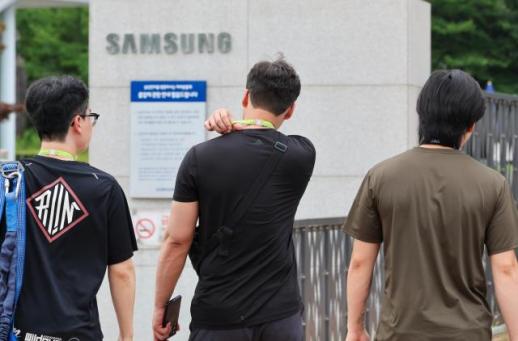 Exclusive: Samsung brings ChatGPT Enterprise into prized chip business SEOUL, July 22 (AJP) - Samsung Electronics is set to deploy ChatGPT Enterprise into its prized and heavily coveted semiconductor business by the end of July, signaling a strategic shift as artificial intelligence enters one of the company's most security-sensitive operations. The rollout marks a notable turn for Samsung's Device Solutions (DS) division, which oversees its semiconductor operations and has maintained some of the company's toughest restrictions on external generative AI since sensitive data leaks in 2023. The chip unit had initially planned to introduce the enterprise service in June, but postponed the rollout by about a month after conducting additional security reviews involving semiconductor technology and internal data handling. An official familiar with the matter said the internal timetable had been revised from June to July, with deployment now targeted by the end of this month. Samsung began allowing employees across its broader corporate organization to use external generative AI services on June 12, according to a separate company official. Employees were required to complete online training covering security guidelines before gaining access. "We made external generative AI available from June 12," the official said. "People say it is much more convenient because they can use it directly from their company PCs." The DS division's rollout has taken longer because semiconductor engineers routinely handle highly sensitive information involving chip designs, manufacturing processes, equipment specifications, software code and production yields. "DS has more security issues to examine than other divisions," the official said. Samsung signed an enterprise agreement directly with OpenAI for ChatGPT Enterprise rather than deploying a separately developed in-house language model. Unlike Samsung's earlier AI tools, ChatGPT Enterprise is expected to process much larger documents and attachments without significant performance loss, an advantage for semiconductor engineers who routinely work with lengthy technical documents, software code and extensive research and manufacturing data. That capability could fundamentally change how engineers retrieve and use technical knowledge, according to Choi Byung-ho, a professor at Korea University's Human-Inspired AI Research Institute. "Previously, information had to be stored in a database before it could be searched," Choi said. "Now, AI can bring together materials scattered across personal computers, cloud storage, shared folders and databases, summarize them and provide links to the original sources." The technology could also move beyond information retrieval by using accumulated corporate knowledge to support a degree of inference, analysis and forecasting, he added. Samsung has not disclosed what categories of semiconductor data employees will be permitted to upload into ChatGPT Enterprise. Highly sensitive information related to nationally protected technologies, chip designs, manufacturing processes, equipment and yields is expected to remain restricted under the company's internal security policies. Nor has Samsung disclosed where employee prompts and uploaded files will be processed or stored, or detailed the architecture supporting the service. Industry officials believe the system is likely to rely primarily on domestic servers, although the precise data-storage location and processing architecture remain unclear. Choi said server location remained one of the most important security considerations for companies handling strategic technologies. "To protect data sovereignty, the first question is where the server is located," Choi said. "The next question is whether the server sits inside or outside the organization and how the data is encrypted." "Installing the servers inside the organization and cutting off external communications could be the safest option," he added. "But no technology is 100 percent secure. Ultimately, how well a company manages security is itself a measure of its capability." The deployment represents a sharp reversal from Samsung's response to generative AI in 2023, when engineers in the chip division were found to have entered source code, equipment-related information and meeting records into ChatGPT. Samsung subsequently restricted access over concerns that confidential information transmitted to external servers could neither be retrieved nor deleted. The DS division later required approval for many external ChatGPT uses while promoting internally developed AI tools. As generative AI has become increasingly integrated into software development, document analysis and research, Samsung is shifting from blanket restrictions toward controlled enterprise deployment supported by internal safeguards. The company has also strengthened employee training. Staff in its broader corporate organization were required to complete online courses covering AI security before being granted access to external generative AI services, the corporate official said. Samsung has separately been providing AI transformation training for senior executives, including presidents and executive vice presidents. Details of training requirements and usage policies for rank-and-file employees in the DS division have yet to be announced internally. Choi cautioned that introducing an enterprise AI platform would not automatically translate into productivity gains. "Applying generative AI directly to business operations is not easy," he said. "A company must first process and organize its internal data, and that requires significant time and cost." Corporate information often exists in multiple versions and formats and contains internal abbreviations, complex tables and inconsistent structures that AI systems cannot accurately interpret without additional preparation, he said. "The information may look plausible, but companies need accurate results," Choi said. "If even one part is wrong in a highly precise task, considerable time may have to be spent reviewing the output." Hallucinations also remain an inherent limitation because generative AI generates responses based on probabilities rather than an independent concept of truth. "Hallucinations cannot be completely eliminated because they are part of how generative AI works," Choi said. "The important question is how much they can be reduced, and the key is to provide the system with sufficient knowledge about the company and the task." Companies should also instruct AI systems to acknowledge uncertainty—or stop generating responses altogether—when sufficient information cannot be found, rather than producing unsupported answers, he added. For investors, the deployment is unlikely to generate an immediate earnings impact. It nevertheless represents a significant milestone in Samsung's broader AI transformation, bringing enterprise generative AI into the daily workflow of its most strategically important business. The semiconductor industry is characterized by long development cycles and enormous volumes of technical information. Reducing the time engineers spend searching, comparing and analyzing data could improve research productivity and accelerate decision-making over the longer term. The corporate official said the biggest early gains were likely to come for software developers. "It should be much better for developers, including for coding," the official said. "Being able to use it directly within the company also makes it more convenient." Choi expects the clearest productivity improvements to emerge first in repetitive, rules-based work. "AI can already perform well in routine tasks where the rules have been defined," he said. "More complex work that requires discussion, judgment and decision-making remains difficult, which means people still need to give the right instructions and review the results." Samsung is also expanding access to other external AI platforms. Claude Code, Anthropic's coding-focused AI service, was opened in May on a priority basis for software developers rather than the broader workforce, according to the company official. An internal notice also lists Google's Gemini for a planned November rollout, although that timetable could change following further internal reviews. 2026-07-22 16:59:06
-
Government Launches National Healthcare Network to Strengthen Regional and Essential Medical Services To address the concentration of large hospitals in the metropolitan area and the crisis in regional and essential medical services, the government is launching a national master plan to rebuild the healthcare network. The plan focuses on establishing a comprehensive regional healthcare system divided into '5 major and 3 special' care zones, along with enhancing compensation for essential medical personnel and expanding the medical accident safety net. On July 22, the Ministry of Health and Welfare announced its strategy to ensure that everyone receives proper medical care, regardless of where they live, under the initiative titled "Strengthening Regional, Essential, and Public Healthcare." The core of this strategy is to build a comprehensive regional healthcare supply system. The government will categorize the nation into major care zones (5 major and 3 special for severe treatment), medium care zones (one or more cities or counties for moderate treatment), and small care zones (cities or counties for mild treatment and health management). Specifically, the government will focus on developing local national university hospitals to the level of the so-called 'Big 5' hospitals in the metropolitan area, enabling them to provide comprehensive care for complex severe diseases. In medium care zones, the government plans to expand and develop 41 regional public hospitals, including local medical centers and Red Cross hospitals, while in small care zones, it aims to introduce a 'Korean-style family doctor' system and establish 'public health clinics' to fill healthcare gaps in rural areas.To support these initiatives, a special fund of 1.2 trillion won for regional essential medical care will be established by 2027, along with the introduction of an annual 400 billion won regional fee system. The government's responsibility for essential medical services, including emergency, trauma, maternity, and pediatric care, will also be significantly strengthened. The expansion of severe emergency medical centers will be prioritized, and a pilot project for patient transport will be rolled out nationwide in September to prevent emergency room overcrowding. Additionally, resources will be concentrated on trauma centers, and the deployment of medical helicopters will be enhanced. For mothers and children, the government plans to expand severe maternal and child medical centers, implement a maternal registration system starting in vulnerable areas, and establish more children's hospitals and a pediatric family doctor system. A notable aspect of the plan is the establishment of a groundbreaking 'medical accident safety net' and fee reform. The government will introduce medical accident liability insurance, providing compensation of up to 1.8 billion won in essential medical areas such as emergency, maternity, and pediatrics. Moreover, the government plans to significantly increase the national compensation for unavoidable medical accidents from the current 30 million won to a maximum of 300 million won, and to allow leniency in sentencing and restrictions on prosecution for high-risk essential medical practices that do not involve gross negligence. An annual investment of 3.6 trillion won from health insurance finances will also lead to substantial increases in low compensation fees for severe and essential medical fields. The government is also laying the groundwork for innovation in the public healthcare system and securing medical personnel. The National Central Medical Center will be developed to the level of a top-tier general hospital, and a national medical school will train about 100 public health professionals each year. In the short term, the government will relax regulations on on-call duties and expand the 'contract-based regional essential doctor system,' while in the long term, it plans to promote a 'regional doctor system' and establish medical schools in areas without them to ensure a stable supply of medical personnel.Minister of Health and Welfare Jeong Eun-kyeong stated, "This government will definitely resolve the issues of regional and essential medical care," emphasizing the commitment to revitalizing regional healthcare to save lives and to lead growth centered on the '5 major and 3 special' framework.* This article has been translated by AI. 2026-07-22 16:56:00
-
VIP Asset Management Calls for Swift Legislation of Stock Price Stabilization Law VIP Asset Management has called for the swift enactment of the 'Stock Price Stabilization Law,' which aims to eliminate tax incentives that encourage undervalued stock prices during the inheritance and gift processes of major shareholders.Kim Min-guk, CEO of VIP Asset Management, stated at a discussion held in the National Assembly on the legislative agenda for the Stock Price Stabilization Law to resolve the 'Korea Discount' that, "This bill is not a regulation to artificially inflate stock prices, but a system to correct the misguided incentive that low stock prices lead to tax benefits for major shareholders."Despite recent gains in the stock market, Kim noted that undervaluation in the domestic market persists. He explained, "Excluding the top five semiconductor companies, the KOSPI index was at 2,787 points as of July 21, and 73% of KOSPI-listed companies, or 586 firms, have a price-to-book ratio (PBR) of less than 1, which has actually increased compared to a year ago."Kim identified the inheritance and gift tax system as a key reason for this undervaluation. Under the current system, the tax is calculated based on the average stock price four months before and after the valuation date, meaning that lower stock prices reduce the tax burden for major shareholders.He emphasized, "It is time to end the tragedy where news of a major shareholder's health decline or death becomes a catalyst for rising stock prices."Kim further argued that actions such as reducing dividends, retaining cash reserves, utilizing treasury stocks, dual listings, conservative earnings management, and passive investor relations fall within the realm of management decisions and are difficult to penalize. He suggested that rather than regulating these actions, it would be more effective to eliminate the benefits derived from maintaining low stock prices.The Stock Price Stabilization Law proposes that when a major shareholder inherits or gifts listed stocks, if the stock price does not reach 80% of the tax law's net asset value, the valuation will apply the method used for unlisted stocks, setting the net asset value at a minimum of 80%.Kim noted, "The 80% minimum net asset value rule already applies to unlisted stocks, and applying it to listed stocks would reduce confusion in the system while allowing for fairer valuations."Additionally, the bill includes the abolition of the 20% premium tax on major shareholders and allows for the payment of taxes in listed stocks.Kim concluded, "By preventing stock price suppression, we can create a structure where both major shareholders and minority shareholders benefit from increased corporate value, aligning their interests in the same direction."* This article has been translated by AI. 2026-07-22 16:52:00