


Latest by
-
 AI Reshapes News Ecosystem, Advocates for Media and Data Sovereignty Concerns have been raised that generative artificial intelligence (AI) is reshaping the entire process of news production, distribution, and consumption, potentially leading to media dependence on global AI platforms. To address this, experts suggest establishing a solidarity framework among media organizations and creating standards for the use of news data, distribution history, and compensation systems to ensure information and data sovereignty in the AI era.On July 22, a seminar titled 'Exploring Measures for Democratic Public Opinion Formation in the Age of AI Agents' was held at the National Assembly Hall in Yeouido, Seoul, co-hosted by the offices of Democratic Party lawmakers Hwang Hee and Lee Yeon-hee and the Korea Artificial Intelligence Association.Attendees included Lee Woo-tak, a professor at Sogang University, Kim Kyung-tae, vice president of the Korea Artificial Intelligence Association, Jeong Seung-kyung, head of the Data Trust Center at the Korea Artificial Intelligence Association, Kwon Oh-hyun, director of Nexin Technology, and Ha Sung-heun, head of the Korea Trade Information Communication.In his keynote address, Professor Lee Woo-tak emphasized that 'over the past 20 years, domestic media has ceded editorial control and news distribution leadership to portals, and now faces the risk of becoming dependent on generative AI platforms.' He urged that 'domestic media must unite around public media to redesign the order of news distribution.'However, he also noted that the generative AI era does not solely present challenges for the media. 'As AI services require reliable and up-to-date information, this presents an opportunity for media to establish a trustworthy news supply system.'Kim Kyung-tae, vice president of the Korea Artificial Intelligence Association, stated, 'In the age of AI, media must secure control over the standards and distribution of news data.' He described the relationship between media organizations and global AI companies like OpenAI as being on an 'uneven playing field,' where media outlets are inevitably influenced by the content provision methods and pricing conditions set by these companies.He proposed that media organizations should create a common standard for news usage. Citing the example of the media coalition 'SPUR,' which includes the BBC and The Guardian, he suggested that when AI companies utilize media content, they should adhere to formats and conditions set by the media, ensuring transparency in the purpose and volume of article usage.Additionally, he called for a pricing structure that varies based on the purpose of AI training, article citation, display, and reprocessing, along with a verification system to ensure compliance with contractual purposes.Kim also recommended forming a 'News Providers Association' centered on public media to establish standards for news data, usage records, verification, and compensation systems, while collaborating with international media coalitions to enhance negotiation power against global AI companies.Jeong Seung-kyung, head of the Data Trust Center at the Korea Artificial Intelligence Association, stressed the need to establish a data sovereignty system that guarantees ownership and control of media data in the AI era. He pointed out that high-quality data produced by media, including articles, columns, transcripts, photos, videos, and audio, is being used for AI training, yet the purposes and distribution channels remain opaque, and compensation for providers is inadequate.Jeong explained that a transaction structure is needed to standardize media data, gather it in a central hub, verify the identities and purposes of utilizing companies, and track the distribution history of the data. He also proposed various compensation methods, such as subscriptions, bulk purchases, pay-per-use, and royalty sharing, to reward based on the value and usage of the data.He concluded that to effectively utilize media data with technology, supportive policies and systems must be in place, advocating for the creation of a platform with transparent consumption pathways and compensation systems for providers. This would enable media organizations to exercise ownership and control over data, securing data sovereignty in the AI era.* This article has been translated by AI. 2026-07-22 16:28:00
-
Pro Gamer Faker Appointed Honorary Police Officer to Combat Cyber Gambling Pro gamer Faker, also known as Lee Sang-hyuk, has taken on the role of an honorary police officer to help prevent youth cyber gambling.On July 22, the National Police Agency appointed Lee as an honorary police officer and ambassador for cyber gambling prevention at a ceremony held in the Seodaemun District of Seoul. Lee was given the rank of sergeant, one step above a police officer, reflecting the nature of the cyber gambling prevention work, which aligns with the entry rank for police officers in cyber investigation roles.The police chose Lee due to his significant influence among young people. They noted that through his long career as a professional gamer, he has demonstrated values of self-discipline, focus, and restraint, which can positively impact youth both domestically and internationally.Lee will participate in creating promotional videos and posters to raise awareness about the self-reporting system for youth cyber gambling until August. During the appointment ceremony, he also presented a signed T1 uniform to be given to youths who have actively participated in recovery programs for gambling addiction.The National Police Agency has been operating a self-reporting system for youth cyber gambling since May 18, which will run until August 31. As of July 16, there have been 806 reports, an increase of 512 from the 294 reports received in the first month of the program.The reporting system is aimed at youths under 19 who have experienced cyber gambling, as well as their guardians. Reports can be submitted through the 117 School Violence Reporting and Counseling Center. Once a report is received, school liaison officers and specialized gambling counselors conduct initial consultations and screenings, connecting individuals to addiction treatment facilities based on the results.Self-reporting does not lead to criminal penalties. The police will consider the amount of money used for gambling, the individual's attitude of remorse, and the recovery process before determining whether to offer leniency through a review committee that includes external experts. If illegal financial activities, such as proxy deposits, are confirmed, support for victim recovery will be coordinated with the Financial Integration Support Center.This initiative was piloted in eight provincial police agencies starting in 2024, beginning with the Daejeon Police Agency. During that time, 512 youths who participated in cyber gambling were connected to recovery programs, with only four, or 0.8%, relapsing within three months. The government believes that the self-reporting system is effective in identifying and addressing gambling issues early, leading to its nationwide expansion.Lee expressed, "I feel a great sense of responsibility being appointed as an honorary police officer and ambassador. I will actively participate in raising awareness about the dangers of cyber gambling and the self-reporting system among youth."Acting Police Chief Yoo Jae-sung stated, "It is crucial to start counseling and treatment for youth gambling issues before they escalate. We hope Lee's influence will encourage young people to come forward and report their experiences."* This article has been translated by AI. 2026-07-22 16:28:00
-
Chinese AI Startup Moonshot AI Seeks $74 Billion Funding to Compete with U.S. Chinese artificial intelligence (AI) startup Moonshot AI is launching a major funding round aimed at achieving a valuation of up to $50 billion (approximately 74 trillion won). This move reflects the increasing competition among Chinese AI firms in what has been termed a 'war of funds' against the United States.According to reports from Chinese media on July 22, Moonshot AI plans to complete its current funding round, based on a valuation of $31.5 billion, within a few days and will immediately seek additional investments. The company is also considering a listing on the Hong Kong stock exchange within the next six months.Following the successful launch of its latest AI model, Kimi K3, on July 16, Moonshot AI is actively working to secure funding to bolster its technological capabilities.Industry experts believe that Kimi K3 has achieved performance levels competitive with top U.S. AI models from companies like OpenAI and Anthropic. In fact, the AI performance evaluation organization Artificial Analysis has reported that Kimi K3 outperformed Anthropic's advanced model, Claude Opus 4.8, in certain benchmarks.While U.S. closed AI models such as OpenAI's GPT, Google's Gemini, and Anthropic's Claude continue to lead the market, the recent releases of Kimi K3 and DeepSeek V4 in China are rapidly closing the performance gap with these top-tier models.Chinese AI companies are actively seeking funding to ensure they do not fall behind in the AI race with the U.S., focusing on securing resources for model development, computing infrastructure, and talent acquisition.The Wall Street Journal reported on July 22 that at least six Chinese AI startups are preparing for initial public offerings (IPOs) on the Chinese mainland or Hong Kong stock exchanges by 2027.DeepSeek, a competitor of Moonshot AI, is a notable example. The company has raised over 50 billion yuan (approximately 11 trillion won) in its first external funding round and is currently pursuing a second round of investment. DeepSeek is also planning to debut on the Shanghai stock exchange next year.Gary Tan, a portfolio manager at Allspring Global Investments, told the Wall Street Journal that the recent funding competition is driven by the substantial capital required for AI model development, computing infrastructure, and talent acquisition.There are also concerns about potential additional regulations from the U.S. Currently, Chinese AI companies are allowed to use advanced semiconductors from Nvidia in data centers outside China. However, to prepare for possible future restrictions, these companies need significant funding to secure computing resources through contracts with overseas cloud service providers.Earlier this year, the surge in interest in AI led to the successful listings of Chinese AI startups ZFWA and MiniMax on the Hong Kong stock exchange. Charu Chanana, a chief investment strategist at Saxo Markets, noted that AI supply chain-related companies raised over $10 billion in Hong Kong in the first half of this year.* This article has been translated by AI. 2026-07-22 16:28:00
-
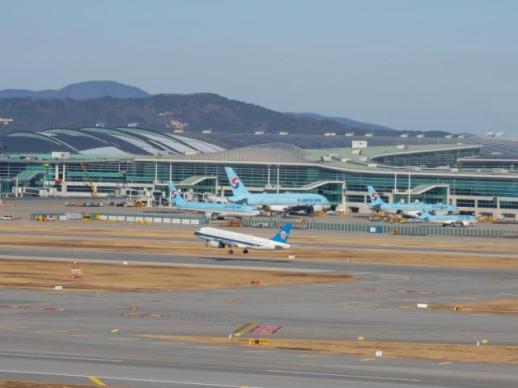 Incheon Airport to open departure gates early during summer peak SEOUL, July 22 (AJP) - South Korea will open some departure gates at Incheon International Airport earlier and increase immigration screening staff during the peak summer travel season, the Ministry of Justice said Wednesday. The special immigration measures will be in place from Thursday through Aug. 8, as the country enters one of the busiest periods for overseas travel. At Terminal 1, departure gate No. 2 will open at 5:30 a.m., while departure gate No. 4 will open at 6 a.m. At Terminal 2, departure gate No. 2 will open at 5 a.m. Immigration officers will also begin work earlier to ease passenger congestion. The number of screening staff at Terminal 1 will be increased to 32 from 24, while Terminal 2 will have 20 officers, up from 14. The ministry said personnel from other departments will also be assigned to support immigration screening during the peak period. Families traveling with minors will also be allowed to register for automated immigration clearance at departure gates during the summer season. Previously, minors had to visit an immigration service center outside the departure area to register for the service. Justice Minister Jung Sung-ho said the ministry would mobilize its screening capacity to ensure that Korean nationals using Incheon Airport during the summer peak season do not face inconvenience during immigration procedures. 2026-07-22 16:26:33
-
In Seoul, 40% of Rental Contracts Exceed 700 Million Won as Housing Costs Rise In Seoul's apartment market, the demand for rentals in the 60-85 square meter range, popular among families of three to four, has surged, leading to a significant increase in the proportion of contracts with deposits exceeding 700 million won. As more contracts meet or exceed the thresholds for major public rental loans and guarantees, concerns are growing about the financial burden on middle-class renters.According to the Ministry of Land, Infrastructure and Transport's real transaction disclosure system, as of July 22, 2026, 41.4% of rental transactions for apartments in the 60-85 square meter range reported this year had deposits of 700 million won or more. This marks a 9.2 percentage point increase from 32.2% in the first half of last year.The trend of rentals exceeding 700 million won is spreading beyond the affluent Gangnam area to mid-range and outer districts of Seoul. Areas that previously saw many transactions in the 500-600 million won range are now experiencing a rise in contracts priced between 700 million and 800 million won, indicating a shift in the baseline for rental prices. This change is attributed to a combination of factors, including a shortage of available apartments, a decrease in rental listings, and rising sales prices that have driven up deposits.By district, the proportion of rentals over 700 million won in Dongdaemun-gu jumped from 13.2% in the first half of last year to 37.2% this year, with the number of transactions increasing from 188 to 287 during the same period.In Dongjak-gu, the figure rose from 41.4% to 58.3%, while in Songpa-gu, it increased from 45.5% to 62.2%. Seongdong-gu saw an increase from 49.7% to 65.7%. Both Seodaemun-gu and Gangdong-gu also surpassed the 40% mark, and Seongbuk-gu rose from 6.6% to 20.8%, indicating a clear upward trend even in the outskirts of Seoul.For instance, in Dongdaemun-gu's Jang-an-dong, a new rental contract for an 84.78 square meter unit at Jang-an Hyundai Home Town was signed for 750 million won on July 13, setting a new record for that size. This represents a 100 million won increase from a similar contract signed in April for 650 million won. A renewal contract in the same month also saw an increase from a previous deposit of 540 million won to 630 million won.A representative from a local real estate agency in Dongdaemun-gu noted, "While it is true that the influx of new large-scale developments in nearby areas like Imun and Hwikyung New Town has contributed to rising prices, even considering this, properties with deposits several million won higher than last year are being quickly absorbed."The issue is that 700 million won has become a critical threshold for middle-class renters seeking access to public rental financing. The Korea Housing Guarantee Corporation (HUG) requires that rental deposits in the metropolitan area be below 700 million won to qualify for its main rental loan and guarantee products. Similarly, the Korea Housing Finance Corporation (HF) sets the same limit for its general and group rental deposit guarantees.Once deposits exceed 700 million won, renters face challenges in utilizing these public guarantee products. They may need to rely on private guarantees, increase their own capital contributions, downsize their living space, or consider switching to guaranteed monthly rent options.Experts warn that if rental prices for mid-sized apartments continue to exceed public guarantee limits, it could push middle-class renters toward smaller living spaces and a shift to monthly rentals. The increase in the proportion of transactions over 700 million won signifies that the baseline for housing costs that family units must bear is rising.Kim In-man, head of Kim In-man Real Estate Economic Research Institute, stated, "The fact that rental prices in the most sought-after segments are beginning to exceed public guarantee limits signals that the government's rental financing safety net is out of sync with market prices. To normalize both the rental and sales markets, it is essential to lower the barriers for loans for households without homes that are seeking to reside in these areas."* This article has been translated by AI. 2026-07-22 16:20:00
-
Chinese Stock Market Adjusts Amid Profit-Taking; Supernode Stocks Surge The Chinese stock market, which had risen for two consecutive trading days, showed signs of adjustment on July 22, attributed to profit-taking by investors. On this day, the Shanghai Composite Index closed up 0.07% at 3,867.03, while the Shenzhen Component Index fell 1.42% to 14,061.44, and the ChiNext Index dropped 3.23% to 3,566.73. The previous day, the Chinese market had experienced a significant rise due to stabilization measures from the securities authorities and a rebound in the semiconductor sector. However, as investors took some profits, the upward momentum slowed, leading to a slight decline in the market. Additionally, analysts noted that the market was in a wait-and-see mode ahead of earnings reports from Alphabet (Google) and Tesla, with investors keenly interested in whether the AI investment cycle would continue and if the scale of AI investments by major U.S. tech companies would be maintained. Despite the profit-taking, the China Securities Regulatory Commission reaffirmed its commitment to market stability, preventing a significant drop. Huaxi Securities stated in a report, "The recent market adjustment has alleviated some short-term selling pressure, and based on this, a rebound occurred this week, followed by today's adjustment. With buying and selling balanced, there is a high possibility that the rebound will continue from a technical perspective." Notably, stocks related to supernodes surged, with companies like ZTE Corporation and Gongjin Technology hitting their daily price limits. A supernode is a massive AI computing system that connects thousands of AI semiconductors to function as a single giant computer. Following Huawei's unveiling of the 'Atlas 950 Superpod' supernode on July 17, Tencent announced plans to establish a supernode in the fourth quarter of this year, which has been seen as positive news. Tencent also explained that it aims to build large-scale domestic AI computing power to drastically reduce inference costs. The precious metals sector also saw gains, with companies like Shanjin International and Chifeng Jilong Gold Mining reaching their daily price limits. On this day, the international spot gold price rose by more than 1% throughout the day, surpassing $4,120 per ounce. Ongoing global geopolitical tensions have led to a continuous rise in the prices of precious and industrial metals, particularly as central banks around the world continue to purchase gold. Meanwhile, the People's Bank of China set the yuan's reference exchange rate against the dollar at 6.7933 yuan, an increase of 0.0016 yuan from the previous day, reflecting a 0.02% rise in the value of the yuan.* This article has been translated by AI. 2026-07-22 16:12:00
-
Nam Joo-hyuk Discusses His Role in Netflix's 'Donggung' After Military Service 남주혁 has returned to global audiences with his first project after military service, 'Donggung.' The Netflix series achieved 4.9 million views within three days of its release, ranking second in the global Top 10 non-English shows and maintaining the top spot in South Korea's Top 10 series since its debut. At the center of the story is Nam Joo-hyuk, who plays Gucheon, a character with the ability to traverse between the world of the living and the realm of spirits. Alongside the secretive court lady, Saenggang (played by Noh Yoon-seo), he unravels the curse that haunts Donggung, firmly anchoring the narrative between reality and the supernatural. "I’m glad to hear that people seem to enjoy 'Donggung.' I’ve heard that some viewers watched it all in one sitting, and it felt great to receive such positive feedback. The staff, cast, director, and writer all worked hard to create an engaging show from the hot summer to the cold winter. Hearing that makes the difficult moments during filming feel worthwhile," he said. 'Donggung' unfolds as a story that shifts between the real world and the spirit realm. Nam Joo-hyuk noted that the world of spirits was more intricately crafted than he had imagined when he first read the script, and he felt the scale of the action and underwater scenes more vividly once filming began. "When I first read the script, I was surprised by how detailed the 'spirit world' was compared to what I had envisioned. The action scenes were more extensive than I anticipated, and I realized there were many underwater scenes once I actually got into the water. If the vividness of those scenes was well captured, then the hardships I faced during filming were nothing in comparison," he explained. He anticipated some challenges when he first saw the script, as each of the eight episodes features significant action sequences. Having served in the military, he felt physically prepared and enthusiastic. However, his mindset changed when he encountered the set and the spirit world. "I didn’t think I would escape hardship when I first read the script. With so much action and a major action scene in nearly every episode, I expected to face some challenges. But since I was in the military, I felt fit and energetic, thinking I would only face a little hardship. However, once I started filming and encountered the spirit world, I was amazed at how well it was realized. It shifted from 'I might face some hardship' to 'I will face a lot of hardship,'" he said. Historical action requires consideration of costumes and movement. Nam Joo-hyuk did not view Gucheon’s actions as merely aggressive fighting. He interpreted them as a desire to guide spirits with stories to a better place while also ensuring his own survival. "Rather than thinking of it as eliminating spirits, I focused on helping those with stories find their way to a better place. Gucheon also needs to survive, so I approached the action with the mindset of 'let’s go safely to a good place together.' I wanted to strip away any flair from my movements. I viewed the action not just as fighting but as a way to convey the message of 'go to a good place.' Therefore, I approached it more defensively than aggressively," he said. There were also many scenes where he had to act against invisible entities. Nam Joo-hyuk relied on the set's arrangement and the director's guidance to imagine the positions and movements of these unseen characters. "In the early scenes with the spirit, there was nothing in front of me. No matter how well the director directed, it was hard to visualize. But once I arrived on set and saw the surroundings, I could imagine where the spirit would emerge. As the action scenes were completed with graphic work based on my movements, I acted while considering various thoughts like 'Should I dodge here?'" he said. In scenes with the creature, he practiced by observing a model. Once filming began, the model was removed, but he had spent time imagining its presence. "There was a model for the creature. Once we started shooting, we had to remove the model, so I looked at it for a long time before that. I thought, 'This creature will be here.' I discussed with the director how it would move, and I imagined, 'It must be climbing here now' while filming. Since it was described as the cute character in our story, I aimed to create chemistry with it," he said. The relationship between Gucheon and Saenggang cannot be simply defined as a romance. Nam Joo-hyuk views their connection as one of mutual reliance, akin to a savior relationship, with a strong sense of camaraderie. "I didn’t think of it as a romance. I see Gucheon and Saenggang as saviors who come to rely on each other, and I believe there is a strong sense of camaraderie. However, I approached it with the idea that viewers might perceive it as a romance or feel a deeper camaraderie or different energy. Since the script itself didn’t contain romance, we aimed to allow viewers to imagine various interpretations of Gucheon and Saenggang. Based on the current reactions, it seems the audience is responding well to what we intended," he said. His military service also provided him with time to reflect on his filmography. Nam Joo-hyuk expressed a desire to explore a wider range of characters beyond romantic comedies in the future, and he found that opportunity with 'Donggung' and the character of Gucheon. "While in the military, I thought about wanting to explore more diverse characters. I had time to reflect on my filmography and realized I had done a lot of romantic comedies in my twenties. I still want to do romantic comedies, but I also want to encounter characters with stronger traits. While thinking about this, I met 'Donggung' and Gucheon, and I decided to shape Gucheon in that direction. I considered how a broken and isolated child would survive in an uncomfortable palace," he said. Nam Joo-hyuk is aware of the mixed opinions regarding his acting and the recurring critiques. He embraces both positive feedback and constructive criticism as motivation for improvement. "I recognize that opinions can be divided. This has been the case both in the past and now. I appreciate the positive comments and also value the constructive criticism, as they prompt me to think about how I can develop and grow further. Such feedback often serves as new motivation. The more viewers there are for a character, the more diverse opinions will arise. I will continue to reflect and strive to create better characters in the future," he said. Looking ahead, Nam Joo-hyuk intends to approach each project with the same mindset, valuing the opportunity to work on quality productions and aspiring to be a more studied and researched actor. "Being an actor means being evaluated with each project. I believe I will continue to approach each work with the same mindset. I will think about how to present my character well to the audience and what they will see in this project. I believe encountering good works is a great blessing for both actors and people. I am grateful for this opportunity and will continue to study and research to experience more of such moments in the future." * This article has been translated by AI. 2026-07-22 16:12:00
-
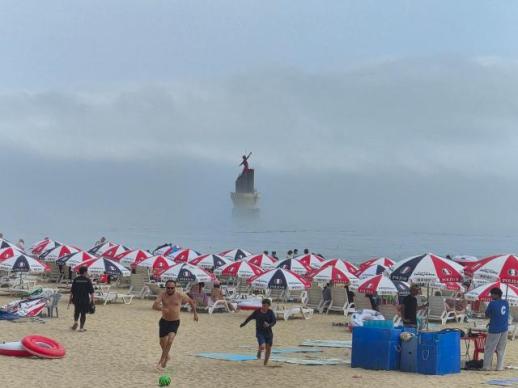 Busan fever sweeps Asia as Taiwanese lead new tourism boom SEOUL, July 22 (AJP) - Busan has emerged as one of Asia’s hottest urban escapes, drawing travelers with its beaches, seafood, cinematic coastal scenery and the hometown appeal of BTS members Jimin and Jungkook. Chinese can now be heard across the southern port city, but increasingly it is not the Mandarin typically associated with mainland visitors. Taiwanese travelers have become one of Busan’s largest and fastest-growing visitor groups, helping transform the city from a secondary stop after Seoul into a destination in its own right. A new expression circulating on social media in Taiwan, mainland China and Japan captures the mood: “Busan sickness.” The phrase describes the lingering longing travelers feel after leaving the city. Once commonly associated with “Seoul sickness,” the post-trip nostalgia appears to have shifted southward as Busan gains a stronger identity among young Asian travelers. The boom is visible in the numbers. Busan welcomed 1.94 million foreign visitors in the first five months of 2026, up 40 percent from a year earlier and 78.4 percent from the same period in 2019, according to the Busan Tourism Organization’s latest data. The figure represented 22.2 percent of South Korea's 8.72 million inbound visitors during the period, meaning more than one in five foreign tourists visiting Korea traveled to Busan. While nationwide inbound tourism grew about 21 percent, Busan expanded at nearly twice that pace, cementing its status as one of Asia's fastest-rising urban tourism destinations. In May alone, the city received 460,683 international visitors, a 42.9 percent increase from a year earlier and 83.7 percent above the pre-pandemic level recorded in May 2019. The most striking change has come from Taiwan. Some 84,502 Taiwanese visitors traveled to Busan in May, up 46.3 percent from a year earlier and more than four times the May 2019 level. They accounted for 18.3 percent of all foreign visitors that month, nearly matching mainland Chinese travelers, who made up 19.4 percent. Over the January-May period, Taiwan was Busan’s largest single visitor market, with 375,322 arrivals and a 19.4 percent share. Mainland China followed with 359,981 visitors, or 18.6 percent, while Japan accounted for 233,685, or 12.1 percent. Mainland Chinese tourism is also recovering rapidly. Their arrivals nearly doubled from a year earlier to 89,275 in May and were almost three times the corresponding 2019 level. But the strong Taiwanese presence has changed the linguistic and cultural complexion of Busan’s tourism districts, particularly around Haeundae, Gwangalli and popular shopping areas. The city’s broader tourism surge has also translated into heavier spending. Foreign visitors spent 132.2 billion won ($95 million) in Busan in May, more than 2.5 times January’s 51.2 billion won, according to city data. Busan retained its position as South Korea’s second-largest destination for foreign tourist spending after Seoul for a third consecutive month. The appeal is also reflected in online sentiment. An analysis by Yanolja Research of 11,270 Chinese-language travel posts on Xiaohongshu and 18,694 reviews on Ctrip ranked Busan first in overall satisfaction among eight Asian cities, ahead of Tokyo and Singapore, with an average score of 4.723 out of five. Nature accounted for 38.2 percent of Busan-related mentions, followed by food at 23.8 percent. The finding suggests that the city’s appeal comes less from the sheer number of attractions than from the concentration and intensity of the experiences it offers. Busan’s first advantage is its highly photogenic landscape. Unlike the dense and relentlessly paced capital, Busan is increasingly perceived as a place that feels distinctly Korean but is less exhausting. Its geography places expansive coastlines beside urban neighborhoods, giving travelers beaches, cafés, markets and nightlife within a relatively compact area. Haeundae, Gwangalli and Gamcheon Culture Village have long appealed to social media users. More recently, attractions that let visitors experience the sea rather than merely view it have widened the city’s draw. The Haeundae Blueline Park beach train, promoted on Xiaohongshu as a “train running by the sea,” has become one of the city’s most recognizable images. Yacht tours, Skyline Luge and the X the Sky observatory have similarly helped turn Busan’s coastline into an activity-driven tourism product. Affordability is another strength. Local dishes such as pork-and-rice soup and milmyeon wheat noodles offer inexpensive alternatives to the increasingly costly dining scene in Seoul. That value has proved especially attractive to Taiwanese visitors, who can reach Busan on direct flights to Gimhae International Airport in about two hours. Travelers from parts of Japan enjoy similarly easy access, allowing Busan to function as a convenient weekend destination rather than an extension of a longer trip to Seoul. Yanolja Research said Busan was moving beyond its traditional image as a city of beaches and scenery by combining marine resources with transportation, observation decks, leisure activities and entertainment. The result, it said, was a new model of an “Asian experiential tourism city” built around the sea. The latest tourism figures suggest the model is working. Busan is no longer merely South Korea’s second city or a seaside add-on to Seoul. For a growing number of Asian travelers, it has become the Korean city they miss once they leave. 2026-07-22 16:08:54
-
Trump Approves Historic Nuclear Agreement Allowing Saudi Uranium Enrichment President Donald Trump has approved a nuclear agreement supporting Saudi Arabia's development of civilian nuclear power, which opens the door to potential uranium enrichment in the kingdom, according to reports from the Wall Street Journal and the Associated Press on July 21, citing sources. This agreement raises concerns about nuclear proliferation in the Middle East while also generating expectations of benefits for the U.S. nuclear industry.Reports indicate that Trump officially approved the U.S.-Saudi nuclear cooperation agreement last week, which will last for 30 years and is estimated to be worth hundreds of billions of dollars. U.S. Energy Secretary Chris Wright and Saudi Energy Minister Abdulaziz bin Salman are set to sign the agreement on July 22. The agreement will then undergo review by the U.S. Congress.The agreement is designed to ensure that U.S. companies play a key role in building Saudi reactors and nuclear infrastructure, aiming to prevent Russian and Chinese access to the Saudi nuclear market.The main issue at stake is whether uranium enrichment will be permitted in Saudi Arabia. The two countries will conduct joint research for two years to assess the commercial viability of uranium enrichment in the kingdom.If the need for enrichment is recognized, U.S. companies could construct local enrichment facilities using a 'black box' method that prevents the transfer of sensitive technology to Saudi Arabia. Conversely, if the U.S. opposes enrichment, Saudi Arabia would be barred from independently pursuing enrichment or collaborating with other countries for 10 years.The Trump administration believes that U.S. involvement in the construction and operation of facilities can prevent the military diversion of enriched uranium and the reprocessing of spent nuclear fuel.However, concerns have been raised that allowing Saudi uranium enrichment could trigger a competition for nuclear technology among Middle Eastern countries, including the UAE, Turkey, and Egypt. The controversy is further fueled by Saudi Arabia's refusal to adopt an additional protocol that would enhance inspections by the International Atomic Energy Agency (IAEA).Robert Einhorn, a former senior State Department official, stated, "This agreement could revitalize the U.S. nuclear industry and strengthen U.S.-Saudi relations while blocking strategic advances by Russia and China," but he cautioned that without sufficient constraints, including on uranium enrichment, the risk of nuclear proliferation in the Middle East and beyond could increase.Henry Sokolski, executive director of the Nonproliferation Policy Education Center, criticized the agreement, saying, "If Saudi Arabia goes down this path, the UAE, Turkey, and Egypt will likely follow. It is unrealistic to expect this will lead to positive outcomes."In response, Secretary Wright emphasized in a statement that the agreement will utilize the world's best nuclear technology and expertise designed in the U.S., while adhering to the strictest nuclear safety and nonproliferation standards.Notably, this agreement does not condition normalization of relations between Saudi Arabia and Israel, marking a departure from the Biden administration's approach. Critics argue that while the U.S. demands Iran reduce its nuclear program, it is allowing a potential for uranium enrichment in its competitor, Saudi Arabia.However, it is expected to be challenging for Congress to block the agreement. The Wall Street Journal reported that to prevent the agreement, a joint resolution must pass both the House and Senate, and if President Trump exercises veto power, a two-thirds majority in both chambers would be required to override it. Currently, the Republican Party holds a majority in both the House and Senate.* This article has been translated by AI. 2026-07-22 16:08:00
-
 Seoul elementary schools kick off summer vacation SEOUL, July 22 (AJP) - Students leave school after a summer vacation ceremony at Jungpyeong Elementary School in Nowon-gu, Seoul, on July 22, 2026. 2026-07-22 16:06:11