


Latest by
-
 Fuel Tax Cut Extension in Question Amid Rising Oil Prices As international oil prices have surpassed $100 per barrel, attention is turning to whether the government will extend the fuel tax cut set to expire at the end of this month. The government plans to decide on the tax adjustment by considering the oil price ceiling and trends in international oil prices. However, there are calls to reassess the tax rates and adjustment methods, as the temporary fuel tax cut introduced in 2021 has effectively continued for nearly five years.According to the Ministry of Economy and Finance on the 14th, the government will determine whether to extend the fuel tax cut and the extent of the cut based on a comprehensive review of international oil prices, domestic oil product prices, and the operation of the oil price ceiling system. Relevant discussions are expected to take place at a meeting of economic ministers and related agencies before the 30th.Currently, a 15% tax cut applies to gasoline, while diesel and liquefied petroleum gas (LPG) are subject to a 25% cut. As a result, the tax on gasoline is 698 won per liter, diesel is 436 won, and LPG is 152 won. Compared to the flexible tax rates before the cuts, gasoline is 122 won lower per liter, diesel is 145 won lower, and LPG is 51 won lower.If the government extends the current tax cuts, consumers will not receive additional discounts on fuel prices; rather, it will maintain the reduced tax burden. Conversely, if the tax cut is terminated, the flexible tax rates will apply again, leading to increased tax burdens on gasoline and diesel, which could contribute to rising fuel prices.Ultimately, the government faces a dilemma: extending the cuts would mean accepting a reduction in tax revenue while trying to curb price increases, whereas normalizing the tax could lead to higher fuel costs and increased inflationary pressures.Recent trends in international oil prices are complicating the normalization of the fuel tax. On the 10th, Brent crude and West Texas Intermediate (WTI) prices reached $107.63 and $102.48 per barrel, respectively, marking a return to triple-digit prices. On the 13th, Brent crude approached $110 during trading, indicating sustained high oil prices.Domestic inflation is also a factor. The consumer price index rose 3.1% in August compared to the same month last year, returning to the 3% range after a month. However, excluding the base effect from last year's telecommunications discounts, the inflation rate is estimated at around 2.5%. In the same month, oil prices increased by 14.2% year-on-year. As of the 14th, the average selling price at gas stations was 1,858.69 won per liter for gasoline and 1,843.98 won for diesel.The fuel tax cut was first introduced in November 2021 and has been extended several times, with the cut rates adjusted based on international oil prices and inflation. The gasoline tax cut rate peaked at 37% in 2022 before being gradually reduced. However, following a surge in oil prices from the Middle East in March of this year, the gasoline tax cut was increased from 7% to 15%, and the cuts for diesel and LPG were raised from 10% to 25%. Similar cuts were extended in May and July.Nevertheless, the government has indicated that if international oil prices stabilize, it may reduce the fuel tax cut or normalize it. A Ministry of Economy and Finance official stated, "If oil prices fall, normalizing the fuel tax could allow consumers to purchase at lower prices than before," adding that adjustments will be made based on oil price trends.Regarding the financial burden of the fuel tax cut, the official noted, "Both the flexible tax rate reduction and the oil price ceiling ultimately involve financial resources," but emphasized that if gas station purchase prices rise significantly, both the financial burden and consumer burden must be considered.* This article has been translated by AI. 2026-09-14 17:16:00
 -
CJ Logistics Launches 'Green Delivery Plus 4th Phase' to Support Disabled Small Business Owners CJ Logistics, in collaboration with the Community Chest of Korea and the Milal Welfare Foundation, is launching a program to enhance the logistics capabilities of disabled small business owners.On September 14, CJ Logistics announced it will support 22 businesses run by disabled individuals through its 'Green Delivery Plus 4th Phase' initiative.Now in its fourth year, the Green Delivery Plus program aims to reduce logistics costs for small businesses and enhance their competitiveness in eco-friendly logistics. This year, the program will focus on providing concentrated support to disabled small business owners in partnership with the Milal Welfare Foundation, a specialized welfare organization for the disabled. The initiative seeks to strengthen the self-reliance of disabled small business owners, who often face higher barriers to entry in logistics operations, while promoting eco-friendly logistics.Eligible businesses include those directly operated by disabled representatives or those with a workforce comprising at least 30% disabled employees, particularly those that rely heavily on logistics and use significant amounts of packaging materials. The selected 22 businesses will receive support of up to 1 million won for shipping costs and eco-friendly packaging materials worth 400,000 won, including one-touch paper boxes, paper tape, and honeycomb cushioning materials.Additionally, offline training sessions will be held to share knowledge on logistics operations and eco-friendly packaging. The training, scheduled for October, will cover topics such as the use of eco-friendly packaging materials like tape-type invoices, films, and cardboard, as well as the latest logistics trends.Disabled small business owners interested in participating can apply by scanning the QR code on the recruitment poster or through a Google form by September 30. More details can be found on the Milal Welfare Foundation's website.A representative from CJ Logistics stated, "This initiative goes beyond simple logistics support; it is a program aimed at establishing a foundation for the self-reliance of disabled small business owners. We will continue to work with the Community Chest of Korea and the Milal Welfare Foundation to create a healthy logistics ecosystem and support small businesses."Meanwhile, CJ Logistics has passed the second follow-up audit for the international standard 'ISO 37301' for compliance management systems, overseen by the Korea Compliance Promotion Agency. The company plans to strengthen its compliance management system through education, information provision, and on-site monitoring.* This article has been translated by AI. 2026-09-14 17:16:00
-
 HUINNO passes technology review for KOSDAQ IPO SEOUL, September 14 (AJP) - South Korean digital health company HUINNO has passed a technology review required for a special KOSDAQ listing, moving its initial public offering (IPO) process to the next stage. The company said Monday it received an A rating and a BBB rating from two evaluation agencies designated by the Korea Exchange (KRX), meeting the technology requirement for the listing route. HUINNO develops artificial intelligence (AI)-based medical technology, including wearable systems for heart monitoring. “We will thoroughly prepare for the follow-up procedures and expand the supply of our solutions to medical institutions at home and abroad based on our AI analysis capabilities and product safety,” CEO Kil Young-jun said. The assessment focused on HUINNO's technology for electrocardiogram, or ECG, diagnosis and patient monitoring. The company combines AI with wearable medical devices to help doctors detect abnormal heart rhythms and track patients over time. Arrhythmias can occur intermittently and may not appear during short hospital tests. Longer ECG monitoring can help doctors detect irregular heart activity that might otherwise be missed. HUINNO's Memo Care system records ECG data through a wearable device for up to 14 days. Its AI software analyzes readings to diagnose arrhythmias. The service has been introduced at major tertiary hospitals in South Korea and is also being adopted by general hospitals and smaller clinics, according to the company. Memo Cue, another solution from HUINNO, is designed for hospitalized patients. It allows medical staff to monitor ECG readings and other vital signs in real time and has been adopted mainly by tertiary hospitals. HUINNO said its in-house AI technology can identify abnormal signals in ECG data and support doctors in interpreting the results. Its wearable ECG patch also includes protection designed to improve electrical safety during defibrillation. The company has raised about 80 billion won ($59.4 million) from South Korean institutional investors. Yuhan Corp., a South Korean pharmaceutical company, is both a strategic investor and HUINNO's domestic distribution partner. It is also expanding overseas. Memo Care has received medical device certification in Japan, and the company has signed an exclusive distribution agreement with a local partner covering the Japanese market. It is preparing to launch Vital Picasso, an AI-based clinical decision support system designed to help medical staff detect signs that a hospitalized patient's condition may be worsening. AJP Takeaways - South Korean digital health company HUINNO passed the technology assessment required for a special KOSDAQ listing after receiving A and BBB ratings from two Korea Exchange-designated evaluation agencies. - The company plans to move toward a preliminary listing review as it pursues an IPO, with its technology centered on AI-powered ECG analysis and wearable patient-monitoring devices. - HUINNO has raised about 80 billion won from institutional investors, entered the Japanese market with Memo Care and is preparing a new AI system designed to detect deterioration in hospitalized patients. 2026-09-14 17:15:23
 -
 BTS' brother band TXT to launch world tour in Seoul SEOUL, September 14 (AJP) - K-pop boy group Tomorrow X Together (TXT), the brother band of world-popular BTS, will launch its fifth world tour with three concerts in Seoul in November, the group said Monday. The Seoul concerts for "STEAL THE WIND" will be held from Nov. 13 to 15 at KSPO Dome in Olympic Park, southern Seoul. The group announced the tour through the fan platform Weverse at 2 p.m. Monday. Membership presales for Korean fans will begin on Oct. 1, followed by global membership presales and general ticket sales. The Seoul concerts will also be streamed live online, with further details to be announced later. The world tour will begin in Seoul before continuing to Asia, Japan, North America and Europe. "STEAL THE WIND" marks the group's first world tour since closing its "ACT" series, which included "ACT : LOVE SICK," "ACT : SWEET MIRAGE," "ACT : PROMISE" and "ACT : TOMORROW." The new tour title refers to taking control of the flow and moving forward, according to the announcement. A poster released Monday showed the five members standing in an open field against a stormy backdrop, hinting at the tour's theme. Tomorrow X Together will also perform at the 2026 Global Citizen Festival in New York's Central Park on Sept. 26. The group is the only Korean act on this year's lineup, and Yeonjun will also perform a solo stage. AJP Takeaways - Tomorrow X Together will begin its fifth world tour in Seoul. - The Seoul concerts will be held Nov. 13-15 at KSPO Dome. - Online live streaming will be available for the Seoul shows. 2026-09-14 17:14:11
 -
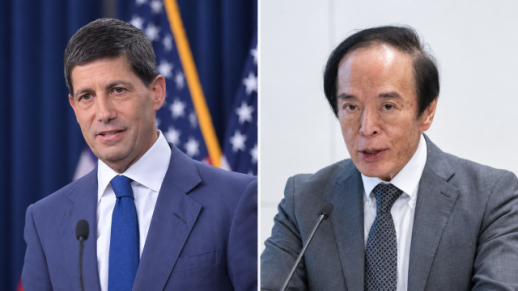 Korea bond curve flattens as front-end yields hit multi-year highs SEOUL, Sept. 14 (AJP) — South Korea's government bond curve flattened further Monday as front-end yields climbed to multi-year highs while longer maturities retreated, sharpening expectations for a higher-for-longer tightening path ahead of this week's Federal Reserve and Bank of Japan meetings. The two-year Korean government bond yield ended at 3.932 percent and the three-year at 4.025 percent, their highest levels since Nov. 1, 2023. Longer maturities pulled back from Friday's highs. The 10-year yield had climbed to 4.540 percent Friday, its highest since Oct. 21, 2022, during the domestic bond-market turmoil triggered by the Legoland crisis. The divergence flattened the curve as the front end, which is more sensitive to expectations for the Bank of Korea's base rate, caught up with longer maturities that had already repriced higher on inflation, oil and fiscal risks. U.S. Treasuries showed a similar pattern. The two-year Treasury yield rose 4.4 basis points Friday to 4.594 percent, while the 10-year yield fell 2.4 basis points to 4.92 percent after briefly touching 4.98 percent following the latest U.S. inflation data. The move suggests investors are pricing more near-term Federal Reserve tightening while also buying longer-dated bonds on expectations that higher rates will eventually weaken demand and inflation. Markets now price roughly an 86 percent chance of a quarter-point Fed increase this week from the current 3.50 percent to 3.75 percent range. U.S. consumer prices rose 0.4 percent in August from the previous month and 3.4 percent from a year earlier. Core prices gained 0.3 percent on the month, slightly above expectations. Goldman Sachs shifted Monday to forecasting a 25-basis-point increase, while J.P. Morgan expects another hike in December. The policy move itself is becoming less important to markets than the path beyond September. Meritz Securities analyst Yoon Yeo-sam said Monday that a September hike had become the more realistic outcome, although he still believed the Fed would ideally avoid another increase. Attention should increasingly turn to whether September marks the end of the tightening cycle or whether another increase follows in December, he said. Mirae Asset Securities analyst Min Ji-hee had already forecast a quarter-point increase in a Sept. 10 preview and expects the Fed's rate projections for this year and next to move higher. The flattening in U.S. yields does not mean growth concerns alone are driving longer maturities lower. Oil briefly retreated around the inflation release, easing some near-term price pressure, before Brent crude returned above $100 a barrel as Middle East supply risks intensified. That leaves the Fed confronting sticky inflation while monetary conditions continue to tighten. BOJ adds pressure through the yen Japan presents a different risk for Korean markets. The BOJ is widely expected to raise its policy rate from 1 percent to 1.25 percent this week. All but two of 68 economists in a recent Reuters poll expect a hike, while 24 of 66 respondents see another increase to 1.50 percent as early as October or December. The immediate move is therefore largely priced. Markets are more focused on how quickly further increases follow. Japan's producer prices rose 7.6 percent from a year earlier in August, while yen-based import prices jumped 24.8 percent. Yoon expects the BOJ to raise rates to 1.25 percent this week and sees the tightening pace potentially accelerating toward one quarter-point increase every three to four months. He sees a terminal rate of 1.75 percent as increasingly plausible rather than 1.50 percent. The yen has strengthened sharply this month as markets priced faster BOJ tightening and investors reduced yen-funded carry positions. Higher Japanese rates make borrowing in yen less attractive and can force leveraged investors to unwind positions in higher-yielding assets elsewhere. A quarter-point hike already embedded in prices may have limited impact by itself. Guidance pointing to a faster pace of tightening could have a larger effect on Asian currencies, bonds and equities. Korea caught between Fed, BOJ and oil South Korea sits between the two tightening channels. Higher Fed rates lift global dollar funding costs and U.S. Treasury yields, putting upward pressure on Korean bond yields and potentially supporting the dollar against the won. BOJ tightening works through the yen and regional capital flows by reducing the attraction of yen-funded carry trades and raising the risk of abrupt position unwinds. Oil adds a third pressure point. South Korea's heavy dependence on imported energy means a sustained rise in crude prices can lift domestic inflation even without further weakness in the won. The Bank of Korea has already raised its Base Rate twice in succession from 2.50 percent to 3.00 percent and has said the timing and pace of further increases will depend on inflation, growth and financial stability. Domestic bond yields have repriced accordingly. Monday's 2.8 trillion won ($2.1 billion) 10-year government bond auction cleared at a weighted average yield of 4.510 percent, below Friday's 4.540 percent close. The front end, however, continued to move higher. Yoon expects the BOK's key rate eventually to reach 3.50 percent but said continued U.S. tightening and elevated oil prices could force markets to consider a terminal rate as high as 3.75 percent. A parallel rise across maturities would point to a broad inflation or term-premium shock. A flattening curve instead suggests markets are assigning more weight to additional tightening in the near term while also considering the eventual growth cost. AJP Takeaways - South Korea's yield curve flattened further as two- and three-year government bond yields climbed to multi-year highs while longer maturities retreated. - The move reflects growing expectations that the BOK may need to keep rates higher for longer as the Fed tightens further and oil stays elevated. - The BOJ poses a separate risk through the yen, with faster Japanese tightening potentially accelerating carry-trade unwinds and reshaping regional capital flows. - Markets are increasingly focused less on this week's expected quarter-point moves than on how far the Fed, BOJ and BOK tightening cycles still have to run. 2026-09-14 17:12:32
 -
Korea's Food and Drug Administration Donates 5 Million Won to Jecheon Ahead of Chuseok The Korea Food and Drug Administration announced on September 14 that it has donated 5 million won to Jecheon City, a sister city, to support those in need ahead of the Chuseok holiday.On this day, officials from the agency visited Jecheon City Hall and contributed the entire amount of a reward received for being selected as an excellent institution for performance management in 2025. Kim Yong-jae, the Deputy Commissioner of the Korea Food and Drug Administration, visited the Jecheon Naeto Market with Jecheon Mayor Lee Sang-cheon, where they listened to the concerns of local merchants and offered encouragement.The agency explained that this visit was organized to invigorate traditional markets struggling with high prices and economic downturns, while also strengthening ties with its sister city.Kim stated, "Based on the spirit of mutual growth established with Jecheon City, we will continue to pursue various collaborative measures to contribute to the development of the local community."The Korea Food and Drug Administration also announced plans to actively engage in social contribution activities aimed at fostering communication with neighbors and promoting regional co-growth.* This article has been translated by AI. 2026-09-14 17:12:10
-
Mokpo City Council Delays Review of Coalition Group Ordinance The Mokpo City Council's proposed ordinance to institutionalize the activities of minority parties and independent lawmakers has been postponed at the committee level.According to the Mokpo City Council, the ordinance titled 'Ordinance on the Formation and Operation of Coalition Groups in the Mokpo City Council,' introduced by Councilman Park Yong-jun, was put on hold during the 408th Operations Committee meeting held on September 11.This ordinance was designed to establish necessary provisions for the formation and operation of coalition groups within the council, based on Article 63-2 of the Local Autonomy Act.The proposal allows not only parties with five or more affiliated members but also independent lawmakers who do not belong to existing coalition groups to form separate coalition groups under certain conditions.The aim is to ensure that the legislative activities of minority parties and independent lawmakers are institutionally protected and to enhance the functions of opinion coordination and consultation on key council issues.However, during the review process, disagreements arose regarding the phrase 'chairperson's approval' in Article 7 of the ordinance related to support for coalition groups and the budget support procedures, leading to the decision to postpone the review.Councilman Park expressed strong regret over the postponement decision.Park Yong-jun stated, “The Operations Committee and each standing committee are official decision-making bodies that review and vote on individual agenda items, and they differ from negotiation channels that gather and adjust opinions among parties or lawmakers in advance.”He added, “The fact that the Mokpo City Council has relied significantly on traditional methods, such as meetings of the leadership, indicates the need to institutionalize formal negotiation channels. The reason why the National Assembly and various local councils have established grounds for coalition group operations is to reflect diverse political opinions in legislative activities.”Park further commented on the postponement, saying, “While the phrase 'chairperson's approval' was raised as an issue, the wording and support procedures can be sufficiently refined through discussion. It is difficult to understand why the establishment of the ordinance itself is being delayed for this reason.”He explained, “The formation of coalition groups by minority parties and independent lawmakers to voice their opinions within the council is not intended to weaken the authority of the majority but to provide a mechanism for reflecting diverse public opinions in legislative activities.”Park also noted, “If the majority party is wary of the very alliance of minority parties and independent lawmakers rather than respecting minority opinions, it contradicts the spirit of cooperation in local councils. While the ordinance's shortcomings should be addressed, discussions on institutionalizing coalition groups should not be halted.”He concluded, “I will work to ensure that diverse political voices are reflected in council operations and that the legislative activities of minority lawmakers are institutionally guaranteed by thoroughly reviewing the ordinance and creating a space for cooperation.”Meanwhile, the Local Autonomy Act allows local councils to establish coalition groups and stipulates that necessary provisions for the formation and operation of these groups should be determined by ordinance. Therefore, discussions surrounding this ordinance are expected to lead to institutional discussions on how the Mokpo City Council will reconcile majority and minority opinions and reflect them in legislative operations.* This article has been translated by AI. 2026-09-14 17:12:00
-
Kingnet Invests 400 Billion Won in Wemade's Management Acquisition Chinese gaming company Kingnet Network is investing approximately 400 billion won in the acquisition of Wemade's management. Kingnet, which has been embroiled in a legal dispute with Wemade over the 'Mir' intellectual property (IP) for nearly a decade, is now moving to acquire the company.On September 14, Wemade announced that a consortium of investors, including NeoPulse and Kingnet, is proceeding with the necessary steps for the transaction's completion, including payment of the remaining balance and regulatory approvals by October 30. NeoPulse has agreed to acquire a 39.33% stake from Wemade Chairman Park Kwan-ho for 920 billion won, with 828 billion won of that amount still pending.Instead of directly acquiring Wemade shares, Kingnet will invest in NeoSphere, the parent company of NeoPulse, securing a 49% stake. The key issue is whether the necessary procedures for the transaction can be completed by the scheduled payment date of October 30. Wemade has stated that it is currently working on the 'various procedures required for transaction completion, including regulatory approvals.'When Chinese capital makes large investments in overseas companies, it may require notifications and approvals related to foreign direct investment in China, depending on the nature and scale of the investment. In South Korea, acquiring a significant stake that includes management rights may also trigger corporate merger notifications and reviews.If the necessary procedures for transaction completion are not finalized by October 30, the payment schedule may change according to the terms of the stock purchase agreement (SPA) signed by both parties. Industry insiders suggest that if there are delays in the overseas investment procedures, the payment schedule may be adjusted through negotiations between the two sides.Wemade has been tight-lipped about the progress of the transaction. A Wemade representative stated, 'We apologize for not being able to provide more specific details regarding the ongoing matter, and we will share additional information in accordance with related procedures if necessary.'The significance of Kingnet's participation in this transaction is underscored by its past relationship with Wemade. Kingnet was involved in a prolonged legal dispute with Wemade over royalty payments for the 'Legend of Mir 2' IP. In April of this year, Wemade settled the dispute, receiving approximately 43 billion won.Just a few months later, Kingnet is now investing in the acquisition of Wemade's management, marking a reversal in the relationship between the two companies. Following the acquisition, Kingnet plans to pursue business collaboration utilizing the Mir IP alongside NeoPulse. However, specific details regarding licensing regions, duration, and target games have not been disclosed.* This article has been translated by AI. 2026-09-14 17:04:10
-
Musinsa to Advance 130 Billion Won in Payments Ahead of Chuseok Holiday Musinsa will expedite payments to help its partner brands manage cash flow and stabilize operations ahead of the Chuseok holiday.On September 14, Musinsa announced it will advance a total of 130 billion won in settlement payments to over 10,000 partner companies operating on its platform and the '29CM' online store.Typically, Musinsa processes payments for confirmed orders from the 1st to the end of each month on the 10th of the following month. However, considering that this year's Chuseok holiday falls in late September, the company has decided to prepay the settlement for confirmed orders from September 1 to 20 on the 22nd, just before the holiday.This initiative aims to alleviate liquidity pressures for small and medium-sized partners, who often face increased short-term cash demands during the holiday season. Musinsa has consistently advanced payments during holidays to foster a cooperative relationship with its partner brands.A Musinsa representative stated, "We decided to implement early settlements to ease the financial burden on our more than 10,000 partner brands, which typically see increased cash needs ahead of Chuseok. We hope this measure will significantly assist our partners in maintaining smooth cash flow and operational stability."Meanwhile, on September 7, Musinsa applied for preliminary review for its listing on the KOSPI stock market, marking the beginning of its initial public offering (IPO) process. The company plans to issue 227,829,016 shares, with 26.6 million shares available for public offering. The par value per share is set at 100 won.* This article has been translated by AI. 2026-09-14 17:04:10
-
KRX Aftermarket Launches with High Trading Volume in Photonics Sector The Korea Exchange (KRX) launched its aftermarket on September 14, allowing investors to continue trading in high-volume stocks such as photonics and light electronics. With real-time trading available after regular market hours, the domestic stock market will operate until 8 p.m. starting today.As of 4:50 p.m., the top traded stock on the KOSPI was photonics, with approximately 28.92 million shares changing hands. Photonics was trading at 10,270 won, up 30.00% from the previous trading day. Samsung Electronics followed with about 16.71 million shares traded, while SM Biopharma, HMM, and Hyundai Pharmaceutical had around 10.44 million, 9.82 million, and 8.53 million shares traded, respectively.On the KOSDAQ, light electronics led with about 76.26 million shares traded. It was followed by Dream Security with approximately 36.99 million shares, Xgate with about 16.23 million shares, Samik Pharmaceutical with around 15.09 million shares, and Korea BNC with about 13.94 million shares. Notably, Samik Pharmaceutical saw a rise of over 20%, while Korea BNC and light electronics both increased by more than 10%, indicating significant volatility.The aftermarket began immediately after the regular market closed sharply lower. The KOSPI ended down 3.26% at 6,684.37, while the KOSDAQ fell 1.69% to 806.79. In the KOSPI market, foreign and institutional investors sold a net 3.29 trillion won and 1.17 trillion won, respectively, while individual investors bought a net 2.97 trillion won.The KRX aftermarket operates from 4 p.m. to 8 p.m. Unlike the previous single-price trading, this new system allows for immediate execution of trades when buy and sell orders match, similar to regular market trading. This change enables investors to respond in real-time to market conditions and stock-specific issues even after the regular trading hours.Additionally, the overlap in operating hours between the alternative exchange Next Trade (NXT) and the KRX aftermarket has intensified competition among multiple markets after the close. For investors, this means extended trading hours and a variety of markets to consider for order execution based on price and liquidity.* This article has been translated by AI. 2026-09-14 17:04:00