


Latest by
-
 DTS begins KOSDAQ IPO process SEOUL, September 14 (AJP) - South Korean thermal solutions company DTS has begun the initial public offering (IPO) process for a KOSDAQ listing after filing a securities registration statement with the Financial Services Commission (FSC), the company said Monday. DTS plans to offer 2,228,917 initial shares at a proposed price range of 17,000 won to 18,500 won each. The deal is expected to raise between 37.9 billion won ($28.2 million) and 41.2 billion won ($30.6 million). Institutional bookbuilding is scheduled for October 1 to 8, followed by subscriptions for retail investors on October 13 and 14. Daishin Securities is the lead underwriter. Founded in 2000, DTS designs and manufactures air-cooled heat exchangers used in power generation, liquefied natural gas and petrochemical plants. Its main products include air fin coolers, or AFCs, which use outside air to cool process gases and liquids. It also makes air-cooled condensers, or ACCs, which cool steam from power-generation turbines and convert it back into water. The company said its main strength lies in designing heat exchangers to meet the operating conditions of each plant. Its technology includes fins that improve heat transfer, low-noise designs and the capacity to manufacture large-scale equipment. DTS handles projects from design and production to quality inspection and delivery, allowing it to adjust equipment to different performance, noise and installation requirements. The business has expanded overseas. As of the end of the first half, DTS had completed 284 projects in more than 30 countries. It said it had supplied 15 of the world's top 20 engineering, procurement and construction (EPC) companies. DTS also said it had received as many as 27 repeat orders from a single end customer and up to 15 from the same EPC company, reflecting what it described as long-term relationships with major clients. Sales and operating profit have also grown. Revenue rose to 142.7 billion won last year from 75.8 billion won in 2023, while operating profit increased to 25.1 billion won from 13.3 billion won over the same period. Its operating margin stood at 17.6 percent last year. The growth continued in the first half. Revenue reached 79.1 billion won, up 26.2 percent from a year earlier. Operating profit rose 42.9 percent to 15.0 billion won. DTS plans to use the IPO proceeds to expand and automate production facilities and develop new businesses. Investments at its Gunsan production base, which produces heat-exchange equipment, are intended to raise productivity and improve cost competitiveness. It also plans to expand its existing energy-plant capacity and strengthen its business in artificial intelligence and low-carbon energy. AJP Takeaways - DTS said September 14 that it filed a securities registration statement for a KOSDAQ IPO, offering 2.23 million shares at 17,000 won to 18,500 won each. - The offering is expected to raise 37.9 billion won to 41.2 billion won, with institutional bookbuilding scheduled for October 1 to 8 and retail subscriptions for October 13 and 14. - DTS completed 284 projects in more than 30 countries as of the first half and reported first-half revenue of 79.1 billion won and operating profit of 15.0 billion won. 2026-09-14 17:51:39
 -
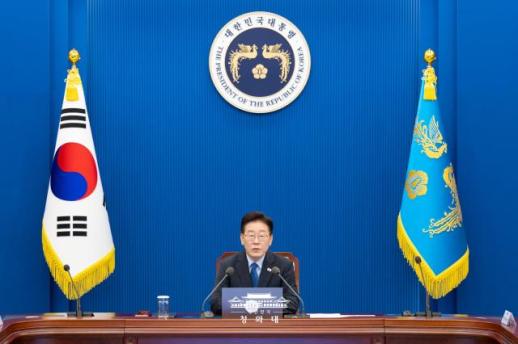 Fairness backlash jolts Lee, lifts conservative opposition SEOUL, September 14 (AJP) - President Lee Jae Myung is facing a sharp erosion of support among young South Koreans, with controversies surrounding former Gender Equality and Family Minister nominee Yong Hye-in and Justice Minister nominee Kim Seung-won turning questions of fairness into a political liability for the administration’s second Cabinet reshuffle. A Realmeter survey released Monday showed Lee’s approval rating among respondents aged 18 to 29 at just 18.6 percent, down 10.2 percentage points from the previous week. Support stood at 19.6 percent among young men and an even lower 17.6 percent among young women. The same polling series showed the ruling Democratic Party, or DP, at 36.1 percent nationwide, while the main opposition People Power Party, or PPP, rose to 42.1 percent. Among voters in their 20s, the contrast was far more dramatic: the DP drew 15.0 percent, compared with 61.5 percent for the PPP. “I’m very worried,” DP lawmaker Jeon Yong-gi told AJP when asked about the numbers. The slide has unfolded as Lee’s second round of Cabinet nominations became engulfed in disputes over whether politicians who have built careers around reform and fairness have themselves benefited from political privilege. Yong, a 1990-born Basic Income Party lawmaker who had been tapped to head the Ministry of Gender Equality and Family, withdrew her nomination Sunday after days of controversy over her plan to retain her proportional-representation National Assembly seat while serving as a Cabinet minister. She also faced allegations that her small party had effectively become a family-run political organization, including criticism over her husband’s senior party role, government-backed employment subsidies received by the party and questions over its organizational practices. Yong rejected accusations of improper favoritism, arguing that her husband’s appointment followed party procedures and that retaining a parliamentary seat while serving in the Cabinet was permitted by law. For many critics, however, the dispute landed on particularly sensitive terrain for younger voters: whether people with political connections are playing by the same rules as everyone else. “The decline in the president’s job approval and the rise in PPP support can largely be attributed to the Lee Jae Myung administration’s failed vetting of ministerial nominees, regulation-centered housing policies that run counter to what the public wants, and a worsening economy that people can actually feel,” PPP lawmaker Lee Hun-seung told AJP. “Yong Hye-in has stepped down as gender equality minister nominee, but allegations of hypocrisy and double standards surrounding Justice Minister nominee Kim Seung-won continue to emerge,” Lee said. “With loan restrictions pushing up housing costs while making home ownership even harder, the sense of frustration among young people could only further damage support for the Lee administration.” Kim, a DP lawmaker nominated to lead the Justice Ministry, has been confronted with several separate controversies. The opposition has alleged that Kim improperly pressed the Ministry of Food and Drug Safety in 2021 over approval for a COVID-19 treatment clinical trial involving biotech firm Genencell. Kim has said he simply relayed a public grievance and asked regulators to conduct a fair review, denying that he sought guaranteed approval or knew that problems had been alleged with animal-test data. The controversy widened after reports of suspected unfair stock trading involving people connected to companies around Genencell. Those allegations do not in themselves establish that Kim participated in stock manipulation, and Kim and the DP have rejected attempts to tie him directly to such trading. Questions of fairness also arose over a social cooperative run by Kim’s wife that provides services to children with developmental disabilities. PPP lawmakers alleged that the organization employed two of the couple’s children after beginning to receive government-funded voucher revenue, raising questions about preferential hiring. Kim’s confirmation team rejected the accusations, saying both children performed genuine education and care work for which they were qualified and were paid accordingly. “The hypocrisy and unfairness Yong Hye-in displayed, together with the abolition of prosecutors’ supplementary investigative powers, shattered the illusion among women in their 20s and 30s that Lee Jae Myung was doing a good job,” PPP lawmaker Yoo Sang-bum told AJP. “The hollowness of what the DP calls reform is being exposed, and its support is plunging,” Yoo said. “With no alternative other than the People Power Party, the PPP is benefiting almost by default.” The reference to supplementary investigations points to another issue that has generated unease among some younger women. The DP pushed through an amendment to the Criminal Procedure Act eliminating prosecutors’ authority to directly conduct supplementary investigations while strengthening their power to order police to conduct additional investigative work. The measure was promulgated in August and is scheduled to take effect Oct. 2 as part of a broader restructuring designed to separate investigation from prosecution. Supporters say the change is essential to ending decades of excessive prosecutorial power. Critics, however, have argued that removing a second layer of investigation could hurt crime victims when police investigations are inadequate. The Women’s Party staged a protest in August arguing that the change ignored victims of violence against women. Victims of serious crimes, including the woman attacked in the widely known Busan roundhouse-kick case, have also publicly opposed abolishing prosecutors’ supplementary investigation authority. That debate is politically significant because young women have been among the DP and Lee’s most important sources of support in recent national elections. In the 2022 presidential election, a joint exit poll by South Korea’s three major terrestrial broadcasters found that 58.0 percent of women in their 20s supported Lee, then the DP presidential candidate, compared with 33.8 percent for conservative Yoon Suk Yeol. The pattern strengthened during the political turmoil that followed Yoon’s Dec. 3, 2024, martial law declaration. Young women carrying K-pop light sticks became one of the defining images of the demonstrations demanding Yoon’s impeachment, a movement sometimes described as the “Candlelight Revolution.” Academic research on the protests has identified women in their 20s and 30s as a central force in transforming light sticks into symbols of political solidarity. When Lee won the 2025 presidential election, exit polling again showed 58 percent of women in their 20s and 57 percent of women in their 30s backing him, making young women a crucial part of the coalition that brought the DP back to the presidency. Against that history, Lee’s current 17.6 percent job approval among women in their 20s stands out as a particularly severe warning sign for the ruling camp. “The Lee Jae Myung administration is making appointments and pursuing policies that run counter to fairness, which is the highest priority for people in their 20s,” PPP lawmaker Kim So-hee told AJP. “People in their 20s aren’t driven by progressive or conservative ideology. If you go against their most important value, they turn their backs on you.” PPP lawmaker Ahn Sang-hoon similarly linked the shift to economic anxiety and perceptions of unequal opportunity. “Policies on housing and jobs are kicking away the ladders for younger generations, while the DP is cutting deals with the KCTU and people in their 40s and 50s, fueling anger among people in their 20s and 30s,” Ahn said. “Reforms to save future generations from mounting pension and welfare debt are being led by the PPP, including myself,” he added. “Most recently, Yong Hye-in’s unfair, preferential form of youth politics caused anger among the 2030 generation to explode.” But the PPP’s rebound has also opened a separate argument inside the conservative camp: how much credit belongs to Han Dong-hoon. Han, a former justice minister and former PPP leader, was expelled from the party in January and now serves in the National Assembly as an independent. He has nevertheless emerged as one of the most aggressive figures attacking Kim’s nomination, repeatedly releasing recordings and allegations connected to the drug-approval controversy. His Facebook output has itself become a political story. One media count found that Han published nearly 100 Facebook posts in the nine days following Kim’s nomination, with more than 20 posts on his busiest day. PPP lawmaker Jeong Yeon-wook argued that Han’s political presence is helping the party regardless of his formal status. “The rise in PPP support is both a reflexive benefit from the DP’s tyranny and a reflection of the ‘Han Dong-hoon effect,’” Jeong told AJP. “Even though Han was expelled, there is a public perception that he effectively still belongs to the PPP. Jang Dong-hyeok is simply the party leader. He is not the driving force behind the rise in support.” Other PPP lawmakers sharply disagreed. “That’s quite a stretch,” PPP lawmaker Lee Cheol-kyu told AJP when asked about the claimed “Han Dong-hoon effect.” PPP lawmaker Choi Soo-jin offered an equally terse explanation. “It’s because there is no internal division,” Choi said of the PPP’s rising support. “Han Dong-hoon is an independent.” The disagreement underscores an awkward reality for the opposition: Han has no PPP membership but remains deeply entangled with the party’s political fortunes, while his campaign against Kim has often been more visible than the attacks coming from the PPP leadership itself. The longer-term question is whether the current movement among young voters, and particularly young women, represents a lasting conservative shift or a rejection of the ruling party over specific issues of fairness, housing and criminal justice. Former PPP Supreme Council member Kim Jong-hyuk argued that part of the answer lies in changing memories of the gender politics that once made conservatives deeply unpopular with younger women. “Young people have become disgusted with the hypocrisy and shamelessness of the party of the 1980s activist generation,” Kim told AJP. “In the case of women, there was resistance to conservatives because of Lee Jun-seok’s politics of division, but that feeling has faded over time,” he said. “In particular, I think they have become angry at the Democratic administration’s position on prosecutors’ supplementary investigative powers.” That history remains important. During the 2022 presidential campaign, then-PPP leader Lee Jun-seok was widely credited with a strategy aimed at expanding conservative support among young men. After reconciling with Lee following an internal feud, Yoon posted the seven-word Korean pledge “Abolish the Ministry of Gender Equality and Family” on Facebook, a move interpreted at the time as a direct appeal to male voters in their 20s. The strategy helped Yoon dominate among young men, but it also produced a mirror-image backlash among young women. AJP Takeaways - President Lee Jae Myung’s approval among voters aged 18 to 29 fell to 18.6 percent, while the ruling DP’s support among voters in their 20s dropped to 15.0 percent. - The PPP surged to 61.5 percent among voters in their 20s, as opposition lawmakers linked the shift to fairness controversies, housing pressure and debate over prosecutors’ supplementary investigative powers. - The rebound has also exposed divisions inside the PPP, with lawmakers split over whether former leader Han Dong-hoon deserves credit for the party’s rising support. 2026-09-14 17:50:11
 -
 Agriculture Ministry Exceeds Supply Goals for Chuseok Holiday, Expands Discount Support The Ministry of Agriculture, Food and Rural Affairs has exceeded its supply goals for key items ahead of the Chuseok holiday, aiming to stabilize holiday prices. The government plans to expand discount support to 149 billion won to alleviate consumer burdens.On September 14, the ministry held a meeting at the Government Sejong Center, chaired by Deputy Minister Kim Jong-gu, to review the status of measures for stabilizing living conditions during Chuseok and to assess supply and demand trends.Since announcing its Chuseok living stability measures on September 1, the ministry has continuously monitored price and supply conditions. To reduce the public's price burden, the government and agricultural cooperatives have increased available resources and supplemented measures such as discount events for holiday items.Currently, the supply of 13 key Chuseok items stands at 109.1% of the planned level, with overall supply of major items deemed stable.While agricultural product prices are generally stable, garlic and zucchini are experiencing higher prices. Garlic prices have risen due to decreased production, but the ministry is utilizing stockpiles to increase supply.Zucchini prices increased due to reduced shipments from lower sunlight exposure, but recent improvements in weather conditions have led to a rapid increase in shipments and a decline in wholesale prices. The ministry expects prices to stabilize as purchasing activity for key items increases this week.Livestock prices remain somewhat elevated due to a decrease in the number of animals raised and livestock diseases. The ministry is working to maximize supply through weekend operations at slaughterhouses and increasing systematic shipments. Egg supply is also being stabilized through expanded domestic production and continued imports.To further reduce consumer burdens, discount support has been expanded. The government has increased its discount support from an initial 59 billion won to 149 billion won and extended the support period from September 23 to September 30. As a result, over 4,000 retailers will offer discounts of up to 40% on key items and those experiencing price increases.Twenty food companies have initiated their own discounts of up to 64% on 4,765 items in response to increased demand during Chuseok. Notably, Hanwoo beef, which has seen higher prices due to a decrease in the number of animals raised compared to last year, will be featured in a focused discount event at large supermarkets from September 12 to 24.A refund event for traditional market Onnuri gift certificates will take place from September 16 to 20, and agricultural cooperatives will also promote half-price meal discount events.The ministry plans to monitor the supply and price situation of key items daily until Chuseok, utilizing available resources to expand supply for items with potential supply instability. It will also ensure that consumer burden relief measures, including discount support, are implemented smoothly and provide the public with information on discount events and budget-friendly purchasing options.Deputy Minister Kim Jong-gu stated, "While the supply of key items is stable, there is a possibility of supply fluctuations for some items due to changes in weather conditions. Therefore, related organizations, including local agricultural cooperatives, should manage shipments more rigorously. I urge retailers to actively enhance discount support for key items so that consumers can fully benefit from the large-scale discount initiatives and half-price meal events."* This article has been translated by AI. 2026-09-14 17:48:00
 -
 AI music can make the charts. Can it win fans? SEOUL, September 14 (AJP) - Pitchfork, one of America's best-known music publications, does not hand out zeroes often. But in August, American rapper Tyga's "$TARFACE" got one. The album had already drawn attention after Tyga acknowledged using artificial intelligence as a production tool, including for 1980s-style synthesizers and guitar solos, while saying the lyrics and vocals remained his own. Pitchfork did not reject the album simply because AI was involved. Its criticism was that the music sounded so generic and mechanically assembled that an AI generator might have produced something similar. In Korea, the opposite happened. "Maeumui Sup," or "Forest of the Heart," by independent creator Joseon HipHop entered Melon's Top 100 in early September and climbed as high as No. 89. The track pairs laid-back boom-bap drums with wistful, traditional-leaning melodies. The creator wrote the lyrics before using AI music generator Suno to help produce the composition and vocals. The contrast points to a harder question. If listeners enjoy a song made with AI — and may not even realize AI was involved — what exactly are they rejecting when they say they do not want AI music? Bae Ji-hoon, a 28-year-old office worker, sees little reason to make the distinction. Bae said he regularly listens to HanGroove, whose songs blend contemporary styles with sounds and lyrical elements reminiscent of traditional Korean music. "When you first hear the phrase 'AI music,' you imagine that it is going to sound strange," Bae told AJP. "But when you actually listen, there are already a lot of songs that are really well made." What matters to him is whether the song works. "They hit my taste almost perfectly," he said. Bae said early AI-generated songs often sounded noticeably unnatural, but the technology has improved quickly. "Now there are times when I listen and wonder whether it really was made by AI at all," he said. Listeners may not be very good at telling the difference. Deezer and polling company Ipsos asked 9,000 people across eight countries to distinguish human-made music from fully AI-generated tracks. Participants heard three songs — two generated by AI and one made by humans. Ninety-seven percent failed to identify all three correctly. Yet 80 percent said fully AI-generated songs should be clearly labeled. More than half said they should not compete with human-made music on the same main charts, while 40 percent of streaming users said they would skip an AI-generated song without listening if they knew what it was. The divide is emerging as AI music proliferates. Deezer said fully AI-generated tracks reached about 90,000 uploads a day this summer and, at their June peak, accounted for more than half of all new music submitted to the service. Yet they generated only around 1 to 3 percent of total streams. Listeners may struggle to hear AI, but they still want to know when it is there. A study published in Psychology & Marketing this year found that nearly 88 percent of U.S. adults initially said they would prefer a human-made song to one generated by AI. Researchers then played participants the same AI-generated song, telling one group it had been made by humans and another that it had been generated by AI. Before listening, participants expected the supposedly human-made song to be considerably better. Afterward, the gap largely disappeared. The song scored 6.92 out of 10 when labeled human-made and 6.56 when labeled AI-generated, a difference that was no longer statistically significant. The label still mattered, however. Participants who believed a human had made the song were more willing to listen again, search for more music by the artist and share it with others. "Music is something the listener should enjoy," Bae said. "If the listener is satisfied, isn't that enough?" He sees little ethical problem with AI music as long as its use is disclosed. For musicians, the attraction can be more practical. Frankthehurman, a 27-year-old composer who has experimented with Suno, said the biggest advantage was speed. "The biggest benefit of making music with AI is convenience," he told AJP. He normally experiments with different sounds, instruments and plug-ins while composing. Suno can compress part of that process into minutes. "You can put in lyrics or describe the mood you want and get a complete song unbelievably quickly," he said. "And you can keep generating it again and again." Speed, however, does not necessarily produce a finished record. Frankthehurman said AI-generated vocals can still sound awkward, particularly in pronunciation, and he would revise the output before using it in his own work. "I might add more layers, or if it was a vocal recording, I would rather record it myself," he said. For him, AI is closer to another production tool than a replacement for the musician. "If more people become interested in composing or writing songs because of AI, I think that's a good thing," he said. That also makes "AI music" increasingly difficult to define. One musician may use AI for a single element while retaining control over the writing, arrangement and performance. Another may enter lyrics and a few instructions and receive an almost complete song. Modern music already involves layers of human collaboration. Songwriters, topliners, arrangers, producers, vocal directors, engineers and performers may all contribute to a single release, sometimes across different countries and companies. AI is now entering that chain, forcing copyright systems to decide how much human contribution is enough to constitute authorship. South Korea confronted that question this summer. The Korea Music Copyright Association introduced rules on Aug. 3 that would have allowed AI-assisted works to be registered when a human lyricist, composer or arranger had made a substantial and leading creative contribution. It withdrew the change just 22 days later, saying broader discussion was needed over how human creativity should be recognized when AI is involved. AJP Takeaways - AI-assisted music is entering mainstream charts, but critical reception remains divided, as shown by Joseon HipHop's Melon entry and Pitchfork's 0.0 review of Tyga's "$TARFACE." - Listeners often struggle to distinguish AI-generated music from human-made tracks, yet most still want clear disclosure when AI is involved. - Research suggests AI can match human-made music in immediate listening appeal, but human authorship still boosts willingness to replay, share and follow an artist. 2026-09-14 17:47:23
 -
 ADB backs Korean minerals push in Central Asia SEOUL, September 14 (AJP) - The search for critical minerals in Central Asia picked up a lender on Monday, when the Asian Development Bank said it was ready to co-finance South Korean projects across the region, two days before the first Korea-Central Asia Summit opens in Seoul. The Asian Development Bank (ADB) is Uzbekistan's largest investor, with more than $15 billion in cumulative assistance, and agreed this year on an indicative country program worth $12.4 billion running from 2026 through 2030. Uzbekistan is where South Korea has concentrated its minerals effort. Deputy Prime Minister and Minister of Finance and Economy Koo Yun-cheol met ADB President Masato Kanda at the government complex in Seoul on Monday morning, in Kanda's first visit to South Korea since he took office. Koo heads a ministry reorganized out of the old planning and finance ministry in 2025, with budget authority moved to a separate agency reporting to the prime minister. Koo said cooperation with the bank on climate technology, artificial intelligence and critical minerals had to turn into "tangible results," and proposed widening it across Central Asia off the back of the summit and a separate bilateral meeting with Uzbekistan. On minerals, he argued that deeper work with Uzbekistan could build up local industry and secure supply for Korean manufacturers at the same time. Kanda said the bank stood ready to support cooperation between South Korea and Central Asia "through co-financing of major projects" and similar arrangements. Co-financing would put ADB capital alongside Korean money in individual mining and processing ventures, spreading the risk that has kept Korean firms cautious about the region. He added that he hoped the minerals work would lead to "concrete investment." Koo asked for help getting ADB's Center for AI Innovation and Development standing and operating quickly. Kanda launched the center in Samarkand in May, backed by a $20 million contribution from the South Korean government, and it is to be based in Seoul as a regional hub for AI adoption, with a target of training about 3 million people in digital and AI skills by 2035. Koo also proposed projects matching Korean technology and experience to demand for AI transition in developing countries, and asked the bank to take an active part in the global AI hub South Korea is building. Kanda said he expected the Seoul center to strengthen AI cooperation between the two sides. The energy discussion followed from the AI one. Koo said the expansion of AI industries has raised the importance of stable energy infrastructure, and suggested ADB draw on Korean generation, transmission and distribution technology and operating experience for its regional energy projects. The two also exchanged views on where ADB energy policy goes next now that the bank can support nuclear power. ADB amended that policy in November 2025 to remove its prohibition on financing nuclear investments and afterward signed an agreement with the International Atomic Energy Agency, though any financing remains subject to readiness assessments and no nuclear project has been approved. AJP Takeaways - Asian Development Bank President Masato Kanda told South Korea's deputy prime minister on Monday that the bank stood ready to back cooperation with Central Asia through co-financing of major projects and said he hoped the critical minerals work would lead to concrete investment. - Koo Yun-cheol asked the bank to get its Seoul-based Center for AI Innovation and Development operating quickly, to take an active role in the global AI hub South Korea is building, and to draw on Korean generation, transmission and distribution technology for its regional energy projects. - The Asian Development Bank is Uzbekistan's largest investor, with more than $15 billion in cumulative assistance and an indicative country program worth $12.4 billion for 2026 through 2030, and it launched the AI center in Samarkand in May with a $20 million South Korean contribution, with a target of training about 3 million people by 2035. Those figures come from ADB's own announcements rather than from the meeting. 2026-09-14 17:45:34
 -
Flu and COVID-19 Surge in September, Breaking Seasonal Trends Flu (influenza) and COVID-19 are surging simultaneously, causing alarm in hospitals and pharmacies. Typically, respiratory infections peak in November and December, but this year, the outbreak began earlier in September, challenging the notion that flu is a winter illness.According to the Korea Disease Control and Prevention Agency (KDCA) on September 14, the rate of influenza-like illness (ILI) among outpatients in the week of August 30 to September 5 was 25.3 per 1,000 patients. This is double the seasonal outbreak threshold of 12.9 and nearly four times higher than the same period last year, which recorded 6.6.COVID-19 cases are also rising sharply, raising concerns about a 'twindemic' of both infections. Hospitalizations for COVID-19 increased from 57 in week 33 to 193 in week 36, a rise of approximately 3.4 times.In response, the government has sent notices to hospitals and pharmacies to ensure stocks of COVID-19 treatments like Paxlovid and Veklury are available in preparation for a potential resurgence.Pediatric clinics are seeing an increase in young patients with colds, leading to a rapid depletion of stocks of oseltamivir suspension, commonly used for treating flu in children. While there is no supply disruption, pharmacies report a sudden spike in orders this week, with incoming stock quickly being sold out.A pediatric clinic in Songpa, Seoul, noted, "Especially for children who have difficulty swallowing capsules, the suspension powder is running out quickly, prompting efforts to stock up. There are also reports that the overall supply is low this year due to a mild flu season last year."The spread of flu is accelerating, particularly among school-aged children and younger age groups. According to the KDCA, in week 36, the rate of influenza-like illness among children aged 7 to 12 was the highest at 75.1 per 1,000 outpatients, followed by 49.8 for ages 1 to 6 and 31.3 for ages 13 to 18.Pharmacies are also experiencing a noticeable increase in sales of COVID-19 treatments, fever reducers, and cold medications. A pharmacist at a pharmacy in Gangnam, Seoul, stated, "With the recent surge in COVID-19 cases, we have stocked up on Paxlovid, and other pharmacies are in a similar situation. Additionally, sales of fever reducers and cold medications have been steadily increasing since late August."Particularly, stocks of flu treatments are being depleted rapidly. An industry source noted, "With the rise of type A influenza, orders for flu treatments have surged since the end of August."However, some experts point out that the timing of vaccinations and the spread of the outbreak are misaligned. The KDCA plans to begin the national influenza vaccination campaign on September 21, but with the Chuseok holiday approaching, it may be challenging for hospitals to respond proactively through vaccinations.The KDCA is considering adjusting the vaccination schedule for high-risk groups, including immunocompromised individuals. A KDCA official stated, "We will decide next week based on the vaccine supply schedule and expert consultations."* This article has been translated by AI. 2026-09-14 17:44:00
-
 Korea's Arctic trial arrives Europe. Now come the return trip and viability SEOUL, September 14 (AJP) - South Korea's maiden container voyage testing Arctic waters has successfully arrived in Rotterdam, raising hopes that the Northern Sea Route could sharply shorten cargo voyages between Asia and Europe. The journey of the PanStar Acro is only halfway over, and the harder challenge is the return leg and whether the Arctic option is commercially viable. The 2,758-TEU container ship arrived in Rotterdam on Sunday, 22 days after departing Busan on Aug. 22. It reached its first European port, Felixstowe in Britain, on Saturday after passing through Arctic waters without assistance from a Russian icebreaker. Rotterdam, Europe's largest port, serves as a major gateway for cargo moving into the continent, with extensive rail, road, inland waterway and feeder connections to European markets. The journey is South Korea's first trial of the Northern Sea Route using a container ship. The vessel left Busan carrying 737 TEUs of export cargo, including chemical products, used cars and auto parts, along with 100 TEUs of empty containers. The route between Busan and Rotterdam via the Arctic is about 13,000 kilometers, around 35 percent shorter than the roughly 20,000-kilometer voyage through the Suez Canal. The shorter route could reduce sailing times, fuel use and shipping costs while offering South Korea an alternative to traditional routes such as the Suez Canal. Yet the first voyage also underscored why distance alone cannot determine whether the Arctic can become a regular commercial shipping lane. According to Busan Ilbo, the PanStar Acro encountered dense drifting ice shortly after entering Arctic waters on Aug. 31. Near Wrangel Island in the Chukchi Sea, drifting ice blocked the vessel's path, forcing it to halt nighttime sailing and wait for conditions to improve. Strong winds and currents pushed the ship while it waited, leaving a zigzagging track on navigation data. The vessel later encountered winds of up to 40 knots in the Laptev Sea. Crew members reduced speed and repeatedly adjusted the ship's heading as ice was pushed toward the hull. The vessel also carried out evasive maneuvers to avoid harder chunks of ice near the Vilkitsky Strait. Despite those difficulties, no major accident or safety problem occurred during the outbound voyage. "There were no particular problems. Those were difficulties we had already expected, and the crew made the journey safely," one expert familiar with the trial told AJP. The expert said the return voyage should benefit from information gathered on the way to Europe, although Arctic conditions remain inherently unpredictable. "The sea is different because drifting ice is constantly moving and the weather is always changing," the expert said. "But since they have already traveled the route once, the return trip should be somewhat easier. They now have data on what conditions were like in each area." Conditions aboard also highlighted the human challenges of Arctic shipping. Busan Ilbo reported that access to outside decks was restricted because of freezing conditions and safety risks, while crew members faced prolonged periods confined inside the vessel as it crossed the Arctic. The PanStar Acro is scheduled to call at Gdansk, Poland, on Sept. 16 before heading back to South Korea via the Arctic route. It is expected to return to Busan on Oct. 12, completing its round-trip trial. The return journey could provide an even more important test. Seasonal freezing will have advanced by the time the vessel reenters Arctic waters, meaning the crew could face different ice and weather conditions from those experienced on the outbound voyage. "The conditions will be different on the way back," the same expert said. "On land, taking the same road back would not make much difference, but conditions at sea are constantly changing." Beyond the ice lies an equally difficult commercial question. South Korea is targeting the opening of a regular Arctic shipping route around 2030 and plans to conduct additional trial voyages to accumulate operational data and experience. "We are aiming to open a regular route in 2030," another expert familiar with South Korea's Arctic shipping plans told AJP. "We plan to continue conducting trial voyages every year, accumulating data and experience so that we can prepare step by step for the opening of a regular route." The expert said the government's immediate goal is not to establish a permanent Arctic service with one particular shipping company, but to determine whether the route itself is operationally and commercially viable. "There are shipping companies that still question whether the Arctic route can actually operate and whether it really makes economic sense," the expert said. "The idea is to show that it can actually be sailed in a little over 20 days." "The goal at this stage is not to have one shipping company operate the route regularly. The purpose of the trial voyages is to accumulate data and verify the route's economic feasibility and operational viability," the expert added. The question of commercial viability remains unresolved. While the Arctic route can significantly cut sailing distance compared with the Suez Canal, its competitiveness will ultimately depend on fuel savings, insurance premiums, cargo volumes, schedule reliability and the limited seasonal navigation window. "If the sailing time is shorter, fuel costs are lower and there are no major safety problems, then from a purely market perspective it has clear advantages," the expert said. "But there are international variables," the expert added, citing uncertainty surrounding Russia and Western sanctions as factors that continue to make shipping companies cautious. Sanctions on Russia are particularly important because much of the Northern Sea Route runs along Russia's Arctic coastline. The PanStar Acro crossed the route without using a Russian icebreaker, limiting the need for financial transactions involving Russian services. "If there is a financial transaction with the Russian side, there is a risk of becoming caught up in secondary sanctions," the first expert said. "To avoid that risk, you have to avoid financial transactions with Russia, and that means not using an icebreaker unless it is necessary," the expert said. "If the ice is too thick for a ship to pass on its own, an icebreaker has to break the ice and open the route. Naturally, that costs money." The vessel was able to make the outbound voyage without one largely because it sailed when Arctic sea ice was near its seasonal minimum. "Right now, this is the period when the ice has melted the most," the expert said. "The ship finds a route through the open water and sails without using an icebreaker." The successful outbound trip therefore does not by itself establish that the route can operate reliably over a longer shipping season. Commercial viability will also depend on whether ships can secure sufficient cargo in both directions, maintain predictable schedules despite rapidly changing ice conditions and absorb higher insurance and specialized operating costs. The PanStar Acro has demonstrated that a conventional South Korean container ship can cross the Northern Sea Route in summer without icebreaker assistance and reach northern Europe in just over three weeks. The remaining journey will help answer the harder question facing Seoul as it looks toward 2030 — not whether the Arctic route can be sailed, but whether it can become a reliable and commercially sustainable alternative to the traditional route through the Suez Canal. The bigger question is whether it can prove itself a shipping route worth using. AJP Takeaways - PanStar Acro reached Rotterdam in 22 days via the Northern Sea Route, completing South Korea’s first Arctic container trial to Europe. - The return voyage will test tougher seasonal ice and weather conditions as the ship heads back to Busan. - Seoul aims for a regular Arctic route around 2030, but commercial viability, sanctions, insurance and cargo demand remain key hurdles. 2026-09-14 17:43:55
 -
 Netflix hit meets reality as Korea seeks protection for teachers SEOUL, September 14 (AJP) -The Netflix series Teach You a Lesson, in which a fictional government agency steps into troubled schools to restore teachers’ authority when students and parents cross the line, created a splash this summer and raised a sober question that brought teachers and judges together Monday to seek real-world solutions for restoring dignity in the classroom. The show, which topped Netflix’s non-English TV chart after its June release, struck a nerve in South Korea, where teachers say the real system still leaves many of them exposed to abusive complaints and lawsuits. The divide between fiction and reality was on display Monday as teachers and judges gathered at the National Assembly in Seoul to discuss how South Korea should protect educators from what are commonly called “malicious complaints,” while preserving parents’ legitimate right to raise concerns. The meeting was co-hosted by Reform Party lawmakers Cheon Ha-ram and Lee Ju-young. Cheon said fear of complaints and legal action has increasingly shaped ordinary school activities, from field trips to lunchtime sports. “‘If you do nothing, nothing happens’ must not become the highest truth in education,” Cheon said, arguing that teachers should not be forced to bear legal and administrative risks alone. The concern has persisted despite a series of reforms introduced since the July 2023 death of a young teacher at Seoul’s Seoi Elementary School. Her death, later recognized by the government as work-related, triggered massive teacher rallies and a national debate over parental complaints, child-abuse accusations and declining classroom authority. Police found no criminal wrongdoing by parents in the Seoi case, but education authorities said student discipline, parental complaints and workload appeared to have contributed to the pressures she faced. The backlash prompted revisions to five major laws governing education and teacher protection. Among other changes, the measures strengthened protections for legitimate classroom discipline and created a system allowing superintendents to submit opinions when teachers face child-abuse allegations. Teachers, however, say much of the burden still falls on individuals. Kang Seok-jo, head of the Elementary School Teachers’ Union, told Monday’s meeting that a March survey of 987 elementary school teachers found 78 percent believed attempts to channel complaints through a single official school contact either did not work or existed only on paper. At schools with complaint-response teams, 71.5 percent said teachers themselves were members of those teams. Kang described cases in which a parent sought out a teacher who was on special bereavement leave and complained for more than 40 minutes, and another in which a drunken parent sent incoherent messages at 11 p.m. Other complaints concerned mosquito bites, the temperature of soup served at school lunches and even a teacher’s messaging style. One teacher, he said, was asked about her pregnancy plans. “The law says schools should receive complaints,” Kang said. “But it does not clearly say whom the school should put on the front line.” He called for teachers to be removed entirely from complaint-handling duties and for schools to block complaints from reaching educators through personal phone numbers or other private channels. The anxiety also extends to child-abuse accusations. Education Ministry data cited by teacher groups show 1,870 abuse reports were filed against teachers between September 2023 and February this year. Of 993 cases that had been concluded, 90.4 percent ended either before a formal police investigation or with prosecutors declining to indict. Judges at Monday’s meeting stressed that stronger teacher protections must be balanced against citizens’ right to file legitimate complaints. Presiding Judge Kim Min-cheol said the challenge begins with defining where an ordinary complaint ends and an abusive one begins. “Litigation is a citizen’s right,” Kim said, warning that penalties aimed at abusive complainants could also discourage people with legitimate grievances. He suggested schools could reduce legal uncertainty by developing clearer internal rules, noting that courts consider school regulations when reviewing disputes. Presiding Judge Moon Jung-heum, meanwhile, pointed to Supreme Court precedent recognizing that teachers exercise broad professional discretion in educating students and that their educational judgments should generally be respected. Lee suggested more formal safeguards for parent-teacher consultations, including designated times and places and, where appropriate, recordings or other records of what was said. Pressure for such measures is spreading beyond the National Assembly. Gyeonggi Superintendent of Education An Min-seok, who took office in July, has launched a superintendent-led teacher rights protection task force designed to shield educators from abusive complaints and lawsuits. The system, which formally began operating in August with 300 designated teacher-rights protection officers, is intended to ensure that the education office — rather than individual teachers — takes responsibility for serious complaints from the initial response through resolution. AJP Takeaways - Netflix hit Teach You a Lesson has sharpened debate over classroom authority, as teachers and judges gathered at the National Assembly to seek real-world protections against abusive complaints and lawsuits. - Teachers say reforms introduced after the 2023 Seoi Elementary School case still leave individuals exposed, with complaint-response systems often requiring teachers themselves to handle grievances. - Child-abuse allegations remain a major source of anxiety: Of 993 concluded cases cited by teacher groups, 90.4 percent ended before formal police investigation or without indictment. 2026-09-14 17:38:14
 -
Korean Women's Basketball Team Finalizes Roster for 2026 Aichi-Nagoya Asian Games The Korean women's basketball team will compete in the 2026 Aichi-Nagoya Asian Games without its key players, Jisoo Park (Cheongju KB) and Jihyun Park (LA Sparks).The Korea Basketball Association announced the final roster for the women's basketball team on September 14, 2026.Among the 13 players initially selected for training, Jisoo Park and Jihyun Park will not join the final squad. The team has decided to proceed with 11 players without adding any replacements.According to the association, Jisoo Park, who is recovering from ankle surgery, has shown a strong desire to join the team and has been in regular communication with the coaching staff while focusing on her rehabilitation. However, after a comprehensive review of her physical condition and recovery progress, it was determined that she would not participate.Jihyun Park will miss the tournament due to commitments with her WNBA team.Despite the absence of these two players, head coach Suho Park expressed confidence in the existing players' chemistry and teamwork. He stated, "The players have been training together since summer, building their organization. While it is unfortunate that Jisoo cannot join us, we will focus on enhancing the strengths of the 11 players who have been working together to perform well at the Asian Games."The final roster includes Huh Yea-eun (KB), Ahn Hye-ji, Lee So-hee, Choi Yi-saem (all Busan BNK), Park So-hee, Jeong Hyun, Jin An (all Bucheon Hana Bank), Kang Yu-rim, Lee Hae-ran (both Yongin Samsung Life), Kang Yi-seul (Asan Woori Bank), and Hong Yu-soon (Incheon Shinhan Bank).The team, which was assembled in July, prepared for the Asian Games through an exhibition match in Japan in August and the FIBA Women's Basketball World Cup held in Germany in September. After returning home on September 10 and completing their preparations, the team departed for Japan on September 15.Placed in Group C, Korea will begin its campaign on September 18 at 10 a.m. against Malaysia, followed by matches against Mongolia on September 21 at 1 p.m. and Taiwan on September 22 at 4 p.m.The tournament format allows the top two teams from each group and the two best third-placed teams to advance to the quarterfinals. 2026-09-14 17:36:00
-
Samsung Electronics Faces Internal Conflict Amid Threats Over Bonus Disputes Internal conflicts at Samsung Electronics have escalated, with tensions over bonus distribution methods leading to allegations of threats against specific employees and union leaders. According to industry sources, the Samsung Group's inter-company labor union, Samsung Electronics Branch (Intercompany Union), sent a formal request to the Donghaeng Labor Union, which focuses on the home appliances and mobile (DX) sectors, demanding measures to prevent violent expressions directed at employees and union leaders.The accompanying reference materials included posts from a communication channel within the union that contained derogatory remarks aimed at the Intercompany Union chairman and specific employees, as well as references to explosives and physical harm, indicating serious threats.The Intercompany Union stated, "Despite the communication channel being a closed space requiring individual authentication, the operators have allowed such extreme expressions without intervention or sanctions." They emphasized that this behavior creates feelings of humiliation and anxiety among members, transcending mere differences of opinion.They further demanded a formal response in writing by September 18, including measures to prevent recurrence and preservation of original records of communication.The root cause of this conflict lies in the growing dissatisfaction among members regarding the disparity in bonus amounts across different business divisions. The widening compensation gap between the semiconductor (DS) and non-semiconductor (DX) divisions has led to differences in union positions, which have devolved into hostile language directed at one another. As the Intercompany Union, primarily representing the semiconductor sector, pushes for the introduction of a performance bonus system linked to operating profit and agreements on one-time special bonuses, the Donghaeng Union has opposed these semiconductor-centric compensation proposals, calling for separate compensation measures.Moreover, the Donghaeng Union has continued to operate a separate communication channel, claiming to protect the actual rights of DX division members, while independently conveying compensation demands to management, furthering the divide.In response, the Intercompany Union plans to hold a general meeting in October to propose amendments to its regulations, limiting membership eligibility to employees in the DS division, effectively declaring a transition to a 'semiconductor-exclusive union.'* This article has been translated by AI. 2026-09-14 17:32:10