


Latest by
-
 NS Home Shopping Delivers 390 Sets of Samgyetang to Partner Companies NS Home Shopping announced that it held the 'Yes NS Partners Smile Day' on July 14, delivering Harim samgyetang sets to outstanding partner companies in celebration of the summer's first heat wave.The 'Yes NS Partners Smile Day' is an annual program aimed at expressing gratitude to partner companies for their hard work and supporting mutual growth.This year, a total of 390 sets of Harim samgyetang were prepared for representatives and sales personnel from over 200 top partner companies across all media.Jo Hang-mok, CEO of NS Home Shopping, stated, "We organized this event to express our appreciation to our partners who work hard to present quality products. We will continue various mutual growth activities to foster a healthy distribution ecosystem."Meanwhile, NS Home Shopping held a welcome event last month at its headquarters in Pangyo, Seongnam, to celebrate the first day of work for employees of Homeplus Express, following the completion of its acquisition process. During the event, CEO Jo described the acquisition as a strategic leap that goes beyond merely increasing the company's size, aiming to transform its structure.* This article has been translated by AI. 2026-07-14 17:52:00
-
Japanese Government Delays Approval of 'Honebuto Policy' Amid Market Concerns Japan's government has postponed the approval of its economic and fiscal management guidelines, known as the 'Honebuto Policy,' and is revising its wording. The original draft removed the term 'fiscal consolidation' and emphasized cooperation between the government and the Bank of Japan (BOJ), prompting backlash from the market. In response, the government has decided to clarify the independence of the BOJ.The Nihon Keizai Shimbun reported on July 14 that the Japanese government is delaying the cabinet decision on the Honebuto Policy, which was initially scheduled for around this date, and is adjusting the wording. The Honebuto Policy serves as the government's annual economic management guideline, setting the direction for the next year's budget and economic policy. This will be the first policy crafted under Prime Minister Sanae Takaichi, incorporating the administration's commitment to 'responsible proactive fiscal policy.'In the draft released at the end of last month, the Takaichi Cabinet removed the phrase 'fiscal consolidation,' which had been included in previous drafts. It emphasized that appropriate monetary policy management by the BOJ is 'very important' and expressed hopes for alignment with government economic policy. The market interpreted this as a signal to restrain the BOJ from further interest rate hikes to support expanded fiscal spending, raising concerns that maintaining low policy rates while increasing fiscal expenditure could exacerbate inflation and weaken the yen.This backlash followed a sharp rise in Japanese government bond yields after the initial draft was released. The yield on newly issued 10-year government bonds surged to 2.9% on July 9, the highest level in nearly 30 years. The yen also weakened, trading around 162 yen per dollar.Finance Minister Satsuki Katayama acknowledged during a press conference on July 10 that the market's reaction has been termed the 'Honebuto Shock.' Katsutoshi Inadome, chief strategist at Mitsui Sumitomo Trust Asset Management, noted that the rise in long-term Japanese interest rates has been more pronounced than in the U.S. and South Korea, stating, 'The increase in rates is particularly notable due to unique factors in Japan, and the impact of the Honebuto Shock has been significant.'Revisions to Honebuto PolicyIn light of the growing backlash, the Japanese government is working to clarify that the market misunderstood the intent of the original draft. Minister of Economic and Fiscal Policy, Minoru Kiyuchi, stated, 'The government's position remains that specific monetary policy tools should be left to the Bank of Japan.' Chief Cabinet Secretary Minoru Kihara also clarified, 'We are not pursuing policies that would recklessly expand fiscal size and undermine market confidence.'The government is not only providing clarifications but is also revising the wording of the Honebuto Policy. They are considering adding a footnote referencing Article 3 of the Bank of Japan Act, which stipulates the BOJ's monetary policy autonomy, and including the phrase 'achieving stable price increases' in sections related to monetary policy. The original draft only reflected Article 4 of the Bank of Japan Act, which outlines cooperation between the government and the BOJ.Another reason for the delay in finalizing the Honebuto Policy is the proposed consumption tax cut on food items. The Japanese government plans to reduce the consumption tax rate on food from 8% to 1% for two years starting in April 2027, with a plan to provide a payment equivalent to 1% based on income, effectively bringing the real tax rate to 0%. The ruling Liberal Democratic Party aims to avoid issuing deficit bonds by securing funding through subsidy adjustments and non-tax revenue, but the opposition parties disagree, citing a lack of concrete funding plans.The issue extends beyond just tax cuts. The Japanese government has also announced a growth strategy to invest a total of 370 trillion yen (approximately $3.4 trillion) in 17 strategic sectors, including artificial intelligence and semiconductors, by 2040. With plans to revise three key security documents by the end of this year, defense spending is also expected to increase starting in the 2027 fiscal year. As tax revenues decrease due to the consumption tax cut while investments in growth industries and defense spending rise, the market is closely monitoring whether the government can balance growth investments with fiscal soundness, especially considering external factors like the situation in the Middle East.Inadome expressed concern, stating, 'The removal of the term 'fiscal consolidation' is shocking,' and added that there is significant anxiety regarding plans that assume additional expenditures, such as the 370 trillion yen in public-private investment. He suggested that the market should be prepared for potential further interest rate hikes by the BOJ, noting, 'The market is wary of proactive fiscal and monetary policy interventions. Now, when the relationship between the government and the BOJ appears unstable, it is crucial to respond carefully to market conditions.'* This article has been translated by AI. 2026-07-14 17:48:00
-
Retail Investors Rally to Save Stocks of Monami and Hansung Enterprises Amid Delisting Fears Retail investors have driven up the stock prices of Monami and Hansung Enterprises, two well-known brands in South Korea, in a bid to prevent their delisting from the KOSDAQ market. This surge comes as the Korea Exchange has significantly tightened its listing maintenance criteria, leading to increased concerns about companies falling below the market capitalization threshold.Within just two weeks of the new regulations taking effect, nine companies issued warnings about being designated as management items due to insufficient market capitalization, with five of them officially classified as such. Starting next month, companies with stock prices below 1,000 won will also face management item designations.In response, companies on the brink of delisting have attempted to defend their stock prices through share buybacks, capital increases, and asset sales. However, the market has seen volatile price fluctuations as selling pressure from delisting fears mixed with buying interest from those hoping to maintain listings.Interestingly, a paradoxical trend has emerged where individual investors are rallying to support long-familiar brands like Monami and Hansung Enterprises. This movement aims to boost their market capitalization above the delisting threshold. Some market observers describe this as a display of “patriotism” to protect South Korea's representative brands, while others view it as a form of self-defense against losses and a speculative gamble.Lee Jeong-hwan, a professor at Hanyang University’s Department of Economics and Finance, noted, “While there may be a genuine desire to save these companies, ultimately, investors are acting to minimize their losses. The term ‘support buying’ alone does not adequately explain this phenomenon.”Initially, the market anticipated that the stricter listing maintenance criteria would further dampen investor sentiment toward struggling companies. However, some individual investors have actively purchased shares of firms facing delisting, defying expectations.One notable example is Hansung Enterprises, known for its crabmeat products, which saw its market capitalization drop to 28.7 billion won due to rising raw material costs and declining profitability, falling below the new listing maintenance standard of 30 billion won. However, the stock price surged from 4,635 won on July 6 to 8,460 won by July 10, nearly doubling in about a week. The stock hit its daily limit on July 9 and 10, and as of 2:40 PM on July 14, it was trading at 10,730 won, up 26.83% from the previous day, nearing its upper limit of 10,990 won.The turnaround was not driven by financial performance or restructuring but rather by a social media campaign highlighting Hansung Enterprises’ charitable activities, including hosting concerts for Korean War veterans for nearly 25 years. This sparked a consensus that “such companies should not disappear,” leading to a rapid influx of retail investors, boosting its market capitalization to 52.5 billion won, surpassing the delisting threshold.A similar trend occurred with Monami, a popular pen brand in South Korea. Monami’s stock price jumped 62% from 1,318 won on July 6 to 2,145 won within a week. After nearing its daily limit, the stock continued to rise, reaching 2,510 won by 2:41 PM on July 14, up 17.02% from the previous trading day, and peaking at 2,780 won during the session. Its market capitalization increased from 24.9 billion won to 40.5 billion won, alleviating delisting concerns.Lee, a 36-year-old IT professional with experience studying in the U.S., shared, “I rarely go to stationery stores these days, but I recently bought a Monami three-color pen set online. It’s affordable and has a great writing feel, so I’ve always trusted it. I even brought Monami pens with me when I was in the U.S.”This affection for the brands was echoed in online investment communities, with comments like “a brand that has been with us for a long time” and “a company that must not disappear.”Hansung Enterprises expressed gratitude on its website on July 7, stating, “We appreciate the positive feedback and support we have received online and on social media. Since our first voyage in 1963, we have strived to produce ‘good food.’”Monami President Song Jae-hwa also expressed gratitude in a handwritten statement posted on the company’s official Instagram on July 10, saying, “Your support during this difficult time, when delisting was a possibility, has been a great source of strength. Monami, which has been part of South Korea’s history, will continue to stand strong by your side.”As stock prices soared, discussions around “support buying” heated up in online investment forums. One post stated, “Monami is a patriotic company. Let’s push it to 10,000 won by Liberation Day,” while another investor praised it as “a good company that also pays dividends.”However, skepticism remains. One investor pointed out, “There are limits to propping up stock prices using patriotism.” Another cautioned, “Delisting does not mean the company will disappear. Buy the products, not the stocks.”Another investor remarked, “Regardless of patriotism, I need to survive first,” reflecting the complex psychology of investors.This phenomenon recalls the 2019 “No Japan” movement, during which the stock price of Monami surged by 29.88% to close at 3,325 won on July 4, 2019, amid a boycott of Japanese products. The expectation was that domestic product consumption would increase. The following day, shares of Shinseong Trading, which operates the domestic clothing brand Topten, also surged by 26.6% due to anticipated benefits from Uniqlo’s decline.However, this rally differs from the past as it is driven more by the psychology of defending against delisting rather than actual performance. Professor Lee emphasized the need to reassess current regulations, stating, “If a market capitalization of 30 billion won can exempt a company from delisting, similar phenomena may recur, necessitating a more refined regulatory framework.”Conversely, Professor Yang Jun-seok of Catholic University highlighted the investors’ expectations, noting, “Those investing in such companies often hope that someone will acquire the company or that the government will provide support at the last moment. Even if that doesn’t happen, they often judge that the stock price has already fallen to a point where additional losses will not be significant, leading them to take risks.”Professor Yang compared this situation to the 2021 GameStop incident in the U.S., where retail investors on the Reddit forum WallStreetBets began buying shares to counteract hedge funds betting against the stock, leading to a massive price surge.Both cases illustrate how collective investor psychology can drive stock prices more than a company’s performance or intrinsic value. Professor Yang noted, “This is not so much normal investing as it is a strong reaction against short-sellers.”Online, some voices have taken a self-deprecating view of the situation, with one post stating, “While the world talks about AI, the Korean stock market is focused on crab meat and pen stocks,” highlighting the reality of the current market.Whether this “support buying” represents true patriotic investment or another form of speculation remains a topic of debate. For now, both Monami and Hansung Enterprises have alleviated their delisting risks, but it remains uncertain whether they can maintain their upward momentum once investor interest wanes.* This article has been translated by AI. 2026-07-14 17:48:00
-
Public Forum Highlights Calls for Easing Real Estate Regulations The Ministry of Land, Infrastructure and Transport held its first public forum to discuss measures for expanding housing supply ahead of a real estate summit led by the President. The event saw a surge of demands for regulatory easing, including the recovery of non-apartment supply, revitalization of private redevelopment projects, utilization of urban idle land, and relaxation of urban and architectural regulations.According to the Ministry, the forum titled 'Measures to Expand Housing Supply for National Housing Stability' took place at the Jeongdong 1928 Art Center in Seoul on July 14. It was attended by Minister Kim Yoon-deok, representatives from public institutions related to real estate, academia, industry, and civic groups. The session was chaired by Lee Yong-man, an emeritus professor at Hansung University.In his opening remarks, Minister Kim stated, "I will listen carefully to the opinions of the participants and reflect them in the upcoming government announcement on real estate issues. This time, I will do my utmost to ensure that the real estate problems are effectively addressed."The recovery of non-apartment supply, particularly villas and officetels, was a key topic of discussion, especially following a decline in the market due to rental fraud. Participants noted that a combination of loan regulations, rising construction costs, and restrictions on rental businesses has weakened the foundation for non-apartment supply.There were also calls to revitalize reconstruction and redevelopment efforts. Concerns were raised about rising construction costs, the burden of member contributions, reduced relocation loan availability, rental housing ratios, and restrictions on the transfer of member status, all of which are slowing down private redevelopment projects. Participants emphasized the need to make regulations related to private redevelopment more realistic.Discussions also included strategies for utilizing urban idle land. Attendees suggested that areas such as semi-industrial zones, long-unsold commercial and self-sufficient land, and underutilized commercial properties and offices should be considered for conversion to residential use. However, to avoid controversy over preferential treatment, it was suggested that public contributions such as the supply of public rental housing, infrastructure expansion, and donations should accompany these changes.The need to alleviate housing burdens for young people and newlywed couples, as well as to protect tenants, was also highlighted. The Min-dalpaeng Union pointed out that many young individuals are exposed to rental fraud, unreturned deposits, and management fee burdens, arguing that housing policies should include protections for tenant rights.Relaxation of urban and architectural regulations was another topic on the agenda. Panelists suggested that converting vacant commercial spaces or office facilities into residential units and adjusting sunlight and parking regulations for low-rise residential areas could help increase short-term supply.In his closing remarks, Minister Kim acknowledged, "The housing issue is the most challenging, and its impact on the public is significant." He assured that the opinions raised during the forum would be well reflected to alleviate the notion of 'real estate ruin.'The government plans to hold additional forums on July 15 and 16, led by the Financial Services Commission and the Ministry of Economy and Finance, respectively. A comprehensive forum chaired by President Lee Jae-myung is scheduled for July 23 to discuss overall real estate policies, including housing supply, finance, and taxation.* This article has been translated by AI. 2026-07-14 17:44:00
-
Housing Supply Policies Face Delays Despite Government Emphasis The government has emphasized the need to expand housing supply, but there are growing concerns that the process of moving from planning to actual construction remains stalled. Key bottlenecks identified include loan-to-value (LTV) regulations, relocation financing, rising construction costs, project financing, and the need for relaxed building regulations.During a housing supply discussion hosted by the Ministry of Land, Infrastructure and Transport on July 14, Jin Mi-yun, a professor at Myongji University, stressed the importance of viewing supply policies from a 'pipeline' perspective. She noted, "The processes of permitting, construction, sales, completion, and occupancy should flow in a cycle, but currently, there is a bottleneck at the construction stage."She added, "The flow of housing supply is more important than individual indicators like permits or construction. We need to view the situation where permits are granted but construction does not proceed in a broader context." Jin also pointed out that while financial and tax support is necessary, it must be carefully designed to avoid negatively impacting market expectations.The most pressing issue is loan regulations. In non-apartment and redevelopment projects, LTV regulations are cited as a factor hindering supply. With LTV effectively blocked for housing sellers and rental businesses in regulated areas, new construction sellers are struggling with land acquisition and project advancement.Loan regulations are also seen as slowing down redevelopment projects. For reconstruction and redevelopment initiatives, demolition and construction can only begin after existing residents have relocated. A reduction in relocation financing can directly delay project timelines.A representative from the Singil Urban Public Housing Complex project stated, "Urban redevelopment projects can only proceed after existing residents have relocated. To move, they need funds for deposits and tenant reimbursements, but there are currently no financial institutions willing to provide relocation loans, putting the project at risk of delays."Kim Deok-rye, a senior researcher at the Korea Housing Industry Institute, noted, "The reason projects are stalled is that LTV has been significantly reduced, leading to substantial lending restrictions. The government has promised to create funds and guarantee products for non-apartment projects, but these are still not available, so they need to be established quickly."Rising construction costs and project viability have also been identified as factors exacerbating bottlenecks. As construction costs soar, the financial burden on project members increases, and the ratio of rental housing and public contributions diminishes project viability. Kim Hyo-sun, a senior real estate expert at KB Kookmin Bank, pointed out, "About 49.8% of housing in Seoul is aging, with some outer areas like Nowon and Gangbuk reaching over 60%. Redevelopment projects are crucial not only for housing supply but also for improving living conditions and asset utilization."Kim emphasized, "While many complexes are being pursued through redevelopment in Seoul, only a few have actually begun construction. The key factor is project viability."Meanwhile, the utilization of public land and underused urban areas has been highlighted as a critical task for transitioning to construction. Park Cheon-kyu, head of the Korea Research Institute for Human Settlements, stated, "We need to quickly secure underutilized land in urban areas and adjust zoning and density in semi-industrial zones." He proposed the creation of a 'third supply axis' that utilizes underused urban land in addition to existing redevelopment projects and new land development.* This article has been translated by AI. 2026-07-14 17:44:00
-
Samsung Electronics Reconsiders U.S. ADR Listing Following SK Hynix's Success Samsung Electronics is reportedly re-evaluating the possibility of listing American Depositary Receipts (ADRs) on the U.S. stock market, following the successful debut of SK Hynix.On July 14, Bloomberg News cited sources familiar with the matter, stating that Samsung has recently engaged in preliminary discussions with banks regarding the issuance of ADRs. However, the sources noted that the company has not yet made a decision on whether to proceed with the listing, nor has it selected underwriters or established a specific transaction structure. Samsung is expected to assess the situation after observing the volatile trends in memory semiconductor stocks.ADRs are securities issued by U.S. depositary institutions that represent shares of foreign companies, allowing investors to trade these shares on U.S. exchanges and enhancing accessibility for investors.Samsung has considered issuing ADRs in the past but has not moved forward with such plans. However, sources indicated that the recent successful U.S. listing by competitor SK Hynix has prompted Samsung to revisit this possibility.Last week, SK Hynix raised $26.5 billion (approximately 40 trillion won) through its U.S. listing, marking the largest amount ever raised by a foreign company in the U.S. market. This event has been seen as a confirmation of strong interest from U.S. investors in key companies involved in expanding artificial intelligence (AI) infrastructure.Should Samsung pursue a U.S. listing, the complexity of its business structure, which encompasses not only semiconductors but also smartphones and home appliances, could pose challenges in transaction design. Additionally, ongoing labor disputes may also impact investor perceptions and the structuring of the listing, according to sources.* This article has been translated by AI. 2026-07-14 17:40:00
-
New Debt Counseling Hotline '1375' Launched for Financial and Welfare Support The government is establishing a comprehensive support system to identify citizens struggling with excessive debt early and connect them with services ranging from debt adjustment to personal rehabilitation, bankruptcy, and welfare and employment support. Starting in October, the Credit Recovery Commission will operate a debt counseling hotline at '1375'.On July 14, the Financial Services Commission reported to the Cabinet meeting on the 'Suicide Prevention Measures for Economic Crisis Victims' developed in collaboration with relevant ministries. The number of suicide deaths due to economic issues rose from 3,089 in 2015 to 4,398 in 2024, increasing its share of total suicides from 23.0% to 29.6% during the same period.The government will initially operate the Credit Recovery Commission as a comprehensive support center for debtors. The Commission will provide guidance and connections for debt adjustment, personal rehabilitation and bankruptcy applications, illegal loan reporting, and employment and welfare services. The hotline number 1375 signifies 'healing the daily struggles caused by debt' and will operate on a recipient-paid basis.The government also plans to expand debt support centers. This month, the number of comprehensive support centers for personal rehabilitation and bankruptcy will increase from 10 to 12, with plans to expand the number of integrated support centers for low-income finance from 50 to 56 by the end of the year. A unified issuance system will be established at the Credit Information Center to prevent applicants from having to obtain debt certificates from multiple financial institutions.A system will also be developed to proactively identify individuals in economic crisis using financial and non-financial data. This includes creating a 'special model for economic crisis victims' that combines information on debt, high-interest loans, and revolving credit with health insurance premium payment data, while expanding financial information linked to the Ministry of Health and Welfare's crisis household identification system.New financial products specifically for vulnerable groups will be launched in collaboration with private financial institutions. BNK Busan Bank will offer loans and savings products with interest rate benefits for vulnerable borrowers who diligently repay policy-based low-income finance. Woori Card plans to introduce a product tentatively named 'Woori Hope Card' for users who face difficulties obtaining both regular credit cards and Sunshine Loan cards.Additionally, a credit life insurance program funded by the insurance industry will be provided free of charge to users of comprehensive support, covering part of the debt adjustment balance in cases of serious illness or death. Financial support initiatives for overcoming economic crises will be made easily accessible through the low-income finance platform 'Itda.'* This article has been translated by AI. 2026-07-14 17:40:00
-
Special Prosecutor Requests Delay in Kim Geon-hee's Supreme Court Ruling The special prosecutor's team, led by Min Jung-ki, has requested the Supreme Court to postpone the ruling date for Kim Geon-hee's appeal, originally scheduled for July 16. This request follows the guilty verdict against former President Yoon Suk Yeol for violations of the political fund law, which the team wants to be considered in Kim's case.According to legal sources on July 14, the special prosecutor's team submitted a motion to the Supreme Court to delay the ruling date. The Supreme Court's Second Division, presided over by Justice Park Young-jae, was set to announce its decision on Kim's appeal regarding the three major allegations: stock price manipulation involving Deutsche Motors, receiving money from the Unification Church, and the free provision of opinion polls from Myung Tae-kyun.In a public statement, the special prosecutor's team explained, "We are requesting a delay to submit additional opinions reflecting the verdict in the case against former President Yoon."Previously, the Seoul Central District Court's Criminal Division 33, led by Judge Lee Jin-gwan, sentenced former President Yoon to two years in prison for violations of the political fund law on July 13. Yoon and his wife were indicted by the special prosecutor for allegedly receiving over 270 million won worth of opinion polls from Myung Tae-kyun for free between June 2021 and March 2022, ahead of the presidential election.The court found Yoon guilty of implicitly agreeing to receive the results of 14 polls (valued at approximately 27.29 million won) that were confirmed to have been delivered.Notably, the court recognized that Kim delegated the polling method to Myung and that Yoon received the results, implicitly agreeing to the arrangement, thus acknowledging a tacit understanding among the couple and Myung.This ruling contrasts sharply with the lower court's decisions regarding Kim, which previously stated that Myung's opinion polls were a type of "bait product" to secure paid contracts, leading to a not guilty verdict on those charges.However, Kim was found guilty on some charges related to her involvement in the stock price manipulation of Deutsche Motors and receiving money from the Unification Church, resulting in a four-year prison sentence and a fine of 50 million won in the second trial.* This article has been translated by AI. 2026-07-14 17:40:00
-
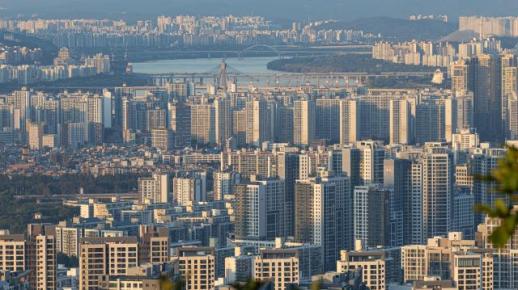 Home ownership becoming a pipe dream for young Korean SEOUL, July 14 (AJP) - Home ownership among young South Koreans has fallen at one of the fastest rates in recent years, underscoring how soaring housing costs are pushing ownership further out of reach even as the government expands housing support that remains largely centered on public rentals rather than ownership. An analysis of anonymized household microdata from the Survey of Household Finances and Living Conditions, reported by Munhwa Ilbo on July 13, showed that the owner-occupancy rate among households headed by people in their 20s and 30s fell to 27.7 percent in 2025 from 38.3 percent in 2021. The decline coincided with a widening wealth gap between generations. Average net assets of younger households dropped to 219.5 million won ($159,000) from 256.6 million won over the same period, while households headed by people in their 50s and 60s saw average net assets rise to 574.2 million won from 473.1 million won. The owner-occupancy and net asset figures are measured at the household level according to the age of the household head. The deterioration comes as the government's latest youth housing policy increasingly relies on expanding rental housing rather than ownership opportunities. Under the 2026 Youth Policy Implementation Plan finalized on April 28, the government plans to provide 67,000 homes for young people this year. Of those, 43,000 units, or 64.2 percent, will be public rental housing, while 24,000 will be publicly supplied homes available for purchase. The rental program consists mainly of 29,000 existing homes purchased or leased by public agencies and rented to young tenants, along with 10,000 newly built public rental homes, 1,000 youth-specialized housing units and 2,400 privately supplied rental homes supported and regulated by the government. While public rental housing offers lower rents and longer tenancy security, it does not allow occupants to build housing wealth in the way homeownership does. Publicly supplied homes transfer ownership to buyers, although the eventual financial gains depend on purchase prices, location and future market conditions. The emphasis on rental housing reflects a broader trend in government policy over the past decade. According to the government's second Basic Plan for Youth Policy, about 460,000 public homes for young people were approved between 2021 and 2025, including 295,000 rental units and 164,000 homes for sale. The government said most of those figures represented project approvals, meaning a considerable time lag remained before construction, completion and actual occupancy. An earlier youth housing initiative announced by the Moon Jae-in administration in 2018 likewise focused heavily on rental support, comprising 140,000 public rental homes and 130,000 government-supported private rental units through 2022. Separate administrative statistics also point to a persistent gap between generations. The Ministry of Data and Statistics' "Administrative Statistics by Life Cycle in 2024," released on Dec. 23, showed that only 11.5 percent of individuals aged 15 to 39 owned a home, unchanged from a year earlier. That compared with 45.5 percent among those aged 40 to 64 and 46.3 percent among people aged 65 and older. The ministry noted that younger homeowners earned nearly twice as much income from wages and business as non-homeowners but also carried significantly heavier debt, with median loan balances 6.5 times larger than those without homes. The administrative homeownership figures are calculated for individuals, while the owner-occupancy and net asset figures from the household finance survey are measured at the household level and therefore are not directly comparable. Economists have increasingly argued that rising housing costs are becoming a structural drag on Korea's economy rather than simply a housing affordability issue. In an issue note published on Jan. 19, the Bank of Korea estimated that every 1 percent increase in housing costs reduced the total assets of young people by 0.04 percent. The central bank said rising housing expenses constrain consumption as well as spending on education, skills and career development, describing youth employment and housing as "structural problems constraining Korea's growth." A separate BOK study released on Feb. 12 found that a 5 percent increase in housing prices reduced the economic well-being of households headed by people younger than 50 by 0.23 percent while increasing that of older households by 0.26 percent. According to the central bank, younger households typically respond to higher home prices by saving more aggressively or taking on larger mortgages to purchase their first home or move into better housing, reducing current consumption. Older households, already holding substantial housing assets, benefit from rising property values without facing the same financial burden. Kang Min-joo, ING's senior economist for South Korea and Japan, said in Asia 2026: 6 Questions for Korea's Recovery, published on Dec. 3, that persistently strong demand and chronically limited housing supply in Seoul continued to push prices higher. Kang noted that Korean households hold roughly 46 percent of their total assets in real estate. However, because property is difficult to convert into cash and mortgage repayments consume a growing share of income, rising home values have provided only limited support for private consumption. The housing market has also complicated monetary policy. When the Bank of Korea kept its benchmark interest rate unchanged at 2.50 percent on May 28, it warned that housing prices in the Seoul metropolitan area and expectations of further gains had strengthened while housing-related lending continued to accelerate. Korea's household debt stood at nearly 89 percent of nominal gross domestic product at the end of last year, among the highest levels in the developed world. Kang said the growing divergence between the overheated Seoul housing market and weaker regional markets could constrain the central bank's policy flexibility in either direction, making it more difficult to balance inflation, financial stability and economic growth. The property market is also intersecting with broader capital flows. According to the BOK, Korean residents' investment in overseas stocks and bonds more than doubled to $140.3 billion last year from $67 billion in 2024, increasing its share of gross domestic product to 7.5 percent from 3.6 percent. The central bank said overseas investment strengthens Korea's external asset position and future investment income but can temporarily weaken the won by increasing demand for foreign currencies. Kang also said whether Korean investors increasingly favor overseas assets over domestic investments could become an important factor influencing the won. No official study, however, has established a direct causal relationship between declining youth homeownership and rising overseas investment. For now, the government's latest housing plan leaves several critical questions unanswered. While it specifies the number of homes to be supplied, it provides few details on regional allocation or when projects will move from approval to construction, completion and actual occupancy. For many younger Koreans, those timelines may prove just as important as the number of homes promised, as each year spent waiting for new supply risks placing homeownership even further beyond reach. 2026-07-14 17:39:12
-
CJ Freshway Fined for Food Poisoning at Hospital Cafeteria CJ Freshway, which operates a cafeteria at a large hospital in Gangnam, Seoul, has been fined over 37 million won due to a food poisoning incident.According to industry sources on July 14, the Gangnam District Office recently issued a food disposal order and imposed a fine of 37.2 million won related to the food poisoning that occurred at the cafeteria of Gangnam Severance Hospital, managed by CJ Freshway.Initially, the Gangnam District Office notified CJ Freshway of a one-month business suspension along with the food disposal order under the Food Sanitation Act. After reviewing CJ Freshway's comments and following administrative procedures, it was ultimately decided to impose a fine instead of a business suspension, in accordance with Article 82 of the Food Sanitation Act.This decision was made based on Articles 72 and 75 of the Food Sanitation Act, which allows for the disposal of food if there is a risk of food safety hazards. If a hazard is confirmed, administrative actions such as business suspension or cancellation of business permits can be taken.A CJ Freshway representative stated, "We apologize for the inconvenience caused to our customers. We take this matter very seriously and will strengthen our safety management system to prevent recurrence."* This article has been translated by AI. 2026-07-14 17:32:00