


Latest by
-
 Skin1004 Opens First Global Flagship Store in New York, Targets North America Skin1004, a skincare brand under Craver Corporation, has opened its first global flagship store in New York City, marking a significant step in its strategy to penetrate the North American market. The store, located on Broadway, serves as the brand's first global offline hub, designed to convey its philosophy and product experiences directly to consumers. It will act as a base for expanding into the global market, particularly in the U.S. The store's design is inspired by Madagascar, the brand's origin, incorporating organic curves and restrained materials to reflect the natural formations of the region's canyons. The layout aims to provide a sense of nature's comfort amidst the bustling New York City environment. The product display area is designed like an exhibition space, allowing visitors to engage with the brand's story and products simultaneously. To celebrate the flagship store's opening, Skin1004 hosted a week-long customer engagement event. This included a limited-edition starter kit exclusive to the New York flagship, discounts for purchasing customers, skin type tests, one-on-one skin consultations, and sampling programs to encourage visitor participation. During the event, the store attracted over 7,000 visitors. The design inspired by Madagascar's canyons and the product experience programs received positive feedback, resulting in a Google Maps rating of 4.9 stars from local consumers. The U.S. has recently emerged as a key battleground for K-beauty brands. CJ Olive Young is expanding its online business in the U.S., while major K-beauty brands such as Amorepacific, LG Household & Health Care, A.P.R., Dalba Global, and Chosun Beauty are strengthening their local distribution networks and offline channels to enhance their presence in the North American market. Kwak In-seung, Chief Business Officer of Craver and head of the Skin1004 brand, stated, "We will continue to expand consumer touchpoints in major global markets, including the U.S., and strengthen our brand influence in the K-beauty market through differentiated brand experiences that encompass both online and offline channels."* This article has been translated by AI. 2026-07-13 17:24:00
-
Xi Jinping to Deliver Keynote at World AI Conference on July 17 China will host the World Artificial Intelligence Conference (WAIC) in Shanghai from July 17 to 20. President Xi Jinping is expected to outline China's policy direction on artificial intelligence (AI) development and global governance during his keynote address.According to Lin Jian, a spokesperson for the Chinese Foreign Ministry, the '2026 World AI Conference and High-Level Meeting on AI Global Governance' will take place from July 17 to 20 in Shanghai.Lin stated that President Xi will present a comprehensive and systematic overview of China's policy stance and plans regarding AI development and governance during the opening ceremony.The event, themed 'Intelligent Partners, Creating the Future Together,' will feature attendees from various governments, industry, academia, research institutions, and international organizations.Lin noted, 'AI technology innovation is entering an unprecedentedly active phase, providing breakthroughs across multiple fields. As opportunities and challenges arise in the international community, AI governance has become a significant issue that the world must address collectively.'He added, 'China has actively worked to ensure that AI develops in a way that benefits humanity and is inclusive, earning high praise from the international community for supporting the capacity building of Global South countries.'Lin expressed hope that the conference would serve as a platform for countries to enhance mutual trust, build consensus, and deepen cooperation, emphasizing the desire to promote healthy, safe, and orderly AI development, making this conference a milestone in the history of AI advancement.The WAIC has been a prominent AI event held annually in Shanghai since 2018, with the Chinese government utilizing it as a key platform to foster its domestic AI industry and lead discussions on global AI governance.* This article has been translated by AI. 2026-07-13 17:24:00
-
Seoul Housing Prices Rise Sharply as June Transactions Exceed 57% The proportion of 'rising transactions'—sales at higher prices than previous deals—in the Seoul apartment market has significantly increased. In June, the share of rising transactions in Seoul surpassed 57%, leading the national trend. However, analysts caution that the decline in transaction volume and potential regulatory changes necessitate further observation.On July 13, Zigbang reported that, according to data from the Ministry of Land, Infrastructure and Transport, the share of rising transactions in nationwide apartment sales rose to 47.3% in June, up from 45.7% in May.In the metropolitan area, Seoul's increase in rising transactions was particularly notable, jumping from 47.7% in May to 57.1% in June—a 9.4 percentage point rise in just one month. In May, only five districts had rising transaction shares exceeding 50%, but this number expanded to 23 districts in June, excluding Gangnam and Gwangjin.By district, the largest increases in rising transaction shares were seen in Yongsan (17.7 percentage points), Mapo (15.8 percentage points), Jungnang (15.5 percentage points), Seocho (14.6 percentage points), Gwanak (13.3 percentage points), Yeongdeungpo (13.0 percentage points), Geumcheon (12.4 percentage points), and Seongdong (12.2 percentage points).Notably, areas with relatively lower-priced apartments, such as Jungnang, Gwanak, Yeongdeungpo, and Geumcheon, also saw an increase in rising transaction shares, indicating a shift in trading patterns in regions that had previously experienced limited price increases.However, Seoul's transaction volume decreased from 7,681 in May to 3,105 in June. As transaction reports are still being processed, there is potential for changes in the rising transaction share depending on fluctuations in transaction volume and composition.In Gyeonggi Province, the share of rising transactions increased from 46.4% to 49.4%, a 3.0 percentage point rise. Areas leading this increase included Gwacheon (22.7 percentage points), Seongnam's Sujeong District (20.1 percentage points), Gwangmyeong (13.7 percentage points), Seongnam's Bundang District (10.7 percentage points), Suwon's Yeongtong District (8.8 percentage points), and Hwaseong's Dongtan District (8.6 percentage points).While Seongnam, Gwacheon, and Gwangmyeong saw an increase in rising transaction shares despite a decrease in transaction volume, Dongtan experienced a 41% increase in transaction volume compared to the previous month, leading to a rise in its share of rising transactions as well. Zigbang attributed this trend to expectations of improved transportation conditions due to expanded semiconductor industry investments and the opening of the GTX-A line.In Incheon, the share of rising transactions in June remained stable at 44.1%, slightly down from 44.2% the previous month. While there was a slight increase in rising transactions centered around Yeongjong, overall changes were minimal.In the provinces, trends varied by region. The overall share of rising transactions in the provinces decreased by 0.2 percentage points to 44.3%. While regions such as Gangwon (3.5 percentage points), Chungnam (3.3 percentage points), Ulsan (2.7 percentage points), and Gyeongbuk (1.6 percentage points) saw increases, Jeju (-5.6 percentage points), Jeonbuk (-4.6 percentage points), and Daegu (-3.3 percentage points) experienced more significant declines.Zigbang noted, "The increase in rising transaction shares in June reflects distinct regional differences rather than a uniform national trend. As June's transactions were influenced by market conditions prior to the government's additional regulatory area designations and tax reform discussions, it is essential to monitor how future policy changes will impact transaction flows."Meanwhile, according to Zigbang, as of June 6, the gap in deposits between new lease contracts and renewals has widened, particularly in Seoul, due to rising rental prices. In Seoul, the deposit for new contracts for 84 square meters has been found to be up to 80 million won higher than for renewals.* This article has been translated by AI. 2026-07-13 17:20:00
-
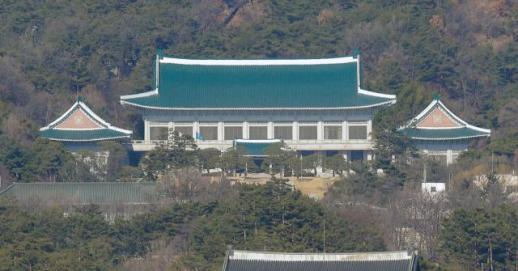 Gov't unveils over 800 trillion won budget plan with push for AI and chips SEOUL, July 13 (AJP) - South Korea plans to increase next year's government spending to more than 800 trillion won (US$533 billion) and set up a fund to use extra tax revenue for investment in artificial intelligence (AI), semiconductors, regional development and younger generations. The fiscal plans were unveiled at a meeting on Monday chaired by President Lee Jae Myung at Cheong Wa Dae, with key Cabinet members and other officials in attendance. Minister of Planning and Budget Park Hong-keun said national tax revenue is expected to exceed 500 trillion won in 2027, compared with an earlier projection of 412 trillion won, while total expenditure would rise more than 10 percent from this year's original budget. At the center of the plans are a proposed fund that would accumulate tax revenue exceeding its long-term trend and deploy the money over several years in four areas: younger generations, growth engines, regional development and talent. The expansion will be paired with what the government described as its largest-ever expenditure restructuring, including reviews targeting reductions of 15 percent in discretionary spending and 10 percent in mandatory spending to free resources for higher-priority programs. The government said heavier investment in 2027 would raise potential growth and strengthen the revenue base, allowing expenditure growth, the fiscal balance and the government debt ratio to be managed more steadily over the medium term rather than relying solely on future tax gains. Semiconductors, AI data centers and physical AI were designated as three megaprojects that will receive priority in budget allocation, infrastructure construction, regulatory support and coordination with private investment. For AI data centers, the government will form an interministerial task force to support 8.4 gigawatts of private investment planned through 2029, while promoting core technologies, large-scale test beds, industry clusters and an alliance of domestic companies. In physical AI, Seoul aims to build a domestic full-stack platform covering foundation models, devices, AI chips, networks and security by 2030, with public procurement supporting early demand as applications expand from manufacturing into defense, care services, agriculture and policing. The semiconductor plan will support a projected 957 trillion won ($638 billion) in private fab investment by strengthening domestic suppliers of materials, components and equipment, packaging and foundry businesses, along with next-generation chips for on-device AI, power systems and defense. The government will also expand electricity, water, transportation and housing infrastructure, develop a semiconductor-focused advanced city at a military air base in Gwangju, and begin preparations for a first-of-its-kind fab in Yongin, Gyeonggi Province, by 2031. Deputy Prime Minister and Minister of Economy and Finance Koo Yun-cheol said the investment drive would be paired with plans to train more than 200,000 young specialists and create more than 300,000 jobs through private hiring, public employment and entrepreneurship. Koo also proposed additional public rental housing, a youth-oriented individual savings account and temporarily eased income requirements for housing loans for newlyweds, while extending employment insurance, training and retirement support to platform workers and freelancers. The fiscal push reflects a broader assessment by the Ministry of Economy and Finance, the Ministry of Planning and Budget, the Bank of Korea and the Financial Services Commission that stronger semiconductor-led growth and tax revenue should be converted into productive investment. At an expanded macro-fiscal-financial meeting in June, the four authorities cited a 17.1 percent year-on-year rise in first-quarter nominal gross domestic product and a 53.2 percent increase in May exports, while agreeing that additional fiscal room should support potential growth and ease polarization and living-cost pressures. They nevertheless warned that higher interest rates and volatility in foreign-exchange and equity markets could weigh disproportionately on vulnerable borrowers, small-business owners, import-dependent companies and leveraged investors, while the BOK’s June review highlighted housing, household debt and nonbank risks despite broadly stable financial conditions. The FSC's 150 trillion won fund will separately channel public and private financing into advanced industries, leaving the proposed Future Response Fund to manage above-trend revenue as a long-term fiscal resource, although detailed contribution rules and the division of responsibilities remain undecided. 2026-07-13 17:19:07
-
All Top 4 FIFA Rankings Reach World Cup Semifinals, Creating Dream Matchups The semifinals for the 2026 FIFA North America World Cup have been finalized, featuring all four top-ranked teams in a historic "dream matchup."As of July 12, the quarterfinals concluded with France (FIFA rank 1), Argentina (2), Spain (3), and England (4) securing their spots in the semifinals.This marks the first time in World Cup history that the top four ranked teams have reached the semifinals together. All four nations have a rich history of World Cup victories.According to soccer statistics provider Opta, France has the highest chance of winning at approximately 34%. Spain follows with about 24%, England at 22%, and Argentina at 20%.The highly anticipated match between France and Spain, dubbed a "preview of the final," will take place on July 15 at 4 a.m. at the Dallas Stadium in Texas. Opta predicts a 57.44% chance of victory for France and a 42.56% chance for Spain, indicating a favorable outlook for the French team.France, aiming for its third consecutive final appearance, has dominated the tournament with six wins, scoring 16 goals and conceding only 2. Key player Kylian Mbappé leads the tournament with 8 goals, while Michael Olise has provided 5 assists, and Ousmane Dembélé has contributed 7 points (5 goals, 2 assists).On the other hand, Spain, seeking to reclaim the title for the first time since the 2010 South Africa tournament, boasts a strong defense, allowing only 1 goal in 6 matches. Players like Lamine Yamal, Mikel Oyarzabal, and Mikel Merino, who scored decisive goals in the Round of 16 against Portugal (1-0) and the quarterfinal against Belgium (2-1), have been instrumental in their success.On July 16 at 4 a.m. at the Atlanta Stadium in Georgia, historic rivals England and Argentina will face off. This will be their first World Cup meeting since the 2002 Korea-Japan tournament. Their encounters have always been significant, from the Falklands War in 1982 to Diego Maradona's "Hand of God" incident in 1986 and David Beckham's red card in 1998.Opta forecasts a closely contested match, with England having a 51.27% chance of winning and Argentina at 48.73%.England, aiming for its first title in 60 years since hosting the tournament in 1966, will rely on the performances of Harry Kane and Jude Bellingham, both of whom have scored 6 goals in the tournament. Bellingham notably scored twice in the quarterfinal against Norway (2-1), helping his team in a critical moment.Argentina, seeking its fourth title and second consecutive win, will be led by soccer legend Lionel Messi. Although he did not score in the quarterfinal against Switzerland (3-1), he provided an assist, making history as the first player to achieve a total of 20 goals and 10 assists in World Cup history. He has accumulated 8 goals and 2 assists throughout the tournament.* This article has been translated by AI. 2026-07-13 17:16:00
-
Aribio Receives $60 Million from China's Puxing Pharmaceutical to Accelerate AR1001 Commercialization Aribio has received a $60 million advance payment from China's Puxing Pharmaceutical as part of a global licensing agreement for the Alzheimer's treatment candidate AR1001, signaling an acceleration in commercialization efforts. The company plans to use the funds to finalize global Phase 3 trials, analyze data, establish global approval strategies, and prepare for production and quality control.On July 13, Aribio announced that it had received an additional $50 million (approximately 75.2 billion won) from Puxing Pharmaceutical, bringing the total option payment to $60 million, which includes an initial $10 million received in May.This advance payment is part of the exclusive global licensing agreement for AR1001 signed by both companies in May, which has a total contract value of $4.7 billion (approximately 7 trillion won). If Puxing exercises its option for global rights, Aribio will receive additional contract payments, development, approval, and sales milestone payments, as well as royalties on sales.Recently, the company completed dosing of the last patient in the global Phase 3 trial, POLARIS-AD. This trial involved 1,535 early Alzheimer's patients across 230 institutions in 13 countries, including South Korea, the United States, Canada, Europe, and China. The company is currently in the process of locking the database and conducting statistical analyses, with top-line results expected to be released this fall.The collaboration between the two companies is expanding beyond technology transfer into a strategic partnership. Puxing has also signed a separate strategic equity investment agreement worth $27.5 million (approximately 42.5 billion won).Jae-jun Jeong, CEO of Aribio, stated, "The full execution of the advance payment according to the planned procedures demonstrates Puxing's confidence in the clinical success potential and global commercial value of AR1001. As we approach the Phase 3 top-line announcement, we will continue to collaborate to provide new treatment opportunities for Alzheimer's patients worldwide."Market analysts believe that Aribio's decision on whether to apply for New Drug Application (NDA) approval from the U.S. Food and Drug Administration (FDA) in early 2027, following the Phase 3 results expected in September, will be a critical turning point for the company's value.Meanwhile, the cumulative contract value of technology exports from domestic pharmaceutical and biotech companies in the first half of the year has reached 13 trillion won, raising expectations that it will surpass last year's record high. Notably, Aribio has achieved results exceeding half of the domestic biotech industry's technology export volume in just the first half of this year.* This article has been translated by AI. 2026-07-13 17:16:00
-
Korea Zinc and MBK Partners Clash Over Shareholder Rights Dispute Korea Zinc and MBK Partners, along with Youngpoong, have clashed again over a court ruling regarding the restriction of Youngpoong's voting rights during an extraordinary shareholders meeting held in January 2026. Youngpoong claims the court recognized the illegal actions of Korea Zinc's management and their liability for damages, while Korea Zinc counters that the ruling only pertains to personal damages awarded to CEO Park Gi-deok and does not affect the current governance structure.On July 10, the 17th Civil Division of the Seoul Central District Court, presided over by Judge Jang Ji-hye, ruled in favor of Youngpoong in a damages lawsuit against Park, ordering him to pay 100 million won plus delayed damages.This lawsuit stems from Korea Zinc's actions during the January extraordinary shareholders meeting, where it allegedly formed a cross-shareholding relationship using its Australian subsidiary, Sunmetal Corporation (SMC), to restrict Youngpoong's voting rights.Youngpoong explained that the court determined SMC could not be considered a company similar to a stock corporation under Korean law, thus not qualifying as a subsidiary. Consequently, the court recognized the act of restricting Youngpoong's voting rights based on the cross-shareholding with SMC as an illegal act.The court also found that Park, as both CEO of Korea Zinc and a director of SMC, was directly involved in the formation of the cross-shareholding and the process of restricting voting rights, which was deemed an obstruction of the existing management's control.MBK and Youngpoong stated, "This ruling confirms that the major shareholder's voting rights cannot be limited under the pretext of defending the existing management's control, and it clearly establishes that legal responsibility follows those who lead illegal actions." In contrast, Korea Zinc argued that the ruling does not address the legality of hostile takeovers or the overall legality of management defense. Korea Zinc stated, "This ruling pertains specifically to the cross-shareholding related to the January extraordinary shareholders meeting and is a personal damages ruling against Park, who was the chair of that meeting." Korea Zinc emphasized that the legality of the governance structure was affirmed by the Supreme Court in March 2026 regarding the cross-shareholding with its overseas subsidiary, Sunmetal Holdings (SMH), and the restriction of Youngpoong's voting rights. "Since the legality of the current governance structure has been recognized based on the March shareholders meeting resolution, this ruling has no impact on Korea Zinc," it added, urging a distinction between the January extraordinary shareholders meeting and the March regular shareholders meeting.* This article has been translated by AI. 2026-07-13 17:16:00
-
Ho Chi Minh City's Tan Son Nhat International Airport Considers Complete Terminal Renovation Plans are being considered for a complete renovation of the existing domestic terminal, Terminal 1 (T1), at Ho Chi Minh City's Tan Son Nhat International Airport. As discussions continue about dividing the roles of Tan Son Nhat and the upcoming Long Thanh Airport, the focus has shifted to addressing outdated facilities and reorganizing the terminal layout. According to local media, including VnExpress, the Airports Corporation of Vietnam (ACV) is in the preliminary stages of reviewing improvement plans for T1 and Terminal 2 (T2), which includes the possibility of reconstructing T1 and building a connecting corridor between T1 and T3. However, ACV has stated that these plans are still in the early review phase, and decisions regarding the demolition of the existing terminal or the start of construction have not yet been finalized. T1 has reached its limits in both facilities and layout due to long-term operation. Constructed between 1963 and 1964, T1 has undergone several expansions and renovations, currently covering an area of approximately 41,000 square meters. It has a capacity of about 15 million passengers annually and can handle an average of 40,000 passengers per day. Before T3 became operational, T1 experienced significant congestion as passengers concentrated there. During peak seasons, such as holidays, daily passenger numbers approached 100,000, leading to bottlenecks at check-in counters, security screening areas, and drop-off zones. Consequently, ACV has determined that T1's facilities and layout cannot adequately meet long-term demand, prompting a consideration of complete reconstruction rather than incremental repairs. Currently, T1 primarily serves domestic flights for VietJet Air, while Vietnam Airlines, Bamboo Airways, Pacific Airlines, Vasco, and Sun Group have shifted their operations to the newly constructed T3. T3 is located about 1 kilometer away from T1, raising concerns about the inconvenience of moving between terminals. As a result, ACV is separately exploring the idea of a underground passage directly connecting T1 and T3. Details regarding the design, total investment, and timeline for this project have not yet been disclosed, and it remains undecided whether the passage will be for pedestrians or a shuttle service. However, if realized, passengers will be able to move between terminals without detouring through external roads. Conversely, the proposal for an underground passage connecting the TCP parking lot and T1 has been excluded after review. ACV assessed that the area has heavy cross traffic and existing infrastructure, and T1's facilities are outdated, making execution unlikely. Currently, passengers traveling from the TCP bus stop to T1 must cross a road that coincides with vehicle traffic, raising safety and congestion concerns. The renovation plan for T1 includes vertical development of the existing site and expansion of service areas. The initial concept proposed by the CPG-ADCC consulting consortium includes constructing a multi-level terminal to increase passenger service space and create a combined facility with parking. This plan is based on a capacity of 10 million passengers annually, with provisions for future expansion to 15 million. Additionally, a new VIP terminal is also under consideration. This facility would cater to heads of state, business leaders, high-ranking passengers, and private jet users, with the capacity to flexibly accommodate one Code E aircraft or five Code C aircraft. However, this proposal is also in the research phase, and final project details have not been confirmed. Discussions about the renovation of Tan Son Nhat Airport are taking place alongside preparations for the opening of Long Thanh Airport. ACV is developing a plan to operate both airports simultaneously, dividing their roles based on market demand, as Long Thanh Airport is expected to begin operations by the end of this year. An ACV representative emphasized that Tan Son Nhat Airport will not be reduced or closed after the opening of Long Thanh Airport and aims to maintain an annual capacity of 50 million passengers. Netizens Urge Quick Connection Between T1 and T3 Vietnamese netizens have primarily pointed out the need for improved connectivity between airport terminals and facility upgrades. One user noted, "There is no direct connection between T1 and T3, forcing passengers to use external roads," adding that this is a significant drawback in terminal movement that needs immediate improvement. Some suggested that rather than building a new T1, a connecting passage should be prioritized. Another user remarked, "T1 is still beautiful," suggesting that instead of incurring costs for a new construction, a underground or above-ground connection should be established. Conversely, there were also calls for early maintenance due to T1's aging. One user commented, "T1 is somewhat outdated," stating that it needs to be updated quickly to harmonize with T3. Voices emphasizing the airport's role as a gateway to Ho Chi Minh City also emerged. One user stated, "It should be developed quickly and beautifully to match the image of Ho Chi Minh City," highlighting its importance as a key aviation hub for tourism and domestic and international cargo transport. There were also demands for modernization of facilities and expanded choices for users. One user argued, "We need to look to the future and modernize," insisting that passengers should be able to choose their desired destinations based on demand, and that competition among airports would benefit customer convenience. Additionally, there were calls for improvements to basic amenities, with one user stating, "Attention should also be paid to the maintenance and repair of airport restrooms." Meanwhile, Tan Son Nhat Airport is expected to continue handling domestic and medium-haul international flights, while Long Thanh Airport is gradually positioned as a new international gateway and transfer hub for the southern region. According to CPG-ADCC consulting research, Tan Son Nhat Airport is projected to handle approximately 40 million passengers annually by 2030, with domestic flights accounting for 75% of that total. By 2050, the airport's capacity could increase to 50 million passengers, with domestic flights making up about 80%. Currently, Long Thanh Airport is planned to handle 44.5 million passengers by 2030 and 77.5 million by 2050. ACV has received operational permits from major domestic airlines for Long Thanh Airport and is in discussions with several international airlines regarding its opening.* This article has been translated by AI. 2026-07-13 17:12:00
-
Rising Treatment Duration and Insurance Costs for Accident Victims A man diagnosed with back and knee sprains following a traffic accident in March 2024 has undergone over two years of outpatient treatment at a traditional medicine clinic. He has visited the clinic 141 times and received 57 medical certificates, 34 of which were issued without any additional examination.As the implementation of the so-called '8-week rule' to manage the appropriateness of long-term treatment for accident victims is delayed, cases of prolonged treatment that are difficult to filter out under the current system continue to rise. Critics point out that there is a lack of objective procedures to assess the necessity for additional treatment, leading to treatment durations extending from months to years and increasing the burden of auto insurance payouts.According to the insurance industry on July 13, data from four major property and casualty insurers revealed that from January 2023 to the first half of last year, 8,242 accident victims received medical certificates more than 18 times. In 2023, the first year that required additional medical certificates for treatment extending beyond four weeks, 140 accident victims received certificates 18 times or more. This number has significantly increased as cases of repeated certificate issuance to extend treatment have continued.The Board of Audit and Inspection also highlighted similar cases. A man diagnosed with a grade 12 spinal sprain following a January 2023 accident submitted 31 similar medical certificates to extend his treatment period, incurring medical expenses of 1,455,000 won.The insurance industry cites the absence of an objective review process for assessing the necessity of additional treatment as a key reason for the recurrence of long-term treatment. Currently, when a medical institution diagnoses the need for further treatment, insurers find it challenging to verify its appropriateness separately. The existing method, which only checks for the submission of medical certificates, has limitations in managing long-term treatment.The Ministry of Land, Infrastructure and Transport and financial authorities have been promoting the introduction of the '8-week rule,' which would allow a public body to assess the necessity for additional treatment for accident victims receiving care beyond eight weeks. The aim is to protect patients who genuinely need long-term treatment while filtering out cases where the necessity for treatment is unclear.However, the traditional medicine sector has pushed back, arguing that imposing a uniform limit on treatment duration does not reflect patients' conditions and recovery speeds. As disagreements persist, the implementation of the new system remains stalled.As long-term treatment continues, the financial burden of traditional medicine is also increasing. Last year, the average cost of traditional medicine per accident victim at four major property and casualty insurers was 1,083,000 won, nearly three times higher than the average cost of Western medicine, which was 355,000 won.There has also been a rise in what is known as 'set billing,' where patients receive six or more of eight traditional treatments, including acupuncture, moxibustion, cupping, and herbal injections, in a single visit. Last year, the total outpatient treatment costs for traditional medicine at the four major insurers amounted to 817.4 billion won, with set billing accounting for 64.4% of that total.The insurance industry views the expansion of set billing as one of the factors contributing to the increase in traditional medicine costs. However, the traditional medicine sector maintains that multiple treatments can be administered based on patient conditions and that it cannot be assumed that multiple procedures indicate over-treatment.An insurance industry representative stated, 'The current four-week payment guarantee process only verifies the submission of medical certificates and does not objectively assess the appropriateness of additional treatment. The core of the 8-week rule is to ensure that medical judgments are made by a public body.' He added, 'As long-term treatment continues in some medical institutions, effective management measures are necessary.'* This article has been translated by AI. 2026-07-13 17:12:00
-
KOSPI Falls Below 7000 Amid Semiconductor Stock Decline The KOSPI index has fallen below the 7000 mark for the first time in over two months. This decline comes despite the successful listing of SK Hynix's American Depositary Receipts (ADR) and strong semiconductor export performance. Concerns over a potential breakdown in U.S.-Iran peace talks have further dampened investor sentiment. Analysts predict that extreme market volatility will continue for the foreseeable future.On July 13, the Korea Exchange reported that the KOSPI closed at 6806.93, down 669.01 points (8.95%) from the previous trading day, marking the third-largest drop this year. Since January, there have been 11 trading days where the KOSPI fell more than 5%, six days with declines over 7%, and four days, including today, with drops exceeding 8%. Notably, in the past month alone, significant declines have occurred on June 8 (-8.29%), June 23 (-9.99%), and July 2 (-7.89%), raising concerns about ongoing market volatility.The semiconductor sector was at the center of today's decline, with heavy selling pressure on major stocks like Samsung Electronics and SK Hynix. SK Hynix plummeted 15.37% to close at 1,845,000 won, losing the 1,900,000 won mark, while Samsung Electronics fell 10.7% to finish at 254,500 won. Other semiconductor stocks, including SK Square (-17.60%) and Samsung Electro-Mechanics (-18.62%), also experienced double-digit losses.Despite the recent strong performance of SK Hynix's ADR on the Nasdaq and solid growth in semiconductor earnings, the market reacted more sensitively to concerns about a peak in memory chip demand.Additionally, rising geopolitical tensions in the Middle East due to U.S.-Iran conflicts have intensified risk-averse sentiment among investors. With international oil prices and the dollar strengthening, and U.S. stock index futures showing weakness, negative sentiment quickly spread to the domestic market.Supply and demand dynamics also contributed to the index's decline. While individual investors made net purchases of 3.88 trillion won in a bid to buy at lower prices, it was insufficient to support the market. Foreign investors sold a net 1.73 trillion won, and institutions sold a net 2.2 trillion won, leading the index lower. This month, pension funds engaged in rebalancing, recording a net sale of 646 billion won.Hwang Seung-taek, head of research at Hana Securities, stated, “Concerns about the peak in the memory semiconductor market and deteriorating investor sentiment are the main causes of the decline. The selling by foreign investors has exacerbated volatility, increasing fatigue and risk-averse sentiment among market participants.” 2026-07-13 17:12:00