


Latest by
-
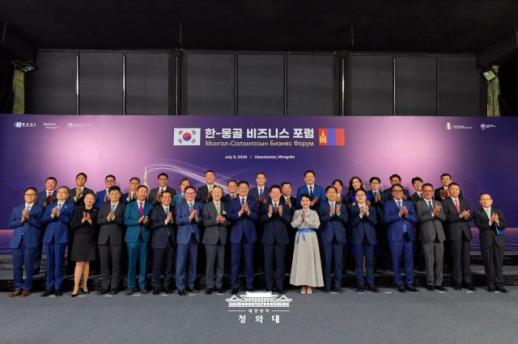
 POSCO ties up with Mongolia in about $100 mln energy push SEOUL, July 10 (AJP) - POSCO International signed a memorandum of understanding with Newcom LLC, a leading Mongolian energy and infrastructure firm, to jointly develop energy projects worth about $100 million. The South Korean trading arm of POSCO Group said the deal, sealed in Ulaanbaatar on Thursday during President Lee Jae Myung's state visit, marks the group's bid to plant a foothold in Central Asia's energy market as it broadens beyond steel and batteries. Under the agreement, the two firms will build a district-heating business anchored on heat pumps, capturing waste heat from the cooling water of the Ulaanbaatar CHP-4 power plant and converting it into heating supply. POSCO International will oversee development, project financing and engineering, while Newcom handles local investment, permits and site securing. "Drawing on our heat-pump, renewable and energy-storage technologies, the government will firmly back Korean firms entering the eco-friendly energy market," Climate Minister Kim Sung-hwan said, pledging support for the transition. POSCO International said it would expand into follow-on renewable ventures with Newcom, including onshore wind, to seize an early position in the market emerging from Mongolia's energy transition. 2026-07-10 11:14:03
-
 Kim Tae-hyo Appears in Court for Detention Hearing Amid Coup Allegations Kim Tae-hyo, former first deputy director of the National Security Office, appeared in court on July 10 for a detention hearing related to allegations of sending messages to persuade allied nations, including the United States, of the legitimacy of the December 3 martial law.The chief judge of the Seoul Central District Court began the pre-detention hearing at 10 a.m. for Kim, who faces charges of engaging in insurrection-related duties and abuse of power. A decision on his detention is expected as early as late afternoon.Before the hearing, Kwon Young-bin, deputy special prosecutor of the second special investigation team, explained, "We requested the warrant because we believe Kim's actions regarding the National Security Office, which had not been investigated in relation to the December 3 insurrection, are very serious."He added, "The Supreme Court ruled yesterday that the act of issuing a government statement regarding the martial law was wrong, and it is clear that Kim's actions were also incorrect."When asked by reporters whether he acknowledged sending messages to allied nations, whether he directed the transmission of messages after the martial law was lifted, and whether he acted on instructions from former President Yoon Suk Yeol, Kim only replied, "I will discuss it next time" as he entered the courtroom.The special investigation team suspects that Kim directed officials from the National Security Office and the Ministry of Foreign Affairs to send messages justifying the martial law to allied nations, including the United States, shortly after its declaration. They are also looking into allegations that he instructed officials to engage in unconstitutional and illegal actions to justify the martial law.According to the special investigation team, the messages included statements such as, "This action is to protect liberal democracy," "The National Assembly attempted to paralyze the executive branch through impeachment and budget cuts, aiming to fundamentally destroy the constitutional order of the Republic of Korea," and "President Yoon Suk Yeol maintains a stance against pro-North Korean leftists and anti-Americanism."Earlier, the special investigation team launched a forced investigation into Kim's residence and university research office in April, and in May, they summoned him as a suspect for questioning at their office in Gwacheon, Gyeonggi Province. Subsequently, on July 7, they requested a detention warrant for Kim.* This article has been translated by AI. 2026-07-10 11:12:00
-
Korean Pharmaceutical Industry at a Crossroads as Price Cuts Loom The Korean pharmaceutical industry is at a critical juncture. The government plans to implement a drug price reduction system focused on generics starting in August, citing the sustainability of health insurance finances. The core of the policy is to lower drug prices through adjustments to the prices of identical active ingredient medications, aiming to reduce health insurance costs.Managing health insurance finances and alleviating the burden of medical expenses on citizens are essential responsibilities for the government. However, policies are not evaluated solely on intent. The outcomes that consider public health and industrial competitiveness are crucial. If repeated price reductions undermine the research and development foundation of domestic pharmaceutical companies and weaken their commitment to new drug development, the potential social costs could far exceed the short-term financial savings.Many pharmaceutical companies in South Korea have a history of around 100 years. These companies, which have grown by supplying essential medicines to the public since the Korean War, are now attempting to transform into global firms developing biopharmaceuticals and innovative new drugs. The domestic pharmaceutical industry is experiencing a new turning point, with a series of overseas technology exports of locally developed new drugs.However, new drug development is a high-risk, long-term investment industry. Developing a new drug typically requires over a decade and costs billions of won. Many candidate substances fail during clinical trials, and the probability of success leading to final approval is extremely low. Nevertheless, companies continue their research and development because a successful new drug not only drives sales but also saves lives and serves as a new growth engine for the national economy.In industries predicated on failure, government policies must create conditions that allow companies to take risks again. However, in a structure where drug prices are continuously lowered, the resources available for reinvestment in research and development will inevitably decrease. Although the government plans to offer price advantages to innovative and quasi-innovative pharmaceutical companies with high research and development ratios in this price reform, if sales decline immediately, mid-sized and small pharmaceutical companies are likely to be the first to cut their research and development budgets. Research and development should be viewed as an investment in the future, not merely a cost. If investment shrinks, new drug development will ultimately come to a halt.The government should pursue a pricing policy that promotes innovation rather than a uniform price reduction. It should provide appropriate compensation for innovative new drugs, support clinical trials, expand tax incentives for research and development, establish AI-based new drug development infrastructure, enhance data utilization, and improve approval processes. The efficiency of health insurance finances and the competitiveness of the pharmaceutical industry are not mutually exclusive values but rather national tasks that should be pursued together.Above all, policies must be consistent. It is ironic that while the government is preparing to implement a drug price reform citing the burden on health insurance finances, it is simultaneously proposing to use limited health insurance funds for hair loss treatments. The National Assembly Budget Office has analyzed that applying health insurance to hair loss treatment could result in an additional annual expenditure of up to 160 billion won, depending on the co-payment rate.The government should not view pharmaceutical companies merely as targets for price reductions. Pharmaceutical companies are on the front lines of public health. Whether in the event of an infectious disease outbreak or when patients with rare diseases seek their last hope, the answer ultimately lies in new treatments and innovative new drugs. New drug development is not just an investment for companies; it is an investment in the lives of citizens and the future of the nation. Creating an environment where companies can boldly challenge research and development without fear of failure is the most certain investment in protecting public health. It is time for the government to shift its policies from a regulatory focus to an innovation-centered approach, enabling domestic pharmaceutical companies with a century of history to grow into leading innovative firms in the global market over the next century.* This article has been translated by AI. 2026-07-10 11:08:00
-
Government to Review Property Tax Reforms Ahead of National Real Estate Forum The government has announced plans for a comprehensive real estate policy, with President Lee Jae-myung set to preside over a 'National Real Estate Forum' on July 23.Kim Yong-beom, head of the Presidential Policy Office, spoke to reporters on the morning of July 10 at the Blue House, stating, "From July 14 to 16, the Ministry of Land, Infrastructure and Transport, the Financial Services Commission, and the Ministry of Economy and Finance will hold public discussions on supply, finance, and taxation to gather opinions from experts and the public." He added, "On the 23rd, the President will directly participate in a forum to discuss the various opinions presented so far and explore policy directions."Kim emphasized, "We plan to discuss the diverse opinions that have been raised and seek policy directions during the forum. We will also gather input from citizens who cannot attend through online channels."He noted, "Concerns among the public regarding the real estate market have been growing. Housing is a matter closely tied to people's lives, and the burdens and anxieties related to housing prices, rents, loans, and home ownership are challenges many citizens are experiencing daily."Kim stated, "The government takes this market situation seriously and is reviewing policies with a priority on ensuring housing stability for the public."He explained, "The government has been pursuing policies under the principles of expanding supply and stabilizing the market. Supply plans are being implemented without delay, and necessary market stabilization measures are being taken in response to concerns about overheating in certain areas, such as the designation of land transaction permit zones in Dongtan, Giheung, and Guri."In particular, he mentioned, "We are also examining reasonable improvement measures for the overall taxation system, including property and transaction taxes, based on research and international examples."Kim added, "I do not believe that real estate policy can be completed solely by the government's judgment. Market conditions are constantly changing, and there may be voices from the field that the government has not yet considered."He concluded, "What is needed now is not for the government to unilaterally present answers, but for the public and experts to collaboratively create solutions. The government does not assume it knows all the answers. We will listen more to the voices from the field and actively accept better alternatives."* This article has been translated by AI. 2026-07-10 11:08:00
-
Rift in Democratic Party Over Preference Voting System and Youth Committee Chair The Democratic Party is facing internal strife over the introduction of a preference voting system and a youth committee chair at its upcoming convention on August 17. Proponents argue that this was agreed upon a year ago, while opponents caution that it could create confusion with less than a week before candidate registration.During a Supreme Council meeting, proponent Hwang Myeong-seon stated, "This convention should be a platform for unity and celebration," urging for the swift processing of the preference voting method and the youth committee chair as decided by the convention preparation committee.He added, "This system was established according to our party's rules during Lee Jae-myung's tenure as party leader. Everyone agreed to it a year ago, and now it is being questioned because it may disadvantage certain candidates."Another proponent, Kang Deuk-gu, questioned, "Why is a norm that has not been an issue for a year suddenly being violated just before candidate registration? If it’s not about calculations of advantage or disadvantage, it doesn’t make sense."Conversely, opponent Lee Seong-yun emphasized, "The party constitution is not just an internal rule; it is our party's constitution. The rules created by party members cannot be overridden by any individual or organization." He asserted that no institution or individual, including the convention preparation committee, can stand above the party's constitution.Supreme Council member Moon Jeong-bok also expressed concern, stating, "Applying the preference voting system for the party leader election without amending the current regulations does not align with our constitution. With only a few days left until the candidate registration on the 16th, how can young party members prepare?"Following the Supreme Council meeting, chief spokesperson Kang Jun-hyeon told reporters that Han Byeong-do, the acting party leader and floor leader, expressed a commitment to reach a conclusion in any form. This indicates an intention to quickly resolve the factional conflict arising from the proposed system.However, both Kang and Hwang separately told reporters that Supreme Council members intending to run for the next convention should resign immediately. Kang added that Park Ji-won, a regular member, and Park Gyu-hwan, a nominated member, should also step down, as Park Ji-won was elected as a member of the National Assembly in the June 3 by-election, and Park Gyu-hwan was appointed by former leader Jeong Cheong-rae.With Han's declaration to reach a conclusion by today, there is a possibility that the preference voting system could be approved through a vote in the Supreme Council. However, there are concerns that a majority vote could disadvantage the proponents. Hwang stated, "I have not yet considered responses after a potential rejection, but we need a spirit of compromise to avoid a vote."The preference voting system allows voters to list their top three preferred candidates on the ballot. If a candidate receives a majority of first-choice votes in the first round, they are declared the winner. If no candidate achieves a majority, subsequent choices are counted. Some analysts suggest this method may favor the proponents.The youth committee chair will be elected separately from among the five Supreme Council members. The composition of the electorate will follow the same rules as for the election of the party leader and Supreme Council members. If there are four or more candidates, a preliminary election will be held to select three candidates, and the candidate with the most votes will be elected using a one-person, one-vote system. 2026-07-10 11:04:00
-
President Lee: Strengthening Korea-NATO Cooperation Beyond Arms Sales 이재명 대통령은 나토(NATO·북대서양조약기구)와의 협력을 단순한 방산 수출을 넘어 공동 연구·생산·운용을 아우르는 '한-나토 방산협력 2.0'으로 발전시키겠다는 구상을 밝혔다. 이 대통령은 9일(현지시간) 튀르키예 국영 아나돌루통신이 공개한 인터뷰에서 “이번 정상회의는 이러한 비전을 실현하기 위한 첫 번째 실질적 단계”라며 이같이 말했다. 이 대통령은 지난 7~8일 나토 정상회의 참석차 튀르키예 앙카라를 방문했다. 이 대통령은 “한-나토 조달기본협정 협상 개시와 다국적 협력사업 참여 확대, 나토 혁신 생태계와의 협력이 미래지향적 협력을 제도화하는 기반이 될 것”이라며 “단순히 무기체계를 거래하는 현재의 방산 협력을 넘어 함께 연구하고, 함께 생산하며, 함께 운용하는 것”이라고 강조했다. 이 대통령은 “안보는 더 이상 지리적 경계에 머물지 않고 유럽·대서양과 인도·태평양은 공통의 안보 도전으로 긴밀히 연결되고 있다”며 “기술 혁신과 회복력 있는 산업 기반, 신뢰할 수 있는 파트너십이 새로운 안보를 좌우한다”고 설명했다. 그러면서 “한국과 나토가 강력한 방위산업을 함께 구축하는 데 그치지 않고 앞으로 수십 년간 국제 안보 질서를 함께 떠받치는 장기적 전략 파트너가 되는 것이 비전”이라고 역설했다. 아나돌루통신은 스톡홀름국제평화연구소(SIPRI) 자료를 인용해 러시아·우크라이나 전쟁 이후 한국이 미국에 이어 유럽 나토 회원국에 두 번째로 큰 무기 공급국이 됐다고 주장했다. 이 매체는 한-나토 조달기본협정이 체결되면 한국 기업들이 연간 약 99억 달러 규모의 나토 방산 조달 시장에 진출할 수 있을 것으로 전망했다.* This article has been translated by AI. 2026-07-10 11:00:00
-
Reviving Private Rental Housing: Reasons and Methods The real estate market is difficult to read. Owning a home is also challenging. Government policies are equally complex. This is where the difficult view of real estate begins.Let’s start with a number. In 2018 alone, 150,000 private rental units were newly registered. Even until 2020, around 100,000 units entered the system each year. However, after the July 10, 2020, measures that abolished registered apartment rentals and short-term rentals, new registrations sharply declined. In 2023, there were 47,000 units, 40,000 in 2024, and 29,000 last year. This is a fifth of the peak. According to the Ministry of Land, Infrastructure and Transport, the registered rental stock as of the end of March this year was 958,000 units. This number continues to decrease.While the stock is dwindling, the rental market has heated up. The apartment lease supply-demand index in Seoul reached 126.7, the highest since early 2021, and the monthly rent increase rate in Seoul from January to May this year was the highest recorded. Of the 8.47 million rental households nationwide, public rentals account for 23.2%. The rest is supported by private rentals, which have been losing stock for three consecutive years.The reasons to revive private rentals are clear. Yet, both the government and landlords hesitate to take action. Registered rentals are decreasing, and the burden of monthly rent is increasing, but why is no one willing to return to the past?Earlier this year, the president announced plans to gradually eliminate the exemption from capital gains tax for registered rentals, and relevant departments even considered the continuation of the non-apartment rental business. However, a recent shift in sentiment has been detected among government departments and the ruling party.At a private rental housing forum held in the National Assembly on July 8, the Ministry of Land stated, “Both public and private rentals need to move forward together.” The government, which was reviewing the elimination of benefits, has begun to seek revitalization measures again.It is not wrong to say that the direction has changed. It is more accurate to say that market figures have drawn the government back to the table. The problem lies in what comes next. The prescriptions discussed at the forum frequently mentioned the term 'restoration.' This includes reviving the early conversion to sale that has disappeared and extending the automatically canceled registration status. However, reviving something is different from simply returning to the past. Two Hesitations and the TenantsThere are reasons for the government's hesitation in front of private rentals. It stems from the memory of the activation of registered rentals in 2017. At that time, the government attempted to attract multi-home properties into the system by simultaneously reducing acquisition tax, property tax, comprehensive real estate tax, and capital gains tax. However, criticism arose that tax benefits were being used as a means for gap investment and tax avoidance, leading to the system being overturned within three years. It is understandable that a government that has been burned once is hesitant to offer benefits again.Landlords share similar concerns. They registered only to see the system abolished three years later and received unexpected notices for comprehensive real estate tax. There is no guarantee that conditions will not change again if they register now, even within the same government. For those who have witnessed a shift from benefit elimination to revitalization in just a few months, the promises of the system have already lost their effectiveness.The situation for tenants is different. In the past, registered rentals provided tax cuts for landlords, but they did not adequately guarantee how affordably and safely tenants could live. Registered rentals did not necessarily mean affordable and safe rental housing. Therefore, it is difficult for tenants to be confident that the benefits of this revitalization will come to them.The government worries about the controversy over preferential treatment, landlords fear policy changes, and tenants suspect that benefits may bypass them. As each party takes a step back for different reasons, the burden falls on tenants who are facing soaring monthly rents. What is needed now is not to determine whose hesitation is justified, but to design a plan that can move all three parties forward. Returning Means Bringing Back FlawsThe real issue with the system in 2017 was not just the size of the benefits. It was that the benefits were tied solely to the 'registration' switch. As long as one registered, they could charge market rates for rent and still receive the same reductions. The only protection for tenants was a 5% annual increase cap, which merely restrained the speed of rent increases without lowering the level.Benefits were granted based on registration status, without questioning whether tenants were actually paying less. Restoring this structure would also bring back its flaws.Similar failures have been repeated in other private rentals. One example is corporate rentals, known as News Stay. In 2015, the government provided land, low-interest loans, floor area ratio, and tax incentives to encourage supply, but did not set initial rent standards and only applied an increase cap. After the mandatory period ended, there was no decision on whether to convert to sale. Although public funds were involved, the question of how affordably tenants could live and who would benefit from development profits was left unanswered.In late 2017, the system was restructured into public-supported private rentals, and conditions were belatedly added to limit initial rents to 90-95% of market rates. Currently, about 18,000 units of News Stay nationwide are awaiting the outcome of conversion to sale after the mandatory period expires. The cost of not setting conditions from the beginning is now being billed eight years later.Another example is the Seoul Youth Safe Housing initiative. The city provided private developers with zoning upgrades, floor area ratio relaxations, and financial support in exchange for receiving rental housing at lower than market rates. The idea of exchanging benefits for rental conditions was correct, as evidenced by the high competition for demand.However, while carefully designing what to offer landlords, the city left it to the market to determine how to protect tenants' deposits. In some projects, buildings were auctioned off due to the developer's debt issues, and in places where the obligation to join a guarantee insurance was not met, tenants' deposits were tied up. Rising construction and financing costs worsened project viability, leading to a sharp decline in private participation, with no permits issued last year.News Stay left unanswered how affordably tenants could live, and the Youth Safe Housing initiative neglected to ensure that the deposited funds would be protected. To revive private rentals, both conditions must be met: tenants should be able to rent at lower than market rates, and they should be able to receive their deposits back without worry. If either condition is lacking, the system will not last long. Benefits Should Be Based on Performance, Not RegistrationThe new system should evaluate two performance metrics: how much rent has been reduced and how safely deposits have been protected.First is affordability. Support should vary based on how much rent has been reduced, not on registration status. The key is not the size of the benefits but the slope of the support.An example is France's Loc'Avantages program. If rent is set 15% below market rates, landlords receive a 15% tax credit on rental income; if 30% below, they receive 35%; and if 45% below, they receive 65%. The more they reduce rent, the more they get back. Landlords enter into a minimum six-year agreement with the state, adhering to tenant income limits and housing energy performance conditions. Landlords choose how much to lower rent, and the state assigns value to that choice. Support is tied to the actual benefits tenants receive, not merely to registration.In the U.S., the low-income housing tax credit has turned tax credits into a mechanism for private capital procurement, requiring a certain amount of housing to be supplied to households below the median income. However, issues have arisen regarding rent increases or conversions to other uses after the mandatory period. This indicates that it is essential to design not only the creation of affordable rental housing but also how long those conditions will be maintained.A similar framework existed in South Korea. In 2024, the government introduced a new type of long-term private rental that differentiated regulations and support based on autonomy, semi-autonomy, and support types. The more regulations imposed, the greater the support. However, even the strongest support type only limited initial rents to 95% of market rates, which was too close to be considered affordable. The framework was established, but the slope was gentle.The safety of deposits should also be tied to support conditions. For instance, projects where guarantee membership is not confirmed or where the sum of senior claims and deposits exceeds a certain percentage of the property value should have tax, financial, and floor area ratio support suspended. Regular checks on guarantee membership and senior claims should be conducted, and if standards are violated, support should be suspended or previously granted benefits reclaimed.The extent of rent reduction can be verified through numbers, and the safety of deposits can be confirmed through registration and guarantee membership. Support must be linked to these two performance metrics for benefits to finally reach tenants. What to Restore and What to RebuildThese criteria can bring together those advocating for the revival of private rentals and those criticizing tax benefits for multiple homeowners.The government will have a basis to prevent preferential treatment controversies. If it can be confirmed that tenants are actually living affordably and safely in proportion to the tax cuts or relaxed regulations, it can explain who the benefits are for. Support is not given merely for registration but is contingent on achieving policy goals.For landlords, predictability will increase. If the level of rent reduction, agreement period, and corresponding tax and financial support are tied to contracts, the conditions already established are less likely to be easily shaken, even with a change in administration. What is needed is not necessarily large benefits but stable benefits that do not change over the promised period.Civil society has criticized the tax benefits for registered rentals because they have concentrated on benefits for multiple homeowners and tax avoidance rather than affordable rental housing supply and tenant protection. The demand to retain benefits only when affordable rental housing supply and tenant protection are met does not conflict with the revitalization of private rentals. Benefits are granted not for mere registration but for providing affordable rentals and protecting deposits.The discussions around early conversion to sale or extending registration status should also be filtered through these criteria. It is essential to assess how much these measures will lower housing costs for tenants, how long rental housing will be maintained, and how deposits will be protected. If the benefits to tenants are calculated, it becomes a system; if not, it is merely a benefit for businesses.The reasons to revive private rentals are clear. The declining stock and soaring rents illustrate this. However, what is needed now is not a return to the system of eight years ago. It is about filling the conditions that were left empty back then.The issue is not whether to revive registered rentals. The real question is whether tenants will actually pay less in rent and receive their deposits back in full. Without these criteria, restoration will merely be a repetition of the past.* This article has been translated by AI. 2026-07-10 10:56:00
-
Lotte Chemical to Lower Supply Prices for SMEs with Naphtha Subsidy Lotte Chemical announced plans on July 10 to temporarily lower supply prices for key products to alleviate cost burdens for small and medium-sized enterprise (SME) customers facing challenges due to global supply chain instability. The initiative aims to contribute to maintaining a stable supply chain in the domestic market.This measure will utilize the "2026 Naphtha Supply Stabilization Subsidy" overseen by the Ministry of Trade, Industry and Energy, designed to mitigate the impact of fluctuations in petrochemical raw material prices and to ensure that government support benefits the broader industry.Lotte Chemical plans to sequentially inform customers about the applicable products, duration, and support measures, taking into account the proportion of raw materials used for each product, market conditions, and individual customer transaction terms. Lotte Daesan Petrochemical, a subsidiary of Lotte Chemical, has also notified its customers of adjustments to supply prices to strengthen supply chain stability and partnerships.Through this price reduction, Lotte Chemical aims to solidify its partnerships with SME customers and support the stable production and supply of essential petrochemical materials used across various sectors.Meanwhile, despite external variables, Lotte Chemical has focused on stabilizing the domestic supply chain by converting export volumes to domestic sales and flexibly managing production and maintenance schedules. In April, the company postponed routine maintenance at its Yeosu plant by one week to ensure a stable supply of medical-grade polypropylene and urgently transported 3,900 tons of propylene produced at its Daesan plant. Additionally, during a period of uncertainty in the supply of construction materials, it increased production of EOA, a raw material for concrete additives, supplying 7,000 tons, which is 140% of the average monthly domestic demand.Lotte Chemical stated, "We will continue to prioritize cooperative relationships with our customers to enhance the competitiveness of the domestic industry."Other major petrochemical companies, including LG Chem, SK Geocentric, Hanwha Solutions, and Hanwha TotalEnergies, are also reducing supply prices for SME customers in connection with the government's naphtha supply stabilization subsidy.* This article has been translated by AI. 2026-07-10 10:52:00
-
President Lee's Approval Rating at 53% Amid Economic Concerns President Lee Jae-myung's approval rating stands at 53%, according to a survey released on July 10. Korea Gallup reported that from July 7 to 9, 53% of respondents aged 18 and older approved of President Lee's job performance. This marks a 1 percentage point decrease from the previous week. Meanwhile, 35% of respondents rated his performance negatively, also down by 1 percentage point, while 12% withheld their opinions. The primary reason for the positive assessment was attributed to 'economic and livelihood' issues, cited by 19% of respondents, followed by 'diplomacy' at 17%, 'overall performance' at 10%, and 'job competence and capability' at 6%. Negative evaluations were largely due to concerns over 'economic and livelihood issues, high exchange rates' (21%), 'overall poor performance' (7%), and issues related to 'morality, evasion of personal trials, real estate policies, and authoritarianism' (each at 6%). In party support ratings, the Democratic Party recorded 42%, while the People Power Party stood at 24%. The Democratic Party saw a 1 percentage point increase from the previous week, while the People Power Party dropped by 2 percentage points. The Justice Party and the Reform Party each garnered 3%, while the Progressive Party and the Basic Income Party received 1% each. Those with no party affiliation accounted for 26%. This survey was conducted using a random sampling of mobile phone virtual numbers through Computer-Assisted Telephone Interviewing (CATI). For more details, please refer to the website of the National Election Survey Deliberation Commission. * This article has been translated by AI. 2026-07-10 10:48:00
-
 Seoul says U.S. may consider building military ships in Korean yards SEOUL, July 10 (AJP) - South Korea’s presidential office said Washington does not appear to rule out the possibility of having U.S. military vessels built in Korean shipyards, even as existing U.S. law poses major barriers to foreign construction of Navy ships. A senior presidential official made the remark Thursday during a briefing in Ulaanbaatar, Mongolia, after President Lee Jae Myung and U.S. President Donald Trump discussed military shipbuilding on the sidelines of the NATO summit in Ankara earlier this week. The official said Seoul still needs to determine exactly what form of construction Trump has in mind, but added that the Korean side had received the impression that building the vessels in Korea was not being excluded. Trump first raised the idea at last month’s G7 summit, asking Lee whether South Korea could quickly build 10 U.S. warships. The two leaders briefly revisited the issue at a dinner during the NATO summit, but Seoul described the exchange as informal rather than a formal negotiation. The U.S. Department of Defense and the Navy recently sent requests for information to major South Korean shipbuilders, including HD Hyundai Heavy Industries, Hanwha Ocean, and Samsung Heavy Industries, seeking details on their ability to design and build combat vessels and medium-sized replenishment oilers. The biggest hurdle is the Byrnes-Tollefson Amendment, which effectively bars U.S. Navy vessels and major hull or superstructure components from being constructed in foreign shipyards unless specific exceptions are granted. The presidential official acknowledged that there would be questions over how to work around or resolve the legal restrictions, adding that the issue appears to involve both presidential authority and Congress. The official also said Seoul needs further working-level talks to clarify whether Trump’s request refers to full vessel construction, block construction, naval auxiliaries, military support vessels or other categories, as different rules may apply depending on the type of ship. The official said shipbuilding could become a key area of cooperation, combining Korea’s advanced shipbuilding capabilities and investment plans with broader efforts to strengthen the Korea-U.S. alliance. 2026-07-10 10:43:40