


Latest by
-
 Han Byeong-do Criticizes Jang Dong-hyuk for Focusing on Election Fraud Conspiracy Han Byeong-do, the acting leader of the Democratic Party and floor leader, criticized Jang Dong-hyuk of the People Power Party on July 10 for being preoccupied with conspiracy theories about election fraud related to the shortage of ballots in the June 3 local elections.During a Supreme Council meeting held at the National Assembly, Han stated, "The People Power Party is demanding a special investigation solely from the opposition and is using this situation as a tool for political strife."He further emphasized, "While the People Power Party claims to support reforming the Election Commission, it is passive about constitutional amendments aimed at dismantling the commission."Han expressed the need for a fair special investigation that the public can accept, suggesting that a third party, such as the Korean Bar Association, should be involved in the recommendation process.Additionally, he announced that the Democratic Party would thoroughly investigate internal corruption within the Election Commission and overall accountability through the special investigation law proposed the previous day.He also highlighted that the three reform bills concerning the Election Commission include measures to transition the chairperson to a full-time position, expand the number of standing commissioners, and incorporate external personnel, aiming to uproot outdated practices within the commission. Han pledged that the Democratic Party would take the lead in safeguarding citizens' voting rights and restoring the integrity of the election management system.* This article has been translated by AI. 2026-07-10 10:04:00
-
Korean Technology to Enhance Mongolia's Resource Development and Healthcare South Korea's Deputy Prime Minister and Minister of Economy and Finance, Ku Yun-cheol, met with senior officials from the Mongolian government during President Lee Jae-myung's state visit to Mongolia to discuss expanding cooperation in critical minerals, artificial intelligence (AI), renewable energy, and healthcare.On July 9, Ku held discussions with Mongolian Deputy Prime Minister and Minister of Economic Development, Zandanshatar Enkhbayar, and Minister of Finance, Chuluunbat Mendsekh.The two sides agreed on the need to elevate economic cooperation to usher in a 'golden era' in Korea-Mongolia relations, marking the first state visit in 15 years. They recognized significant potential for collaboration in future-oriented sectors such as AI technology, data center construction, critical mineral supply chains, renewable energy development, and healthcare.Ku emphasized, "By combining Mongolia's abundant mineral and climate resources with Korea's advanced technology, we can open a new golden era of Korea-Mongolia economic cooperation. Let's pursue mutually beneficial projects in critical mineral supply chains, renewable energy development, and AI collaboration."Mongolia ranks seventh in the world for copper reserves, ninth for molybdenum production, and second for rare earth element reserves. Its renewable energy potential is estimated at around 2,600 gigawatts.Enkhbayar referred to South Korea as "an important third neighboring country and partner in economic development," advocating for the strengthening of the strategic partnership between the two nations.Both sides welcomed the preliminary agreement on a Comprehensive Economic Partnership Agreement (CEPA) during this visit, aiming to expand trade and investment beyond critical mineral development and utilization to strategic areas such as AI and digital infrastructure.Mendsekh expressed a keen interest in South Korea's economic development experience and technology, hoping for more Korean companies to enter Mongolia, particularly in sectors where both countries can create synergies, such as AI and renewable energy.As part of this summit, the Ministry of Economy and Finance signed a memorandum of understanding (MOU) with Mongolia's Ministry of Finance for the construction of the second national cancer center. This facility will be a specialized hospital with 400 beds and 95,000 square meters dedicated to cancer prevention, diagnosis, treatment, education, and research. The project is estimated to cost $230 million, funded through the Economic Development Cooperation Fund (EDCF).The MOU aims to expedite the feasibility study for the second national cancer center, which Mongolia requested EDCF support for, and to strengthen cooperation between the two sides.Mongolia has one of the highest cancer incidence and mortality rates in the world, with 234 cases and 182 deaths per 100,000 people. Liver and colorectal cancers have the highest rates of both incidence and mortality globally. The existing national cancer center in Mongolia, established in 1961, is reported to be outdated and limited in its capacity due to a shortage of beds.The two sides plan to specify the introduction of an AI-based next-generation medical system tailored to Mongolia's realities during the feasibility study process. They will also pursue cooperation through other development projects, such as the Knowledge Sharing Program (KSP), to enhance Mongolia's cancer prevention and response capabilities.This feasibility study marks the first initiative following the Ministry of Economy and Finance's announcement of a new EDCF vision in April. The ministry will detail how to apply Korea's innovative medical technologies, including AI-based diagnostic systems, in Mongolia before seeking approval from the vice minister.Additionally, the ministry supported the signing of an MOU for a $30 million financing agreement between the Korea Export-Import Bank and the Mongolian Trade and Development Bank. This financing arrangement allows the Export-Import Bank to lend funds to local banks in Mongolia, which in turn provide loans to importers of Korean goods.The government expects that this agreement will facilitate policy funding for local companies importing Korean products, thereby expanding the export of Korean goods such as food and cosmetics to Mongolia.* This article has been translated by AI. 2026-07-10 10:04:00
-
Employment Insurance Criteria to Shift from Hours to Income Basis The government will change the criteria for employment insurance from a focus on working hours to an income-based system. A new 'income aggregation system' will allow workers to combine earnings from multiple jobs to meet the insurance eligibility threshold, even if individual job earnings fall short.The Ministry of Employment and Labor announced on July 10 that it will publicly announce a partial amendment to the Employment Insurance Act and the Act on the Collection of Employment and Industrial Accident Insurance Premiums for 40 days.The income-based employment insurance reform aims to include part-time and multiple job workers in the safety net. As platform work, short-term employment, and multiple job holdings increase, relying solely on working hours to determine insurance eligibility could leave gaps in coverage.To address this, the government will shift the eligibility criteria from working hours to income, linking it with income data from the National Tax Service. This will establish a foundation for applying employment insurance to all workers.Initially, the eligibility threshold will change from the current requirement of working at least 60 hours per month (15 hours per week) to earning at least 800,000 won per month. This adjustment considers that the average monthly earnings for new insurance-eligible workers working 15 hours a week is 790,000 won, while the threshold for insurance eligibility is set at 800,000 won. Future adjustments will take into account inflation rates, wage increases, and the expansion of insurance coverage.The new income aggregation system will also be established for workers with multiple jobs. If the earnings from individual jobs fall below 800,000 won, workers can still apply for insurance if their total earnings from all jobs exceed this amount.The premium collection system will also be reformed. The current annual reporting of total earnings by employers will be abolished. Instead, employers will report monthly earnings to the Korea Workers' Compensation and Welfare Service or use income data reported to the National Tax Service as a substitute for monthly earnings reporting. The criteria for selecting priority support companies in the nonprofit sector will include a revenue cap of 60 billion won.Meanwhile, Minister of Employment and Labor Kim Young-hoon visited the Korea Workers' Compensation and Welfare Service to review the progress of the income-based employment insurance initiative. Since March, the service has formed a dedicated task force to collaborate with the National Tax Service and other social insurance agencies to ensure the successful implementation of the income-based employment insurance.In particular, a new process will be designed to match approximately 25.1 million income records from the National Tax Service with about 15.5 million employment insurance database entries to assess and calculate insurance premiums based on worker income. To support employers, enhancements will be made to the total service for employment and industrial accident insurance, including the development of a mobile app, activation of a one-click earnings service, and the establishment of a chatbot consultation system.However, reducing administrative burdens is also crucial for successful implementation. During the meeting with Minister Kim, the labor union of the Korea Workers' Compensation and Welfare Service emphasized the need for sufficient staffing and budget, as well as improvements to restrictions on dual eligibility for employment insurance.Minister Kim stated, "The income-based employment insurance represents the most significant turning point in the 30-year history of employment insurance in South Korea. We will ensure that all necessary measures, including infrastructure, are implemented without delay. This is the first step toward a 'universal employment insurance' that guarantees protection for all workers, and we will continue to expand the scope of insurance coverage."* This article has been translated by AI. 2026-07-10 10:04:00
-
EU PVC Paste Resin Subject to Anti-Dumping Duties Up to 31.55% for Five Years The government will impose anti-dumping duties of up to 31.55% on PVC paste resin imported from Europe, including Germany and France, for five years. This measure aims to prevent damage to the domestic industry caused by low-priced imports and to create a fair competitive environment.The Ministry of Economy and Finance announced on July 10 that it has decided to levy anti-dumping duties on PVC paste resin imported from Germany, France, Norway, and Sweden.PVC paste resin is a fine powdered plastic raw material processed in a dough-like state when mixed with plasticizers. It is widely used in products such as synthetic leather, wallpaper, flooring, and gloves for both consumer and industrial applications.This action follows a complaint filed by Hanwha Solutions in July of last year, which led the Ministry of Trade, Industry and Energy's Trade Commission to initiate an investigation in August. The commission confirmed the existence of dumping and substantial harm to the domestic industry.As a result, the anti-dumping duties will be applied to the targeted products from August 5, 2026, until August 4, 2031, at rates ranging from 25.79% to 31.55%.The confirmed duty rates by supplier are as follows: 31.55% for Germany's Vinolit and its affiliates, 30.60% for other German suppliers, and 31.55% for France's Chemours and its affiliates as well as other suppliers. Norway's Inovyn Europe and its affiliates will face a rate of 25.79%, while Sweden's Inovyn Trade and its affiliates will be subject to 28.15%.To prevent potential harm to the domestic industry during the investigation period, the government had already imposed provisional anti-dumping duties ranging from 25.79% to 42.81% since February 25.The confirmed anti-dumping duties are imposed in accordance with the World Trade Organization (WTO) anti-dumping agreement and customs regulations. This system levies duties based on the difference between the normal value and the dumping price when foreign goods are imported at prices lower than the normal value, causing substantial harm to the domestic industry.The Ministry of Economy and Finance believes this measure will help alleviate the damage to the domestic PVC paste resin industry and restore fair competition between imported and domestic products.The government plans to continue monitoring the impact of low-priced imports on the domestic market. As of July, a total of 36 anti-dumping duties are in effect, including three provisional duties.* This article has been translated by AI. 2026-07-10 10:04:00
-
 SK hynix ADR debut sends KOSPI past 7,500 and boosts Asia SEOUL, July 10 (AJP) - The KOSPI surged past the 7,500 line at Friday's open, hours before SK hynix's American depositary receipts begin trading on the Nasdaq in the largest ADR offering ever brought to the U.S. market. The main index in Seoul jumped 235.48 points, or 3.2 percent, to 7,527.39 in the first minutes of trade. SK hynix rose 3.1 percent to 2,254,000 won ($1,497) and Samsung Electronics gained 3.6 percent to 288,000 won ($191), with the chipmaker's sale of up to roughly $28 billion in ADRs drawing orders for more than seven times the shares on offer before pricing. The rally was broad but the buying was not. Foreign investors net sold 353.3 billion won worth of KOSPI shares in early trade, while individuals bought 179.2 billion won and institutions 172.3 billion won. Traders read the outflow as the ADR trade already at work. Some global houses have recommended buying the New York line and selling the Seoul shares, betting the ADR opens at a premium the local stock cannot immediately follow. SK square, the holding company that owns roughly 20 percent of SK hynix, jumped 6.8 percent to 1,417,000 won ($941). The offering consists of 177.9 million ADRs, each representing one-tenth of a common share, with regular trading under the ticker SKHY set to begin Monday after a when-issued session Friday. The debut lands on a supportive overnight backdrop. The Nasdaq climbed 1.3 percent, and Tokyo's Nikkei closed 1.4 percent higher at 67,743.85 on Thursday. The KOSDAQ added 16.54 points, or 2.1 percent, to 810.54. The Nikkei 225 advanced 1.3 percent and the composite index in Shanghai 1.65 percent higher. The won traded at 1,506.10 per dollar, marginally stronger than Thursday. 2026-07-10 09:59:34
-
Korea Eximbank Provides $30 Million Financial Support to Mongolia Korea Eximbank is set to provide $30 million in financial support to a local bank in Mongolia. This initiative aims to connect the growing demand for K-culture and Korean consumer goods in Mongolia with the expansion of exports by Korean companies, while also strengthening financial support for small and medium-sized enterprises operating in the region.On July 9, Korea Eximbank announced that it had signed a memorandum of understanding (MOU) with the Mongolia Trade Development Bank (TDB) for the $30 million financial support. The agreement was finalized during a summit between South Korean and Mongolian leaders held in Ulaanbaatar.In this indirect financing arrangement, Korea Eximbank will supply funds to the local bank, which will then provide loans to local companies purchasing Korean exports. This marks the resumption of financial support after a nine-year hiatus following Mongolia's foreign exchange crisis in 2017.TDB operates over 90 branches in Mongolia and has secured numerous client companies that import food, beverages, and cosmetics from South Korea. Korea Eximbank plans to leverage this network to quickly supply funds, thereby supporting the increase of exports from Korean small and medium-sized enterprises to Mongolia and helping them establish a foothold in the new market.Hwang Gi-yeon, president of Korea Eximbank, stated, "Through this financial support, we expect to enhance the export of Korean products and diversify trade between the two countries, including the import of key minerals. As Korean companies are actively entering the Mongolian market, we will continue to provide policy financing support to strengthen their export competitiveness."* This article has been translated by AI. 2026-07-10 09:56:00
-
Real Estate Trends: Southern Gyeonggi Province Gains Momentum Post-Regulation As apartment prices in Seoul continue to rise, the upward trend that was once centered in Gangnam is now spreading to northern and non-Gangnam areas. In Gyeonggi Province, the price increase that began in Dongtan is now extending to major southern regions such as Yongin and Suwon. In the jeonse market, the rising rents have led to a notable increase in the proportion of existing tenants renewing their leases, surpassing 50% for the first time, indicating a trend of tenants 'staying put.'Seongbuk and Guro Lead the Charge as Seoul's Housing Prices Rise NorthwardAccording to the Korea Real Estate Agency's report on nationwide apartment price trends for the first week of July (as of July 6), the average apartment sale price across the country increased by 0.11% compared to the previous week.In Seoul, the increase in apartment sale prices rose to 0.30%, up from 0.27% the previous week. The agency noted, "While some areas are still in a wait-and-see mode, transactions are continuing in complexes with development potential and in well-located, large-scale developments near subway stations."This survey highlighted a significant rise in the northern districts of Seoul. The average increase in the 14 northern districts was 0.33%, surpassing the 0.28% increase in the 11 southern districts. Notable increases were recorded in Seongbuk-gu (0.51%), Guro-gu (0.50%), Jungnang-gu (0.39%), Gwangjin-gu (0.38%), Gangbuk-gu (0.37%), and Dongdaemun-gu (0.36%).In the southern districts, Songpa-gu and Gangdong-gu both saw the largest increases at 0.34%, followed by Yeongdeungpo-gu (0.32%) and Gwanak-gu (0.31%).The agency explained that Seongbuk-gu's rise is driven by large complexes in Hawolgok and Jongam-dong, while Jungnang-gu's increase is centered around the Shinnae and Myeonmok-dong subway areas, and Gwangjin-gu's growth is attributed to small to medium-sized complexes in Guui and Jayang-dong.Despite Regulations, Southern Gyeonggi Province Remains Strong as Price Increases Spread to YeongtongIn Gyeonggi Province, the strength in the southern region continues. Despite the government's designation of Dongtan in Hwaseong, Giheung in Yongin, and Guri as regulated areas and land transaction permission zones, Dongtan saw a 1.29% increase this week, only slightly down from the previous week's 1.46%.Notably, Yeongtong-gu in Suwon surged by 1.19%, marking one of the highest increases in the region. Analysts suggest that the buying momentum that was concentrated in Dongtan is now shifting to adjacent areas, creating a balloon effect.As Jeonse Prices Rise, 'Staying Put' Becomes Common; Renewal Rate Exceeds 50%The jeonse market is also experiencing instability. The jeonse prices for apartments in Seoul increased from 0.30% last week to 0.31% this week, surpassing the sale price increase rate of 0.30%.According to the Ministry of Land, Infrastructure and Transport's real transaction disclosure system, there were 57,354 jeonse contracts for Seoul apartments in the first half of this year. Among these, renewal contracts accounted for 28,770, or 50.2%, marking the first time the proportion has exceeded half.In contrast, new contracts totaled 26,764 (46.7%), while contracts without specified categories accounted for 1,820 (3.2%). This represents a 9.8 percentage point increase from the 40.4% renewal rate in the first half of last year.While the levels for multi-family and multi-unit dwellings remained similar to last year, the proportion of renewals for apartments has significantly increased. This trend suggests that rising jeonse prices are leading tenants to prefer staying in their current homes rather than seeking new ones.New Tenants Face Increased Burden as Jeonse Deposit Gap Reaches 80 Million WonThe burden on new tenants is also growing. According to a report from Zigbang on July 6, the gap in jeonse deposits between new contracts and renewals is rapidly widening, even for the same apartment and size.In particular, Seoul has seen the largest disparity in the metropolitan area. For an 84 square meter unit, the difference in jeonse deposits between new and renewed contracts has reached up to 80 million won. For a 59 square meter unit, the gap increased from 35 million won in January to 77.5 million won in June, more than doubling. During the same period, the deposit for new contracts rose from 500 million won to 547.5 million won, while the renewal deposit only increased from 465 million won to 470 million won.Zigbang analyzed that new contracts reflect current market prices immediately, while renewals often maintain existing contract conditions, leading to the widening deposit gap. It further explained that the rising jeonse prices and lack of available listings are increasing the burden on new contracts, which in turn is driving existing tenants to prefer renewing their leases, considering moving costs and other factors. 2026-07-10 09:56:00
-
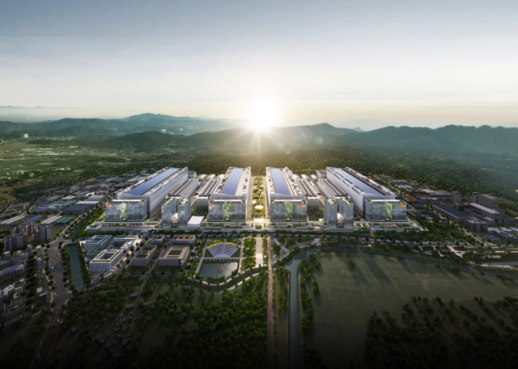 Seoul to seek US understanding over Gwangju military airport tapped for chip hub SEOUL, July 10 (AJP) -South Korea will seek U.S. understanding over plans to redevelop Gwangju Military Airport, a facility earmarked to support U.S. air operations during a military contingency, after the site was selected for a massive new semiconductor cluster. The issue could require close coordination with Washington because the airport retains a wartime role under the South Korea-U.S. alliance even as Seoul prepares to relocate the base and turn the land into the centerpiece of its government-led Honam chip project. The Ministry of Land, Infrastructure and Transport said Thursday that it had designated 364.19 square kilometers surrounding the planned cluster as a land transaction permit zone following a review by the Central Urban Planning Committee. The designation will remain in force from July 14 through July 13, 2028, requiring government approval for property transactions exceeding specified sizes. The controlled area covers all five districts of Gwangju as well as Naju, Jangseong and Hwasun in South Jeolla Province. The measure is intended to curb speculative buying and sharp land-price increases following the announcement of the large-scale development project. The government selected Gwangju Military Airport on Monday as the site of the Honam semiconductor cluster, where Samsung Electronics and SK hynix are expected to build a combined four fabrication plants. The broader project is tied to investment estimated at more than 800 trillion won ($530 billion), making the airport's relocation and the resolution of its alliance-related operational role critical to the project's timetable. Under the permit system, transactions involving land above certain sizes require approval from local government heads. Buyers of residential land must live on the site, while purchasers of commercial or industrial land must use it for actual business operations. Landowners are also subject to an actual-use obligation for up to five years, making speculative purchases difficult. The ministry and local authorities said they will closely monitor the newly designated zone and take stern action, in cooperation with relevant agencies, if suspicious transactions or illegal speculative activity are detected. Gwangju military airport is one of five South Korea-U.S. Air Force collocated operating bases in the country. Although no U.S. Air Force operational unit is permanently stationed there in peacetime, the base is maintained for the deployment of U.S. air assets in a contingency. Military officials and observers say relocating the airport will require consultations between Seoul and Washington under the Status of Forces Agreement, as part of the site is known to have been granted for U.S. military use. The Defense Ministry said it will “swiftly consult” with the U.S. side on ways to make the site available in time for the semiconductor project while preventing any security vacuum. The airport already has a preliminary relocation candidate site in Muan County, but the government’s decision to use the current site for the chip cluster has raised the possibility that the airfield may need to be vacated earlier than originally planned. One option under discussion is dispersing some functions of the ROK Air Force’s 1st Fighter Wing, which operates T-50 advanced trainers and conducts pilot training, to other bases before a new airport is completed. A Defense Ministry official said the government will push the policy in a way that allows both national security and the semiconductor industry to develop together. 2026-07-10 09:51:17
-
HLB's Liver Cancer Drug FDA Approval Delayed Again Due to Manufacturing Issues HLB's efforts to secure FDA approval for its liver cancer drug have hit another snag. Quality control issues at the manufacturing facility of its co-developer have prevented the company from overcoming the approval hurdle for the third time.On July 9, HLB's U.S. subsidiary Elevate Therapeutics received a Complete Response Letter (CRL) from the FDA regarding its New Drug Application (NDA) for the drug riboceranib.Riboceranib has been developed as a treatment for liver cancer in combination with the immuno-oncology drug camrelizumab from China's Jiangsu Hengrui Medicine.In the CRL, the FDA indicated that while there were no direct issues with the clinical data for riboceranib itself, concerns were raised during the cGMP inspection of the manufacturing facility included in the NDA, leading to the issuance of Form 483. This form notifies companies of necessary improvements identified during FDA inspections.The FDA stated that approval cannot be granted until the identified issues at the manufacturing facility are resolved in a timely manner and compliance with cGMP standards is confirmed. Additionally, a Pre-Approval Inspection (PAI) may be conducted if necessary, and both cGMP inspection and PAI must be satisfied for final approval.The facility in question received a Form 483 following a routine cGMP inspection in April and is currently undergoing corrective actions. The final inspection rating has yet to be determined.According to the company, this facility was inspected by the FDA for the first time in about eight years, having received four 'No Action Indicated' (NAI) ratings and one 'Voluntary Action Indicated' (VAI) rating in its previous five inspections since 2018.HLB explained that since this inspection was a routine cGMP audit rather than a PAI for approval, Elevate and HLB were not informed in advance about the issuance of Form 483.Immediately after receiving the CRL, Elevate officially requested details of Form 483, FDA response materials, and a timeline for corrections from Jiangsu Hengrui. The company plans to review the related materials and consult with the FDA before proceeding with the resubmission process.Kim Dong-geon, CEO of Elevate, stated, "The CRL did not include any concerns regarding clinical efficacy or safety data, nor did it require additional clinical trials. We will promptly address the cGMP-related issues at the manufacturing facility and aim to resubmit as soon as possible."Meanwhile, HLB's stock has plummeted, trading at a lower limit immediately after the market opened. As of 9:37 a.m., HLB was trading at 36,600 won, down 15,600 won (29.89%) from the previous trading day.* This article has been translated by AI. 2026-07-10 09:48:00
-
Coway Ranks 27th in South Korea's Top 100 Brands, Up Four Spots from Last Year Coway has been named among South Korea's top 100 brands for the second quarter of this year.The company announced on July 10 that it ranked 27th in the '2026 Second Quarter South Korea's Top 100 Brands' list released by Brandstock, scoring 869.3 points out of a possible 1,000. This marks a four-spot increase from the same period last year.The South Korea's Top 100 Brands list is a certification system that selects the top 100 brands from over 1,000 brands across major domestic industries based on the Brand Stock Index (BSTI) evaluation model.In preparation for the summer peak season, Coway has developed a full lineup of ice water purifiers tailored for households and offices, including the 'Icon Ice Water Purifier Mini' with a slim 20cm design, the 'Icon Ice Water Purifier Standard' featuring a generous 1.1kg ice storage capacity, and the 'Icon Ice Water Purifier Max,' which boasts a maximum ice storage capacity of 2.1kg among countertop products.The company is also expanding its business into healthcare and home convenience appliances. Recently, it launched the personal low-frequency stimulator 'Terasol P' under its home medical device brand, Terasol. Additionally, it has increased its offerings in the home convenience appliance category with wall-mounted air conditioners that combine expert management services and zero food waste disposal systems.A Coway representative stated, "We will continue to lead the market by introducing products and services tailored to various lifestyles, and we will provide new value to our customers based on our differentiated technological capabilities and care service expertise."* This article has been translated by AI. 2026-07-10 09:48:00