


Latest by
-
 Volkswagen Faces Pressure from Chinese EV Makers as Hyundai Aims for Global Top 2 The Hyundai Motor Group, currently the world's third-largest automaker, is accelerating its bid to enter the global top two. As Chinese electric vehicle manufacturers intensify their competition, Volkswagen Group, currently in second place, is facing challenges that may open new opportunities for Hyundai.According to industry sources, the strategies of Volkswagen and Hyundai for 2030 are diverging. Earlier this month, Volkswagen announced its 'Future Plan 2030,' setting an annual sales target of 9 million vehicles, similar to last year's global deliveries of 9.02 million. Instead of aggressively increasing sales, Volkswagen is focusing on improving its cost structure and profitability by reducing workforce, vehicle types, and excess production capacity.In contrast, Hyundai and Kia presented their 2030 sales targets during their respective 'CEO Investor Days' this year, aiming for 5.55 million and 4.13 million vehicles, respectively. Combined, this totals 9.68 million, which is 2.41 million more than the approximately 7.27 million vehicles sold by Hyundai and Kia last year. If these plans materialize, Hyundai could surpass Volkswagen in sales volume.Volkswagen, which has held the second spot in the global automotive market for several years, is undergoing significant restructuring. Faced with poor sales in China and declining profitability, the company has initiated a rigorous overhaul, planning to reduce its global workforce by 100,000 as part of its restructuring efforts.The crisis for Volkswagen originated in China, once its largest market. Local competitors like BYD have flooded the market with competitively priced electric vehicles, rapidly diminishing Volkswagen's market share. In the first half of this year, vehicle sales from Volkswagen's joint ventures in China fell to 856,000, down 386,000 (31.1%) from 1.24 million during the same period last year.The gap between Hyundai and Volkswagen in the global market is narrowing quickly. In terms of wholesale sales, Volkswagen's global sales in the first half of this year were approximately 3.99 million, about 400,000 more than the combined sales of Hyundai and Kia, which totaled around 3.59 million. Last year, Volkswagen sold about 4.36 million vehicles, while Hyundai and Kia sold about 3.65 million, indicating a reduction in the gap by 310,000 in just one year.Hyundai is currently leading in profitability. In the first half of this year, the combined operating profit of Hyundai and Kia reached 10.1992 trillion won. In comparison, Volkswagen reported an operating profit of 5.9 billion euros (approximately 9.22 trillion won) during the same period. For the entire previous year, Hyundai and Kia's combined operating profit was 20.546 trillion won, surpassing Volkswagen's approximately 8.9 billion euros.Industry analysts suggest that if the current trends continue, Hyundai could catch up to Volkswagen's sales figures before 2030. With competitive advantages in electric vehicles, hybrid technology, local production expansion, and robotics, Hyundai's growth trajectory appears promising.Kim Pil-soo, a professor at Daelim University’s Department of Future Automotive Studies, stated, "The quantitative and qualitative gap between Hyundai and Volkswagen has significantly narrowed. If the current trend continues, I believe Hyundai has a chance to rise to the global second position in terms of both quantity and quality within the next two years."* This article has been translated by AI. 2026-09-07 18:04:00
 -
Single-Stock Leveraged ETFs Face Decline After Initial Surge This year, single-stock leveraged and inverse exchange-traded funds (ETFs) that heated up the stock market are now on a path toward decline. Despite an explosive influx of investor funds during the semiconductor rally, these funds have been labeled as a source of volatility, leading to a rapid cooling of investor enthusiasm. Returns have plummeted, and trading volumes have dropped sharply. What transpired in the 100 days since the launch of single-stock leveraged ETFs?According to the Korea Exchange, single-stock leveraged ETFs were suddenly approved on May 27. Investors showed strong interest in these funds, which track the daily returns of specific stocks like Samsung Electronics and SK Hynix rather than an index. Within just two weeks of their launch, the market capitalization of 16 products doubled.The total assets under management (AUM) for the 16 single-stock leveraged ETFs surged, peaking at 16.1954 trillion won on June 22, a record achieved in less than a month since their launch. Trading volume also skyrocketed, reaching 10.418 trillion won on the first day of trading, and soaring to 19.4429 trillion won by June 22. At one point, daily trading volume approached 20 trillion won, indicating a heated market.However, the excitement lasted less than two months. Extreme volatility, with daily fluctuations of up to 40%, raised concerns about a 'whipsaw' effect. Additionally, semiconductor stocks faced corrections starting in July, exacerbating the price swings of the leveraged ETFs. In fact, the stock prices of Samsung Electronics and SK Hynix, the underlying assets of these ETFs, dropped by 27.7% and 43.6%, respectively, from the market's peak on June 22 to July 4.In response, the government belatedly implemented regulations at the end of July. Following the increase of the minimum deposit requirement from 10 million won to 30 million won, trading volume fell to 3.1518 trillion won on July 31. By August 4, it had shrunk to 498.4 billion won, just one-twentieth of the initial trading volume. AUM also began to decline, with the total for the 16 ETFs dropping to 6.2178 trillion won as of August 4, a 61.7% decrease from the peak.Returns have also deteriorated sharply. As of August 4, the average return for the 16 listed products was -57.61%. The eight products based on Samsung Electronics saw average losses in the -50% range, while those based on SK Hynix all fell below -55%. The product with the largest loss, 1Q SK Hynix Futures Single-Stock Leveraged ETF, plummeted to -68.67%. Inverse products also suffered losses, with SOL SK Hynix Futures Single-Stock Inverse 2X at -55.12% and PLUS Samsung Electronics Futures Single-Stock Inverse 2X at -48.92% returns.Currently, access to single-stock leveraged ETFs is extremely limited for investors. A minimum deposit of 30 million won is required, along with mandatory pre-training and simulated trading. Starting this month, the trading unit will expand from one share to 20 shares. Individual investors without substantial capital will find it difficult to participate. The financial investment industry has noted that the regulatory approach for single-stock leveraged ETFs is similar to the past efforts to stabilize the equity-linked warrant (ELW) market, which now barely survives after various regulations.A financial industry official stated, "Rather than eliminating the product, the approach is to gradually raise the investment threshold, which is very similar to the ELW regulations. As regulations accumulate, the trading volume of single-stock leveraged ETFs will naturally shrink."* This article has been translated by AI. 2026-09-07 17:56:00
-
First Discussion on Single Stock Leverage ETFs Took Place on January 13 The popularity of single stock leverage and inverse exchange-traded funds (ETFs) has waned, but the controversy surrounding them continues to grow. A key point of contention is who first proposed the introduction of 'single stock leverage ETFs.'According to financial authorities, discussions about the introduction of single stock leverage ETFs began on January 13. On that day, Kim Yong-beom, then head of the Presidential Policy Office, convened a closed meeting with representatives from five securities and asset management firms. Officials from the Financial Services Commission and the Financial Supervisory Service also attended. The private sector attendees included Park Jong-moon, CEO of Samsung Securities; Heo Sun-ho, Vice Chairman of Mirae Asset Securities; Kim Woo-seok, CEO of Samsung Asset Management; Bae Jae-kyu, CEO of Korea Investment Trust Management; and Kim Sung-hwan, CEO of Korea Investment Securities.During the meeting, one participant expressed concerns that the domestic regulations on high-risk leverage ETFs were excessively strict. It was noted that the inability to trade single stock leverage and three-times index tracking ETFs in South Korea was driving investors to overseas markets.Immediate communication with the government followed. Kim Yong-beom reportedly stated, "There are many leverage products and individual stock ETFs that are possible in the domestic market but not available in Korea." The next day, Kim mentioned in an interview with a media outlet that he had instructed financial authorities to consider the introduction of single stock leverage ETFs.The process for introducing single stock leverage ETFs then proceeded swiftly. The Financial Services Commission designed the underlying asset requirements, and the Financial Supervisory Service reviewed compliance with these requirements before granting approval for actual listings.However, the identity of the initial proposer remains unclear. Industry sources suggest that a representative from one of the asset management firms present at the January meeting was the first to make the proposal, which was subsequently accepted by Kim Yong-beom.* This article has been translated by AI. 2026-09-07 17:56:00
-
Single-Stock Leveraged ETF Controversy Emerges as Key Issue in National Assembly Audit The controversy surrounding single-stock leveraged exchange-traded funds (ETFs) is expected to be a major issue in this year's National Assembly audit. As discussions expand to include the product's introduction process, policy decision background, individual investor losses, and market volatility, tension is rising within the financial investment sector.According to the financial investment industry on September 7, the People Power Party submitted a request for a national investigation on September 4, demanding clarity on the policy decision process and accountability regarding the introduction of single-stock leveraged ETFs. The party plans to examine the correlation between the timing of the product's introduction and the upcoming local elections, as well as whether political objectives took precedence over investor protection procedures in capital market stimulation. The investigation will encompass the entire communication, reporting, and directive system among the Presidential Office, Financial Services Commission, Financial Supervisory Service, Korea Exchange, and asset management industry.Particularly, debates are anticipated regarding the speed of the system's introduction and the selection of target stocks. Industry insiders have pointed out that the system, initially expected to be introduced in the second half of this year, was implemented just months after discussions between the government and industry intensified, suggesting it was rushed without adequate review and discussion.As the National Assembly audit is set to take place over three weeks starting October 6, there is keen interest in who will be selected as witnesses. Financial Services Commission Chairman Lee Ok-won and Financial Supervisory Service Chairman Lee Chan-jin are expected to attend as heads of their respective agencies, while former Blue House Policy Chief Kim Yong-beom is also likely to be called as a witness.There is a strong possibility that representatives from the asset management industry who have criticized the introduction of single-stock leveraged ETFs will also be selected as witnesses. Predictions suggest that Bae Jae-kyu, CEO of Korea Investment Trust Management, who has been vocal in his criticism, may be among them. Mirae Asset Management, where the sons of Kim and Lee are reportedly employed, is also considered a candidate for witness selection.The Political Affairs Committee is expected to compile the first list of witnesses this week and finalize the selections by the third or fourth week of this month after discussions between the ruling and opposition party secretaries. The final list of witnesses will be confirmed once the detailed audit schedule for each standing committee is established.* This article has been translated by AI. 2026-09-07 17:52:20
-
100 Days After Launch, Single-Stock Leveraged ETFs Show Disastrous Results 단일종목 레버리지·인버스 상장지수펀드(ETF)가 지난 4일로 출시 100일을 맞았다. 성적표는 처참했다. 출시 첫날 10조원을 넘어섰던 거래대금은 100일 만에 20분의 1 토막 났다. 16개 상품의 상장 이후 평균 수익률은 마이너스(-) 57%로 곤두박질쳤다. 사실상 단종(斷種)의 길로 접어들었다는 분석이다. 이 상품 도입을 둘러싼 논란은 올해 국회 국정감사에서도 최대 이슈로 다뤄질 전망이다. <관련기사 5면>7일 한국거래소에 따르면 지난 4일 기준 국내 상장된 단일종목 레버리지·인버스 ETF 16개의 거래대금은 4984억3000만원으로 집계됐다. 상장 첫날인 5월 27일 10조418억4300만원과 비교하면 20분의 1가량으로 쪼그라들었다. 거래대금이 최고치를 찍었던 6월 24일(19조4429억원)에 비해선 40분의 1 수준이다. 거래량도 급감했다. 5월 27일 4억1738만좌였던 거래량은 이달 4일 5525만좌로 86.8% 줄었다. 수익률은 더 처참했다. 지난 4일 기준 16개 상품의 상장 이후 평균 수익률은 -57.61%로 파악됐다. 레버리지, 인버스 모두 마이너스 수익률을 기록했다. -68%를 기록한 상품도 있다. 증권업계 관계자는 "단일종목 레버리지는 기초자산의 일간 수익률을 2배로 추종하는 만큼 기초자산이 하락하면 손실폭도 더 커지는 구조"라며 "기초자산인 삼성전자, SK하이닉스 주가가 상품 출시 이후 최대 19% 급락하면서 수익률이 악화된 것"이라고 지적했다. 시장에선 단일종목 레버리지·인버스 상품이 사실상 퇴출의 길로 접어들 것으로 본다. 해당 상품이 증시 변동성을 키운 핵심 요인으로 지적되면서 각종 진입규제가 강화된 탓이다. 9월 국정감사를 앞두고 논란도 재점화할 전망이다. 야당은 물론 여당 일각에서도 국정감사에서 이 상품 도입 과정에 대한 책임 소재를 따져 물어야 한다는 주장이 나오고 있다.* This article has been translated by AI. 2026-09-07 17:52:20
-
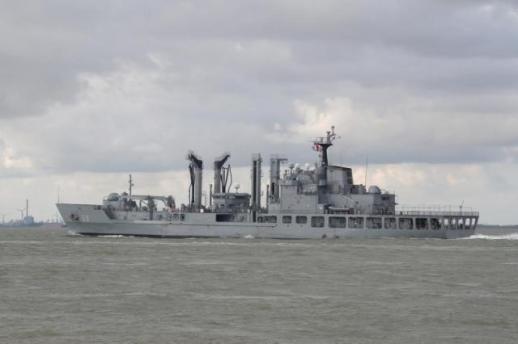 Seoul's Hormuz dilemma puts Tokyo on notice SEOUL, September 07 (AJP) - The heat from Washington is rising on Seoul to contribute to reopening the Strait of Hormuz, and Tokyo is increasingly feeling it too as Japan braces for the possibility that it could be next in line for a U.S. call to act. South Korea has yet to decide whether to send military assets to the strategic waterway, but the Trump administration has become increasingly explicit in demanding support from an ally heavily dependent on Middle Eastern energy. The dilemma is being watched closely in Japan, which faces an even greater exposure to Hormuz and many of the same questions over how far a U.S. ally should go in sharing the burden of keeping vital sea lanes open. The South Korean Ministry of National Defense said Monday that no specific form of military contribution has been decided, stressing that discussions remain under way with the United States and other partners. “The government is closely consulting with the international community, including the United States, on practical ways to contribute to freedom of navigation in the Strait of Hormuz and the swift restoration of peace and stability in the Middle East,” a Defense Ministry official said. “No specific measures have been decided at this point.” “The review has likely already been completed, and South Korea is expected to provide some form of support. The government appears to be gauging reactions before making a move,” a source familiar with the discussions said on condition of anonymity. The ministry said Seoul has also been holding consultations with Britain and France without disclosing details. The comments came as Washington sharpened its public pressure. A White House official said Sunday that the United States was “still waiting” for South Korea to deploy resources to the region, pointing directly to the country's reliance on Middle Eastern oil. The Pentagon separately reiterated President Donald Trump's expectation that allies help defend freedom of navigation through Hormuz. Trump has repeatedly singled out South Korea since the war with Iran began on Feb. 28. He said in March that South Korea, Japan, China and other countries dependent on the strait would “have to get involved a little bit,” while emphasizing that Washington had long helped defend South Korea. The rhetoric has become more pointed. Trump said late last month that he would “remember” what he described as South Korea's reluctance to assist the United States over Iran. He also recently shared a Washington Post opinion column urging him to pressure Seoul to sell its Cheongung-II, or M-SAM II, air defense system to Ukraine, adding to perceptions that Washington expects a broader security contribution from its ally. The implication has not been lost on Tokyo. Japan and South Korea sit in remarkably similar positions as two of Washington's closest Asian allies and major importers of Middle Eastern energy. Japan's dependence is even greater. Around 93 percent of Japan's crude oil imports pass through the Strait of Hormuz, compared with roughly 61 percent for South Korea. The disparity leaves Tokyo vulnerable to the same argument Washington is already making to Seoul: countries whose economies depend on the waterway should contribute more directly to keeping it open. Japanese media have increasingly framed South Korea's deliberations as a possible precedent. A Korean deployment, even one limited to surveillance, logistics or mine-clearing support, could make it harder for Tokyo to resist similar pressure from Washington. Japan has so far avoided committing Self-Defense Force assets to an active operation. Its government has instead emphasized diplomacy, safe navigation and close coordination with international partners while insisting that no deployment decision has been made. Tokyo, however, has not remained outside discussions. Japan has taken part in consultations over a possible multinational mission led by Britain and France, reflecting concerns that prolonged disruption to Hormuz would pose an immediate threat to the country's energy security. The legal and political hurdles are higher for Japan. Its postwar constitutional framework and security legislation impose tighter restrictions on Self-Defense Force operations in active conflict zones, particularly where a mission could amount to the use of force. Mine-clearing after hostilities subside would be one of the more legally feasible options, while operating amid active combat would be far more complicated. South Korea faces fewer constitutional constraints but carries its own political risks. Iran has warned that any South Korean military action directed against it would be considered participation in the war. Seoul therefore has strong incentives to draw a clear distinction between protecting commercial shipping and taking part in combat operations. Defense experts said a narrowly defined deployment could offer a middle course. “We have reached a point where it is time to consider a deployment,” Choi Ki-il, a professor of military studies at Sangji University and head of the Korea Defense Industry Research Institute, told AJP. Choi said any mission should focus on protecting South Korean vessels and crews and supporting freedom of navigation rather than taking part in direct combat against Iran. “Even if we deploy, our role should be limited to protecting our own ships,” Choi said. He said maritime patrol aircraft, warships or logistics support assets could be considered depending on what the government determines is necessary. Among the assets reportedly under consideration are the Navy's P-8A Poseidon maritime patrol aircraft and the 11,000-ton ROKS Soyang fast combat support ship. The P-8A can conduct wide-area maritime surveillance, while the Soyang can provide fuel, ammunition and other supplies to naval forces at sea. The Defense Ministry stressed Monday that no specific assets, timing or scale have been decided. A multinational framework could give Seoul greater political room. Britain and France have been leading discussions over a defensive force aimed at protecting civilian shipping and supporting mine-clearing operations in and around the strait. “If South Korea participates, it should not do so independently, but as part of a coalition force,” Kim Hong-yoo, a professor at Kyung Hee University and a policy committee member of the Korea Defense Industry Association, told AJP. Kim said a coalition format could allow South Korea to take on support functions without leading a separate Korean operation. Coalition fleets can include not only combat vessels but logistics and other support ships, he said. The National Security Council would likely become involved once a deployment decision is made because the government would then have to determine which forces could be spared without undermining South Korea's own defense posture, Kim said. President Lee Jae Myung's state visit to France adds another layer to the deliberations. Lee is scheduled to hold summit talks with French President Emmanuel Macron on Tuesday. France, together with Britain, has played a leading role in discussions over a multinational Hormuz mission, making the issue a possible subject for discussion even though neither government has confirmed it will be on the summit agenda. A coalition-based contribution could give Seoul a way to respond to Washington without appearing to join a unilateral U.S.-led military campaign against Iran. The same formula could eventually become relevant to Japan. Tokyo's domestic debate already reflects competing instincts. Conservative voices have argued that Japan cannot indefinitely rely on other countries to protect a waterway indispensable to its economy and have called for a Maritime Self-Defense Force contribution. Others argue that Japan should avoid being pulled into a widening war and instead use its long-standing diplomatic channels with both Washington and Tehran. The debate ultimately goes beyond Hormuz. Washington's pressure on Seoul is becoming a broader test of how the United States expects its Asian allies to share security responsibilities outside Northeast Asia. South Korea and Japan have long relied on the U.S. military to deter threats closer to home. The Trump administration is increasingly asking what they are prepared to do in return when American strategic interests and global trade routes are at risk elsewhere. A South Korean decision to send even limited assets could therefore change more than Seoul's relationship with Washington. It could establish a new benchmark for Asian allied burden-sharing. Tokyo would then have to explain why Japan, whose economy depends even more heavily on Hormuz, should remain on the sidelines. For Seoul, the immediate challenge is finding a contribution substantial enough to satisfy Washington without crossing the line into direct participation in the Iran war. For Tokyo, the harder question may be what happens if South Korea moves first. AJP Takeaways - Washington is intensifying pressure on South Korea to contribute to reopening the Strait of Hormuz. - Tokyo is watching Seoul closely as Japan could face the same U.S. demand given its even heavier dependence on Middle Eastern oil. - South Korea is weighing limited roles such as maritime surveillance, logistics and coalition support rather than direct combat. - A Korean deployment could set a precedent for how Washington expects its Asian allies to share security burdens beyond their home region. 2026-09-07 17:52:06
 -
Dongmyeong University Integrates AI into Healthcare Education Dongmyeong University has initiated a program to connect major education with AI and digital transformation (DX) technologies by simultaneously involving students from seven health, sports, and beauty departments in an industry exhibition.Students from the nursing, occupational therapy, speech therapy and audiology rehabilitation, sports rehabilitation, beauty care, K-sports taekwondo, and sports convergence departments visited the '2026 Healthcare Week' held at BEXCO in Busan on September 3-4 to explore technologies and services in the digital healthcare industry.This visit was part of the 'TU Busan AI·DX Convergence Talent Development Project,' funded by the university's innovation support program. The aim was for students to directly observe how their fields of study intersect with AI and DX technologies in the industry.The items students examined included wearable health monitoring, AI clinical data utilization, rehabilitation and care robots, digital health measurement and rehabilitation equipment, smart welfare and senior care solutions, community integrated care, and anti-aging services.The nursing department explored examples of AI-based clinical decision-making technologies applied in nursing and care settings, and experienced rehabilitation and care robots as well as senior care solutions. The occupational therapy department focused on AgeTech and participated in a seminar titled 'The Future of Age-Friendly Industry Opened by AgeTech Technologies.'Students from the speech therapy and audiology rehabilitation department examined medical and rehabilitation device exhibitions to assess the potential for expanding the roles of speech rehabilitation and audiology professionals. Meanwhile, K-sports taekwondo students handled digital health measurement equipment to explore its application in athlete training. Students from the sports rehabilitation, beauty care, and sports convergence departments also reviewed technologies related to their respective majors.Cha Ji-cheol, head of the university's innovation team, stated, "This field experience provided an opportunity for students from different majors to see how AI and digital technologies connect with their fields and the industry. We will continue to expand education linked to the industry so that students can enhance their major knowledge with AI and DX capabilities to respond to future industrial changes."Meanwhile, Dongmyeong University will accept applications for the 2027 academic year from September 7 to 11.* This article has been translated by AI. 2026-09-07 17:48:00
-
New Bridge Connects North Korea and Russia, Allowing 300 Vehicles Daily A new car bridge connecting North Korea and Russia has officially opened. This new route, which adds a roadway to the existing rail-centric border transport network, is expected to enhance logistics and exchanges between the two countries.According to Yonhap News Agency, the opening ceremony for the Tumen River car bridge took place on September 5. Russian Prime Minister Mikhail Mishustin and North Korean Premier Park Tae-sung attended the event via video link.Mishustin stated, "This spring, we jointly embarked on this ambitious project, and in just 16 months, we are witnessing this historic moment." He noted that the new bridge was designed to accommodate an increase in cargo and passenger transport, stating, "Up to 300 vehicles can pass through daily."The Tumen River car bridge was constructed with two lanes for traffic. The total length, including the bridge connection, is approximately 5 kilometers, with the main bridge spanning about 1 kilometer. A ten-lane border checkpoint for vehicle traffic has also been established near Russia's Khasan station.Russia views the new bridge as a key infrastructure project to expand trade between the two nations. Mishustin emphasized that the bridge is part of the 'East-West International Transport Corridor' connecting St. Petersburg in western Russia to Vladivostok in the Far East. He stated that expanding border transport infrastructure will boost trade and economic cooperation between North Korea and Russia, as well as collaboration in science, technology, and culture, adding, "New jobs will be created, and the tourism industry will have a bright outlook."Premier Park also evaluated that under the strategic leadership of the two countries' leaders, exchanges and long-term cooperation projects are being implemented based on the strategic partnership treaty.The construction of this car bridge is a result of an agreement made during the North Korea-Russia summit held in June 2024 in Pyongyang. The two countries began construction near the existing Tumen River railway bridge in April of last year. The Russian government had anticipated the bridge's completion by June 19 during the connection ceremony in April, but the actual opening was delayed by about three months.The opening ceremony also highlighted the historical significance of North Korea-Russia relations. The Tumen River car bridge is named after Soviet officer Yakov Novichenko, who thwarted an assassination attempt on then-North Korean leader Kim Il-sung in 1946.During the event, Novichenko's grandson, Nikolai Sherbitsky, drove a red Zaporozhets car that belonged to Novichenko across the bridge, leading the procession of Russian vehicles.With the opening of this bridge, a direct connection between North Korea and Russia via vehicle transport has been established, complementing the existing Tumen River railway bridge. As Russia emphasizes the expansion of transport infrastructure and the strengthening of trade and logistics cooperation, attention will be focused on how much vehicle transport volume and trade scale will increase in the future.* This article has been translated by AI. 2026-09-07 17:48:00
-
SAP Korea Extends Sponsorship with Jeon In-ji, Continuing a 10-Year Partnership SAP Korea announced on September 7 that it has extended its official sponsorship agreement with professional golfer Jeon In-ji until December 31, 2027. The sponsorship extension was formalized during a VIP customer golf event held on September 5 at Asiana Country Club, attended by Jeon and key clients. This extension marks a long-term partnership that began in 2017, continuing for nearly a decade. SAP Korea explained that Jeon's consistent efforts to improve her skills resonate with SAP's direction of creating growth opportunities through business AI innovation in a rapidly changing artificial intelligence market. Jeon, known as the 'Major Queen,' has won three of her four LPGA Tour titles at major championships, including the 2015 U.S. Women's Open, the 2016 Amundi Evian Championship, and the 2022 KPMG Women's PGA Championship. If she wins at the Chevron Championship or the AIG Women's Open in the future, she will achieve a 'Career Grand Slam.' After struggling with injuries, Jeon has made a successful comeback this season. In March, she finished in the top five at the Ford Championship for the first time in three years and seven months, and in June, she placed fourth at the U.S. Women's Open, raising her world ranking to 43rd. During their partnership, both parties have engaged in various collaborations. Initially, they held design thinking workshops at the SAP AppHaus to explore performance enhancement strategies using Internet of Things (IoT) and big data technologies. During a visit to SAP's headquarters in Germany, they also conducted a golf clinic for local junior players. With this contract extension, both sides plan to continue their partnership focused on mutual growth through sports. Shin Eun-young, CEO of SAP Korea, stated, "The partnership with Jeon In-ji over the past 10 years has been a meaningful journey of growth based on mutual trust. In a rapidly changing environment, Jeon demonstrates unwavering belief and a spirit of challenge, making her a significant source of inspiration for SAP. We will continue to support her as she strives toward her goals, and we hope this partnership will showcase the value of corporate and athlete growth to our global customers." Jeon remarked, "Thanks to SAP's strong support and trust over the past 10 years, I have been able to focus more on the tour. Having been together for so long, I will repay SAP and my fans with great performances and consistency in the future."* This article has been translated by AI. 2026-09-07 17:44:00
-
Tokyo's Shinjuku District Moves to Ban 2,000 Minpaku Lodgings Tokyo's Shinjuku Ward, home to the highest number of minpaku (private lodging) facilities in Japan, has decided to ban such operations in residential areas and near schools. This new regulation will apply not only to newly opened minpaku but also to existing facilities, potentially affecting over 2,000 lodgings, which is more than half of the total in the area. While the Japanese government has been expanding minpaku to meet the accommodation demand from inbound tourists, Shinjuku Ward has introduced stringent regulations due to increasing complaints from residents.According to the Yomiuri Shimbun, Shinjuku Ward plans to amend its minpaku ordinance to prohibit operations in residential zones and educational districts. Existing facilities will be given a grace period before the regulations take effect. However, if property owners meet certain conditions, such as residing on the premises and managing the property directly, they may be allowed to continue operations.The ward is also considering reducing the number of days minpaku can operate in commercial areas from the current 180 days per year to 120 days. As reported by Nikkei, Shinjuku Ward currently prohibits weekday operations in residential zones, while allowing up to 180 days in other areas. The ward plans to submit the ordinance amendment to the council in February 2027 after gathering resident feedback.As of July 15, the Japan Tourism Agency reported that Shinjuku Ward has the highest number of registered minpaku in the country, with 3,775 facilities. The Asahi Shimbun noted that nearly 10% of the 42,070 registered minpaku nationwide are located in Shinjuku, a popular area for foreign tourists, including the Kabukicho district.The increase in minpaku has led to a surge in related complaints. In 2025, Shinjuku Ward received 1,334 complaints and consultations regarding minpaku, including illegal operations, an increase of 542 from the previous year. Complaints have included violations of waste disposal regulations, noise issues, and unauthorized access to private property.Despite issuing business suspension orders to 29 operators for repeated violations and ordering five to cease operations, complaints have not decreased. According to the Asahi Shimbun, Shinjuku Ward issued a cease operation order to a business that failed to comply with a corrective order issued in December 2022, marking the first time such action has been taken in Tokyo. The ward has concluded that merely identifying and penalizing violators is insufficient to protect residents' living conditions. A Shinjuku Ward official told the Yomiuri, "We lack the personnel to address problematic minpaku individually, so we need to implement uniform regulations."Japan enacted the minpaku law in June 2018 to accommodate the lodging demand from inbound tourists. However, as disputes and complaints related to minpaku have continued, the Japan Tourism Agency sent a notice to local governments in July, stating that municipalities could prohibit minpaku operations in specific areas if residential and educational environments are compromised. It also indicated that existing facilities could face operational bans after a grace period if no appropriate measures are taken.The movement to strengthen minpaku regulations is spreading to other regions. The Asahi Shimbun reported that Tokyo's Ota Ward is pursuing an ordinance to ban minpaku operations within 100 meters of residential areas and elementary and middle schools, allowing operations only from Saturday noon to Monday noon in other areas. Nikkei also reported that Toshima Ward plans to prohibit new minpaku openings in 70% of the ward starting in December and limit existing facilities to 120 operating days per year. Kyoto City is also considering measures to effectively ban minpaku operations in residential and industrial areas, although, unlike Shinjuku Ward, the regulations would only apply to new facilities.Shinjuku Ward's plan to uniformly ban operations for existing facilities is highly unusual in Japan. Masaki Yamashita, a fellow at JTB Research Institute, emphasized the need to adequately explain the necessity of regulations to operators, noting that problematic businesses might relocate or shift to other types of lodging. He suggested that a national-level review of overall accommodation management strategies is necessary.* This article has been translated by AI. 2026-09-07 17:44:00