


Latest by
-
 Freedom Edge Exercise Begins Amid UFS Scale Down; US Aircraft Carrier Absent for Second Year South Korea, the United States, and Japan commenced the multi-domain joint exercise "Freedom Edge" on September 7 in international waters southeast of Jeju. Unlike the scaled-down joint exercise "Ulchi Freedom Shield (UFS)" due to concerns over North Korea's reactions, this training is proceeding as planned. However, the US aircraft carrier will not participate for the second consecutive year. The three nations will conduct the Freedom Edge exercise over five days, concluding on September 11. Key maritime and aerial forces from the three countries will participate, and a joint training control group will manage the exercise systematically and safely. The three countries characterized this exercise as an annual training of a defensive nature that adheres to international laws and norms. They explained that the goal is to enhance deterrence and response capabilities against North Korea's nuclear and missile threats while safeguarding regional peace and stability. The training will focus on strengthening operational capabilities and joint response abilities across various domains, including maritime, aerial, and cyber operations. The three nations aim to maintain a robust and stable cooperative relationship through this exercise. This exercise is noteworthy as it demonstrates that security cooperation among South Korea, the US, and Japan continues as planned following the scale-down of UFS. It reflects ongoing military collaboration among the three countries to address North Korea's nuclear and missile threats, separate from managing relations with Pyongyang. However, the absence of the US aircraft carrier, a key strategic asset, is notable again this year. Analysts suggest that the deployment of US carriers to the Middle East due to the Iran conflict has influenced this decision. Freedom Edge is a result of an agreement made during the Camp David summit in 2023 under the Yoon Suk Yeol administration to conduct regular multi-domain exercises. The name is derived from the US-South Korea joint exercise "Freedom Shield" and the US-Japan joint exercise "Keen Edge." The first exercise began in June 2024, followed by a second in November of the same year and a third in September last year, making this the fourth iteration. The US aircraft carrier has not participated since last year's exercise, marking two consecutive years without its involvement. 2026-09-07 17:28:00
 -
Coupang Expands Furniture Care Services Beyond Delivery and Installation Coupang is enhancing its furniture offerings by extending its services from delivery and installation to post-purchase care. On September 7, Coupang announced the expansion of its 'Coupang Care Service,' which has primarily focused on electronics, to include furniture. The company claims it is the first in the industry to offer both free warranty and damage insurance for furniture. This service has been operational since July. The furniture care service compensates for repair costs if items purchased from Coupang are damaged due to external impacts or if they break after the manufacturer's basic warranty period expires. The coverage period can extend up to three years from the delivery date, including the manufacturer's warranty. Compensation covers damages that may occur during actual use and functional defects. For instance, if the frame or legs of a bed or sofa are damaged due to external impact, repair costs are supported for up to two incidents. If there are functional issues with components like wardrobe hinges or drawer rails, customers can receive repair cost compensation without a limit on the number of claims, as long as they stay within the total compensation limit after the manufacturer's warranty ends. Customers can choose a compensation limit ranging from 100,000 won to 5 million won based on the price of the furniture and their needs. For a standard compensation limit of 1 million won, the insurance premium is 45,000 won for a two-year term and 60,000 won for three years. Claims for insurance benefits can be submitted through the Lotte Insurance app after repairs are completed. Actual repairs will be handled by service centers or partners designated by the manufacturer. Currently, the service is available for major brands with established post-repair systems, including Iloom, Casamia, Hanssem, Desk, and Sidiz. Coupang plans to continue expanding the list of applicable brands and integrate the service with its 'Rocket Installation' for large items delivered and installed by professional technicians. This is not the first time Coupang has expanded its care services. In 2024, it broadened its insurance offerings from mobile phones and small appliances to include large appliances like TVs, refrigerators, washing machines, and air conditioners under the Rocket Installation service. At that time, it allowed for an extension of warranty repair periods for up to five years after the manufacturer's warranty expired. By extending post-purchase protection services from electronics to furniture, Coupang is broadening the competitive scope of its Rocket Installation service beyond just delivery and installation. A Coupang representative stated, "The introduction of furniture insurance is part of our efforts to enhance customer experience, and we plan to actively expand our unique benefits and services in the future."* This article has been translated by AI. 2026-09-07 17:28:00
-
China Issues Preliminary Ruling on Japanese-Derived Dichlorosilane Dumping The Chinese government announced on September 7 that it has made a preliminary ruling regarding dumping of Japanese-derived dichlorosilane.The Ministry of Commerce stated that the anti-dumping investigation, which began on January 7 of this year, found that "dumping exists, the domestic dichlorosilane industry has suffered substantial damage, and a causal relationship exists between the two." This preliminary ruling was released on September 7 (local time).Dichlorosilane is a high-purity gas primarily used in the silicon thin film deposition process during semiconductor manufacturing, utilized in the production of various types of chips, including memory and analog chips.As a result, the Ministry announced that it will implement temporary anti-dumping measures in the form of deposits starting September 8, requiring importers to pay deposits based on the rates applicable to each Japanese company.The deposit rates for Japanese companies have been set at 99.2% for Shin-Etsu Chemical, 80.8% for Denali Silane, and 99.2% for other Japanese firms. These rates are provisional and will be in effect while the investigation is ongoing.The Ministry indicated that stakeholders can submit written opinions to the investigating agency within 10 days from the announcement date.A spokesperson for the Ministry emphasized that the anti-dumping investigation was conducted in accordance with Chinese laws and regulations, as well as World Trade Organization (WTO) rules. The spokesperson stated, "China consistently maintains a cautious and restrained approach to trade remedy measures and firmly upholds fair and free trade."The spokesperson added, "We will continue to conduct the investigation in accordance with the law and ensure that the rights of all stakeholders are fully protected, aiming to make an objective and fair final determination based on the investigation results."This anti-dumping action was initiated following a complaint from the relevant industry in China last December. The domestic industry claimed that while imports of Japanese dichlorosilane increased from 2022 to 2024, the import prices fell by 31%, raising suspicions of dumping. The Chinese industry argued that the dumping of Japanese products harmed domestic production and management, leading the Ministry to conclude that the complaint met the requirements for initiating an investigation. 2026-09-07 17:28:00
-
 Seoul picks three operators for autonomous taxi platform SEOUL, September 07 (AJP) - Seoul has selected Kakao Mobility, Hyundai Motor and T-money Mobility to operate private platforms for autonomous vehicle transport services, shifting the city's robotaxi system from a single-app model to a three-way platform structure. The move is expected to end Kakao Mobility's two-year run as the sole platform operator for Seoul's autonomous taxi calling service. Under the city's recruitment notice, selected operators will be allowed to provide platform services for two years from the date of their agreement with Seoul. The platforms must support real-time reservations, ride-hailing, dispatch, payment and route guidance for autonomous passenger transport services. Operators are also required to share transport-related data with the city and autonomous driving companies. Seoul opened the recruitment on Aug. 4 and accepted applications through Aug. 24. The city said in the notice that applicants had to own a mobile app capable of supporting paid autonomous vehicle transport services for citizens and autonomous vehicle operators. Applicants also had to operate the service as a non-profit project, without charging platform usage fees or settlement commissions to Seoul or autonomous vehicle operators. Payment-related fees charged through card companies or payment gateway firms must be kept within 2 percent. Selected operators are required to build their systems in line with Seoul's standard interface rules and launch public services, including calling, payment and autonomous vehicle route guidance, by Dec. 31. The city also required operators to provide map data on routes, stops and passenger pickup points, along with real-time monitoring screens showing ride status and vehicle operation data. The recruitment notice said Seoul could select one or more operators that scored at least 85 points in the evaluation. The evaluation covered service goals, technical capability, route guidance, dispatch plans, monitoring, payment settlement, data-sharing systems and cooperation with autonomous vehicle companies. The platform competition is likely to widen access points for Seoul's autonomous taxi services, which have so far been closely tied to Kakao T. Hyundai Motor's entry would mark the first time an automaker directly joins Seoul's robotaxi platform operation. The three selected operators are expected to sign agreements with the city and connect their platforms before services begin in earnest later this year. Seoul has been expanding its autonomous taxi program, including nighttime services in Gangnam, as it prepares to broaden operating areas in stages. AJP Takeaways - Seoul selected Kakao Mobility, Hyundai Motor and T-money Mobility for its autonomous vehicle transport platform project. - The city’s robotaxi calling system is set to shift from Kakao Mobility’s single-app model to a three-platform structure. - Selected operators will provide reservation, ride-hailing, dispatch, payment and route guidance services. 2026-09-07 17:26:59
 -
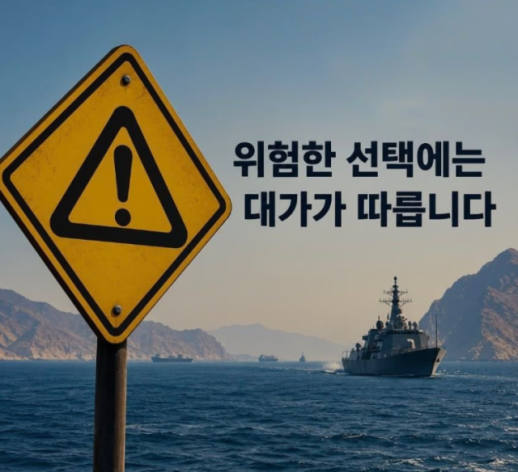 OPINION: South Korea needs its own Iran policy Iran's Ministry of Foreign Affairs issued its warning to South Korea in Korean. Esmaeil Baqaei, the ministry's spokesman and the official who states Iran's positions to the outside world, posts in English nearly every day. On Monday, he put up a statement on X, written in Korean, addressed to a public whose president had landed in Nice the evening before. It opens warmly. "The relationship between Iran and the Republic of Korea has a history spanning more than 64 years, and the ties between our two countries have developed throughout on a foundation of mutual respect," he wrote. "Iran places great importance on its friendly relations with the Republic of Korea." The warning sits in the middle. Any other country that stations forces in the Persian Gulf and the Strait of Hormuz, or joins operations there, cannot be regarded as anything other than a direct supporter of the party committing aggression, and it will bring about serious consequences. The statement ends on sovereignty. "No state possessing sovereignty and responsibility should submit to American pressure and intimidation and join in complicity with acts of aggression and appalling crimes against the great people of Iran." Nowhere in it does Baqaei write South Korea, or navy, or deployment. The middle paragraph says "another country." Writing the whole thing in Korean did the naming for him. Lee Jae Myung spent Monday in Saint-Paul-de-Vence, co-chairing a film summit with Emmanuel Macron. He arrives in Paris on Tuesday for lunch at the Élysée, a summit and a state dinner. A Cheong Wa Dae official said last week the agenda could take in nuclear power cooperation and a South Korean troop deployment to the Strait of Hormuz. Tehran wrote to South Koreans in Korean. Seoul will work out its reply over lunch in Paris, which would not be a first. Twice already this year, South Korea has taken a position on Iran, and both times it did so inside a text somebody else had drafted. On March 19, the leaders of Britain, France, Germany, Italy, the Netherlands and Japan condemned Iranian attacks on commercial shipping and the closure of the strait, and told Tehran to comply with Security Council Resolution 2817. Seoul's name went onto the document afterward. So did more than 30 others. Two weeks later, Lee and Macron stood together at Cheong Wa Dae and announced that South Korea and France would work to secure safe maritime routes through Hormuz. Neither explained how, and they took no questions. There is a precedent for what happens when Seoul enforces an Iran policy it did not write. The Hankuk Chemi was carrying 7,200 tons of chemical products when the Islamic Revolutionary Guard Corps boarded it on Jan. 4, 2021, and took it into Bandar Abbas. Iran said the tanker had been polluting the Gulf. Its owner said it had not. What Tehran wanted was the roughly $7 billion of Iranian oil money sitting in two South Korean banks, frozen there under American sanctions. Most of the crew flew home in early February, after Seoul agreed to unblock $1 billion. The ship and its captain stayed until April 9. The remaining money was not released until August 2023, and then only because Washington and Tehran had struck a prisoner deal. Iran had no way to reach the government that wrote those sanctions, so it took a ship belonging to the government that enforced them. Four weeks ago, the Iranian embassy in Seoul put a softer version of the same argument to AJP. Mohammad Esmaeil Passandideh, counselor and deputy head of mission, said the postwar period would be a good moment to rebuild. He also said Iran had given South Korean shipping free and secure passage right through the war, and had expected Seoul to speak up in return. That second claim is his, and it has not been verified. He said something else in that interview. Iran, he told AJP, was not looking to close or blockade the strait once the war ended. On Sunday, Mohsen Rezaei, who runs Iran's Supreme National Security Council, said a restricted zone would be declared around the strait and parts of the Gulf, with any ship entering it added to a sanctions list. An assurance from Tehran is worth what the receiving government can test it against. Testing takes people who know the file, channels that do not run through a third capital, and a settled view of your own. South Korea is thin on all three. The standard reply is that Seoul cannot afford to freelance on this. In March, that held up. Before the war, roughly 70 percent of South Korean crude came through Hormuz. Middle Eastern barrels are now about half of imports, down from two-thirds a year earlier, with American, African and Latin American oil taking the rest. The dependency that justified the silence has shrunk considerably, though nobody in Seoul appears to have revisited the silence. None of this settles whether South Korean ships should sail. That argument is worth having, and serious people in Seoul are on both sides of it. What is not worth having is a third year in which this country's Iran policy amounts to whatever Washington asks for and Paris helps phrase. Passandideh said it in August, weeks before any of this week's messages went out. "It will be too late for Korea to wait for the green light from the United States," he said. *The author is the assistant editor of AJP. 2026-09-07 17:24:24
 -
Controversy Erupts Over Proposed Absolute Grading System for High School Students The National Education Commission, a presidential advisory body, is facing backlash after an internal document suggesting a shift to an absolute grading system for high school students starting in the 2030 academic year was leaked. This proposal comes shortly after the confirmation of a relative grading system with five levels for college admissions in 2028, leading to confusion among students and parents.On September 7, the Commission issued a statement clarifying that the inclusion of the absolute grading transition in the national education development plan has not been decided. They noted that the leaked document was still in the drafting phase and emphasized that it would be thoroughly reviewed from the beginning.Proposed Absolute Grading System Sparks ConcernThe controversy began when parts of the draft for the 10-year national education development plan (2026-2035) were made public. Reports indicated that the plan included a complete transition from the current relative grading system to an absolute grading system based on achievement standards starting in 2030. Additionally, there were discussions about introducing written and essay-type evaluations in the College Scholastic Ability Test (CSAT).This shift is seen as necessary to encourage students to enroll in advanced courses without fear of negatively impacting their grades, allowing them to choose subjects that align with their interests and aptitudes.Confusion Grows Amid Recent ChangesHowever, the reaction from the education community has been one of shock and confusion. The Ministry of Education had recently confirmed the five-level relative grading system for high school students entering in 2026, making the timing of the proposed changes particularly contentious.If the absolute grading system is implemented as suggested, students taking the college entrance exams in 2028 and 2029 would only experience this grading system for two years, raising concerns about the stability of the evaluation process.Moreover, if all schools adopt an absolute grading system, there are fears that grade inflation could occur, leading universities to distrust high school grades and rely more heavily on other evaluation methods, such as the CSAT or individual university entrance exams.Commission Responds to Growing ConcernsIn response to the escalating situation, the National Education Commission quickly issued an official statement to clarify the matter. They reiterated that the transition to an absolute grading system is still in the draft stage and has not been finalized. Acknowledging the confusion, they stated that the leaked document would be reviewed from scratch to prevent any misinterpretation.The Commission plans to finalize the national education development plan by the end of March 2027, following extensive discussions and public consultations to ensure social consensus.However, the leak of preliminary discussions regarding the direction of college admissions has raised concerns about the trustworthiness of the Commission and the anxiety among students, which is unlikely to dissipate soon.* This article has been translated by AI. 2026-09-07 17:24:10
-
K-Content Statistics to Revise Genre Classifications Amid Industry Changes The Ministry of Culture, Sports and Tourism and the Korea Creative Content Agency announced plans on September 7 to improve the classification and survey system for the content industry to accurately reflect the rapidly changing structure and business forms of the sector.To this end, the agency has formed an expert committee for the 'Research on Classification and Survey Systems for Future Response in the Content Industry.' The committee is composed of experts from key areas such as music and publishing, comics, animation and characters, broadcasting, film, advertising, games, knowledge information, and content solutions.Since May, the committee has held a total of 20 meetings over approximately four months, focusing on the business structures of various industries, commonly used terminology, and the understanding and convenience of survey respondents. On August 21, the committee shared the results of discussions by sector in a plenary session and comprehensively reviewed the direction for improving the classification and survey system for the content industry.The committee aims to reflect the unique characteristics of each sector flexibly, considering the value chain and business structure of the industry, rather than categorizing all content fields by uniform standards. It plans to develop improvements that minimize the complexity of the classification system while providing clear definitions and survey questions for newly emerging businesses.Kim Yoon-ji, head of the Korea Creative Content Agency, stated, “The content industry is rapidly changing the boundaries of business areas due to the combination of platforms, intellectual property (IP), and technology. It is essential to continuously reflect the voices from the field in statistics.” She added, “Since this committee has involved sufficient discussions among industry, academia, and government, we will create a statistical system that more accurately represents the current state and changes in the content industry.”Meanwhile, current content industry statistics are categorized primarily by genre, which has faced criticism for failing to adequately reflect the rapidly changing industry structure, including the expansion of IP areas, platforms, and AI-based businesses.* This article has been translated by AI. 2026-09-07 17:24:10
-
Fluctuating Exchange Rates and Bond Yields Challenge Major Corporations The fluctuating exchange rate of the Korean won against the U.S. dollar and the volatility of U.S. Treasury yields are complicating strategic planning for major corporations. The rapid changes in macroeconomic indicators have made it increasingly difficult for companies to establish quarterly plans.On September 7, the exchange rate for the won against the dollar closed at 1,340.5 won (as of 3:30 PM) in the Seoul foreign exchange market, marking a decline of approximately 14% from its peak in June.Exchange rate fluctuations are considered a direct factor affecting corporate performance. Samsung Electronics reported that the strong dollar positively impacted its operating profit by about 3.1 trillion won in the second quarter compared to the previous quarter. Hyundai Motor also noted that the exchange rate effect contributed an additional 2.571 trillion won in sales and 238 billion won in operating profit during the same period. Conversely, if the won strengthens rapidly, the benefits previously enjoyed from the exchange rate could diminish significantly.Industry insiders suggest that the speed of exchange rate changes poses a greater burden than its absolute level. One industry official stated, "Even after establishing quarterly plans, we find ourselves needing to revise our assumptions about the exchange rate just weeks later. The increasing uncertainty makes it difficult to finalize investment timing." While a stable exchange rate, whether high or low, can be incorporated into business plans, a reversal in direction over a few months necessitates recalculating sales prices, costs, and investment resources. Companies with significant overseas sales and investments, such as Samsung Electronics, SK Hynix, Hyundai Motor, and LG Electronics, are reportedly in a position where they must reassess their scenarios regarding exchange rates and interest rates.In contrast, U.S. Treasury yields are on the rise. The yield on 10-year bonds reached 4.817% during trading on September 2, the highest level since November 2023, and was at 4.78% on September 4. Analysts attribute this increase to the widening U.S. fiscal deficit, inflationary pressures, and the potential for further interest rate hikes.The burden of rising interest rates is also identified as a factor disrupting corporate plans. U.S. Treasury yields serve as a benchmark for global corporate bonds and loan rates. Companies like Samsung, SK, Hyundai, and LG, which are making substantial investments in overseas factories and AI data centers, face increased costs for bond issuance and borrowing as long-term rates rise. As the benchmark for investment returns also increases, there is speculation that they may need to reevaluate the timing and scale of their projects.A survey conducted by the Korea Chamber of Commerce and Industry found that 55.6% of 2,470 manufacturing companies have revised their management plans for the second half of the year following changes in the geopolitical situation in the Middle East. Among these, 59.3% adjusted their sales prices and delivery costs, while 56.4% modified their procurement methods for raw materials. Additionally, 19.7% reported changes to the scale or timing of new investments.Lee Min-hyuk, a researcher at KB Kookmin Bank, stated, "If the rise in U.S. long-term interest rates increases the capital costs for hyperscalers, it could dampen AI investments and the semiconductor industry, potentially leading to downward pressure on the won through the Korean economy and stock market." This indicates that fluctuations in U.S. Treasury yields and exchange rates could simultaneously impact the performance of export companies like Samsung Electronics and SK Hynix, as well as the demand for AI investments. 2026-09-07 17:24:10
-
Oil Prices Surge Past $100 Amid U.S.-Iran Tensions International oil prices have surged past $100 per barrel due to heightened tensions in the Strait of Hormuz following mutual tanker attacks between the U.S. and Iran. The shift from high oil prices and high exchange rates in the first half of the year to high oil prices and low exchange rates in the second half has left companies expressing fatigue over frequent macroeconomic changes.As of September 4, Dubai crude, primarily imported by South Korea, was trading at $101.91 per barrel, marking a 58% increase from $64.5 two months ago.Brent crude was priced at $96.28, while Texas crude reached $91.48, both reflecting increases of 14.9% and 13.8%, respectively, compared to a month earlier.The rise in oil prices is attributed to the difficulties faced by 'dark transit' tankers, which transport oil produced by Saudi Arabia, the United Arab Emirates, and Kuwait outside the Strait of Hormuz. These vessels have become increasingly vulnerable to Iranian attacks, leading to significant price hikes. 'Dark transit' refers to the practice of turning off Automatic Identification Systems (AIS) to avoid detection, thereby risking collisions.Experts are concerned that escalating tensions between the U.S. and Iran could lead to a return to a high oil price environment, with prices potentially exceeding $120 per barrel as seen in the first half of the year.Heo Jun-young, a professor of economics at Sogang University, stated, "Given the weakened U.S. defensive capabilities in the region and Iran's declaration of total resistance, it will be difficult to avoid rising oil prices for the time being. The situation largely depends on the stance of the Trump administration, but there are signs that they will not back down in the short term."Industries such as petrochemicals, aviation, food, and travel, which struggled during the first half of the year due to high oil prices, are now facing renewed tension. Although the strengthening of the Korean won offers some relief, the outlook for improved performance remains bleak.Major corporations are convening executive meetings to urgently revise their management plans for the second half of the year. Strategies include cost-cutting, diversifying supply chains, and implementing emergency management systems to mitigate the secondary impacts of high oil prices.For instance, Samsung Electronics' mobile division is currently facing declining profitability due to soaring memory prices but is adopting a strategy of absorbing losses to maintain market share. However, if high oil prices lead to increased raw material and transportation costs, adjustments will be unavoidable, potentially resulting in further price hikes for mid-range products to defend profitability.A business insider noted, "If high oil prices return, domestic companies will have to reactivate their emergency response systems and thoroughly reassess or delay their planned investments for the second half of the year, focusing on cash preservation. Some are already developing phased emergency management scenarios based on oil prices, logistics costs, and exchange rate trends at the group control tower level."* This article has been translated by AI. 2026-09-07 17:24:00
-
Rising Oil Prices Threaten Key Industries Amid Economic Uncertainty International oil prices have surged past $100 a barrel, raising concerns for industries sensitive to raw material and logistics costs, including petrochemicals, aviation, and finished goods. The semiconductor sector, a cornerstone of the national economy, may also be affected by prolonged volatility.According to the petrochemical industry on September 7, the price of naphtha, a key raw material, skyrocketed from $608.60 per ton in February, before the U.S.-Iran conflict, to $1,063.14 in April, before dropping to $862 on September 4. This figure remains 42% higher than in February. The government has extended measures to manage supply and demand, including pre-approval for naphtha exports and a ban on hoarding, for an additional five months since August 27. However, the Ministry of Trade, Industry and Energy reports that there is no indication of a supply bottleneck similar to that seen in March and April due to diversified import sources.The electronics and mobile sectors, along with related suppliers, are facing renewed pressure from rising logistics costs due to increased volatility in ocean freight rates. LG Electronics reported logistics expenses of 1.5273 trillion won in the first half of the year, a 7.4% increase from the same period last year. Samsung Electronics is also experiencing pressure on its operating profit margins due to rising transportation costs within its selling and administrative expenses. The prices of materials such as injection molding resins and synthetic rubber, which are byproducts of petrochemicals, are also fluctuating, adding uncertainty to cost calculations.Even the semiconductor sector, a key export driver, is not entirely insulated. Currently, Samsung Electronics and SK Hynix are relatively unaffected by short-term fluctuations in oil prices and exchange rates, thanks to a global AI boom. However, concerns are growing that prolonged high oil prices could trigger inflation, potentially dampening demand for AI memory products.As capital costs rise due to high oil prices, the pace of investment by global tech giants in AI servers and data centers may slow. If big tech companies face tighter budgets, the ongoing discussions about a potential semiconductor peak-out could resurface.In the shipping industry, despite the burden of rising fuel costs, freight rates have surged significantly, offsetting some expenses. The Shanghai Container Freight Index (SCFI) rose approximately 141% from 1,489.19 on March 6 to 3,590.05 on September 4. Additionally, the decline in the won-dollar exchange rate has eased the burden of fuel costs denominated in dollars, supporting performance.In the aviation sector, where fuel costs constitute a significant portion of operating expenses, the financial impact is becoming evident. The average price of Singapore jet fuel (MOPS), which is used to calculate international fuel surcharges for September, has surged 25.4% to 355.46 cents per gallon compared to the previous period. Consequently, the fuel surcharge for September has increased by seven levels to 21, up from 14 levels the previous month.The challenge lies ahead. There is a time lag before the increase in oil prices is reflected in fuel surcharges, which could intensify short-term profitability pressures. Low-cost carriers (LCCs) are facing fierce price competition, making it difficult to immediately pass on rising costs to ticket prices, compounded by concerns over passenger demand declining due to surcharge increases.An aviation industry insider stated, "With international oil prices threatening to breach the $100 per barrel mark again, we expect the burden of fuel costs to increase in the second half of the year. We are concerned that continued increases in fuel surcharges could negatively impact travel demand."* This article has been translated by AI. 2026-09-07 17:24:00