


Latest by
-
 Man Survives 9 Months with Genetically Modified Pig Kidney Before Human Transplant A 66-year-old man who received a genetically modified pig kidney has survived for 271 days without dialysis before successfully undergoing a human kidney transplant. This marks the first instance of a pig kidney serving as a 'bridge' for a patient awaiting a human transplant.According to a report by The Guardian on September 3, Tim Andrews, who lives in New Hampshire, was suffering from end-stage kidney disease due to type 2 diabetes when he received the pig kidney in January 2025. After 271 days without dialysis, he received a human kidney transplant. Andrews had only a 9% chance of receiving a human donor kidney within five years, while the risk of death or being removed from the transplant waiting list was over 40%.The transplant, performed at Massachusetts General Hospital in January 2025, utilized a kidney from a pig named Wilma. The transplanted kidney had its major xenogeneic antigens removed and the pig endogenous retrovirus inactivated, with seven human genes inserted through gene editing. These measures aimed to reduce the risk of the human immune system attacking the organ and to lower the risk of pathogens from the pig that could infect humans.The Guardian reported that this case represents the longest survival period without dialysis after a pig kidney transplant in a living person. Previously, a pig kidney was transplanted into a living patient in 2024, but that patient died 52 days later from heart disease unrelated to the transplant. Prior studies had not reported any xenograft organs surviving for more than two months.Andrews described the pig kidney transplant as a "miracle," stating that he was able to cook, clean, and take long walks with his dog after the procedure. However, about six months post-transplant, damage to the blood vessels of the pig kidney was observed, leading to a decline in organ function, and the kidney was removed after nine months. Following this, Andrews underwent several months of dialysis, according to The Guardian.He then received a kidney from a deceased human donor, which functioned normally during a subsequent six-month follow-up. Notably, no new antibodies that would attack human tissue were formed due to the pig kidney transplant, indicating it did not interfere with the human kidney transplant. No pig viruses or other pig-derived pathogens were detected either.The findings of this study were published in the medical journal The Lancet. The research team noted that this case demonstrates the potential to address the organ shortage issue. They explained that patients who must wait a long time for a human kidney could receive a pig kidney first, allowing them to wait without dialysis until a suitable human kidney becomes available.Dr. Leonardo Liela from Brigham and Women's Hospital identified the organ shortage as one of the biggest crises in the field of transplantation, expressing hope that xenotransplantation could serve as a 'bridge' for patients awaiting human kidney transplants.However, the research team emphasized that the results are based on a single patient, which limits generalization. The individual characteristics of the patient and the high level of specialized care may have influenced the outcomes.The researchers stated that further clinical trials are needed to confirm whether pig kidneys can be used as a bridge to human kidney transplants.* This article has been translated by AI. 2026-09-04 15:44:00
 -
Broker in Kim Seung-won's New Drug Lobby Case Banned from Leaving Country Kim Seung-won, the nominee for Minister of Justice, is embroiled in allegations of soliciting approval for a COVID-19 treatment clinical trial. A key figure in the case, businessman Yang, has been banned from leaving the country.According to legal sources on September 4, the Seoul Western District Prosecutors' Office has imposed a travel ban on Yang, who is currently indicted in a criminal case, to prevent him from leaving the country during his trial.Yang was indicted without detention in December 2024 for allegedly agreeing to provide money to Kim in exchange for expediting the approval of a clinical trial for a COVID-19 treatment, in collaboration with Kang, the founder of the pharmaceutical company Genensel.Since December of last year, Yang has attempted to travel abroad five times, submitting requests to the court for permission. Generally, defendants not in custody have the freedom to move. However, prosecutors and the court appear to have deemed Yang a flight risk due to his repeated applications to leave the country.In 2021, Yang reportedly asked Kim to expedite the review process for the clinical trial after receiving a request from Kang regarding the approval issue. Investigations revealed that Kim had told Kim Kang-rip, then head of the Ministry of Food and Drug Safety, in October of that year to ensure that Genensel's clinical trial approval application was handled properly.The prosecutors investigating the case decided to defer prosecution against Kim, citing a lack of direct evidence of bribery. Kim's side has denied any wrongdoing and has filed a constitutional complaint.In the political arena, there are allegations of external pressure surrounding the decision to defer prosecution against Kim. Independent lawmaker Han Dong-hoon, a former Minister of Justice, posted on Facebook a document titled 'Report on the Plan to Indict Kim Seung-won and Seek Imprisonment' on the same day.According to the document released by Han, the Seoul Western District Prosecutors' Office had planned to summon Kim for questioning in August 2024 and report to the Ministry of Justice and the Supreme Prosecutors' Office that they would indict Kim on charges of promising to facilitate bribery and seek an eight-month prison sentence.The document noted that while the promised amount was not large, Kim's facilitation allowed related parties to gain substantial illegal profits, and the approval was obtained through false documentation, posing a risk to public health. It also mentioned that a guilty verdict could lead to the loss of Kim's parliamentary seat.In response, Han questioned, "Given that the Western District Prosecutors' Office initially planned to seek a prison sentence, was there an attempt to suppress the investigation or external pressure that led to the final decision to defer prosecution?" He publicly asked the Ministry of Justice and the Supreme Prosecutors' Office, "Who prevented the indictment and prison sentence for Kim Seung-won?"* This article has been translated by AI. 2026-09-04 15:40:00
-
Controversy Erupts Over Cafe's Ban on Male Students A cafe's recent decision to restrict access for male middle and high school students has sparked controversy online, following the spread of a notice that appeared on the cafe's entrance.On September 1, social media and various online communities shared images of the notice, which stated, "Due to the discomfort caused to other customers, we prohibit the entry of male middle and high school students."The notice further explained, "This is an unavoidable decision due to instances of swearing and disorderly conduct during conversations, and we ask for your understanding."As the post gained traction, many users shared similar experiences. Supporters of the cafe's decision claimed they had witnessed groups of students using loud language and causing disturbances, which could significantly inconvenience other patrons who visit to study or have quiet conversations.Some commenters noted, "If the owner decided to refuse service, it must be due to repeated issues," suggesting that there was a valid reason for the notice despite potential revenue loss.Others argued, "If public decorum and basic usage rules are not followed, restrictions are necessary," and speculated that the owner likely resorted to this measure after multiple warnings.Supporters of the cafe emphasized the need for business owners to protect the environment for other customers. They argued that if disruptive patrons cause others to leave or refrain from returning, it ultimately harms the business.Conversely, many criticized the broad application of the ban to all male middle and high school students, arguing that it unfairly punishes those who have not caused any issues. They suggested that while it is reasonable to ask disruptive individuals to leave or limit their return, it is unjust to bar all students based solely on gender and age.One user remarked, "There are male students who simply want to enjoy a drink or study quietly; viewing them as potential troublemakers solely based on their gender and age is excessive." Another added, "If swearing and disturbances are the issues, those behaviors should be prohibited, not the entry of male students as a whole."Critics also pointed out that women and adults can also cause disruptions, questioning why only male students were targeted. They warned that preemptively judging potential disruptive behavior based on gender could foster further bias.Some proposed a compromise, suggesting that instead of a blanket ban, specific usage rules should be established, such as immediate expulsion for swearing or disorderly conduct, and restrictions for damaging property or creating chaos, based on actual behavior rather than demographics.Suggestions included limiting seating or time for groups of students visiting together or notifying guardians and schools about problematic behavior, advocating for a more gradual approach before implementing a total ban.This controversy is gaining attention amid a growing trend of establishments implementing 'no kids' zones and refusing service to specific age groups or demographics. There are calls for a societal standard to balance business owners' operational judgments with the rights of all consumers to access facilities without discrimination.Ultimately, the debate centers on how to manage swearing and disturbances in cafes and whether it is appropriate to impose restrictions on students who have not caused any issues. There is a need for more nuanced guidelines that ensure a comfortable environment for all patrons while preventing innocent students from being excluded based solely on their gender and age.* This article has been translated by AI. 2026-09-04 15:36:00
-
Ruling Party Demands Apology from Independent Lawmaker Han Dong-hoon The Democratic Party of Korea on September 4 demanded that independent lawmaker Han Dong-hoon cease his attacks on Kim Seung-won, the nominee for Minister of Justice, and apologize. They specifically pointed out that Han reflects the nature of past abuses of prosecutorial power.Spokesperson Cho Gye-won stated during a briefing that Han is making unfounded claims with the intent to turn the confirmation hearing into chaos, labeling his remarks as "slander that undermines the essence of public official verification."Cho characterized Han's irrational statements as an affront to the morality of public candidates and a mockery of the public, asserting that they are a direct reflection of Han's past misuse of prosecutorial power.He urged Han to apologize immediately, warning that the public will no longer tolerate the use of the National Assembly's verification authority as a tool for personal media manipulation.Lee Geon-tae also held a press conference in the National Assembly that afternoon, referencing Han's previous tenure as Minister of Justice under the Yoon Suk-yeol administration. He accused Han of attempting to reframe issues surrounding Kim as if there were legitimate concerns.Lee stated, "Using provocative terms like 'bar' and 'room salon' to mischaracterize normal complaints as private solicitations is an attempt to brand Kim with moral flaws. This is a typical political maneuver where the prosecution creates suspicions and the political sphere amplifies them."He concluded by promising to thoroughly expose the fabricated investigations and charges perpetrated by the Yoon administration's political prosecution and to hold those responsible accountable under the law.* This article has been translated by AI. 2026-09-04 15:36:00
-
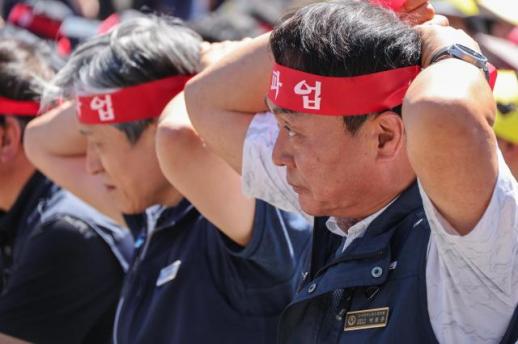 State bank relocation sparks mass finance strike in Seoul SEOUL, September 04 (AJP) - State bank relocation sparks mass finance strike in Seoul Strikes have been a common scene in Korea this year, and the traditional banking picketers took to the streets that they surrendered to IT workers earlier on demanding bigger compensations from AI windfall. Their banner cry was less on wages but say on where they work. Despite the still-summery heat, thousands of finance workers gathered in central Seoul from Friday morning for a mass strike, with employees of three major state-run banks leading opposition to the government's renewed push to move public institutions outside the capital. The strike was organized by the Korea Financial Industry Union (KFIU), an industry-wide labor group representing workers across banks and other financial institutions. Employees of Korea Development Bank (KDB), Industrial Bank of Korea (IBK) and the Export-Import Bank of Korea made up some of the largest groups in the crowd. The rally ran from 11:30 a.m. to 3 p.m. along Sejong-daero in central Seoul's Gwanghwamun district. The union estimated that about 30,000 people took part. By late morning, Lee Jae-ik, vice chair of the KDB labor union, stood among the crowd holding a large union flag. He said relocation would affect both workers' families and the bank's ability to retain experienced staff. “For dual-income couples, the biggest concern is having to live apart,” Lee said over the noise of the rally. “You would see many more couples split between Seoul and another city during the week. In some cases, one spouse might have to give up a career.” He pointed to London and Hong Kong as examples of major financial centers that benefit from having key institutions and professionals clustered in one place. “Finance runs on networks,” Lee said. “Once you break that concentration, you risk losing competitiveness.” The concern lies at the heart of opposition from the three state-bank unions. They argue that moving their headquarters could disrupt ties with companies, financial firms, regulators and specialized staff concentrated in the capital. The protest came a day after the government announced plans to accelerate a second round of public institution relocations. About 350 public institutions in the Seoul metropolitan area are under review, with the government seeking to minimize the number allowed to remain in the capital region. A detailed relocation plan is due in the fourth quarter, with moves scheduled to begin in 2027. KDB, IBK and the Export-Import Bank have not yet been formally designated for relocation, but uncertainty over their fate has already unsettled employees. Lee recalled the impact of an earlier relocation push. “We lost a lot of experienced people during the last relocation push. Vacancies opened up at the manager level, and we had to fill the gaps with juniors. If this happens again, I think there could be another round of departures.” About 2,200 KDB employees participated in Friday's action, Lee said. The union plans to survey workers on how they would respond if another relocation plan is formally proposed. Concern about losing skilled staff was echoed by younger employees standing in the sweltering heat. A KDB employee in his 30s who declined to give his name said most of the bank's clients remain concentrated in Seoul. “Most of the clients we actually deal with are in Seoul,” he said. “If the bank moves farther away, communication will become harder and slower, and that could weaken our competitiveness.” “What worries me even more is that strong candidates may stop seeing KDB as an attractive place to work in the first place.” His family is originally from Busan, the employee said, but he still supported keeping KDB's headquarters in Seoul because of the nature of its work. Another female employee in her 30s, who asked to be identified only by her initials H.J., voiced similar concerns. “There are already a lot of people around me saying they would leave if the bank moves,” she said. “Finding another job is hard enough as it is. Now people are wondering what they are supposed to do if they suddenly have to move.” Lee said the KDB union would continue its campaign through the fourth quarter and could consider a separate strike if the relocation plan moves forward. “We will continue to try our best.” Relocation was not the only issue behind Friday's walkout. The broader KFIU is also calling for a 4.5-day workweek based on a 35-hour week, increased youth hiring, a higher retirement age, changes to the wage-peak system that reduces compensation for older workers approaching retirement and a 6 percent wage increase. The KFIU said further strikes could follow depending on the progress of negotiations with employers. AJP Takeaways - Thousands of finance workers joined a mass strike in central Seoul on Sept. 4, with employees of KDB, IBK and the Export-Import Bank leading opposition to possible headquarters relocations. - KDB union Vice Chair Lee Jae-ik said about 2,200 KDB employees joined the action and warned relocation could trigger further staff departures and weaken recruitment. - About 350 public institutions in the Seoul metropolitan area are under review for a second round of regional relocation, with a detailed plan due in the fourth quarter and moves scheduled to begin in 2027. 2026-09-04 15:33:50
 -
 Op-Ed: When sanctions change the rules: The world they create Editor's Note: The following opinion article was contributed by the Embassy of the Islamic Republic of Iran in Seoul. SEOUL, September 04 (AJP) - No policy exists in a vacuum. A measure designed to pressure one country can, over time, alter the calculations of many others. Companies look for new ways to trade. Banks develop new approaches to managing risk. Governments seek to reduce their dependence on financial networks and supply chains that can become instruments of political pressure. This raises a broader question: when sanctions remain in place for years, do they continue to function simply as a tool of pressure, or do they begin to reshape the economic environment itself? Iran offers one of the clearest long-term cases through which to examine this question. Years of sanctions have imposed significant costs on Iran. They have restricted access to financial resources, complicated payments, raised the cost of trade and increased uncertainty for businesses. But economic pressure does not produce a single, predictable response. Over time, countries adapt. Iran has sought to diversify its trade relationships, develop alternative channels for payments and commerce, strengthen domestic capacity and reduce its vulnerability to external restrictions. This does not mean sanctions have no effect. They clearly do. The issue is more complicated: Pressure changes behavior but not necessarily in the way those applying the pressure intend. Every new round of sanctions can create another shock. It can disrupt an established channel, increase costs or make an existing transaction more difficult. But for a country that has lived under sanctions for years, a new restriction does not necessarily mean starting from zero. Experience matters. Over time, countries learn where their vulnerabilities lie, develop alternatives and adjust their economic networks. A new sanction may close one route, but the response may be to find another. It may increase the cost of a transaction without necessarily stopping it altogether. This is particularly relevant as Washington continues to expand its sanctions regime against Iran, including measures that extend pressure to financial institutions and other actors outside Iran. The question is not whether such measures create pressure. They do. The more important question is whether each new layer of pressure produces the political outcome intended — or whether it also accelerates adaptation and the search for alternatives. A new sanction can create a new obstacle without necessarily creating a new outcome. The longer sanctions remain in place, the more significant this dynamic becomes. The targeted country is not the only actor that adapts. Banks and companies elsewhere also change how they assess markets. Political and sanctions-related risks become part of ordinary business calculations. Governments may seek alternative trading partners, energy sources and financial channels to reduce their exposure to decisions made elsewhere. The growing use of secondary sanctions makes this effect even clearer. Pressure can extend beyond its original target and influence the decisions of banks, companies and governments that were never parties to the initial dispute. Sanctions can therefore produce effects well beyond their original purpose. They can change the calculations of actors who were never part of the original conflict. Consider the experience of an Iranian living, studying or working abroad. A routine bank transaction or the transfer of money for everyday expenses can sometimes become difficult because of restrictions that have little to do with that individual's own actions. It is a small example of a much larger phenomenon: decisions made at the government level can eventually reshape ordinary economic interactions. But the central issue remains political. If sanctions are intended to change a country's behavior, how should their success be measured? Is imposing greater economic costs enough? Or should success ultimately be judged by whether those costs produce the political outcome they were intended to achieve? Iran raises this question clearly. After years of sanctions, many of the underlying political disputes remain unresolved. At the same time, Iran and its economic partners have developed new channels of trade and cooperation, while businesses have adapted to the constraints. This suggests an important distinction between raising the cost and achieving the objective. Sanctions can raise costs. But higher costs are not, by themselves, a political solution. The issue extends beyond Iran. As economic tools have become more prominent in geopolitical competition, countries have begun to rethink what economic security means. It is no longer simply about financial strength or military capability. Access to energy, trade routes, supply chains, payment systems and the ability to make independent economic decisions are increasingly part of the equation. The more sanctions are used as a foreign-policy instrument, the stronger the incentive becomes to develop alternatives. This is the paradox at the heart of long-term sanctions: They are designed to narrow a country's choices, yet they can also encourage the creation of new ones. Iran has experienced this process over time. External pressure has created costs, but it has also encouraged greater diversification of economic relationships and investment in capacities designed to reduce vulnerability to external restrictions. None of this means sanctions are ineffective or cost-free. It means that pressure rarely produces only the response intended by those who apply it. Countries learn. They adapt. They look for alternatives. That is why sanctions should perhaps be assessed by a broader measure — not simply by asking how much pressure they have created, but by asking what they have changed, and where those changes have led. If the ultimate goal is to resolve a political dispute, economic pressure must eventually connect to a political path toward resolution. Sanctions may be one instrument of foreign policy, but they cannot permanently substitute for diplomacy. Otherwise, a temporary instrument can become a permanent condition — one that gradually changes not only the targeted country, but also its economic partners, markets and the wider rules of global economic interaction. So perhaps the more useful question is no longer: “Do sanctions work?” It is: “After years of sanctions, what have they changed?” The targeted country? The behavior of its economic partners? The routes of trade and energy? Or even the rules of the global economic system itself? The answer matters far beyond Iran. It tells us something about how the international system responds when economic pressure becomes a permanent feature of geopolitical competition. Because sanctions may begin as a tool of pressure. But when they become permanent, they do not change only the country they target. They change the world around it. The views and opinions expressed in this article are solely those of the contributor and do not necessarily reflect the editorial position, analysis, or views of AJP, its editors, or its parent organization. AJP publishes contributed opinion pieces from governments, diplomatic missions, experts, and other external contributors as part of its commitment to presenting diverse international perspectives. Publication does not constitute endorsement of the opinions or factual claims contained in the article. 2026-09-04 15:28:57
 -
Support for Developers Facing Funding Challenges: Collaboration Between Developer Association and KB Securities The Korea Developer Association is establishing a 'Real Estate Development Equity Fund' to support developers facing initial funding challenges. On September 3, the Korea Developer Association signed a memorandum of understanding with KB Securities to jointly create the fund aimed at revitalizing domestic real estate development finance and expanding new housing supply. The two organizations plan to build a cooperative model to advance domestic development finance. This initiative is intended to assist small and medium-sized developers struggling due to project financing (PF) system reforms and bridge loan constraints. The government recently announced measures to expand public guarantees, including those from the Housing and Urban Guarantee Corporation (HUG), to facilitate a smooth transition to project financing for normal business operations. Additionally, regulations on equity ratios for residential projects have been temporarily relaxed to reduce the initial capital burden on developers. In line with these efforts, the Korea Developer Association aims to support the capital expansion of high-quality projects in the metropolitan area and stabilize the financial structure of development projects by reducing reliance on high-interest borrowing. This fund creation marks the first achievement of the 'Financial Catalyst Fund' promised by Kim Han-mo, the chairman of the Developer Association, upon his appointment in February. He previously expressed his intention to bring stalled projects back on track due to a lack of initial capital, despite securing excellent project sites and permits. The Developer Association will utilize its network of registered developers to identify on-site projects. KB Securities will assist with financial assessments and operational infrastructure to support project initiation and stabilization. Kim stated, “This initiative will not only meet the public goal of expanding housing supply but also open new opportunities for our member companies and young talents aspiring to become developers. We will continue to establish the catalyst fund and work towards the long-awaited establishment of a mutual aid association in the industry.” Moon Seong-cheol, head of KB Securities, remarked, “Leveraging our extensive experience in facilitating large landmark project financing and operational know-how, we will enhance developers' equity and create a stable financial structure. Through our partnership with the association, we aim to contribute to the smooth landing of the project financing market and the advancement of development finance.”* This article has been translated by AI. 2026-09-04 15:08:20
-
Can Trump Learn from Deng Xiaoping's Decision to End War? 1979, China invaded Vietnam, a fellow communist state. The North Vietnamese government, having unified Vietnam, began to pressure ethnic Chinese and invaded pro-China Cambodia, prompting Deng Xiaoping, then China's top leader, to declare, "The little friend does not listen." With a massive military force, China initially expected an easy victory, but faced strong resistance from the Vietnamese army and militia in the rugged northern mountainous terrain. After about a month of conflict, China declared a sudden unilateral withdrawal, claiming it had achieved its strategic objectives.Despite some successes on the battlefield, the People's Liberation Army suffered severe casualties, and Deng, facing internal factional struggles and the urgent need for reconstruction after the Cultural Revolution, determined that China could not sustain the war. This decision, however, came at the cost of some of Deng's prestige as the war responsibility narrative emerged.Nonetheless, Deng accelerated military modernization following the Sino-Vietnamese War and pushed forward with his reform and opening policies, laying the groundwork for China's rise as an economic powerhouse. His pragmatic approach, exemplified by the "black cat, white cat" theory, became evident in this choice.In contrast, the Soviet Union, also a communist state, invaded Afghanistan the same year but became mired in a decade-long conflict, which ultimately contributed to its collapse. This comparison highlights the effectiveness of Deng's decision.The war that began with a surprise attack by the U.S. and Israel on Iran has now surpassed six months. However, President Donald Trump has yet to achieve a complete victory or a definitive ceasefire. Unlike Deng, he has not declared an end to the conflict.Since last month, the U.S. has adjusted its Iran policy, focusing on economic sanctions while refraining from escalating military actions ahead of the midterm elections. Reports suggest that these sanctions are having some effect. However, relying solely on sanctions to end the war or compel Iran to capitulate has its limits. Countries like Russia, North Korea, and Cuba have withstood U.S. sanctions for extended periods, and Iran has endured decades of American pressure. As a major oil producer with the world's third-largest oil reserves, Iran's resilience is significant, and the war, initiated unilaterally by the U.S. and Israel during ongoing nuclear negotiations, lacks a strong justification.Meanwhile, the costs of the war continue to mount for the U.S. Military fatigue and resource depletion are accumulating, and there is growing concern over the stockpile of advanced weaponry. The rise in oil prices due to the conflict is affecting inflation in the U.S. and ultimately burdening both the American and global economies. Without a clear victory, ceasefire, or end to the war, all participating nations face significant losses.Trump's favorite book, "The Art of War," emphasizes that the best victory is achieved without fighting, and if war is unavoidable, it should be concluded swiftly. However, the U.S. currently finds itself in a situation that fits neither scenario. It has not avoided war, nor has it brought it to a quick conclusion.In this context, it is essential not only to wait for Iran's surrender but also to reassess the U.S. objectives and the costs required to achieve them. Deng Xiaoping, despite losing some face in the Sino-Vietnamese War, retreated for a greater goal, ultimately leading China to become the world's second-largest economy. The Soviet Union, on the other hand, dragged out its conflict for a decade without resolution, resulting in its downfall. The strength of a great power lies not only in its ability to initiate war but also in its capacity to determine when to stop fighting and to step back when necessary.What Trump needs now is that same decisive judgment. However, one wonders if he can emulate Deng Xiaoping's willingness to sacrifice his own prestige for the sake of the nation and a greater cause. 2026-09-04 15:04:00
-
Korean Prosecution Reforms: New Structure for Public Prosecution Service With the launch of the Public Prosecution Service next month, the investigative departments responsible for direct investigations at local prosecution offices will be completely abolished and reorganized into a Major Crimes Division focused on cooperation and support with investigative agencies.The Ministry of Justice announced on September 4 that it will publicly announce the draft of the 'Public Prosecution Service and its affiliated institutions' and the amendment to the 'Prosecutor's Office Act Enforcement Decree' by September 9.This reform plan aims to completely abolish the prosecution's investigative initiation function and significantly strengthen its core functions of judicial control over investigative agencies and maintaining prosecutions.First, many organizations that supported direct investigations by prosecutors will be streamlined. The Crime Information Planning Division of the Supreme Prosecutors' Office and its two subordinate divisions, which analyzed and verified crime information for prosecutors' investigations, will be abolished. The Anti-Corruption and Drug and Organized Crime Divisions, which directed major crime investigations, will be merged into a Major Crimes Division to focus on substantial cooperation and case handling with related investigative agencies.As the field investigation functions are transferred to the Major Crimes Investigation Agency, the Ministry of Justice has also decided to abolish the current Forensic Science Department of the Supreme Prosecutors' Office. However, a forensic planning officer at the deputy chief prosecutor level and three subordinate divisions will remain to handle cross-examinations and evidence analysis necessary for prosecution decisions and maintenance.Consequently, the headquarters of the Public Prosecution Service will be restructured from eight divisions in the existing Supreme Prosecutors' Office to six divisions, six bureaus, and 30 sections and offices.The 43 departments responsible for direct investigations at local prosecution offices will be abolished, and 29 Major Crimes Divisions will be established to handle cooperation and support with investigative agencies, as well as prosecution and maintenance. Among these, five divisions will operate as dedicated departments corresponding one-to-one with the Major Crimes Investigation Agency's joint investigation division. The 67 sections responsible for investigation and inquiry will also be completely abolished.With the reduction of direct investigation departments, the number of deputy chief prosecutor positions will also decrease. The fourth deputy chief prosecutor at the Seoul Central District Prosecutors' Office and the second deputy chief prosecutors at the Daegu and Busan District Prosecutors' Offices will be eliminated, returning the Seoul Central District Prosecutors' Office to a 'three-deputy chief system,' while Daegu and Busan will each have only one deputy chief prosecutor.The space left by the reduction of direct investigation organizations will be filled by functions related to handling civil cases and overseeing investigative agencies. To respond to general criminal cases, which account for 94% of all cases, a 'Criminal Planning Officer' at the deputy chief prosecutor level will be newly established in the Criminal Division of the Public Prosecution Service headquarters, along with a 'Special Judicial Police Cooperation Division' responsible for guiding and training special judicial police.A 'Judicial Control Division' will also be established in each local public prosecution office to rigorously review non-prosecution cases by investigative agencies. This division will utilize the fact-finding verification system under the amended Criminal Procedure Act to examine the legality and adequacy of non-prosecution cases and will act as a monitoring body to demand re-investigation or disciplinary action if necessary. The Judicial Control Division will also be responsible for handling cases where the police fail to comply with supplementary investigation requests or where cases are decided to be re-prosecuted by the appellate body.Additionally, to enhance the tracking and freezing of criminal proceeds, recovery divisions and sections will be established in the Seoul Central, Seoul Southern, and Busan local public prosecution offices, and 11 prosecution offices will be newly created to handle the apprehension of individuals with unexecuted prison sentences.The newly launched Public Prosecution Service will consist of the headquarters, six regional public prosecution offices, 18 local public prosecution offices, and 42 branch offices. The total staffing will include 2,292 prosecutors and 6,120 administrative staff, totaling 8,412 personnel. The Ministry of Justice plans to evaluate the newly established Judicial Control Division and Major Crimes Division within three years to continuously monitor their performance and workload.A Ministry of Justice official stated, "During the legislative notice period, we will gather various opinions from related agencies, experts, and the public to swiftly conclude the amendment process, ensuring that the Public Prosecution Service can establish itself as a dedicated prosecution agency for the people without any issues."* This article has been translated by AI. 2026-09-04 15:04:00
-
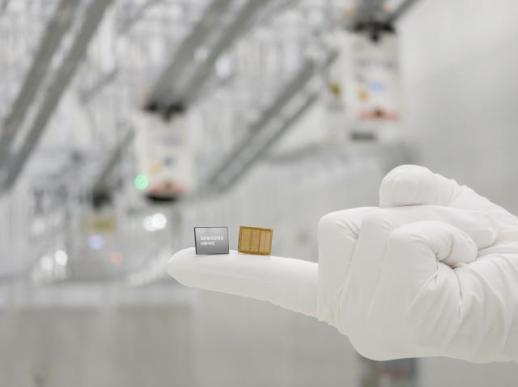 Samsung's aggressive HBM4 bet narrows gap with SK hynix SEOUL, September 04 (AJP) - Samsung Electronics, making up for its passivity and late start in high-bandwidth memory, has ushered in the next generation with an aggressive bet on HBM4 that is paying off by sharply narrowing the gap with frontrunner SK hynix. The world's largest memory maker saw its share of the global HBM market jump to 33 percent in the April-June period from 21 percent three months earlier, according to Counterpoint Research. SK hynix remained comfortably on top with 50 percent, but its share fell from 58 percent. The gap between the HBM pioneer and its late-charging rival narrowed to 17 percentage points from 37 points in the first quarter and 49 points a year earlier, when SK hynix controlled 64 percent of the market against Samsung's 15 percent. Micron Technology ranked third with an 18 percent share. SK hynix still holds the upper hand, backed by accumulated production experience and long-term relationships with Nvidia and other major AI processor customers built during its dominance of the HBM3E cycle. Most HBM revenue also continues to come from HBM3E, while HBM4 shipments are expected to become increasingly visible in market revenue during the second half of this year. Samsung's recent gain is therefore notable because much of its recovery has come before the HBM4 transition is fully reflected in industry sales. Rather than continue chasing SK hynix on the technological path where its rival had already established a commanding lead, Samsung placed a more aggressive bet on moving early into HBM4 and HBM4E. The company has also sought to broaden its customer base beyond Nvidia toward other AI chip designers as customized processors take a growing role in the AI infrastructure market. Lee Jong-hwan, professor of system semiconductor engineering at Sangmyung University, said Samsung made a strategic push into HBM4 and HBM4E after falling behind SK hynix in previous generations, creating an opportunity to expand shipments as the market transitions to newer products. "Samsung has a good chance of narrowing the gap further," Lee said. Samsung began commercial shipments of HBM4 in February, becoming the first in the industry to do so. Its HBM4 combines sixth-generation 10-nanometer-class, or 1c, DRAM with a logic base die manufactured using Samsung's 4-nanometer foundry process. The company followed in May by shipping samples of 12-layer HBM4E, seeking to carry its early HBM4 momentum into the next stage of the memory race. SK hynix, meanwhile, has been expanding HBM4 production while defending the customer relationships it built during the HBM3E cycle. It shipped samples of 12-layer HBM4E to major customers in June. The contest is therefore becoming less about catching up in HBM3E and more about which company can turn next-generation technology into high-volume customer orders first. Lee said Samsung's early HBM4 push reflects a broader strategy of trying to move ahead technologically rather than merely matching a competitor's existing product. Its rollout indicates the company had been preparing for the generational transition in advance and intended to use HBM4 to close the gap created during HBM3E, he said. The strategy could carry greater weight in HBM4 than in previous generations because the architecture increases the importance of capabilities extending beyond DRAM itself. HBM stacks multiple DRAM dies vertically to provide significantly greater bandwidth while keeping memory close to an AI processor. In HBM4, the logic base die beneath the memory stack becomes more sophisticated and increasingly customized for the processor it serves. Samsung has an unusual advantage in such an environment. The company is the only major HBM supplier combining large-scale memory manufacturing, advanced logic foundry production and semiconductor packaging within the same corporate structure. Its HBM4 pairs Samsung's own 1c DRAM with a logic base die produced through its 4-nanometer foundry process, allowing it to offer customers an integrated approach spanning memory, logic and advanced packaging. Closer coordination among those technologies could become increasingly important as HBM products are customized for individual AI processors. Vertical integration, however, only becomes an advantage if Samsung can execute consistently and translate its technology into volume orders. SK hynix retains years of accumulated HBM production experience and the industry's strongest customer relationships. Its partnership with Nvidia in particular gives it a formidable head start. Developing increasingly customized HBM requires memory suppliers to work closely with processor designers well before commercial production begins, making established supplier relationships difficult to displace. A customer already accustomed to jointly developing products with SK hynix has less incentive to switch suppliers solely because a rival reaches a technology milestone first. Winning an early technology race also does not automatically guarantee large-volume orders. Lee cautioned against treating Samsung's strategy as evidence that it will inevitably overtake SK hynix. "That is the strategy and direction, but of course not everything necessarily works out that way," Lee said. The decisive test will come as HBM4 production ramps up and customer qualification translates into actual shipments. If SK hynix leverages its existing customer base and HBM3E leadership to retain those clients through the transition, Samsung's early HBM4 push may prove less disruptive than the latest market-share numbers suggest. But the pace of Samsung's catch-up is beginning to put pressure on the frontrunner. In the second quarter of 2025, SK hynix controlled 64 percent of global HBM revenue compared with Samsung's 15 percent — a 49-percentage-point gulf. Four quarters later, the gap has narrowed to 17 points. The stakes are rising alongside the market itself as AI infrastructure investment drives demand for increasingly powerful and customized memory. SK hynix, Samsung and Micron are pouring enormous sums into fabs, advanced manufacturing equipment and research and development to secure their positions as HBM moves through successive generations. SK hynix enters the HBM4 era with the strongest customer relationships and production track record. Samsung enters with something it lacked during much of the previous cycle: momentum from an aggressive move into the next generation. The next six months should show whether the narrowing gap can turn what had been a lopsided contest into a genuine horse race. AJP Takeaways - Samsung's global HBM revenue share jumps to 33% from 21% in one quarter - Gap with market leader SK hynix narrows to 17 percentage points from 49 a year earlier - Samsung seeks to bypass its HBM3E setback with an early push into HBM4 and HBM4E - SK hynix retains an edge in production experience, Nvidia ties and long-term customer relationships 2026-09-04 15:01:15