


Latest by
-
 Hillstate Launches 20th Anniversary Pop-Up Store in Seongsu 현대건설이 힐스테이트 론칭 20주년을 맞아 서울 성수동에서 브랜드 팝업 스토어를 운영한다. 현대건설은 4일 무신사가 운영하는 라이프스타일 플랫폼 29CM와 협업해 ‘이구홈 성수(29CM HOME SEONGSU) 1호점’에서 힐스테이트 팝업 스토어를 오는 10일까지 운영한다고 밝혔다. 이번 팝업은 ‘FIND MY HILLSTATE’를 주제로 힐스테이트의 새로운 브랜드 아이덴티티(BI)와 리브랜딩 방향을 소개하는 자리다. 공간은 브랜드 홍보존과 고객 체험존, 굿즈 전시존 등으로 구성했다. 힐스테이트는 리브랜딩 이후 △스타일리시 라이프(Stylish Life) △베리어스 라이프(Various Life) △컴포터블 라이프(Comfortable Life)를 3대 핵심 가치로 제시하고 있다. 현대건설은 이를 바탕으로 입주민 대상 주거 서비스와 특화 상품을 확대하고 있다. 브랜드 홍보존에서는 신규 BI와 함께 ‘헤이슬립’, ‘H 헬시스터디’, ‘H 스마트스터디’ 등 힐스테이트의 특화 상품을 소개한다. 고객 체험존에서는 방문객이 특화 상품이 그려진 엽서를 꾸미고 자신의 라이프스타일 취향을 적어 SNS에 공유하는 이벤트를 진행한다. 굿즈 전시존에는 힐스테이트의 3대 핵심 가치에 맞춰 구성한 14종의 브랜드 굿즈와 사은품을 전시한다. 가계부와 텀블러, 키링, 원두커피, 와인 잔과 와인 참 등이 마련됐으며 일부 제품은 할인 판매한다. 써모스, 키티버니포니(KBP), 로파서울 등과 협업한 제품도 선보인다. 현대건설 관계자는 “이번 행사를 통해 기존 입주민뿐 아니라 미래 고객인 젊은 세대가 힐스테이트가 추구하는 라이프스타일을 경험하고 자신만의 취향을 발견할 수 있기를 바란다”고 말했다. 한편 현대건설은 지난 1일 대형원전·SMR·데이터센터·해상풍력 등 미래 성장사업 경쟁력 강화를 위해 토목·건축주택·플랜트·뉴에너지·지원·안전품질 분야에서 2026년 하반기 신입사원을 공개채용한다고 밝혔다.* This article has been translated by AI. 2026-09-04 14:32:00
 -
Regulators Push for Mandatory Disclosure of AI Characters in Advertising Regulators are moving to mandate the disclosure of artificial intelligence (AI) characters in advertisements and enhance monitoring of so-called 'AI washing.' This initiative aims to address new consumer harms arising from the proliferation of generative AI, including phishing, fake reviews, and dark patterns.The Fair Trade Commission (FTC) announced on September 4 that it held a joint academic conference with the Korean Consumer Law Association, the Korea Legislation Research Institute, the Korea Institute of Criminal Justice Policy, the Consumer Trust and AI Innovation Forum, and the Hanyang University Law Research Institute. The conference focused on 'Consumer Protection in the Age of AI and New Challenges in Consumer Law.'In his opening remarks, FTC Vice Chairman Nam Dong-il noted, "While generative AI is rapidly becoming integrated into market transactions and enhancing consumer benefits, sophisticated phishing, fake reviews, and dark patterns based on AI are hindering consumers' rational choices and threatening market trust."He added, "The FTC is pursuing the mandatory disclosure of AI characters in advertisements through revisions to the 'Guidelines for Review of Recommendations and Guarantees' and strengthening monitoring of AI washing. The 7th Basic Plan for Consumer Policy will prioritize AI and digital transformation to bolster the consumer protection framework."During the conference, discussions were divided into two sessions: 'AI and Consumer Transactions' and 'AI and Consumer Safety.' The 'AI and Consumer Transactions' session addressed legislative directions for AI agents, consumer contracts, accidents and liabilities involving AI agents, and issues under e-commerce law. The 'AI and Consumer Safety' session covered integrated management of consumer safety through the collection and use of hazard information, prevention of hazardous goods spread on online platforms, governance of consumer safety related to AI usage, and consumer protection in the medical field involving generative AI.Based on the discussions, the FTC plans to develop legal and institutional measures to create a safe consumer environment in the age of AI and continue discussions with academia on related topics.* This article has been translated by AI. 2026-09-04 14:32:00
-
Ecovacs Expands from Robot Vacuums to Home Robotics at IFA 2026 Ecovacs is expanding its product line from robot vacuums to include window, lawn, and pool cleaning robots, positioning itself as a home robotics company. The strategy involves sharing 80% of core robotic technology across its product range, with the remaining 20% optimized for specific environments. This approach aims to accelerate growth by quickly expanding a single technology base into multiple service robots.On September 4, during a media session at IFA 2026 in Berlin, Ecovacs unveiled its long-term strategy. The company showcased its flagship products, including the robot vacuum 'Deebot,' the window cleaning robot 'Winbot,' the robotic lawn mower 'Goat,' and the pool cleaning robot 'Ultramarine.'David Chen, CEO of Ecovacs, stated, "We utilize about 80% of our core technology in common and optimize the remaining 20% for each specific usage environment." This method allows the company to apply proven technologies across various product lines without redeveloping robotics, sensing, motion control, cleaning, and power management technologies from scratch.The push to expand its product range is driven by growth outside the indoor robot vacuum market. In the first half of this year, global shipments of service robots increased by 44.1% compared to the same period last year, with overseas sales in new categories such as window cleaning, lawn mowing, and pool cleaning rising by 75.1%. In the second quarter, overseas sales accounted for over half of total sales for the first time, reaching 51%.Ecovacs' vertical integration, with research and development and manufacturing kept in-house, also supports its expansion. The company employs over 900 R&D personnel and invested 554 million yuan (approximately $112 million) in R&D in the first half of this year. It has secured more than 3,100 patents.The market for each product category is also broadening. The Deebot robot vacuum is used in over 1.6 million households in Europe, and according to Ecovacs, it holds a 75% market share in the European roller wash robot vacuum segment. The Winbot is used in more than 1.5 million households worldwide, and the robotic lawn mower Goat has entered 35 countries.This year's IFA has also emphasized robotics as a key exhibition theme. The 'IFA Next' space for future technologies features around 300 companies and institutions, and a 'Robots on the Runway' event showcases humanoid robots on stage. This shift in focus from home appliances to physical AI and service robots aligns with Ecovacs' strategy to broaden its business scope.Looking ahead, Ecovacs envisions a future where multiple robots are connected as a single 'robot fleet' to share tasks inside and outside the home. Chen remarked, "The future of home robotics lies not in creating more products, but in freeing people from repetitive daily tasks."* This article has been translated by AI. 2026-09-04 14:24:00
-
National Modern Pentathlon Team Gathers in Haenam for Competition National modern pentathlon athletes have gathered in Haenam to compete over six days. The Haenam County announced that the '4th National Modern Pentathlon Championships' is taking place at Usul Sports Park from September 2 to 7. Hosted by the Korea Modern Pentathlon Federation, the event features over 800 athletes from across the country. Haenam County anticipates that around 6,000 visitors, including athletes, coaches, and officials, will come to the area during the competition. Modern pentathlon combines fencing, swimming, obstacle racing, shooting, and athletics, requiring athletes to excel in various disciplines. It demands not only physical strength and agility but also concentration and technical skills in each sport. South Korea is enhancing its competitiveness in modern pentathlon on the international stage, and this event is expected to serve as a platform for assessing domestic athletes' performance and expanding the sport's reach. Haenam County is fostering modern pentathlon as a key sport in its regional sports marketing strategy and is actively working to attract national-level competitions. Earlier this year, Haenam hosted the National Industrial Modern Pentathlon Championships in April and the 37th Minister of Culture, Sports and Tourism Cup in June, continuing its trend of hosting major events. The county's sports infrastructure, capable of accommodating all modern pentathlon events in one location, is considered a significant advantage. Haenam County has built the nation’s first indoor obstacle course and has facilities including the Usul National Sports Center swimming pool, as well as athletics and fencing venues. This infrastructure is being utilized not only for national competitions but also for attracting winter training camps. To ensure the smooth operation of the event, the county is conducting pre-event checks on the facilities and surrounding environment, focusing on supporting athletes and ensuring safety at the venues. The influx of large teams from across the country is also expected to positively impact the local economy, as athletes, coaches, and officials will utilize local accommodations and restaurants during the event. Noh Bong-jin, head of the sports marketing team at Haenam County Sports Business Division, stated, “As athletes, coaches, and officials from across the country come to Haenam, we are doing our utmost to ensure the event runs safely and smoothly. We will continue to attract national competitions and training camps using our excellent sports facilities, fostering growth in both sports and the local economy.” Meanwhile, Haenam County plans to continue expanding its hosting of national competitions and training camps across various sports, leveraging the sports facilities centered around Usul Sports Park to connect events and athlete stays with local consumption in accommodations and dining.* This article has been translated by AI. 2026-09-04 14:24:00
-
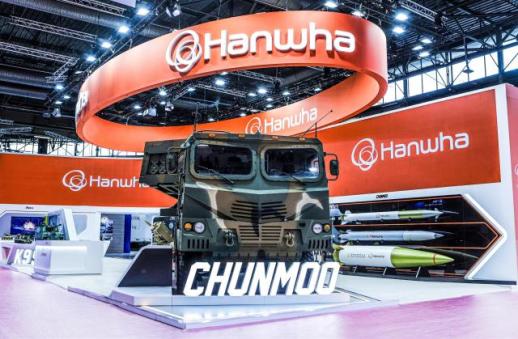 Croatia turns to S. Korean rockets as U.S. blocks long-range munitions SEOUL, September 04 (AJP) - Eighteen truck-mounted rocket launchers able to strike targets more than 300 kilometers away are set to enter Croatian service, bought from South Korea after the United States suspended deliveries of the long-range rockets Zagreb had already contracted for. The Croatian government was scheduled to approve the purchase of 18 K239 Chunmoo self-propelled multiple rocket launchers (MRLS) and their munitions at a cabinet session on Friday, the Zagreb daily Jutarnji list reported on Thursday (local time). The price is 435.2 million euros ($505.9 million) excluding value-added tax. Croatia contracted with the U.S. in late 2024 for eight HIMARS launchers. Washington has since halted deliveries to allies of rockets capable of reaching 300 kilometers because of its own stockpile requirements, and rockets capable of reaching 500 kilometers are barred from sale. That left Croatia holding launchers without access to the deep-strike ammunition that justified buying them. According to Croatia's Defense Minister Ivan Anušić, a deal with Hanwha Aerospace is expected to be signed shortly. A separate agreement covers Poland's WB Group, which will install the command and control system on the Croatian launchers. 85 percent of the order is due for delivery by 2028, with payments spread across 2026 to 2029. Talks between the Croatian defense ministry and its South Korean counterpart began about a year ago. The Chunmoo also fires a larger salvo than the American system, carrying two pods holding 12 rockets against one pod holding six. Approval would make Croatia the fourth European buyer, after Poland, Estonia and Norway. Both Prime Minister Andrej Plenković and President Zoran Milanović backed the purchase. Milanović announced new arms buying two months ago in Ankara, after a NATO summit, framing it as an answer to Serbia's acquisition of PULS, an Israeli rocket artillery system built by Elbit Systems. Croatia and Serbia fought a war between 1991 and 1995 and have both expanded their arsenals in recent years. "As a state we will have to counter that in some way, by equipping ourselves with something similar," Milanović said at the time, according to Jutarnji list's report. The K239 Chunmoo entered South Korean service in 2015 as a replacement for the K136 Kooryong, a 130mm rocket system fielded in 1986. Development began in 2009 under a program funded by the Defense Acquisition Program Administration (DAPA), South Korea's arms procurement agency, and finished in 2013, with production starting the following year. More than 350 have been built. What sets the launcher apart is how it loads. Each vehicle carries two sealed pods on an eight-wheel truck chassis, and the two pods can hold different calibers at the same time. A commander can fire an area-saturation rocket and a precision-guided rocket from the same launcher without swapping hardware or returning to a depot. A typical Chunmoo vehicle carries a mixed load of four 280mm rockets in one pod and six guided 239mm rockets in the other. The 239mm rocket, steered by satellite and inertial navigation, reaches about 80 kilometers. A full load of 12 can be fired in under a minute. Unguided 130mm rockets pack 20 to a pod and reach roughly 36 kilometers, designed to blanket an area rather than hit a single point. The longest reach comes from one missile at a time. The CTM-290, a 600mm ballistic missile derived from the Korean Tactical Surface-to-Surface Missile (KTSSM) family, fills an entire pod on its own. After launch, it climbs to between 25 and 40 kilometers of altitude before diving on the target. The KTSSM's range is estimated to be more than 300 kilometers. Hanwha Aerospace and open technical references list it at about 290 kilometers, the figure its designation reflects. Newer guided rockets for the system have reportedly been offered at ranges up to 500 kilometers. The launcher weighs about 31 tons, travels at up to 80 kilometers per hour on road, and is run by a crew of three. Each launcher is paired with an ammunition resupply vehicle built on the same chassis. Poland opened the export run in 2022, signing a framework agreement for 288 systems in October of that year and a firm contract for 218 in November worth about $3.5 billion. Polish launchers ride on domestic Jelcz trucks and carry the Topaz fire control and Fonet communications systems made by WB Group, the same company now contracted for Croatia's command and control fit. Hanwha Aerospace has since set up a joint venture in Poland to build Chunmoo rockets in Europe. Estonia signed a defense cooperation agreement in Seoul in October 2025 to field the system alongside the American HIMARS it already operates. Norway signed in Oslo on Jan. 30 for 16 launch vehicles, a precision-guided missile package and logistics support, a contract Hanwha Aerospace valued at about $922 million inside a long-range fires program budgeted at roughly $2 billion. Saudi Arabia and the United Arab Emirates bought earlier and smaller batches. The Croatian contract covers launchers, rockets, logistics support, and six weeks of training. Operating all 18 launchers will take about 100 soldiers. Where they will be based within the Croatian Army has not been disclosed. AJP Takeaways - The Croatian government was set to approve the purchase of 18 K239 Chunmoo self-propelled multiple rocket launchers and munitions from Hanwha Aerospace for 435.2 million euros excluding VAT at a cabinet session Friday, Jutarnji list reported. - The United States has suspended deliveries to allies of rockets reaching 300 kilometers and barred sale of those reaching 500 kilometers, leaving Croatia with eight HIMARS launchers it contracted in late 2024 and no access to the deep-strike munitions behind the purchase. - President Zoran Milanović framed the new buy as an answer to Serbia's acquisition of the Israeli PULS system, announcing it in Ankara two months ago after a NATO summit. - Hanwha Aerospace signed a separate Chunmoo contract with Norway in Oslo on Jan. 30 covering 16 launch vehicles for about $922 million, following earlier orders from Poland and Estonia that would make Croatia the fourth European operator. 2026-09-04 14:21:08
 -
Confirmation Hearing for Defense Minister Nominee Kang Shin-cheol to Focus on Policy The confirmation hearing for Kang Shin-cheol, the nominee for Defense Minister, scheduled for the 16th, is expected to focus on verifying defense policy direction and security perspectives rather than personal and ethical controversies surrounding the candidate. This contrasts sharply with the heated debates surrounding other ministerial nominees, such as Kim Seung-won, who faces allegations related to COVID-19 treatment drug trials, and Yong Hye-in, who is embroiled in a controversy over holding dual roles as a lawmaker.According to a comprehensive report by Aju Economy on the 4th, members of the National Assembly's Defense Committee generally hold a positive view of Kang's reputation and ethics within the military. No significant issues regarding his morality or personal life that could sway the confirmation hearing have been identified thus far.As a result, the Defense Committee plans to focus on verifying Kang's positions on major defense issues, including the integration of military academies, the transfer of wartime operational control, military readiness, and the nuclear-powered submarine project, rather than personal background checks.The committee is particularly attentive to Kang's career, noting that he has risen through key military positions regardless of the political administration. He has undergone rigorous evaluations of his ethics, personal life, and leadership capabilities through the military's verification system. Therefore, instead of personal scrutiny, the committee aims to clarify whether Kang will continue the existing defense policies of former Minister An Gyu-baek or identify areas for modification and improvement.Consistent Service Across AdministrationsOne of the most notable aspects of Kang's career is his service in key military and presidential office positions across both conservative and progressive governments. Born in Seoul in 1968, Kang graduated from the Army Academy in 1990 as a second lieutenant.From 2010 to 2011, during the Lee Myung-bak administration, he served as an administrative officer at the Blue House, handling defense policy matters. Under the Park Geun-hye administration, he was promoted to brigadier general in 2016 and served as a military advisor to then-Defense Minister Han Min-koo until 2017. He subsequently held positions as the operations chief of the First Army Corps and the dean of the Army College at the Joint Military University.After the inauguration of the Moon Jae-in administration in 2019, he was promoted to major general and served as the commander of the 11th Mechanized Infantry Division and the director of strategic planning at the Joint Chiefs of Staff. In 2021, he was appointed as the defense reform secretary at the National Security Office of the Blue House, and after being promoted to lieutenant general in December of that year, he continued to serve as the restructured security and defense strategy secretary until the change of administration.When the Yoon Suk-yeol administration began in 2022, he served as the deputy commander of the Ground Operations Command and was appointed as the director of operations at the Joint Chiefs of Staff in June of that year. In October 2023, he was promoted to four-star general and took office as the deputy commander of the ROK-U.S. Combined Forces Command. Kang is the only general promoted to four-star rank from lieutenant general during the Yoon administration after being elevated to major general under the Moon administration.After retiring in September of last year, following the inauguration of the Lee Jae-myung administration, Kang was appointed as the ambassador to Saudi Arabia in January of this year. He was nominated as the successor to Minister An Gyu-baek on the 30th of last month. Throughout the transitions from the Lee Myung-bak administration to the Lee Jae-myung administration, he has held key positions in the Blue House, Joint Chiefs of Staff, ROK-U.S. Combined Forces Command, and diplomatic fields.Focus on Key Defense Issues in HearingThe Defense Committee believes that sufficient background checks have already been conducted on Kang, given his extensive experience in military positions across different administrations. Kang has also expressed his expectation for a policy-focused confirmation hearing. On the 3rd, as he arrived for his first day at the preparation office set up at the Defense Convention in Yongsan, Seoul, he stated, "There are defense policies we need to pursue, and I hope this hearing will be a place to discuss and deliberate on the direction of these policies."Regarding the integration of military academies, he acknowledged, "I understand there are various opinions and concerns, and I will ensure we can cultivate excellent talent." On the transfer of wartime operational control, he indicated, "We will pursue this in a way that strengthens the ROK-U.S. alliance."Consequently, the Defense Committee plans to clarify Kang's specific positions on these issues during the hearing. In particular, they will closely examine his views on the reduction of GOP border troops, adjustments to the civilian control line, the removal of unnecessary military obstacles, and the delegation of rear base security tasks to civilians, all initiatives previously promoted by Minister An.Minister An had proposed reducing the current GOP border troop level of approximately 22,000 to about 6,000 by 2040, in conjunction with the establishment of an AI-based scientific border system, and reallocating the remaining troops to the rear. The Defense Ministry is also working on plans to reduce the civilian control line from an average of 8 km south of the military demarcation line to 6 km and to gradually remove military obstacles.Additionally, the Defense Committee has made it clear that they intend to accurately record Kang's responses during the confirmation hearing in the National Assembly's official records, establishing a standard for future policy verification. If he makes decisions that differ from his hearing responses after taking office, they will seek clear explanations and accountability.A Defense Committee official emphasized, "A policy-focused confirmation hearing does not imply a lower level of scrutiny. We will clearly document the candidate's responses to serve as a standard for evaluating policy consistency and accountability as a minister in the future."* This article has been translated by AI. 2026-09-04 14:20:00
-
Shinan County Supports Expansion of Garden Plant Cooperative's Market Access Shinan County is implementing a phased support plan to expand market access for the Garden Plant Cooperative and alleviate challenges faced by its member farmers. Following the recent formation of an emergency committee for the cooperative, county officials met with committee members on September 3 to listen to their concerns and discuss strategies for increasing plant sales. The emergency committee, led by Chairman Kim Yong-jun, will work with the county to share relevant information and develop practical support measures. Initially, the county plans to gather comprehensive data on the types, specifications, quantities, prices, and images of the plants held by the cooperative to create promotional and sales materials. The support measures will be divided into short-term, medium-term, and long-term initiatives. In the short term, the county will explore the possibility of utilizing the cooperative's plants in various public projects, including solar shielding plantings and environmental forest creation, which are currently underway or planned for this year. The county will also consider linking future projects, such as the Palgeum Southwest Coastal Forest Restoration Project aimed for spring 2027 planting. However, the actual scale of plant usage in public projects will depend on compliance with relevant laws, project guidelines, and specific requirements such as species, specifications, and origin. In the medium term, the county aims to establish a database to systematically manage the trees held by the cooperative. This will help streamline information on species, specifications, and quantities, making it easier for buyers to identify the plants they need. The county is also looking to expand distribution and sales networks beyond the public sector by collaborating with private nurseries and landscaping companies. Long-term plans include broadening cooperation with 26 sister municipalities across the country and local governments in Jeonnam and Gwangju. The goal is to share information on the cooperative's plant inventory and regional demand to secure new market opportunities. Kim Tae-sung, the mayor of Shinan County, stated, “With the formation of the emergency committee, we are continuously communicating with the cooperative to find feasible solutions. We will prioritize exploring possibilities for collaboration with public projects and continue to support small-scale member farmers.” Meanwhile, Shinan County plans to gradually implement measures to link public projects, expand private distribution networks, and share demand information with other local governments, starting with the collection of basic data on the cooperative's plant inventory and available sales quantities.* This article has been translated by AI. 2026-09-04 14:20:00
-
SK Telecom, KT, and Kakao Launch 'Everyone's AI' to Foster Domestic AI Ecosystem The 'Everyone's AI' initiative, which aims to provide free artificial intelligence (AI) services to all citizens, has officially launched. The government emphasized the importance of creating an ecosystem where independent AI models, domestic AI semiconductors, and AI agents can grow together, rather than fostering competition among SK Telecom (SKT), KT, and Kakao.On September 4, the Ministry of Science and ICT held a signing ceremony for the Everyone's AI project at the Korea Press Center in Jung-gu, Seoul. The event was attended by Deputy Prime Minister and Minister of Science and ICT Baek Kyung-hun, SKT CEO Jeong Jae-hun, KT CEO Park Yoon-young, and Kakao CEO Jeong Shin-a.Deputy Prime Minister Baek described Everyone's AI as the most challenging project of the year, stating, "By the official launch in December, it must reach a level that will make the public say 'wow.'" He stressed the need for safety and reliability, as well as differentiated strengths that surpass foreign AI services. Baek noted, "We need a new service structure that connects public services, private services, payments, and communications, rather than simply creating a domestic chatbot similar to ChatGPT. This will help reduce AI disparities based on social class or usage environment and serve as a starting point for an AI-based society."During the event, each consortium, including SKT, KT, and Kakao, presented their strategies for Everyone's AI. They set a goal of achieving 5 million monthly active users (MAU) by the end of the year and plan to launch beta services by October.Kakao Leverages KakaoTalk: 'AI Accessible from Chat List'Kakao highlighted its platform, KakaoTalk, as a key component. Kakao Vice President Kim Se-woong stated, "We will make KakaoTalk the entry point for AI so that citizens do not need to learn or install a new AI app. Users will be able to find AI in their friend or chat lists and summon agents to handle tasks within chat rooms."Kakao also outlined a collaboration strategy with LG Group, aiming to enable AI access not only on PCs but also via phones through LG Uplus.The specialized agents will expand into areas such as healthcare, finance, public services, job placement, life care, and senior care. Kim added, "Initially, we will provide one personal agent, but in the future, users will be able to combine or customize multiple specialized agents, evolving into a 'one-person, N-agent' structure."The goal is to secure 5 million MAU by the end of this year and reach 10 million MAU by the end of 2027. Jeong stated, "We aim to have 30 million users by 2030."KT Focuses on Expanding AI Ecosystem: 'Connecting Diverse Domestic Service Providers'KT emphasized its commitment to expanding the domestic AI ecosystem. KT AX Business Division Head Lee Jin-hyung explained, "The core of our project is 'I-eum Inside.' Rather than creating all services ourselves, we aim to connect various domestic service providers to make Everyone's AI accessible to the public."For example, the next portal will incorporate an AI mode alongside the existing search interface, while shopping services like Danawa will feature AI agents to assist with product searches, comparisons, and recommendations.KT will also diversify its models. Lee stated, "We will apply 'multi-model routing' to select the most suitable model based on requests, combining Upstage's independent AI foundation model, KT's trust model, and Saltlux's public model."Additionally, KT plans to utilize domestic AI semiconductors, specifically Rebellion, to enhance model service efficiency. Lee noted, "We will process incoming AI requests like a factory, ensuring speed, accuracy, economic viability, and stability."SKT Promotes Actionable AI Agents: 'From Job Listings to Cover Letters'SKT showcased its 'actionable AI agents' as a key strength. The company aims to develop AI agents that not only respond to queries but also facilitate subsequent actions.For instance, if a user searches for job information, the AI will recommend similar job postings and assist in creating cover letters.SKT also introduced a telephone AI agent, known as '114,' which will have a phone number assigned to it, making it accessible for the elderly and digitally vulnerable populations.SKT is also focused on expanding the domestic AI ecosystem. Rather than relying solely on the 'A-dot X K2' model developed by DOPAMO, the company plans to orchestrate multiple domestic models. SKT AI Business Division Head Kim Ji-hoon stated, "We are testing a mix of K2, Upstage, Motif, and LG AI Research models, tailoring them to real-world scenarios."Deputy Prime Minister Baek defined Everyone's AI as a project aimed at nurturing the domestic AI ecosystem rather than fostering competition among individual businesses. He stated, "This is not a competitive landscape among SKT, KT, and Kakao. We will not encourage competition as a unified brand identity is needed. The key is for each to secure users while growing the AI market based on domestic models, NPUs, and AI agents."* This article has been translated by AI. 2026-09-04 14:08:10
-
SK Telecom, KT, and Kakao Launch 'Everyone's AI' to Foster Domestic AI Ecosystem The 'Everyone's AI' initiative, which aims to provide free artificial intelligence (AI) services to all citizens, has officially launched. The government emphasized the importance of fostering an ecosystem where independent AI models, domestic AI semiconductors, and AI agents can grow together, rather than focusing on competition among SK Telecom (SKT), KT, and Kakao.On September 4, the Ministry of Science and ICT held a signing ceremony for the Everyone's AI project at the Korea Press Center in central Seoul. The event was attended by Deputy Prime Minister and Minister of Science and ICT Baek Kyung-hwan, SKT CEO Jeong Jae-hun, KT CEO Park Yoon-young, and Kakao CEO Jeong Sin-a.Deputy Prime Minister Baek described Everyone's AI as the most challenging project of the year, stating, "By the official launch in December, it must reach a level that will make citizens say 'wow.'" He stressed the need for safety and reliability, as well as differentiated strengths that surpass foreign AI services. Baek noted, "We need a new service structure that connects public services, private services, payments, and communications, rather than simply creating a domestic chatbot similar to ChatGPT. This will help reduce AI disparities based on social class or usage environment and serve as a starting point for a foundational AI society."During the event, each consortium, including SKT, KT, and Kakao, presented their strategies for Everyone's AI. They set a goal of achieving 5 million monthly active users (MAU) by the end of the year and plan to launch beta services by October.Kakao Leverages KakaoTalk: 'AI Accessible from Chat List'Kakao highlighted its platform, KakaoTalk, as a key entry point for AI. Kim Se-woong, Kakao's Vice President and AI Performance Leader, stated, "We will make KakaoTalk the entry point for AI so that citizens do not need to learn or install a new AI app. Users will be able to discover AI in their friend or chat lists and summon agents within chat rooms to handle tasks."Kakao also outlined a collaboration strategy with LG Group, aiming to enable AI access not only on PCs but also via phones through LG Uplus.Specialized agents will expand into areas such as healthcare, finance, public services, job placement, life care, and senior care. Kim added, "Initially, we will provide one personal agent, but in the future, users will be able to combine or customize multiple specialized agents, evolving into a 'one-person, N-agent' structure." The goal is to secure 5 million MAU by the end of this year and reach 10 million by the end of 2027. Jeong also mentioned plans to reach 30 million users by 2030.KT Focuses on Expanding AI Ecosystem: 'Connecting Diverse Domestic Service Providers'KT emphasized its commitment to expanding the domestic AI ecosystem. Lee Jin-hyung, head of KT's AX Business Division, stated, "The core of our project is 'Eum Inside.' Rather than creating all services ourselves, we aim to connect various domestic service providers to make Everyone's AI accessible to citizens."For example, the next portal will feature an AI mode alongside the existing search interface, while shopping services like Danawa will incorporate AI agents to assist with product searches, comparisons, and recommendations.KT is also diversifying its models. Lee explained, "We will apply 'multi-model routing' to select the most suitable model based on requests, combining our Upstage proprietary AI foundation model, KT's trust model, and Saltlux's public model."Additionally, KT plans to utilize domestic AI semiconductors, specifically Rebellion, to enhance model service efficiency. Lee noted, "We will process incoming AI requests like a factory, ensuring speed, accuracy, economic viability, and stability."SKT Promotes Actionable AI Agents: 'From Job Listings to Resume Writing'SKT is focusing on its 'actionable AI agents.' The company aims to develop AI agents that not only provide information but also facilitate actual actions following searches.For instance, if a user searches for job information, the AI will recommend similar job postings and assist in creating resumes. SKT also introduced a phone AI agent known as '114,' which will have a phone number to make it accessible for the elderly and digitally vulnerable populations.SKT is committed to expanding the domestic AI ecosystem by orchestrating multiple domestic models rather than relying solely on its 'A-dot X K2.' Kim Ji-hoon, head of SKT's AI Business Division, stated, "We are testing a mix of models, including K2, Upstage, Motif, and LG AI Research's models, tailored to real usage scenarios."Deputy Prime Minister Baek defined Everyone's AI as a project aimed at nurturing the domestic AI ecosystem rather than fostering competition among individual companies. He stated, "This is not a competitive landscape among SKT, KT, and Kakao. We will not encourage competition as a unified brand identity is needed. The key is for each to secure users while growing the AI market based on domestic models, NPUs, and AI agents."* This article has been translated by AI. 2026-09-04 14:08:00
-
Gwangju Education Office Enforces Zero Tolerance on Misuse of School Property The Gwangju Education Office is applying a 'zero tolerance' policy to the misuse or unauthorized disposal of school property, while strengthening management and oversight. Following an investigation into incidents of staff misusing school property and unauthorized sales through second-hand transactions in June, the education office confirmed misconduct and has taken disciplinary action against those involved. In light of this situation, the education office plans to reassess the management of public property and enhance preventive measures and audit functions to avoid similar cases in the future. Special training will be conducted across all institutions to prevent the personal misuse of public property and to avoid conflicts of interest. Future audits will also include assessments of the appropriateness of public property management as a mandatory item. If any individual is found to be using public property for personal purposes or gaining private benefits from it, they will be held strictly accountable under the zero tolerance policy. The education office aims to strengthen the management and oversight system, not just by identifying and penalizing misconduct, but also by examining potential gaps in the management process from acquisition to storage, use, and disposal of property. Since public property is not privately owned, the education office expects that these measures will enhance the sense of responsibility among members of schools and educational institutions regarding the management of public property. Kim Dae-jung, the superintendent, stated, "The integrity and public nature of the education field are values that cannot be compromised for any reason. We will thoroughly address the weaknesses in the public property management system and strengthen on-site inspections to fundamentally improve our practices and prevent similar incidents from occurring again." Meanwhile, the Gwangju Education Office plans to continuously monitor the management of public property in schools and institutions, conducting audits and preventive training to enhance transparency and accountability in the management of public assets.* This article has been translated by AI. 2026-09-04 14:04:00