


Latest by
-
 Negotiations on U.S. Investment Project Face Last-Minute Challenges Negotiations for the U.S. investment project are facing last-minute challenges. The report to the National Assembly, originally scheduled for today, has been postponed, which is likely to delay the signing of the memorandum of understanding (MOU) expected soon. The government is mobilizing diplomatic and trade channels for final adjustments.According to relevant departments on the 17th, the Ministry of Trade, Industry and Energy requested the National Assembly's Committee on Industry, Trade, and Small and Medium Enterprises and the Committee on Finance and Economy to postpone the report on U.S. investment that was scheduled for today. With the postponement of the National Assembly report, the signing and announcement of the MOU for the first U.S. investment project, initially anticipated for the 18th, has been indefinitely delayed.The key issues in the final negotiations revolve around the structure and investment conditions of the U.S. investment project. Among the $350 billion investment resulting from the Korea-U.S. tariff negotiations, the purpose of $200 billion remains unclear. The government maintains that the total investment amount under the strategic investment MOU will be $200 billion, with annual remittances not exceeding $20 billion.Discussions continue regarding specific projects, with the Texas gas combined cycle power plant being a strong candidate for the first U.S. investment project. However, issues surrounding power demand guarantees and participation of domestic companies remain contentious.In the nuclear power sector, the method of participation and the cooperation structure with Westinghouse have emerged as variables. The two countries are discussing the introduction of the Korean APR1400 for new large nuclear power plants being constructed in the U.S. While the government advocates for the introduction of the APR1400 for some new large nuclear plants, the U.S. side has expressed reservations.The pyroprocessing project for handling spent nuclear fuel has also been identified as a new variable. Pyroprocessing is a reprocessing technology that recovers uranium and transuranic elements from spent nuclear fuel through electrochemical reactions. However, if funding is allocated for this project, it could exceed the investment cap of $200 billion.How profits and losses will be shared is also a key issue. If the viability of some projects falls short of expectations, the extent of risk that the Korean side is willing to bear will directly impact future investment stability.As the two countries' agreement remains elusive, diplomatic channels have also joined the negotiations. Minister of Foreign Affairs Park Jin departed for the U.S. today and is scheduled to meet with U.S. Secretary of State Marco Rubio in Washington, D.C., on the 18th (local time). Minister of Industry Lee Chang-yang also recently visited the U.S. to engage in last-minute negotiations regarding U.S. investment with U.S. Secretary of Commerce Howard Rutnik.The government is expected to adjust investment conditions while maintaining the investment limit and considering the viability and risk of individual projects. Before his departure, Minister Park stated, "I understand that there are procedural issues domestically rather than disagreements between Korea and the U.S., and that the U.S. investment issue will come up in the overall process of reviewing bilateral relations."* This article has been translated by AI. 2026-09-17 17:36:00
 -
Ryu Jin, Chairman of the Korea Economic Association, Calls for Stronger US-Korea Alliance The Korea-U.S. alliance, which began amid the turmoil of the Korean War in 1950, has expanded over the past 70 years into economic and technological realms. The Korean business community expressed gratitude and respect for veterans and U.S. forces stationed in Korea while reflecting on the significance of the alliance that extends beyond security.The Korea Economic Association (KEA) announced that it held a "Thanksgiving Dinner for the 250th Anniversary of the U.S. Founding" on the afternoon of September 17 at the FKI Tower Conference Center in Yeouido, Seoul.About 180 attendees included figures from both Korean and U.S. political and business sectors, as well as representatives from the U.S. military in Korea. Notable attendees from the Korean government included Prime Minister Han Seung-soo and Deputy Minister of Veterans Affairs Kang Yoon-jin, while the U.S. side was represented by Ambassador to Korea Michelle Steel and U.S. Forces Korea Commander Javier Brunson.Prominent business leaders present included Shin Dong-bin, Chairman of Lotte; Cho Won-tae, Chairman of Korean Air; Kim Yoon, Chairman of Samyang; Lee Jang-han, Chairman of Chong Kun Dang; and Kim Jung-soo, Chairman of Samyang Round Square, along with other executives from major groups such as Samsung, Hyundai, SK, and LG.Chairman Ryu Jin congratulated the U.S. on its 250th anniversary, stating, "This history is marked by a special bond with Korea." He expressed gratitude and respect for the veterans and U.S. forces, noting that the Incheon Landing around 1950 was a turning point that rekindled hope for the Korean people.He added, "The Korea-U.S. alliance is evolving beyond military security into an economic and technological partnership. I hope that our two countries will continue to write a brilliant new history together as the closest friends and allies."U.S. Forces Korea Commander Javier Brunson remarked, "The Korea-U.S. alliance has evolved from shared sacrifices on the battlefield to a global partnership encompassing defense, economy, technology, and culture."The dinner commenced with a toast proposed by Deputy Minister Kang Yoon-jin and Joseph Hilbert, Commander of the U.S. Eighth Army. Following the dinner, singer Insooni and the U.S. Eighth Army's jazz band performed together on stage. Insooni's father had previously served in the U.S. military while stationed in Korea.* This article has been translated by AI. 2026-09-17 17:32:10
-
Trade Commission Proposes Five-Year Extension of Anti-Dumping Measures on Chinese H-Beams The Trade Commission of the Ministry of Trade, Industry and Energy has recommended that the government maintain anti-dumping measures on Chinese H-beams for an additional five years. The commission also determined that a provisional anti-dumping duty of up to 27.96% should be imposed on Chinese rebar, which is used in the manufacturing of parts for automobiles and ships.During its 477th meeting on September 17, the Trade Commission reviewed and voted on the final determination of the anti-dumping investigation into Chinese H-beams and the preliminary determination regarding rebar.H-beams are structural steel products with an H-shaped cross-section, utilized in the construction of buildings, factories, ships, and civil engineering projects. This investigation marks the second sunset review to assess whether to terminate existing anti-dumping measures. Hyundai Steel and Dongkuk Steel requested the review in September 2022, and the investigation commenced in December of the same year.The Trade Commission concluded that ending the current measures could lead to a recurrence of dumping and harm to the domestic industry. Consequently, it plans to recommend to the Minister of Economy and Finance that price commitments be implemented for two companies, Laiwu Steel and Rizhao Steel, while extending anti-dumping duties of 28.23% to 32.72% on other suppliers for the next five years.Regarding Chinese rebar, the commission made a preliminary determination that the domestic industry has suffered substantial harm due to dumping. Rebar is used in the manufacturing of parts for automobiles, construction machinery, shipbuilding, bearings, and industrial machinery. SeAH Besteel and SeAH Changwon Special Steel applied for the investigation in February 2023, and the investigation began in May. To prevent further harm during the investigation period, the commission plans to recommend a provisional anti-dumping duty of 25.08% to 27.96% to the Minister of Economy and Finance.In a separate case involving patent infringement related to fire monitoring systems for secondary batteries, the commission ruled that the actions did not constitute unfair trade practices. It determined that the items in question did not fall within the scope of the applicant's patent rights, thus not qualifying as patent infringement for export or manufacturing purposes.During the meeting, the commission also reported the initiation of anti-dumping investigations into polyethylene terephthalate (PET) films from Taiwan, Thailand, and the United Arab Emirates, as well as ethyl acetate and fully drawn yarn (FDY) from China. PET films are used in packaging and electronic and optical materials, while ethyl acetate serves as a solvent for paints and printing inks. FDY is utilized in textiles and fabrics for both clothing and non-clothing applications.The Trade Commission plans to finalize its determinations on these cases in the first half of next year after conducting written surveys, public hearings, on-site investigations, and gathering opinions from domestic and international stakeholders.* This article has been translated by AI. 2026-09-17 17:32:10
-
Korea Railroad Corporation Expands Global Rail Cooperation The Korea Railroad Corporation is exploring opportunities for overseas expansion in the K-Rail market through agreements with major clients and high-level meetings. On September 17, the corporation announced that it has strengthened its foundation for overseas expansion in the rail sector by collaborating with key international clients and organizations during the Global Infrastructure Cooperation Conference (GICC) 2026, held from September 15 to 17 at the Conrad Hotel in Yeouido. GICC is an international event where key figures such as ministers, deputy ministers, and CEOs from major overseas clients, along with domestic institutions and companies, discuss global infrastructure project cooperation. The event is hosted by the Ministry of Land, Infrastructure and Transport and organized by the Korea Overseas Infrastructure & Urban Development Corporation. During the event, the corporation led a 'Transport Cooperation Seminar' and presented on 'Korean-style Transit-Oriented Development (TOD),' sharing experiences that enhance accessibility and urban value through the integration of rail and urban development with overseas clients and organizations. Following this, the corporation signed a memorandum of understanding with the Tajikistan Railway, agreeing to collaborate on sharing railway project issues, consulting, exchanging information and technology in the rail sector, enhancing the capabilities of railway professionals, and operating a working-level consultative body to identify cooperation projects. Meetings were also held with high-ranking officials, including the Minister of Public Works and Transport of Laos and the Director of the National Railway Authority of Panama, to discuss local railway and transportation infrastructure development plans and the status of major projects. In 2025, the Korea Railroad Corporation achieved success by securing a project management contract for the Mongolian subway and passing the pre-qualification for the UAE high-speed railway. The corporation has contributed to lowering the barriers for small and medium-sized enterprises to participate in overseas railway projects based on a One-Team strategy. Jung Jin-hyuk, the President of the Korea Railroad Corporation, stated, 'GICC is an opportunity to identify the infrastructure development needs of various countries and find new possibilities for cooperation. We will do our best to solidify trust with major clients and ensure that K-Rail technology and experience lead to more opportunities in overseas markets.'* This article has been translated by AI. 2026-09-17 17:32:00
-
Hanwha Aerospace Launches Arion Smet, Plans Six UGVs by 2030 Hanwha Aerospace plans to secure six types of unmanned ground vehicles (UGVs) ranging from small to large by 2030. The company will also transition existing weapon systems, including the K9 self-propelled howitzer and the Chunmoo multiple launch rocket system, into AI-based manned-unmanned hybrid combat systems.On September 17, Hanwha Aerospace unveiled its roadmap for ground defense unmanned systems along with plans to establish a production system for the multipurpose unmanned vehicle, Arion Smet.Arion Smet is an unmanned ground system that recently signed a mass production contract with the Defense Acquisition Program Administration on September 4. It will be supplied sequentially to infantry units of the Army and Marine Corps starting next year.Production will take place at the Changwon facility. Hanwha Aerospace has established a production system with over 40 partner companies supplying key components such as structures, batteries, navigation systems, and LiDAR. The domestic production rate of the vehicle has been raised to over 98% through the localization of major parts.Beginning with the mass production of Arion Smet, Hanwha Aerospace aims to secure six common UGV platforms by 2030. This includes multipurpose unmanned vehicles under 10 tons, medium-sized tracked robotic combat vehicles (T-RCV) under 20 tons, and large unmanned combat vehicles (H-UGV) around 30 tons.The company is also leading the unmanned transition of manned weapon systems. The goal is to develop technology that allows the K9, Chunmoo, and next-generation infantry fighting vehicles to be operated in both manned and unmanned modes by 2029. Plans are in place to apply hybrid technology to 120mm self-propelled mortars, Marine Corps amphibious assault vehicles (KAAV), and combat engineer vehicles (K-CEV).Kim Dong-hyun, head of the LS division at Hanwha Aerospace, stated, "We will actively support the stable supply of unmanned vehicles needed by the Republic of Korea's military and allied nations, and work to secure defense unmanned system technology in preparation for future battlefields."* This article has been translated by AI. 2026-09-17 17:32:00
-
Research Impact Over Quantity Highlighted at 17th Korean University Ranking Forum A new paradigm for global university evaluation has emerged, emphasizing the actual impact of research, international collaboration, and social value, moving beyond mere publication counts and quantitative metrics. Amid the transformative AI revolution, leaders from top global university ranking organizations and domestic higher education experts convened to explore solutions for enhancing the global competitiveness and reputation of South Korean universities.Sookmyung Women's University announced that it hosted the 17th University Ranking Forum of Korea (URFK) on September 17 at the Han Sang-eun Lounge in the Centennial Memorial Hall in Yongsan, Seoul. Organized by the Korean University Ranking Forum and hosted by Sookmyung Women's University, the event was supported by Busan University of Foreign Studies, Clarivate, and Elsevier, attracting over 130 participants, including university presidents, planning directors, evaluation practitioners, and scholars from Korea and abroad.Founded in 2014, the Korean University Ranking Forum is a prominent expert group that assesses the objectivity and rationality of global university evaluations and develops response strategies for domestic universities amid a rapidly changing higher education landscape.This year's forum was themed 'Better Universities, Better Futures.' As global university evaluations shift from a focus on publication counts to a broader consideration of research quality, societal impact, industry-academia collaboration, reputation, and community contributions, the forum addressed the need for substantial improvements and innovative strategies within domestic universities.Representatives from the three leading global university ranking organizations (THE, QS, Shanghai Ranking), as well as officials from Elsevier and Springer Nature, gathered for the event.The morning session began with a welcome address from Sookmyung Women's University President Moon Si-yeon, followed by a presentation by Planning Director Park Kyung-tae on 'Proud Sookmyung, Beyond 120 – SMWU’s 120 Year-Long Endeavor,' outlining the university's vision as it approaches its 120th anniversary. This was followed by congratulatory remarks from Ajou University President Choi Gi-joo and a keynote speech by former Seoul National University President Oh Se-jung.International scholars also delivered engaging presentations. Anders Karlsson, Vice President of Elsevier, discussed how universities' contributions to their communities create a virtuous cycle leading to global competitiveness. Phil Baty, Vice President of THE, and Leigh Kamolins, Vice President of QS, highlighted the latest trends and changes in university evaluations in the AI era, capturing the audience's attention.In the afternoon, practical sessions focused on 'Global Competence and Research Evaluation' and 'Ranking Indicators and University Innovation.' Participants explored effective ways to promote South Korean universities' outstanding research achievements, the use of research data analysis tools, and the evolving methodologies of university evaluations.The final session featured Busan University of Foreign Studies' Director of University Performance Analysis, Koo Kyung-mo, who presented strategies for enhancing the global competitiveness of specialized universities focused on humanities and languages, proposing ways to ensure diversity.Park Kyung-tae, Planning Director of Sookmyung Women's University, stated, 'Global university evaluations are evolving to comprehensively assess various achievements of universities, including research outcomes, international reputation, research impact, and social value.' He expressed hope that the forum would serve as a catalyst for practical innovations and strategies to enhance global competitiveness among universities.* This article has been translated by AI. 2026-09-17 17:32:00
-
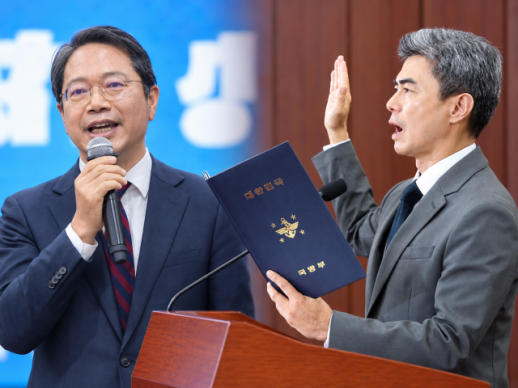 Cabinet picks rubber-stamped ahead of Lee press conference SEOUL, September 17 (AJP) -Ruling-dominant National Assembly committees adopted confirmation hearing reports for Justice Minister nominee Kim Seung-won and Defense Minister nominee Kang Shin-chul on Thursday over opposition objections, escalating a personnel dispute on the eve of South Korean President Lee Jae Myung’s press conference. The Legislation and Judiciary Committee adopted Kim’s report two days after his confirmation hearing. Lawmakers from the main opposition People Power Party (PPP) walked out 12 minutes after the meeting began, arguing that allegations surrounding Kim had not been resolved. The National Defense Committee later adopted Kang’s report, also without the participation of PPP lawmakers. Unlike a prime minister, Cabinet ministers in South Korea do not require parliamentary consent to take office. Confirmation hearings and committee reports give lawmakers a formal opportunity to scrutinize nominees, but the final decision on their appointment rests with the president. Kim, a two-term DP lawmaker and former judge, has been at the center of the latest Cabinet controversy over allegations that he improperly intervened in the regulatory review of an experimental COVID-19 treatment in 2021. Kim contacted the head of the Ministry of Food and Drug Safety after receiving a request from a broker to speed up the review of a clinical trial plan submitted by pharmaceutical company Genencell. The plan was approved about two weeks later. Prosecutors investigated allegations that Kim had been promised up to 5 million won ($3,600) in political donations in return, although the money was never delivered. They issued a deferred-prosecution disposition in December 2024, and Kim has challenged the decision before the Constitutional Court. The case has since drawn renewed scrutiny, with police reopening an investigation into the allegations. Kim has consistently denied improper lobbying, saying he merely relayed a legitimate public-interest petition and did not demand approval of the drug or preferential treatment. During Monday’s hearing, he said he came from a liberal-arts background and lacked the expertise to assess the treatment’s scientific performance or allegations involving manipulated animal-test data. He later said the remark was not intended to evade responsibility. “None of the allegations and issues raised during Kim Seung-won’s confirmation process have been resolved,” five-term PPP lawmaker Yoon Sang-hyun told AJP. “Kim says he did not know because he comes from a liberal-arts background, but that is no excuse,” Yoon said. “Based on the facts already known, I believe he is unfit to serve as justice minister and oppose his appointment,” he added. “I urged President Lee to withdraw the nomination as soon as possible.” The DP maintains that Kim adequately addressed the allegations during the hearing. Public opinion has added to the political pressure. A Korea Society Opinion Institute survey released Wednesday found 52.1 percent opposed Kim’s appointment, compared with 25.1 percent who supported it. The automated phone survey of 1,001 adults nationwide was conducted Sept. 14 and 15 and had a margin of error of plus or minus 3.1 percentage points at a 95 percent confidence level. Kim was also fined 700,000 won for drunk driving in 2008, a record for which he has apologized. Kang faced a less politically explosive but still contentious confirmation hearing Wednesday, with opposition lawmakers questioning him over his family’s receipt of special housing allocations for displaced residents and his son’s purchase of commercial property worth about 700 million won, which was omitted from Kang’s initial asset disclosure. Kang apologized for failing to properly check the disclosure but said there had been no illegal conduct. DP lawmakers defended the retired four-star general, citing his experience as deputy commander of the South Korea-U.S. Combined Forces Command and his support for government priorities including the transfer of wartime operational control and integration of the Army, Navy and Air Force academies. PPP lawmakers said questions surrounding his son’s property purchase and the family’s housing allocations remained unresolved and criticized the hearing for proceeding without witnesses. The personnel fight now moves directly into Lee’s press conference Friday. Lee is scheduled to meet reporters at 10 a.m. at Cheong Wa Dae’s Yeongbingwan, or state guest house, in Seoul for his seventh press conference since taking office in June 2025. The roughly 90-minute event comes as the president faces disputes over his Cabinet choices, constitutional revision and the presidential term system, a possible South Korean contribution to security operations in the Strait of Hormuz and persistent concerns over housing policy. About 150 domestic and foreign journalists are expected to attend. A Realmeter survey of 2,515 adults conducted from Sept. 7 through 11 put Lee’s job approval rating at 33.8 percent, down 3.6 percentage points from the previous week and the lowest since he took office. His disapproval rating rose 3.8 percentage points to 63.3 percent. The survey had a margin of error of plus or minus 2 percentage points at a 95 percent confidence level. Cheong Wa Dae has said Lee intends to use the press conference to clearly explain his positions on major national issues and communicate directly with the public. 2026-09-17 17:30:35
 -
Electricity Rate Cut Insufficient for Steel Industry, Calls for Additional Support The South Korean government has decided to reduce industrial electricity rates outside the capital region by up to 10%. However, industry experts argue that this measure is insufficient to alleviate the financial burden on the steel sector. They advocate for separate support measures utilizing government finances and funds to facilitate the transition to electric and hydrogen-reduced steelmaking.On September 17, the National Assembly Steel Forum, composed of 29 lawmakers from both parties, held a policy seminar titled 'Reform of Industrial Electricity Rates: Impacts and Challenges for the Steel Industry.' The seminar focused on the effects of regional electricity pricing and long-term support strategies for the steel sector.The government plans to introduce a regional industrial electricity pricing system by the end of the year, which will reflect power system costs, self-sufficiency rates, and regional balanced development in the pricing structure. A new 'regional adjustment fee' will be established to apply differentiated industrial electricity rates based on location.According to the Korea Electric Power Corporation (KEPCO), the southern part of the capital region will maintain current rates, while the northern part may see reductions of 6 to 10 won per kWh, the central region 10 to 15 won, and the southern region 13 to 18 won. Overall, this is expected to lower industrial electricity rates by about 10%.The steel industry has positively assessed the potential for immediate relief from electricity costs, particularly since major production hubs like Pohang and Gwangyang are located in regions with significant discounts.However, experts caution that merely lowering rates will not resolve the electricity cost challenges facing the steel industry. Jeong Yeon-je, a professor at Seoul Tech's Department of Energy Policy, emphasized the need to broaden the focus from simply reducing electricity rates for specific industries to how to support the competitiveness of energy-intensive industries.He noted that artificially lowering rates could shift the financial burden to other consumers or lead to financial strain on KEPCO, making it difficult to establish a sustainable support mechanism.Jeong also pointed out that limited rate reductions may not significantly enhance the price competitiveness of steel products, especially given the substantial electricity cost disparities with major competitor countries. He argued for the necessity of reducing actual electricity costs through separate funding rather than just lowering rates.He cited examples from major countries such as Germany, the UK, Japan, and Poland, which support energy-intensive industries like steel not by uniformly lowering electricity rates but by combining government finances, funds, network cost reductions, and compensation for emissions trading costs.These countries select support recipients based on objective criteria such as energy intensity and trade exposure, thereby alleviating cost burdens through government finances or statutory funds.In South Korea, there are calls for establishing stable funding sources separate from the regional electricity pricing system. One proposal is to utilize revenue from emissions trading allocations flowing into the climate response fund to ease the electricity cost burden on the steel industry.Another suggestion is to reduce the burden of the Electricity Industry Base Fund by providing relief for companies located in industrial crisis response areas and offering additional benefits for low-carbon steel facilities like electric and hydrogen-reduced steelmaking.The sustainability of the regional electricity pricing system itself has also been identified as a challenge. Jo Yoon-taek, a senior researcher at POSCO Research Institute, pointed out that even if the regional adjustment fee is implemented, the actual discount effect could quickly diminish if other charges, such as energy and climate fees, increase.There are also calls to lower the actual power supply costs to secure support capacity. Jeon Woo-young, a professor at Seoul Tech, stated, "Utilizing an additional 1 GW of nuclear power in the market for one year could save KEPCO about 400 to 500 billion won in power purchase costs," emphasizing that effectively leveraging South Korea's existing nuclear infrastructure could help reduce KEPCO's financial burden.* This article has been translated by AI. 2026-09-17 17:24:00
-
People Power Party Adopts Bill to Abolish Early Voting The People Power Party has adopted a bill to abolish early voting and implement immediate vote counting at polling stations.Kim Tae-kyu, the party's chief spokesperson, announced this decision to reporters after a general meeting on September 17. The adopted election law amendment also includes provisions for printing ballots equal to the number of voters, monitoring all voting processes, expanding the size of the National Election Commission, and excluding judges from election commission roles. However, the decision on whether to maintain early voting or extend the number of voting days from one to two will be determined after discussions in the relevant committee.Kim explained, "By counting votes immediately at polling stations, we can expedite the counting process and allow for multiple counts if necessary."During the general meeting, Jeong Jeom-sik, the party's floor leader, pointed out, "With only two weeks left until the dismantling of the prosecution and the abolition of supplementary investigation rights, both the Prosecutor General and the Commissioner of the National Police Agency are vacant, and the candidate for the Serious Crimes Investigation Agency has not even submitted a personnel hearing request to the National Assembly."He further questioned, "What is the reason for selecting the seven major crimes for which supplementary investigations are allowed?" He criticized the move as an attempt to undermine the criminal justice system under pressure from hardliners, stating, "The People Power Party will firmly oppose the 'patchwork law' on criminal investigations."Jeong also criticized the Legislative and Judiciary Committee for pushing through the adoption of the personnel hearing report for Kim Seung-won, the Minister of Justice nominee, calling it a public declaration of intent to force the cancellation of President Lee Jae-myung's indictment.* This article has been translated by AI. 2026-09-17 17:24:00
-
 Fed weakens won, flattens curve before BOJ decision SEOUL, Sept. 17 (AJP) — A Federal Reserve rate hike sent the won sharply lower and flattened South Korea's bond curve Thursday, leaving Friday's widely expected Bank of Japan rate increase — and its guidance on further tightening — as the next test for Korean markets. The won closed down 13.6 won at 1,382.2 per dollar from Wednesday's 1,368.6 after the Fed raised its benchmark rate by 25 basis points to 3.75-4.00 percent and signaled scope for another increase this year. The dollar climbed to a seven-week high after the decision. The three-year Korean government bond yield rose 1.0 basis point to 4.063 percent, while the 10-year yield fell 4.1 basis points to 4.506 percent Thursday. The gap between the two benchmarks narrowed to about 44.3 basis points from 49.4 basis points at Wednesday's close, flattening the yield curve. The rise in shorter maturities reflected expectations that further Fed tightening could also lift estimates for the eventual peak in the Bank of Korea's policy rate, as markets turned their attention across the Pacific. The BOJ is widely expected to raise its policy rate from 1 percent to 1.25 percent Friday, which would take the benchmark to a 31-year high. Attention has increasingly shifted to how Gov. Kazuo Ueda describes the timing and pace of subsequent increases. All 52 economists surveyed by Bloomberg expected a September increase, with most anticipating additional hikes either every quarter or at intervals of four to five months, according to a Thursday report by IBK Investment & Securities researcher Kim Ye-seul. Higher inflation risks and renewed yen weakness, which could raise import prices, were cited as reasons for continued tightening. Markets had already priced in a greater than 90 percent probability of a September hike before the meeting, limiting the likely impact of the quarter-point move itself, MUFG Research said in a Sept. 14 report. Ueda is expected to retain a data-dependent approach rather than commit to rapid consecutive increases, with the BOJ continuing to assess economic and inflation conditions before determining the timing and pace of further tightening, according to MUFG. MUFG said language suggesting broader policy discussions at coming meetings could nevertheless fuel expectations for back-to-back increases. The yen weakened toward 156 per dollar Thursday after the Fed decision strengthened the U.S. currency, reversing part of an earlier advance driven by expectations of faster BOJ tightening. A quarter-point BOJ increase alone may therefore offer limited support to the yen unless the central bank gives markets reason to expect a faster tightening path, according to analysts cited by Reuters. The yen's direction after the BOJ meeting was listed alongside the Federal Open Market Committee outcome, oil prices and foreign investor flows as key variables for the KOSPI this week in a Monday report by Kiwoom Securities researcher Han Ji-young. The report said stronger BOJ guidance could put further upward pressure on the yen and Japanese government bond yields and revive concerns over the unwinding of yen-funded carry trades, although it did not forecast that a particular yen move would determine the direction of Korean equities. Friday's market reaction can first be gauged through the dollar-yen rate and Japanese government bond yields, followed by the dollar-won rate and Korean government bonds at comparable maturities. Foreign investor flows will provide a separate indication of whether the BOJ decision triggers a shift in positioning in Korean equities. AJP Takeaways - The won closed down 13.6 won at 1,382.2 per dollar Thursday after the Fed raised rates and left room for further tightening. - Korean government bonds showed a twist flattening, with the three-year yield up 3.7 basis points and the 10-year yield down 1.1 basis points. - The BOJ is widely expected to raise its policy rate to 1.25 percent Friday, with markets focused more on guidance for subsequent increases than on the hike itself. - MUFG says the immediate hike is largely priced in, while Kiwoom flags the post-BOJ yen direction and foreign investor flows as separate variables for Korean equities. 2026-09-17 17:23:07