


Latest by
-
 Bulgarian Journalists Experience Inje County's Natural Beauty and Culture Inje County, located in Gangwon Province, has invited prominent Bulgarian journalists to showcase its pristine nature and cultural tourism resources. The visit also included discussions on potential exchanges linking the autumn flower festival with Bulgarian rose culture.According to Inje County, a two-day promotional tour for a delegation from the Bulgarian Journalists Association took place from September 15 to 16.The delegation included five local media representatives from the Bulgarian Journalists Association, Bulgarian National Radio (BNR), Bulgarian National Television (BNT), and the regional newspaper 'Maritsa.'This event was organized to allow the journalists to experience Inje's nature, culture, and local cuisine firsthand, fostering connections for future media coverage and cultural exchanges.On the first day, the delegation visited a local food market and the Miracle Library. They then experienced Korean Buddhist culture at Baekdamsa Temple, where they engaged in a tea ceremony with monks.During a welcome dinner, they sampled local dishes such as dried pollack and mountain vegetables. Inje County Deputy Mayor Yoon In-jae and the journalists discussed mutual promotional strategies linking Bulgaria's rose culture with Inje's autumn flower festival.Kazanlak, a city in Bulgaria known for its rose production, hosts an annual rose festival. Both sides agreed to explore ways to introduce Bulgarian rose culture at Inje's autumn flower festival while promoting Inje's festival in Bulgaria.However, no formal agreements or specific exchange schedules between the two cities have been finalized yet. Further discussions are needed to translate these talks into actual joint promotions or tourist exchanges.The 2026 Inje Autumn Flower Festival is set to take place from September 24 to October 11, featuring gardens and exhibition programs utilizing autumn flowers such as chrysanthemums and asters.On the second day, the delegation walked through the Wonjae-ri Birch Forest, experiencing Inje's forest tourism resources. They also enjoyed scenic views from the Bakdalgochi Observatory and participated in foot baths and flower tea experiences at Sunshine Village.Participants expressed their admiration, stating, "I have fallen in love with Inje" and "It feels like I am in heaven."This promotional tour aligns with Inje County's policy to expand tourism for foreign visitors. The county is implementing an incentive program that offers up to 20,000 won per person based on the length of stay for travel agencies and community businesses that attract five or more foreign tourists this year. This initiative aims to connect simple promotions with actual lodging and local spending.Deputy Mayor Yoon In-jae remarked, "This was a meaningful opportunity to directly introduce Inje's nature, culture, and cuisine to European media. We will strive to ensure that exchanges with Bulgaria lead to enhanced overseas tourism promotion and revitalization of the local economy."* This article has been translated by AI. 2026-09-17 10:32:00
 -
Korean Foreign Minister Jo Hyun Addresses Delay in U.S. Investment Project Korean Foreign Minister Jo Hyun stated that the report to the National Assembly regarding the first U.S. investment project, originally scheduled for September 17, has been unexpectedly postponed, clarifying that there are no disagreements between South Korea and the United States. Jo is set to meet with U.S. Secretary of State Marco Rubio on September 18.Speaking to reporters at Incheon International Airport, Jo explained that the delay is intended to ensure procedural clarity within South Korea. He added that the issue will also be discussed during the foreign minister meeting between the two countries.Jo emphasized, "What we can do is explain to the U.S., and we will maintain a clear stance on any issues that go against our national interests or differ from our position."The first U.S. investment project is expected to involve a liquefied natural gas (LNG) combined cycle power project in Texas. The South Korean government previously pledged to invest $350 billion (approximately 482 trillion won) in the U.S., which includes $150 billion (about 207 trillion won) for shipbuilding cooperation and $200 billion (about 276 trillion won) for strategic investments.Regarding the potential deployment to the Strait of Hormuz, Jo stated, "Our position has not been determined yet," and added that while South Korea will participate in international cooperation, it will prioritize the safety of its citizens and the freedom of navigation in the Strait of Hormuz.Additionally, in light of recent comments from U.S. President Donald Trump expressing a desire for dialogue with North Korea, Jo remarked, "If a breakthrough in North Korea-U.S. relations is achieved, it would be welcomed by our government," and assured that the South Korean government will ensure it is not sidelined in the process. 2026-09-17 10:28:00
-
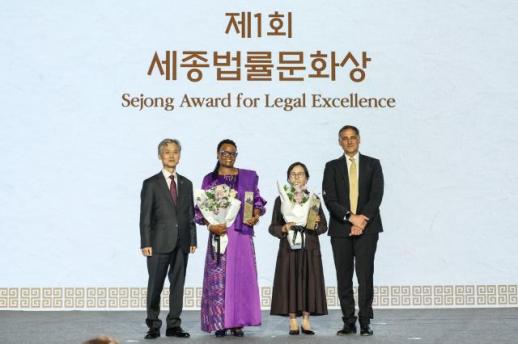 Sejong law award ceremony with chief justice Cho Chief Justice Cho Hee-dae and other attendees pose for a commemorative photo during the inaugural Sejong Law and Culture Award ceremony at Grand Hyatt Seoul in Yongsan District, Seoul, Sept. 16, 2026. From left are Chief Justice Cho Hee-dae, Kwak Bae-hee, head of the Korea Legal Aid Center for Family Relations; Martha Koome, Chief Justice of Kenya; and Dave Sullivan, Deputy General Counsel at the World Bank. 2026-09-17 10:23:46
 -
BYD May Join Xi Jinping's U.S. Visit, Paving Way for Local EV Production China's largest electric vehicle manufacturer, BYD, may be included in the economic delegation accompanying President Xi Jinping during his visit to the United States next week. This speculation arises as President Donald Trump recently expressed a positive stance on local production by Chinese automakers in the U.S., suggesting that discussions about BYD's investment in the U.S. could gain momentum during the upcoming U.S.-China summit.On September 16, Bloomberg reported, citing sources, that a list of Chinese companies accompanying Xi on his state visit is under review, with BYD being a potential candidate. However, the final list for the economic delegation has not yet been confirmed.Xi is scheduled to meet with Trump in Washington on September 24. Reports have also emerged indicating that China is considering sending a large delegation of business leaders.If BYD is included in the delegation, it could be a sensitive choice. The U.S. imposes a 100% additional tariff on Chinese electric vehicles and has implemented strict regulations on Chinese passenger cars and connected car technologies citing national security concerns.Moreover, BYD is on the U.S. Department of Defense's blacklist due to allegations of ties with the Chinese military, which the company has strongly denied.Nonetheless, the possibility of Chinese automakers producing vehicles in the U.S. has gained traction following Trump's recent comments. He indicated earlier this month that there would be no issue with Chinese automakers establishing factories in the U.S. and hiring American workers to produce vehicles.This has led to assessments that opportunities may arise for Chinese automakers, which have faced significant barriers to entering the U.S. market. While exporting vehicles produced in China is effectively blocked by high tariffs and regulations, establishing factories in the U.S. or forming joint ventures with local companies could represent a new business model.Wu Xinbo, director of the U.S. Studies Center at Fudan University, told Bloomberg, "If the U.S. allows it, China is eager to invest in electric vehicles," suggesting that BYD's inclusion in the delegation is a plausible option. He noted that if a Chinese automaker successfully builds a factory in the U.S. or engages in a joint venture with an American company, it would be significant.However, strong opposition from U.S. lawmakers and the automotive industry regarding Chinese companies entering the U.S. market raises uncertainty about whether actual investments will materialize. The U.S. automotive sector has long argued that Chinese companies distort competition by artificially lowering vehicle prices through government subsidies. Recently, the Trump administration expressed serious concerns about transactions involving Ford and Chinese battery manufacturer CATL, as well as Chinese automakers Geely and BYD, demanding a severance of ties.Meanwhile, Xi is expected to form a large delegation of business representatives during his visit to the U.S. This move aims to demonstrate China's commitment to expanding investment and economic relations in the U.S., while also presenting negotiation cards in trade and investment discussions during the summit. According to the South China Morning Post on September 17, in addition to BYD, other companies such as Chinese smartphone maker Xiaomi, optical communication firm Zhongji Innolight, and battery manufacturer CATL are also expected to be part of the delegation.On the U.S. side, executives from major tech companies are set to welcome Xi. Notable attendees at the U.S.-China summit dinner are expected to include Jensen Huang, CEO of NVIDIA; Sam Altman, CEO of OpenAI; and Tim Cook, chair of Apple’s board. 2026-09-17 10:20:10
-
Celltrion's Remsima Achieves 1st Place in Japan's Infliximab Market After 11 Years Celltrion's autoimmune disease treatment, Remsima (ingredient name infliximab), has become the first biosimilar to achieve the top prescription spot in Japan's infliximab market, surpassing original products. This milestone comes approximately 11 years after its launch in Japan in 2015. According to data from IQVIA and local sources on September 17, Remsima captured a 48% market share in Japan's infliximab market as of July, securing the number one prescription position. Currently, there are four products competing in the Japanese infliximab market, with Remsima holding the highest share. In Japan, the difference in out-of-pocket costs between original drugs and biosimilars is minimal, making it challenging to expand market share solely through price competition. As a result, clinical and prescription data, product awareness, corporate brand value, and sales and marketing capabilities are considered key factors influencing actual prescriptions. To address these market characteristics, Celltrion has partnered with Japanese pharmaceutical company Nippon Kayaku for local distribution of Remsima. Since late 2017, Celltrion's Japanese subsidiary has participated directly in sales, implementing a dual-track sales strategy that utilizes both local partners and its own sales organization. Kim Ho-woong, Vice President of Celltrion's Global Sales Division, stated, "Achieving the number one market share in Japan after 11 years of Remsima's launch is a result of a tailored sales strategy considering the local pharmaceutical environment and the capabilities of our experienced local workforce." The increase in Remsima prescriptions is also believed to be influenced by Celltrion's expansion of its autoimmune disease product lineup in Japan. In addition to Remsima, Celltrion sells four autoimmune disease products in Japan, including the adalimumab biosimilar Yuflyma, the tocilizumab biosimilar Aptozma, and the ustekinumab biosimilar Stekima. As of July, Yuflyma held a 21% market share, maintaining the top prescription position among adalimumab biosimilars. Aptozma has also recorded approximately 10% market share based on intravenous (IV) formulations. Celltrion plans to leverage overlapping prescribers of these products to expand prescriptions through integrated sales and marketing efforts. Celltrion is also preparing to launch a subcutaneous (SC) formulation of Remsima. The Japanese subsidiary aims to release Remsima SC in 2027, which is expected to provide patients with more treatment options based on their preferences and treatment environments alongside the existing IV formulation. Kim added, "We expect that the launch of Remsima SC next year will further strengthen the growth trajectory of the Remsima product line."* This article has been translated by AI. 2026-09-17 10:20:00
-
13 Residents of Yanggu Publish Their First Books Using Generative AI Thirteen residents of Yanggu, Gangwon Province, have published their first books using generative artificial intelligence (AI) to write personal essays. This initiative showcases how digital technology education can lead to personal life documentation and publishing.According to Yanggu County, a book concert titled 'Debut Process of Life Writers Using Generative AI' will be held at 6 p.m. on the 17th in the cafeteria on the first floor of the Lifelong Learning Center.This event aims to share the results of a digital humanities lifelong education program that began in June with the community.The 13 participants utilized generative AI as a writing tool to complete essays based on their experiences and thoughts. Each finished work has been published as an official book.Generative AI suggests topics, structure, and sentences based on user prompts and instructions, assisting those unfamiliar with writing in organizing their thoughts and refining drafts.However, content generated by AI may include inaccuracies, necessitating verification and editing by the authors. The quality of the final work is also influenced by the authors' specific memories, judgments, and the editing process.This program is significant as it connects generative AI education not just to technical experience but also to the tangible outcomes of personal life documentation and publishing. It expands the realm of lifelong learning from digital skills training to creative activities.About 30 people, including nine participants involved in the publishing, will attend the book concert, which will be hosted by Professor Jeong Yu-jeong.In the first part of the event, participants will share their experiences from the education program and present their books. In the second part, Professor Kim Yang-soo from Kyung Hee University will give a special lecture on 'AI and Humanities,' discussing the value of creative work in the age of artificial intelligence and methods for documenting life using digital technology.Park In-sook, head of the Lifelong Education Department in Yanggu County, stated, 'It is meaningful that the lives and stories of individual residents have culminated in a book through the use of generative AI. We will expand lifelong learning programs that teach digital skills and their application in daily life.'* This article has been translated by AI. 2026-09-17 10:20:00
-
Jongno 3-ga Named World's Coolest Neighborhood by Time Out for 2026 Seoul's Jongno 3-ga has been named the world's coolest neighborhood for 2026 by the British travel publication Time Out, according to CNN. This area, which ranked third in 2021, has moved up two spots due to its reputation as a culinary hotspot filled with street food and distinctive shops.Grace Beard, a travel editor at Time Out, explained to CNN, "Jongno 3-ga has risen in the rankings thanks to the recent increase in outdoor dining and unique shops." Portuguese tourist Anna Barah expressed her thoughts to CNN, saying, "It’s attractive because culture and food mix, and the old and new coexist." A staff member at the cafe 'Miltoast' in Jongno 3-ga remarked, "This neighborhood has a rich history and excellent food," noting that long lines form outside the establishment every morning.According to CNN, the second place went to the 'Lotion' district in Rabat, Morocco, which maintains its local culture and independent shops despite the presence of a Four Seasons hotel. The third spot was claimed by 'Neos Cosmos' in Athens, Greece, a hub for young artists.Los Angeles' 'Chinatown' ranked fourth, noted for its ability to preserve history while continually reinventing itself. Amy Ballinger, a bookstore owner in Glasgow's 'Govan Hill,' which took fifth place, told CNN, "It’s the friendliest and most culturally rich place I’ve lived." The list also includes over 30 locations worldwide, such as Kitakagaya in Osaka, Chapinero Alto in Bogotá, Koenji in Tokyo, downtown St. Catharines in Canada, Esquilino in Rome, Russafa in Valencia, Tân Định in Ho Chi Minh City, and São Bento in Lisbon.Beard added, "This year's list features many urban areas, unlike previous years, showcasing the revival of city centers that were ghost towns during the COVID-19 pandemic."* This article has been translated by AI. 2026-09-17 10:20:00
-
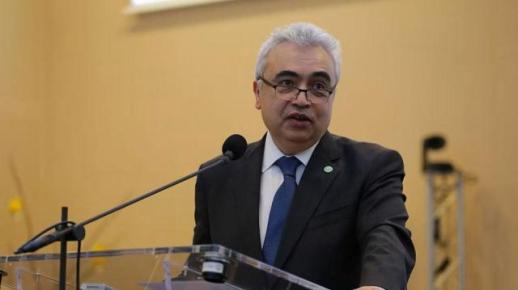 Lee set to meet IEA chief to discuss Asia-Pacific energy cooperation SEOUL, September 17 (AJP) - President Lee Jae Myung is set to meet International Energy Agency (IEA)'s executive director Fatih Birol on Thursday, according to Cheong Wa Dae. At a meeting scheduled for 2 p.m. at Cheong Wa Dae in central Seoul, the two are expected to discuss ways to make energy supplies more stable and strengthen regional cooperation in the Asia-Pacific. They will also discuss other topics including trends in global energy markets, recent developments in the prolonged conflict in the Middle East, and the severe flooding in Nepal that struck last month, leaving thousands of people still missing. Birol recently led a coordinated release of 400 million barrels from strategic oil reserves held by IEA member countries to help ease pressure on global oil supplies following disruptions in the Strait of Hormuz. South Korea has also worked closely with the IEA on energy security and climate change by co-hosting the World Climate Industry Expo since 2024. Established in 1974 following the 1973~1974 oil shock, the IEA is an autonomous organization within the Organisation for Economic Cooperation and Development (OECD). It was created to coordinate international responses to energy supply disruptions and has since expanded its work beyond oil to include electricity, natural gas, renewable energy, critical minerals and climate change. South Korea joined the IEA in 2002. AJP Takeaways - President Lee Jae Myung will meet International Energy Agency Executive Director Fatih Birol at Cheong Wa Dae to discuss Asia-Pacific energy cooperation and supply stability. - The talks will cover global energy markets, the Middle East conflict and Nepal's recent flooding. - The meeting follows the International Energy Agency's release of 400 million barrels from strategic oil reserves amid disruptions in the Strait of Hormuz. 2026-09-17 10:17:31
 -
Jang Dong-hyuk Announces Task Force for College Admissions Fairness In response to the recent failure of the college admissions application system, Jang Dong-hyuk, leader of the People Power Party, announced on September 17 that he will establish a task force dedicated to college admissions fairness. During a Supreme Council meeting held at the National Assembly, Jang stated, "The worst server error in college admissions history has occurred. It is a disaster for students and their parents." He revealed plans for the task force's formation. He added, "Only those who followed the rules and submitted their applications on time have suffered. It is estimated that around 1,200 students were unable to submit their applications." He criticized the incident as a clear case of human error that could have been prevented. Regarding the college admissions fairness task force, Jang emphasized the need for a comprehensive investigation to determine the causes and responsibilities, stating, "We will work with experts from various fields to investigate cases of harm and find practical solutions to assist affected students." Calls for the resignation of Education Minister Choi Kyo-jin have also emerged in light of the situation. Jeong Jeom-sik, the party's floor leader, criticized, "All responsible parties, including Minister Choi, should resign over this admissions crisis." Meanwhile, Jang urged President Lee Jae-myung to provide answers during a press conference scheduled for September 18 regarding a shift in national policy and how to improve relations with the United States. He stated, "A public apology and a declaration of a complete policy shift are necessary. If he cannot address issues such as 'no reappointment or cancellation of charges' and 'withdrawal of the nomination of Kim Seung-won (the candidate for Minister of Justice)' and 'a complete review of real estate policies,' it would be better to cancel the press conference now."* This article has been translated by AI. 2026-09-17 10:16:10
-
Hyundai Pharmaceutical Shares Surge Amid Expectations for Abortion Drug Introduction As the government pushes for the introduction of abortion medication in South Korea, shares of Hyundai Pharmaceutical have surged.According to the Korea Exchange, as of 9:35 a.m. on September 17, Hyundai Pharmaceutical's stock was trading at 10,960 won, up 990 won (9.93%) from the previous trading day. The stock opened at 10,280 won and soared to 11,750 won early in the session.The rise in Hyundai Pharmaceutical's stock is attributed to its emergence as a key player in the market for abortion medication following the government's initiative.Shin Jun-soo, director of the Drug Safety Bureau at the Ministry of Food and Drug Safety, stated in a briefing the day before, "Assuming that all procedures related to the introduction of abortion medication are thoroughly followed, our goal is to introduce it by the first quarter of next year."Hyundai Pharmaceutical is among the companies working to introduce abortion medication in the country. The company has signed a contract with the UK-based pharmaceutical firm Linepharma International to secure exclusive domestic rights for the oral abortion drug Mifepristone.Since 2021, Hyundai Pharmaceutical has submitted three applications for the approval of Mifepristone to the Ministry of Food and Drug Safety. The first application was submitted in July 2021, but the company withdrew it after the ministry requested additional safety, efficacy, and quality data.In March 2023, the company reapplied for approval, but the review was temporarily halted as some required documents needed amendments to the Criminal Code and the Mother and Child Health Act. Hyundai Pharmaceutical submitted its third application for Mifepristone in December 2024, seeking approval for use within 63 days (9 weeks) of pregnancy. The approval is still pending.Meanwhile, the specific timeline for the domestic introduction of Mifepristone will depend on the approval process and whether it will be covered by health insurance. Director Shin noted, "The review has progressed significantly, and we still have to complete the risk management plan approval process. After approval, we will need to go through safety and quality inspections and import procedures, but we will do our best to ensure it can be introduced by the first quarter of next year."* This article has been translated by AI. 2026-09-17 10:16:00