


Latest by
-
 President Lee Welcomes Passage of Fast-Track Legislation President Lee Jae-myung expressed his satisfaction on August 21 after the National Assembly passed a bill significantly shortening the review period for fast-track legislation. "I am truly pleased that things will now move more swiftly," he said.On the social media platform X, President Lee shared the news of the bill's passage, thanking Democratic Party lawmaker Lee Hoon-ki and his colleagues for their efforts. "I sincerely thank the many citizens who are waiting for reforms in housing policies and administrative measures to stabilize the nation," he added.Earlier, on August 20, the National Assembly approved the amendment to reduce the review period for fast-track items from a maximum of 330 days to just 90 days, a move led by the ruling party.* This article has been translated by AI. 2026-08-21 14:16:00
 -
Global Bio ETFs Dominate Recent Weekly Returns Amid Strong Clinical Results Investor sentiment in the global biotech sector has strengthened, leading related exchange-traded funds (ETFs) to dominate the top returns in South Korea over the past week. Following strong performances from major pharmaceutical companies and a series of positive results in new drug trials, global biotech stocks have rebounded, with warmth spreading to domestic related stocks.According to the Korea Exchange on August 21, from August 14 to 20, several global biotech-related ETFs ranked among the top 10 in returns (excluding leverage and inverse funds). The 'TIME Global Bio Active' ETF topped the list with an 8.40% return, followed by 'KoAct U.S. Bio Healthcare Active' at 7.96%. Other notable ETFs included 'KIWOOM U.S. Blockbuster Biotech' (5.89%), 'KODEX U.S. S&P Bio (Synthetic)' (5.31%), 'TIGER U.S. Nasdaq Bio' (5.27%), and 'ACE Global Big Pharma' (4.60%).The concurrent strength of these global biotech ETFs is attributed to the conclusion of second-quarter earnings reports from major pharmaceutical companies, which alleviated uncertainties regarding their performance. Additionally, positive results from new drug trials have emerged. Notably, on August 19, U.S. vaccine developer Moderna and global pharmaceutical giant Merck (MSD) reported that their mRNA cancer vaccine combined with Keytruda met key endpoints in a Phase 3 trial for melanoma, raising expectations for the commercialization of the first personalized mRNA cancer treatment. As a result, Moderna's stock surged by as much as 177% during trading.Lee Ji-soo, a researcher at Daol Investment & Securities, stated, "The strong performances of major pharmaceutical companies and consecutive clinical successes have driven the rise of the Nasdaq Bio and S&P Healthcare indices." The top-performing ETFs, such as TIME Global Bio Active and KoAct U.S. Bio Healthcare Active, have significant holdings in Moderna, suggesting that the recent surge in Moderna's stock has positively impacted the ETFs' returns.The strength of the global biotech sector has also spilled over to domestic related stocks. Samyang Biopharm closed at 56,200 won, up 12,900 won (29.79%) from the previous trading day. This increase is believed to be linked to the announcement of clinical results by Moderna and MSD on the same day that Samyang Biopharm revealed its own mRNA cancer vaccine delivery system research results. Somagen, which has been supplying DNA and RNA genomic analysis services to Moderna, also saw its stock rise by 29.98% (865 won) to 3,750 won. Additionally, Naivec, which is developing a peptide-based mRNA drug delivery platform called PEPTARDEL to address the limitations of existing lipid nanoparticles (LNP), closed up 19.82% (3,160 won) at 19,100 won.However, analysts caution that after a sharp rebound in a short period, there may be limited events to support further gains, raising the potential for increased volatility. Lee noted, "Domestic biotech stocks have shown signs of bottoming out since forming a low at the end of July, but August is a period with few events, such as conferences and domestic companies' clinical announcements. Given the significant rebound in a short time, it is important to remain cautious about potential profit-taking adjustments and increased volatility."* This article has been translated by AI. 2026-08-21 14:12:00
-
BMW Korea Launches Special Support Program for Flood-Affected Customers BMW Group Korea announced a special customer care program on August 21 to assist customers whose vehicles were damaged by flooding due to heavy rainfall.The program will be available at official BMW and MINI service centers nationwide until September 30. It aims to help customers who have suffered flood damage to recover quickly and alleviate their financial burden through appropriate measures.Initially, the program offers free inspections for flood-damaged vehicles. If repairs are necessary and the costs exceed the insurance coverage limit, BMW will provide support for the excess amount based on relevant criteria.Notably, the repair cost support program will be expanded to include all vehicle types, including commercial vehicles, to assist all affected customers.Additionally, customers repairing flood-damaged vehicles under comprehensive insurance will receive support for their deductible, up to 500,000 won. Specific conditions can be confirmed through consultations at service centers.To minimize customer inconvenience during the repair period, BMW Group Korea will also offer mobility services. This includes a loan vehicle service for up to 14 days while flood-damaged vehicles are being repaired.Furthermore, a pickup and delivery service will be available, allowing customers to have their flood-damaged vehicles collected from their desired location and returned after repairs are completed.Meanwhile, BMW and MINI customers whose vehicles are declared a total loss due to flooding and who purchase a new vehicle after completing insurance total loss processing and scrapping documentation by October 31, 2026, will be eligible for existing repurchase benefits along with a trade-in program.* This article has been translated by AI. 2026-08-21 14:12:00
-
Dreame Targets Trust in South Korea, Aiming Beyond Robot Vacuums Chinese appliance manufacturer Dreame is focusing on 'trust' as a key factor in the South Korean market, following its success in technology. With Chinese companies already holding a significant share in the robot vacuum sector, Dreame aims to enhance its competitive edge against local giants Samsung Electronics and LG Electronics by strengthening data privacy and after-sales service (AS).On August 21, Dreame held the 'Dreame in Seoul' event in the Han River Gavit Island in Seocho-gu, Seoul, where it unveiled its localization strategy and new products. Kim Myung-hwan, head of marketing for Dreame Korea, stated, "Our localization strategy focuses on four key areas: innovation, consumer understanding, trust, and co-growth. Our goal is to create an experience where Korean consumers can trust and comfortably choose Dreame, rather than just selling products."A major emphasis for Dreame is data protection. The company relocated its Korean user data server from Singapore to South Korea at the end of last year. It has also implemented a system where images and videos captured by its robot vacuums are not uploaded to the cloud. Additionally, multiple encryption technologies are applied to personal data. After increasing its market share in South Korea to 12.8% last year, Dreame is expanding its product lineup this year to include personal care and kitchen appliances, in addition to robot vacuums.Dreame is also enhancing its after-sales service. The company plans to collaborate with local firms such as Lotte Hi-Mart and SK Networks Service to expand its service infrastructure. This move aims to address the relatively weak after-sales support that has been a concern for Chinese appliance manufacturers in the South Korean market.New products are being introduced with a focus on technological competitiveness. The 'Aqua Steam' product directly sprays 180-degree high-temperature steam onto the floor, followed by a hot water roller mop to remove contaminants. The roller mop can extend up to 8 cm sideways. Dreame plans to leverage the technology it has developed around robot vacuums to expand into cordless vacuums, personal care, and kitchen appliances.The backdrop for Dreame's expansion in South Korea is the market landscape dominated by Chinese companies. According to IDC, in the global home cleaning robot market last year, Roborock held the top position with a 17.7% market share, followed by Ecovacs at 14.3%, while Dreame secured third place with 10.5%. All top five companies in the market were Chinese.The competitive landscape in South Korea is becoming increasingly complex. With Chinese companies like Roborock and Dreame having established a foothold, Samsung and LG are countering with features tailored to AI, security, and the local living environment. Dreame's emphasis on not only technological competition but also data protection and after-sales service indicates that the barriers Chinese brands must overcome in the South Korean appliance market are evolving.* This article has been translated by AI. 2026-08-21 14:04:00
-
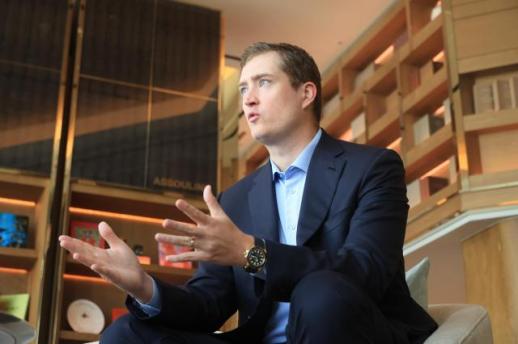 Former NSC chief urges Seoul to take Trump's latest moves seriously SEOUL, August 21 (AJP) - Former White House National Security Council chief of staff Alexander B. Gray urged Seoul to take U.S. President Donald Trump seriously on investment and the treatment of American companies while defending his "unconventional" approach to North Korea, which differs from previous presidents', in an AJP interview in Seoul earlier this week, two days after Trump abruptly ordered a substantial reduction in a joint military exercise with South Korea on Sunday. Trump cited the cost of the annual Ulchi Freedom Shield (UFS) exercise, among other reasons for its reduction, but many pundits speculated that the move was related to delays in implementing Seoul's US$350 billion U.S. investment commitment and Washington's complaints involving Coupang and other American companies. AJP interviewed Gray at Lotte Hotel Seoul on Tuesday as the allies were confronting an unusually broad set of challenges spanning military coordination, North Korea policy, trade and investment. Trump's Aug. 16 order had come only hours before the annual Ulchi Freedom Shield (UFS) exercise was due to begin and apparently without advance notice to officials in either Seoul or Washington. Foreign Minister Cho Hyun told lawmakers the following day that officials in both governments had been unaware of the order beforehand. At the time of the interview, Gray stressed that the exercise then underway had not yet been altered and argued that Trump's broader record demonstrated that Washington remained willing to use force when necessary to maintain deterrence. That changed within a day. South Korea and the U.S. subsequently agreed to end UFS about a week earlier than originally scheduled on Aug. 27, cutting the 11-day exercise to five days and reducing some combined field training drills. About 18,000 South Korean troops are participating in this year's exercise. Gray said Trump's decision should also be viewed in the context of his longstanding interest in personally engaging North Korean leader Kim Jong-un. Gary said Trump believes his unusual personal leverage could produce a diplomatic breakthrough that previous U.S. presidents failed to achieve. "His unique position as a global leader can achieve a diplomatic outcome with North Korea that has eluded every American president since Harry Truman," Gray said. "I think he's very committed to trying to do that," he said. "As he enters the final half of his presidency, I think he's going to look for ways to reshape global politics, and North Korea is a great opportunity to do that," he added. Events since the interview have reinforced signs that Trump is seeking another encounter with Kim. Trump said Wednesday that he expected to meet the North Korean leader later this year, while the Wall Street Journal reported that he had been pressing aides to arrange a meeting as early as this fall, possibly during a November trip to Asia. Trump met Kim three times during his first term, but their nuclear diplomacy broke down without an agreement after the 2019 summit in Hanoi. The nuclear challenge has also grown substantially since those meetings. Trump said Wednesday that North Korea had 57 "very powerful" nuclear weapons. South Korean Defense Minister Ahn Gyu-back told lawmakers the following day that private research estimates generally put Pyongyang's arsenal at between 80 and 120 warheads, although he stressed that the South Korean military could not officially verify an exact figure. Pyongyang, meanwhile, has offered little indication that Trump's latest gesture will immediately revive talks. Kim Yo-jong, the North Korean leader's influential sister, dismissed the scaled-back exercises as insufficient while still describing the personal relationship between Trump and Kim as "excellent." North Korea then fired about 10 short-range ballistic missiles toward its eastern waters on Thursday. Gray said Trump's complimentary language toward Kim should not necessarily be read as personal affection, but as part of his negotiating style. "If you want to have a positive relationship that leads to negotiations that serve U.S. interests, why would you intentionally be nasty to our adversaries?" Gray said. "President Trump thinks that there is no value in gratuitously criticizing people that we have to negotiate with," he said. "Kim Jong-un is ultimately going to have to sit across the table from President Trump and President Lee, and they are going to have to come up with a deal," he added. Gray said the same transactional approach lies behind Trump's demands on South Korea in the economic sphere. For decades, he argued, Washington was willing to tolerate trade arrangements that it did not necessarily regard as economically reciprocal because close alliances with South Korea and Japan produced larger geopolitical benefits. Trump, he said, now wants to change that bargain by coupling the security relationship with large-scale investment that creates jobs and industrial capacity inside the United States. South Korea committed to a $350 billion U.S. investment package as part of the bilateral trade agreement reached last year. The package consists of $200 billion for strategic investments and $150 billion for shipbuilding cooperation. Seoul launched the state-backed Korea-U.S. Strategic Investment Corporation in June to implement the pledge, but specific projects are still being selected. Gray warned that Seoul should not assume it could delay implementation until Trump leaves office in January 2029. He said Trump wants to see concrete projects being built and Americans employed while he remains in the White House, and that a lack of tangible progress over the coming year could create serious difficulties in bilateral relations. Looking beyond the immediate disputes, Gray said Washington still wants the alliance to broaden. "Number one, we want to see the alliance continue to grow and expand into new areas," Gray said. "We also want to see a broader consensus that China is a very serious threat to regional stability," he said. "The U.S. wants to see governments of both the left and the right in all of our partners and allies view China in a similar way," he added. Gray acknowledged that South Korea faces different economic realities because of its geographical proximity and extensive trade ties with China, leaving room for differences over tactics. But he said Washington would continue to seek broad strategic alignment from its allies regardless of which parties hold power. "The final thing is understanding that, as we talk about the investment package, we have to see some reciprocity," Gray said. "We have to see U.S. companies treated fairly," he said. "We have to see the investment deal that was made honored and turned into actual projects," he added. His comments come amid growing political pressure in Washington over the treatment of American businesses in South Korea. A report released last month by the Republican-led U.S. House Judiciary Committee alleged that South Korean regulators had engaged in discriminatory enforcement against American-owned companies, with particular attention to U.S.-listed e-commerce company Coupang and the Korea Fair Trade Commission. Seoul has rejected the broader allegation that it systematically discriminates against foreign companies. Gray was sharply critical of the regulatory environment. "If you look at the way U.S. digital companies are disproportionately receiving large fines, and the way in which the Korea Fair Trade Commission is targeting U.S. companies and going after them with very aggressive raids, frankly, some of the positions those employees have been put in are completely unfair," Gray said. "U.S. digital and tech companies right now are the backbone of the U.S. economy," he said. "They are driving our growth and productivity. They are the innovators," he said. "They have enormous economic heft in the United States," he added. Gray argued that Trump has increasingly treated major American technology companies as strategically important national assets and has shown a willingness to retaliate when he believes they are being unfairly targeted abroad. "The president has recognized that, and he has been very responsive when those companies have been treated unfairly, whether by Canada with a digital services tax or by the European Union with the Digital Markets Act," Gray said. "He has responded to every instance of unfair regulation by threatening tariffs, actually imposing tariffs or using other forms of trade retaliation," he said. "I would hate to see a situation in which Korea didn't take him seriously on this issue, didn't learn the lessons of Canada and the EU, and made the relationship more challenging by failing to understand the way in which we now view our tech companies as national champions," he said. "If they are being discriminated against, I don't think President Trump is going to stand for it," Gray added. The South Korean government publicly pushed back against that characterization a day after Gray's interview. Deputy Prime Minister and Minister of Finance and Economy Koo Yun Cheol told an American Chamber of Commerce in Korea luncheon in Seoul on Wednesday that the government does not discriminate against foreign businesses and regards foreign companies investing and operating in South Korea as Korean companies. Koo also rejected suggestions that Seoul was deliberately delaying the $350 billion investment package, saying project selection was moving forward and identifying energy as one area drawing particular interest. Gray nevertheless argued that the economic relationship could become a source of greater alliance strength if Korean manufacturing capacity is integrated with American technology and production. He pointed to investments by Samsung and SK in the United States and to growing U.S.-Korean cooperation in shipbuilding, including Hanwha's operations in Philadelphia. "I think combining Korea's exceptional manufacturing expertise with U.S. innovation and facilities in the U.S. that can directly support our industrial base is the way to make this not a dependency, but something that benefits both sides," Gray said. Gray also rejected the common portrayal of Trump's foreign policy as impulsive, arguing that unpredictability itself is a calculated negotiating tool. "The president has always said that the unpredictability he is perceived to have by both friends and foes is one of his greatest strengths," Gray said. "He has referenced a term used by President Nixon called the 'madman theory' repeatedly," he said. Gray said the same uncertainty could help deter China from attempting to change the status quo across the Taiwan Strait. "I have a lot of confidence that we are going to be able to get through President Trump's term without a major escalation in Taiwan because I don't think Xi Jinping wants to find out how President Trump would handle an invasion of the Taiwan Strait or other coercion," he said. Gray, who worked with Trump inside the White House during his first term, said his personal experience differed sharply from the image of presidential improvisation often presented publicly. "What I saw personally, though, is a little bit different," Gray said. "I saw a president who uses that ambiguity and the public uncertainty about how he communicates in a very strategic way," he said. "There is a public narrative that he says things without a larger strategy. My experience is that everything he says has been thought through, has been discussed with his advisers, and is communicated in ways that tie back to a larger U.S. interest or the direction he is trying to head," he said. "The public narrative in the U.S. and globally sometimes confuses an intentional tactic with something chaotic or shooting from the hip," he said. "I think it is more intended to look that way than it actually is," Gray added. Gray met political figures during his visit to South Korea. He told AJP that he met independent Rep. Han Dong-hoon, a former leader of the People Power Party, during his stay. Gray also said PPP Chairman Jang Dong-hyeok came to Lotte Hotel Seoul on Monday, Aug. 17, a day before the AJP interview, and that the two held talks. Gray is chief executive officer of American Global Strategies LLC, a Washington-based international strategic advisory firm he co-founded with Robert C. O'Brien, who served as Trump's national security adviser. Gray served as deputy assistant to the president and chief of staff of the White House National Security Council from 2019 to 2021, overseeing the day-to-day operations of the national security adviser's immediate office as well as the NSC's budget, personnel and security functions. He is also a senior nonresident fellow at the Atlantic Council. Before becoming NSC chief of staff, Gray served as special assistant to the president for the defense industrial base at the White House National Economic Council and as the NSC's first director for Oceania and Indo-Pacific security. He also served on Trump's 2016 presidential transition team at the State Department and was a defense policy adviser to Trump's 2016 presidential campaign. 2026-08-21 13:59:55
 -
President Lee's Approval Rating Stands at 45%, Up 1% from Last Week President Lee Jae-myung's approval rating has slightly increased, matching his disapproval rating at 45%, according to a survey released on August 21. This marks a 1 percentage point rise from the record low of 44% reported in the second week of August.The survey, conducted by Korea Gallup from August 18 to 20 among 1,004 adults aged 18 and older, found that 45% of respondents approved of the president's job performance, while another 45% disapproved. Eleven percent of respondents chose not to express an opinion.Among those who approved, the most common reasons cited were 'diplomacy' (19%), 'economy/livelihood' (11%), and 'generally doing well' or 'communication' (both at 7%). Conversely, those who disapproved primarily pointed to 'real estate policy' (28%) as the main issue, followed by 'economy/livelihood' (12%) and 'national defense/security/North Korea' (7%).In terms of party support, the Democratic Party of Korea received 41%, while the People Power Party garnered 25%, with both parties maintaining the same levels of support as in the previous survey. The Reform Party, Justice Party, and Progressive Party each received 2%, while 26% of respondents identified as undecided.This survey was conducted via telephone interviews using randomly selected virtual numbers. The margin of error is ±3.1 percentage points at a 95% confidence level, with a contact rate of 45.6% and a response rate of 10.0%. For more details, please refer to the website of the National Election Survey Deliberation Commission.* This article has been translated by AI. 2026-08-21 13:56:20
-
Nationwide Apartment Subscription Market Faces Decline with Single-Digit Competition Rates for 13 Months The nationwide first-choice subscription competition rate for apartments has remained in single digits for 13 consecutive months, indicating a continued slump in the subscription market.According to an analysis by Realhouse on August 21, the average first-choice competition rate for nationwide apartment subscriptions in July was recorded at 5.86 to 1, a decrease of 0.05 points from the previous month based on a 12-month moving average.The nationwide first-choice competition rate has been in single digits since recording 9.08 to 1 in July of last year. In the metropolitan area, competition rates in Seoul, Incheon, and Gyeonggi all fell compared to the previous month. Seoul's rate decreased from 112.01 to 110.87 to 1, Incheon from 4.59 to 4.23 to 1, and Gyeonggi from 2.59 to 2.57 to 1.In non-metropolitan areas, Busan saw a significant drop, with its first-choice competition rate falling to 2.14 to 1, a decrease of 1.56 points, marking the largest decline nationwide. Jeju's rate was just 0.16 to 1, remaining below the average for 12 consecutive months.Performance in individual complexes was also poor. Among the 24 complexes that announced recruitment in July, 13 failed to fill their first-choice quotas. Notably, three out of four large complexes with over 1,000 units did not meet their first-choice subscription targets.Conversely, subscription demand has been concentrated in a few complexes in Seoul. In July, only two complexes were offered for sale in Seoul, with a total of just 96 first-choice units available, yet the number of subscription applications reached 6,927. This accounted for 26.5% of the total 26,111 subscription applications nationwide during the same period.Analysts suggest that rather than a complete disappearance of subscription demand, there is a growing polarization, with demand increasingly focused on verified complexes with desirable locations and product appeal.Meanwhile, according to Real Estate 114 on August 20, the average sale price of apartments in Busan has more than doubled in four years, increasing the housing cost burden for new homes. Last year, the average sale price of apartments in Busan was 30.24 million won per 3.3 square meters, a 102% increase from 14.98 million won in 2021.Kim Seon-a, head of the subscription analysis team at Realhouse, stated, "The subscription demand itself has not disappeared; rather, it is moving toward a few verified complexes, leading to poorer performance in others. Especially in large complexes, initial poor performance can lead to unsold units, making the timing and pricing of sales critical to the success of the project."* This article has been translated by AI. 2026-08-21 13:56:00
-
Kwon Jin-mi of Home & Shopping Joins Campaign Against Youth Illegal Gambling Kwon Jin-mi, CEO of Home & Shopping, has joined the 'Relay Campaign to Eradicate Youth Illegal Gambling.'According to Home & Shopping, the campaign aims to raise awareness among students about the dangers of illegal online gambling and to prevent its spread. Participants post certification photos conveying messages against illegal gambling and nominate the next participant.Kwon was invited to participate by Lee Il-yong, CEO of Public Home Shopping. She has named Park Jung-min, CEO of KT Alpha, as the next participant.Kwon was appointed CEO of Home & Shopping in March 2026. She joined the company in 2011 as a product team leader at its founding and has since led the sales division.Kwon Jin-mi stated, "It is the responsibility of our entire society to protect youth from falling into illegal gambling. Home & Shopping will take the lead in creating a healthy society."* This article has been translated by AI. 2026-08-21 13:56:00
-
Genesis Surpasses 450,000 Sales in the U.S. After 10 Years, Expands SUV Lineup Genesis has launched the GV90, a large flagship sports utility vehicle (SUV), completing its full lineup of electric vehicles (EVs) from compact to full-size. This fall, Genesis will also introduce its first hybrid models, the GV80 and G80, as part of its strategy to strengthen its growing portfolio of eco-friendly vehicles.According to Hyundai Motor, Genesis has sold a total of 450,049 vehicles in the U.S. since its official entry into the market in 2016, as of July this year. Last year, the brand exceeded annual sales of 80,000 units for the first time, setting a record for the highest annual sales in the U.S. for five consecutive years since 2021. This year, it also achieved the highest sales for the first half of the year, with 39,088 units sold. In July alone, sales reached 6,947 units, marking 22 consecutive months of year-over-year sales growth.Analysts attribute Genesis's growth in the U.S. market to its well-rounded SUV lineup, which excels in product quality, design, and safety. Starting with a sedan-focused lineup, Genesis has expanded to include various segments and electrified models, steadily increasing its sales in a market that traditionally favors utility vehicles.Since introducing the G80 and G90 in 2016, Genesis has responded to diverse consumer demands by launching models such as the G70 in 2018, GV80 in 2020, GV70 in 2021, GV60 in 2022, and the electrified GV70 in 2023, with the GV80 Coupe set to debut in 2024. As a result, SUVs now account for approximately 61.5% of all Genesis sales in the U.S. as of July.Notably, the GV70 (including the electrified model) and GV80 (including the coupe) have recorded the highest and second-highest sales figures in the U.S., with combined sales exceeding 268,724 units, driving local sales.Genesis plans to establish a full SUV lineup that encompasses both electrified and hybrid models with the upcoming launches of the GV90 and GV60 Magma.The GV90 is Genesis's first ultra-large flagship electrified SUV, developed on the dedicated 'eMP platform.' It features the world's first independent opening hidden B-pillar coach door, the 'Neolun Arch Gate,' which provides exceptional openness and spacious entry and exit, as well as a 'roof airbag' that covers the entire roof glass to protect against rollover accidents.The GV60 Magma boasts impressive performance, achieving 0-200 km/h in 10.9 seconds and a top speed of 264 km/h, making it the most powerful electrified model from Genesis. It is equipped with dual motors that deliver a combined output of 448 kW (609 horsepower) and a maximum torque of 740 Nm. When using boost mode, it can reach a peak output of 478 kW (650 horsepower) and a maximum torque of 790 Nm for about 15 seconds.To provide exceptional product quality and a differentiated luxury brand experience, Genesis is expanding its network of dedicated showrooms across the U.S.On August 20, Genesis officially opened its 85th dedicated showroom, 'Genesis of San Bruno,' in San Bruno, California.This showroom serves as a key hub targeting customers in Northern California, conveniently located near downtown San Francisco, the airport, and Silicon Valley. Genesis aims to build a solid foundation for long-term sales growth through its network of dedicated brand locations, including the San Bruno showroom.A Genesis representative stated, 'Since entering the U.S. market in 2016, which is a key market driving the brand's global growth, Genesis has continued to grow. We will further strengthen our position as a luxury brand by expanding our dedicated showrooms and meeting the diverse demands of customers with our new lineup.'* This article has been translated by AI. 2026-08-21 13:52:00
-
Comico Shares Surge 27% on First Day of Trading After Stock Split Comico, a company specializing in cleaning and coating semiconductor equipment parts, saw its shares soar by over 27% on the first day of trading following a stock split.As of 1:37 PM on August 21, Comico's stock was trading at 27,700 won, up 5,900 won (27.06%) from the previous trading day, according to the Korea Exchange.The company had suspended trading since July 29 to facilitate electronic registration changes related to the stock split, which was implemented to increase the number of shares in circulation and enhance trading activity.Comico decided to lower the par value of its shares from 500 won to 200 won, increasing the total number of issued shares from 20,545,310 to 51,363,275.The stock split is expected to improve trading accessibility for investors and enhance liquidity, which likely contributed to the rise in share price.Comico has also been experiencing growth in its financial performance. Last year, the company reported consolidated revenues of 604.1 billion won and an operating profit of 110.9 billion won, both of which showed increases compared to the previous year.In the first half of this year, Comico recorded revenues of 333.0 billion won, an operating profit of 47.5 billion won, and a net profit of 26.1 billion won.The company focuses on precision cleaning and special coating of equipment parts used in semiconductor manufacturing processes, aiming to remove contaminants and enhance the lifespan and yield of these components. Additionally, Comico is expanding its manufacturing business for semiconductor equipment parts based on its cleaning and coating operations.* This article has been translated by AI. 2026-08-21 13:44:00