

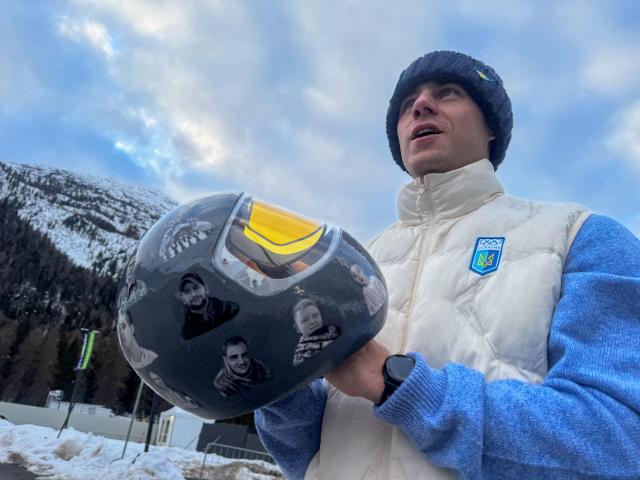
The Ukrainian Olympic Committee said it asked the International Olympic Committee to approve a “memorial helmet” for skeleton racer Vladyslav Heraskevych, but the IOC said it will allow only a memorial armband.
In a statement issued Tuesday (Korea time), the Ukrainian Olympic Committee said it requested IOC approval for Heraskevych’s helmet for the 2026 Milan-Cortina d’Ampezzo Winter Olympics skeleton event.
A day earlier, Heraskevych wore the helmet during a training run at the Cortina Sliding Center in Italy. The helmet features images of Ukrainian athletes killed in the war with Russia.
In an interview with Reuters, Heraskevych said some of the people depicted were his friends. He said the helmet was part of keeping a promise to use the Olympics to sustain attention on the war.
The helmet includes faces of teenage weightlifter Alina Perekhudova, boxer Pavlo Ishchenko and ice hockey player Oleksii Lohinov.
Heraskevych has said he wants to keep drawing attention to Ukraine’s situation during the Olympics while following Olympic rules that ban political demonstrations inside venues.
The IOC barred the helmet, saying it violates Rule 50.2 of the Olympic Charter, which states that no kind of demonstration or political, religious or racial propaganda is permitted in Olympic venues, facilities or other areas.
The Ukrainian Olympic Committee disputed that assessment, saying the helmet fully met safety rules and contained no advertising, political slogans or discriminatory elements. It said the helmet was also confirmed to meet required standards during official training.
The IOC said it chose a compromise: It will not allow the helmet Heraskevych planned to wear to honor athletes killed in the war with Russia, but it will allow him to wear a memorial armband in competition.
The IOC called the decision a compromise, saying armbands have been banned in past cases but that it would make an exception for Heraskevych.
* This article has been translated by AI.
Copyright ⓒ Aju Press All rights reserved.