

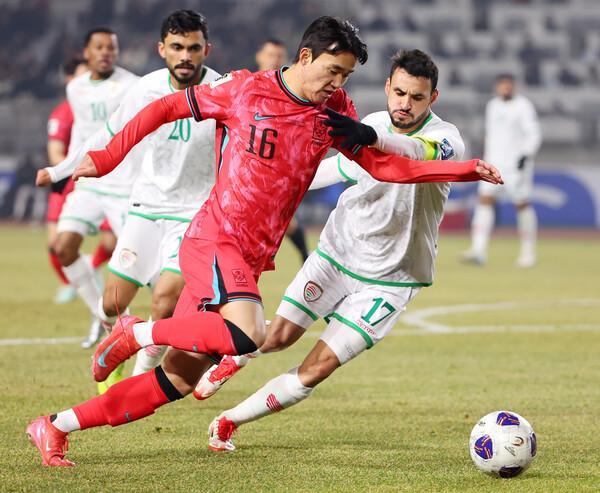
South Korea (No. 22 in the FIFA rankings) will play Ivory Coast (No. 37) at 11 p.m. March 28 (Korea time) at Stadium MK in Milton Keynes, England. The team then faces Austria (No. 24) at 3:45 a.m. April 1 at Ernst Happel Stadion in Vienna.
The two-match European swing is South Korea’s final full-scale test before the World Cup roster is finalized. The opponents were chosen with group-stage preparation in mind: Ivory Coast as a tune-up for South Africa, South Korea’s third group opponent, and Austria as a stand-in for the winner of Europe’s playoff Group D, a potential first-match opponent. Group D currently includes Denmark, North Macedonia, the Czech Republic and Ireland, with the team that will be placed into Group A to be decided through European playoffs later this month.
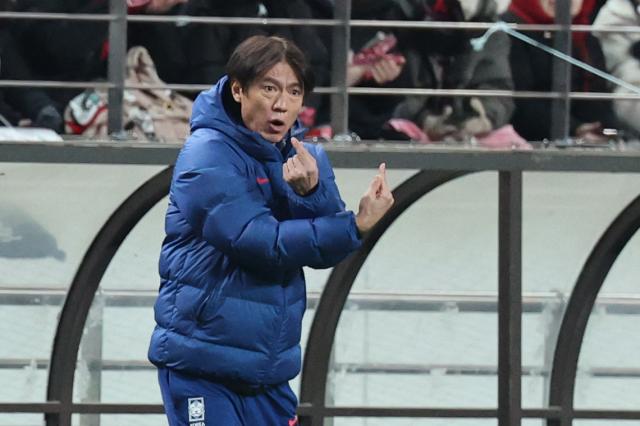
Even so, Hong said the door is not completely closed for players who miss this camp. At a news conference March 16 at Korea Football Park in Cheonan, he said, “The final roster hasn’t been decided right now. I want to pick the players who show the best form in May and take them to the World Cup,” adding, “If they show good form in April and May, they can come back into the national team.”
Among the 27 players called in, wingback options include Yang Hyun-jun (Celtic), Lee Tae-seok (Austria Vienna), Seol Young-woo (Crvena Zvezda), Jens Castrop (Borussia Moenchengladbach) and Kim Moon-hwan (Daejeon Hana Citizen). Lee Myung-jae, who had recently played as the team’s left wingback, was not selected because of injury.
Yang is the standout returnee, back in the national team for the first time in about nine months since June. He has been in strong form for Celtic, scoring eight goals in 37 official matches this season. On March 15, he scored twice against Motherwell to lead a 3-1 league win.
Yang’s appeal is versatility. A natural wide attacker, he has also played right wingback to meet his club’s tactical needs, pairing aggressive dribbling with improved defensive work. Hong called him an increasingly attractive option for a system that demands flexibility.
“Yang Hyun-jun showed good things as a wingback under Celtic’s previous coaching staff,” Hong said. “His performance is much better than the last time he was called up. He’s scoring well, too.”
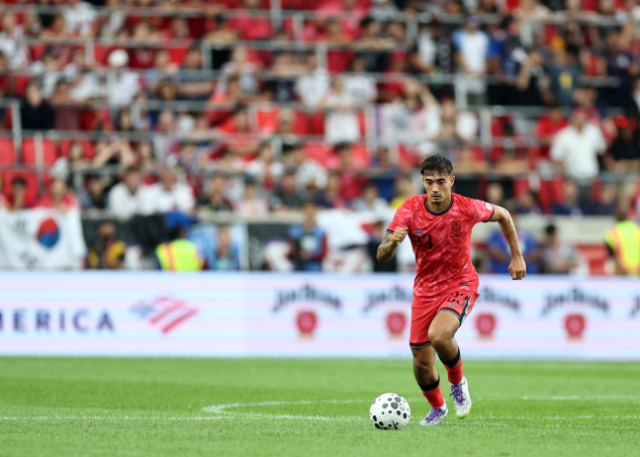
On using Castrop at wingback, Hong said, “Right now Castrop is playing wingback for his club. He isn’t playing full 90 minutes consistently, but he’s playing more than 60 minutes. He isn’t training as a central midfielder, so it’s a situation worth testing (him at wingback).”
In midfield, injuries to established players are forcing broader experimentation in the two friendlies. Park Yong-woo (Al Ain) suffered a season-ending knee cruciate ligament injury, and Won Du-jae (Khor Fakkan) is out for the season with a shoulder injury. Key midfielder Hwang In-beom (Feyenoord) has also become uncertain to join the squad, increasing the urgency to find new combinations.
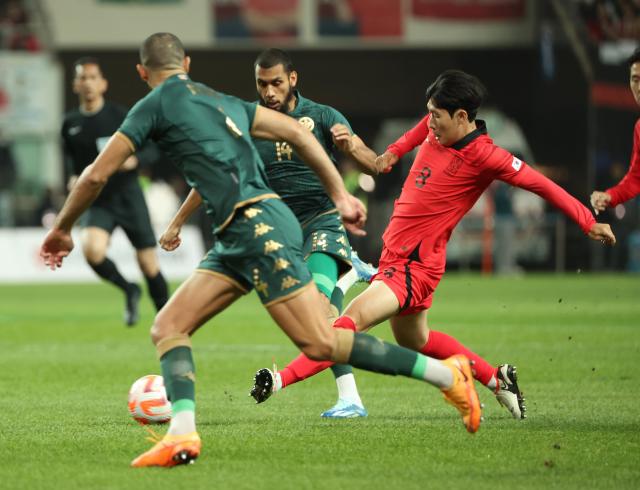
“We needed an attacking midfielder. Hong Hyun-seok can play central midfield and also as a wide attacker,” Hong said. “Park Jin-seop, after his transfer, has been playing as a defensive midfielder in a system that uses two midfielders. He should be able to adapt well to the national team’s tactics.”
Kwon Hyuk-kyu (Karlsruhe) is also in the mix for the defensive midfield role. Hong pointed to the 191-centimeter player’s physical profile and defensive value, saying, “We don’t have many tall players on the national team. When we’re leading and the opponent tries long balls, we don’t have a player to deal with it. I expect that kind of defensive role from Kwon Hyuk-kyu.”
* This article has been translated by AI.
Copyright ⓒ Aju Press All rights reserved.