

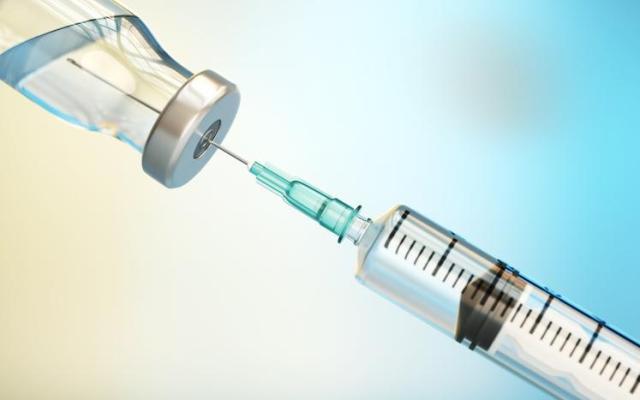
The biologics market, long dominated by intravenous (IV) infusions, is rapidly shifting to subcutaneous (SC) injections. The change is moving beyond convenience, with growing evidence that dosing method can reshape prescribing patterns and revenue, making formulation a key competitive factor.
Industry officials said that in the U.S. market, an insurance billing code (J-code) began applying this month to Merck (MSD)’s SC formulation of its immuno-oncology drug Keytruda. With a J-code, administrative steps between hospitals and insurers are simplified, improving access to prescribing. The industry expects the shift to SC to accelerate further.
Several products have already shown how formulation changes can translate into results. Janssen’s multiple myeloma treatment Darzalex reached about 90% of its sales from the SC version within three years of launch. Backed by that shift, 2023 sales rose more than 20% from the previous year, showing how the same drug can see prescriptions and revenue move together as dosing changes.
Keytruda is also expected to follow a similar path. While the IV version posted $31.7 billion in sales last year, the SC version generated $40 million in sales just four months after launch, indicating rapid uptake. UBS forecast in a report that the U.S. market for Keytruda SC could grow to about $8 billion next year.
Convenience and treatment efficiency are driving the broader shift. IV dosing typically requires a hospital visit and more than an hour for administration, while SC dosing can be delivered in under five minutes and may allow self-injection. SC formulations have been used mainly for autoimmune diseases, but they are increasingly moving into oncology, where clinician monitoring has traditionally been required.
A biotech industry official described the trend as competition expanding beyond efficacy to include treatment continuity.
The shift is also intensifying technology competition. As more efficient drug delivery begins to influence prescribing choices, securing SC conversion technology is emerging as a core advantage.
Globally, competition is centered on companies with formulation-conversion technologies based on human hyaluronidase. U.S.-based Halozyme, through its Enhanze technology, has supported SC conversions of major blockbuster drugs, including Roche’s immuno-oncology drug Tecentriq and Bristol Myers Squibb (BMS)’s immuno-oncology drug Opdivo.
In South Korea, Alteogen is seeking to catch up with its Hybrozyme platform, ALT-B4. The technology temporarily breaks down hyaluronic acid in the skin to create pathways for drug dispersion, enabling subcutaneous delivery even for high-volume antibody therapies. Eight global pharmaceutical companies are developing SC formulations using the platform, including deals signed with GlaxoSmithKline (GSK) in January and Biogen in March.
Latecomers are also entering. Huons Lab, an R&D subsidiary of Huons Global, has developed technology to convert IV formulations to SC based on its HyDIFFUZ platform.
Celltrion is also responding to the expanding SC market with Zymfentra. The company has applied SC conversion technology mainly to its own biosimilars, but plans to expand formulation-conversion services to outside drugmakers.
Industry officials said SC conversion is likely to do more than change formulations, potentially reshaping competitive dynamics. “Now, it’s not only the drug itself but also the delivery method that determines competitiveness,” one industry official said. “As patient convenience and treatment efficiency become key standards, demand for SC formulations will grow further.”
* This article has been translated by AI.
Copyright ⓒ Aju Press All rights reserved.