

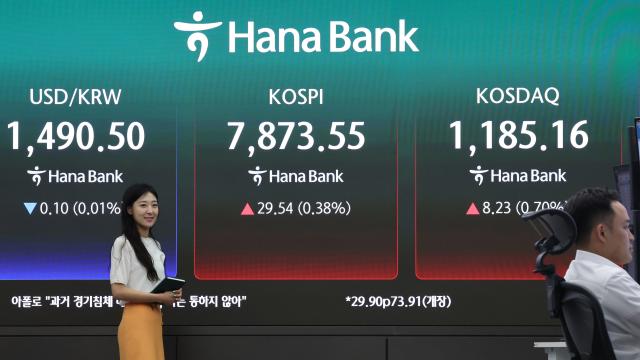
The exchange rate of the won against the dollar has shown volatility, surpassing the 1490 won mark during trading, influenced by rising international oil prices and inflation concerns in the United States.
As of 9:20 a.m. on May 14, the exchange rate was trading at 1489.2 won per dollar. The rate opened at 1489.8 won, down 0.8 won, and briefly crossed the 1490 won threshold shortly after the market opened before retracting some gains.
With ongoing geopolitical tensions in the Middle East, forecasts suggest that the blockade of the Strait of Hormuz will continue until the end of May, keeping international oil prices, particularly West Texas Intermediate (WTI), around the $100 per barrel mark. On May 13, WTI for June delivery closed at $101.02, down $1.16 (1.14%) from the previous session on the New York Mercantile Exchange.
The U.S. Producer Price Index (PPI) for April surged by 1.4% month-over-month and 6.0% year-over-year, exceeding market expectations. Following the consumer price index (CPI), the PPI also surpassed forecasts, raising inflation concerns and leading to an increase in U.S. Treasury yields, particularly for long-term bonds. The dollar strengthened in tandem with rising Treasury yields.
Minkyu Won, an economist at Woori Bank, noted, "The rise in bond yields is clearly contributing to a stronger dollar. Given this trend, there is a significant likelihood that the won will face downward pressure today."
He added, "In addition to active buying by importers, the re-entry of demand for dollar conversions related to overseas stock investments due to a strong U.S. stock market supports the actual demand for dollars. However, the volume of export-related deferred negotiations and the authorities' caution regarding speed control may limit the upper range of the exchange rate."
* This article has been translated by AI.
Copyright ⓒ Aju Press All rights reserved.