

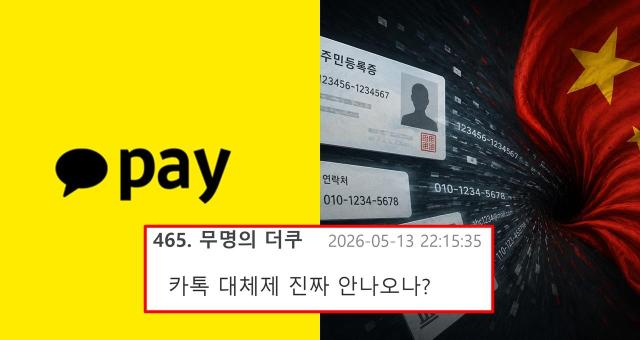
Authorities have launched a formal investigation into KakaoPay, which is accused of providing hundreds of millions of customer data records to China's Alipay.
On May 13, the Chosun Ilbo reported that the Southern Gyeonggi Police Agency has begun its investigation after receiving a referral from the Financial Supervisory Service (FSS) last month. The police are currently investigating KakaoPay for potential violations of the Credit Information Act.
According to the FSS's findings, KakaoPay transmitted a total of 54.2 billion customer data records to Alipay from 2018 to May 2024, affecting approximately 40.45 million users.
This data transfer reportedly occurred when iPhone users registered KakaoPay as a payment method. At that time, KakaoPay shared user information with Apple, which then routed the data through Alipay. Sensitive information, including encrypted phone numbers, email addresses, and account balances, was allegedly included in this transfer.
The controversy first came to light following an FSS announcement in August of last year. Subsequently, the civic group Freedom Korea Defense Corps filed a complaint against senior KakaoPay officials for alleged data breaches and violations of the Credit Information Act with the Seoul Central District Prosecutors' Office.
The case was initially handed over to the Seongdong Police Station in Seoul, but the police considered closing the investigation early, citing that pursuing a separate investigation on a matter already under FSS review would be an unnecessary use of resources. Difficulties in obtaining FSS investigation materials at the time also contributed to this consideration.
After concluding its investigation, the FSS imposed a significant penalty on KakaoPay in February, issuing a 'severe warning' along with a fine of 12.976 billion won and an additional penalty of 4.8 million won.
Following the news, domestic internet users expressed their outrage, commenting, "No wonder I've been getting spam calls all day," "Korean companies have gone crazy," "Kakao is more urgent than Coupang," "Is personal information a public good in Korea?" and "It's time to reform resident registration numbers."
* This article has been translated by AI.
Copyright ⓒ Aju Press All rights reserved.