

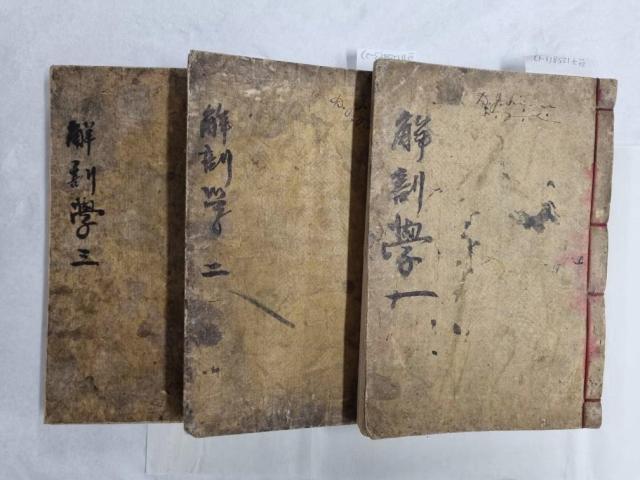
The first Korean medical textbook, "Anatomy" (Jejungwon Korean Medical Textbook), will be registered as a national cultural heritage.
The Cultural Heritage Administration announced on May 14 that it plans to register "Anatomy" as a national cultural heritage.
"Anatomy" is the first Korean anatomy textbook published by Jejungwon, the first modern Western-style medical institution in Korea. Established in April 1885 under King Gojong, Jejungwon served as Korea's first Western hospital, and this textbook was used as a teaching material at Severance Hospital's medical school and various missionary medical institutions.
The textbook was translated into Korean by Kim Pil-soon (1880–1922), a medical student at Jejungwon, from the first three volumes of "Practical Anatomy" by Japanese anatomist Imada Tsukanu (1850–1889). It was published in 1906 with editing by Professor Oliver R. Avison (1860–1956) of Jejungwon.
This textbook serves as a representative document showcasing the early educational practices during the introduction of Western medicine in Korea, confirming that modern medical education was based on a scientific understanding of human anatomy and function. It holds significant academic and historical value as a symbol of the beginning of modern medical education in Korea.
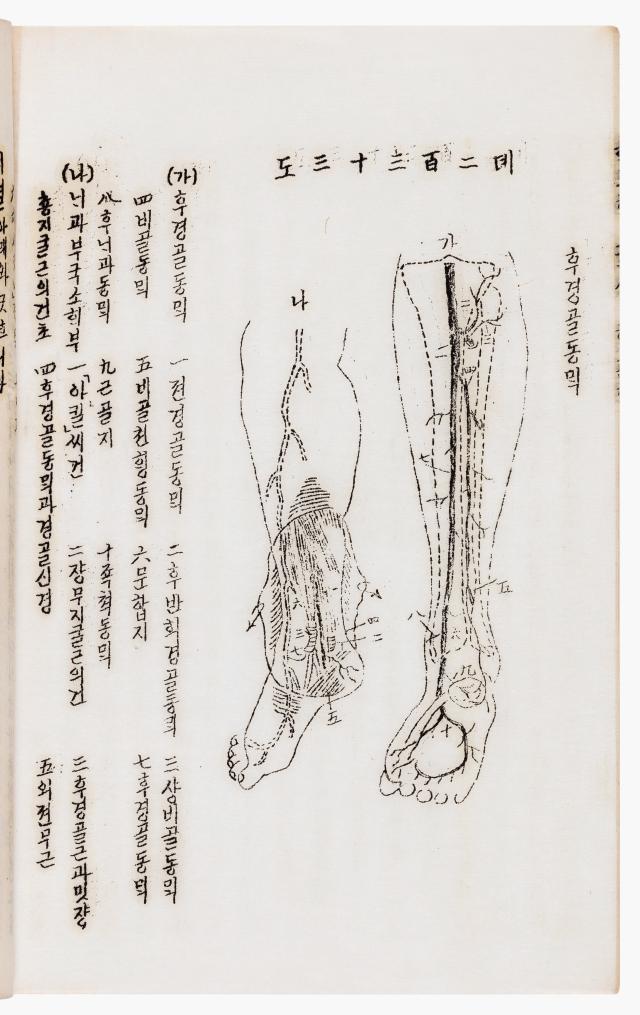
Notably, the textbook explains medical terms in pure Korean, avoiding reliance on Chinese characters or foreign words, using terms like 'yeomtong' (heart) and 'baptong' (stomach). This illustrates the process of translating and popularizing modern medical knowledge into Korean, and it also provides valuable insights into early 20th-century Korean orthography and phonetic changes, making it an important resource for the history of the Korean language.
* This article has been translated by AI.
Copyright ⓒ Aju Press All rights reserved.