


On June 2, the Metropolitan Expo in Athens was bustling with attendees for Posidonia 2026, following the official opening the previous day. The event kicked off with numerous meetings and consultations between global shipowners, shipbuilders, and equipment suppliers, creating a lively atmosphere filled with technical presentations and business discussions.
Held biennially, Posidonia is considered one of the top three maritime exhibitions in the world, alongside Germany's SMM and Norway's Nor-Shipping.
Posidonia 2026, which began on June 1 and runs for five days, is the largest in its history, featuring 2,227 companies from 83 countries and covering an exhibition area of 45,000 square meters. More than 40,000 visitors are expected to attend during the event.
Among the global companies present, the prominence of K-Shipbuilding stood out. This year, the Korean Pavilion, organized by the Korea Marine Equipment Association (KOMEA) in collaboration with the Korea Trade-Investment Promotion Agency (KOTRA), brought together the domestic shipbuilding and maritime industry.
Major South Korean shipbuilders, including HD Hyundai, Samsung Heavy Industries, Hanwha Ocean, and HJ Shipbuilding, along with equipment manufacturers and the Korean Register (KR), showcased the Korean shipbuilding and maritime ecosystem. As a result, the Korean Pavilion attracted significant attention from global shipowners and industry representatives from early in the morning.
Notably, the KR exhibition area, set up in an independent booth, hosted multiple Memorandum of Understanding (MOU) signing ceremonies. With the recent tightening of environmental regulations led by the International Maritime Organization (IMO), the role of classification societies in supporting ship certification and decarbonization strategies has become increasingly important. As the verification and certification of eco-friendly ships and alternative fuel technologies are essential, the demand for collaboration between domestic and international companies is also on the rise.
A KR representative stated, "More than 10 MOUs are expected to be signed at this year's event," adding, "Foreign shipowners are showing high interest in digital platforms that can assist in making practical decisions in response to the recently intensified carbon reduction requirements."
However, many of the MOUs signed during the event focused on collaboration among domestic companies, with limited tangible business partnerships with global shipowners. This was somewhat disappointing given the significance of the world's largest maritime exhibition.
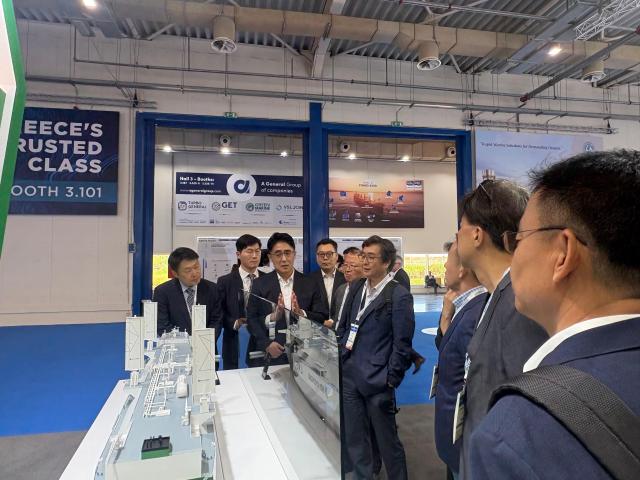
HD Hyundai showcased LNG carriers with capacities of 178,000 cubic meters and 174,000 cubic meters, equipped with wind-assisted propulsion systems. Hanwha Ocean and Samsung Heavy Industries also introduced a diverse portfolio of energy carriers, including LNG carriers and VLCCs.
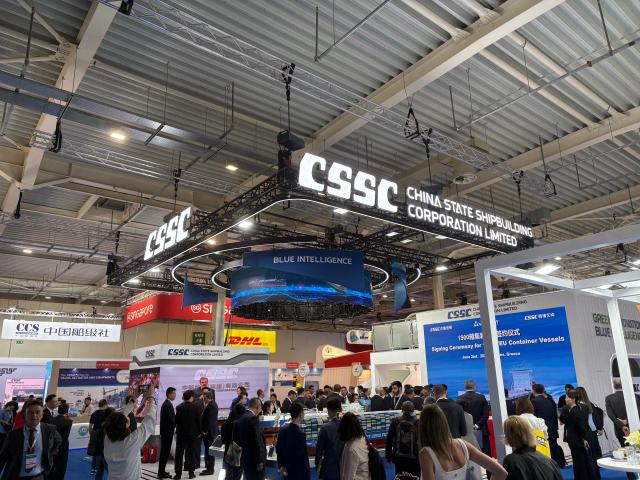
The most notable presence was from the China State Shipbuilding Corporation (CSSC), the largest shipbuilding group in the world, formed by the merger of CSSC and China Shipbuilding Industry Corporation (CSIC) in September 2022.
At this event, CSSC set up its first integrated booth since the merger, showcasing an overwhelming presence with large ship models and digital displays. The booth attracted a crowd of visitors eager to explore the exhibition space.
These companies are reportedly expanding their local sales networks targeting Greece, the world's largest shipowning nation, and are planning large receptions and business contracts during Posidonia.
An industry insider remarked, "While the presence of Chinese companies is undeniably growing, South Korean shipbuilders still maintain a competitive edge in high-value sectors such as LNG carriers, eco-friendly ships, and autonomous navigation technologies. Ultimately, the future of the shipbuilding market will be determined by technological prowess rather than price."
Meanwhile, this year's Posidonia featured not only shipbuilders and KR but also companies from other sectors, including power, engines, and paints. Notably, paint manufacturer KCC participated in Posidonia for the tenth time, showcasing a product portfolio that responds to environmental regulations and the demand for improved vessel operational efficiency, including antifouling, anti-corrosion, and topcoat paints.
[This article was supported by the Foundation for the Sea and the Korean Marine Journalists Association.]
* This article has been translated by AI.

Copyright ⓒ Aju Press All rights reserved.