

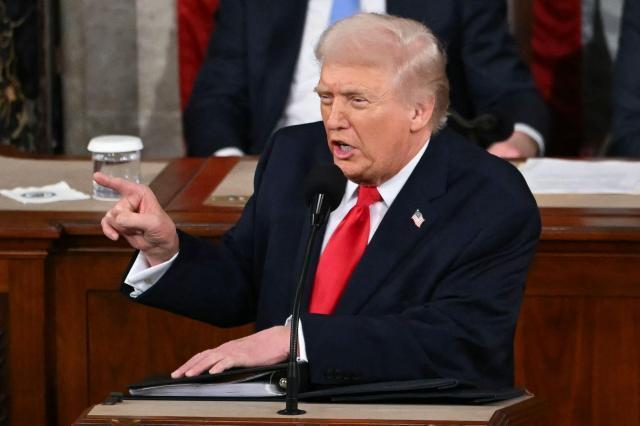
President Donald Trump has indicated that while he aims to maintain a ceasefire with Iran, the death of U.S. military personnel would be a red line that could lead to a resumption of full-scale conflict. Despite ongoing clashes in the Strait of Hormuz and along the Lebanon front, Trump appears focused on avoiding escalation in the Middle East while pursuing peace negotiations.
On June 3, the Wall Street Journal reported that Trump told his advisors, "If Iran kills American troops, I will consider ending the ceasefire." U.S. officials noted that repeated Iranian attacks have increased pressure on Trump, raising doubts about the long-term viability of the ceasefire.
Since the ceasefire was established in early April, clashes between the U.S. and Iran have continued. Iran has recently launched missiles and drones at U.S. military bases in the region and Kuwait International Airport, resulting in casualties, while the U.S. has conducted retaliatory strikes.
The Strait of Hormuz remains a focal point of conflict. Iran is restricting free passage through this strategic waterway, while the U.S. has imposed stringent blockade measures on vessels traveling to and from Iranian ports. These actions have caused significant disruptions in international energy markets and shipping logistics.
During a House hearing, U.S. Secretary of State Marco Rubio characterized the ongoing clashes not as a return to full-scale war but as a "defensive response." He stated, "What happens is a reaction to Iran's actions. If they don't shoot at our ships, we won't shoot at them, but we must respond."
Trump has claimed that a peace agreement, which would include reopening the Strait of Hormuz, dismantling Iran's nuclear program, and eliminating highly enriched uranium, is imminent. However, he has also recently indicated a reluctance to rush the agreement. The Wall Street Journal reported that Trump rejected Iran's latest proposal last week, believing that Iran should make substantial concessions early in the negotiations.
Iran views the negotiation sequence differently, insisting that discussions on its nuclear program can only begin after the U.S. releases frozen assets or provides other financial benefits. The U.S. is pressuring Iran to make concessions in nuclear and security matters first.
The Lebanon front has also emerged as a variable in the negotiations. Iranian Foreign Minister Abbas Araqchi warned that an Israeli attack on Beirut could lead to a resumption of full-scale conflict. Reports suggest that Trump has urged Israeli Prime Minister Benjamin Netanyahu to halt military operations in Lebanon to facilitate progress in negotiations with Iran.
* This article has been translated by AI.

Copyright ⓒ Aju Press All rights reserved.