

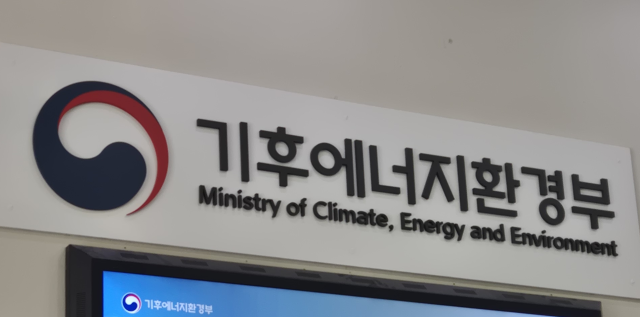
The Ministry of Climate, Energy, and Environment announced that it will sign a memorandum of understanding (MOU) with the WBG on June 11 at the Four Points by Sheraton in Yongsan, Seoul. This agreement aims to enhance collaboration in areas such as climate crisis response, water management, circular economy, and energy transition.
The World Bank Group is a leading international financial institution that provides financial support for climate change response and energy transition projects in developing countries. As the global community increasingly focuses on achieving carbon neutrality and energy security, the importance of collaboration with international financial institutions has grown. There is a rising demand for climate financing, particularly in developing countries, highlighting the need for enhanced cooperation with international organizations.
This revision updates the MOU originally signed between the Ministry of Environment and the World Bank in 2017. It marks the first amendment since the establishment of the Ministry of Climate, Energy, and Environment in October of last year, expanding both the scope and the entities involved in the collaboration.
The cooperation will now extend beyond the International Bank for Reconstruction and Development (IBRD) and the International Development Association (IDA) to include the International Finance Corporation (IFC) and the Multilateral Investment Guarantee Agency (MIGA) as part of the World Bank Group.
The areas of cooperation will also expand. In addition to the existing focus on climate and environmental issues, energy transition has been newly added, and the water sector will now encompass integrated water management, including water quality management.
The two organizations plan to collaborate on sharing information regarding support plans for developing countries, exchanging expertise, education, joint research, identifying and implementing new projects, and assisting in the design of climate, environmental improvement, and energy transition projects in developing nations.
Areas of cooperation will include environmental policies and programs, conservation, biodiversity and natural resources, climate change response, air pollution reduction, water management, soil and groundwater protection, waste management, circular economy, environmental education and awareness, and energy transition.
Additionally, based on this MOU, agencies under the Ministry of Climate will also be able to sign separate statements of intent (SOI) with the World Bank Group.
Oh Il-young, Director of the Climate and Energy Policy Office, stated, "This MOU amendment marks a significant turning point in our collaboration with the World Bank, expanding our existing climate and environmental cooperation into the energy transition sector as we enter the tenth year of our partnership. We will actively work to link our major domestic policies on climate, environment, water management, and energy with the capabilities of the World Bank Group to contribute to achieving the Nationally Determined Contributions (NDC) and green transition for our country and other developing nations."
* This article has been translated by AI.

Copyright ⓒ Aju Press All rights reserved.