SEOUL, June 11 (AJP) —Artificial intelligence (AI) and Human Digital Twin (HDT) technology could fundamentally reshape how people age, enabling physicians to predict disease risks, simulate health outcomes and deliver personalized interventions before symptoms appear, longevity researchers said Wednesday.
The technologies are increasingly being viewed as a bridge between decades of aging research and practical healthcare applications, allowing scientists to combine genomic, medical and lifestyle data to model how individuals age and respond to treatment.
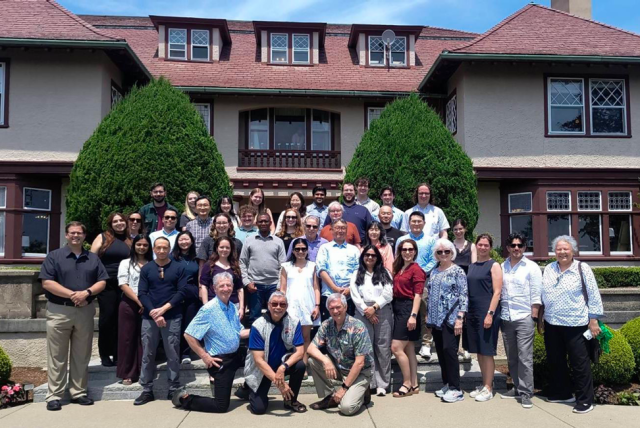
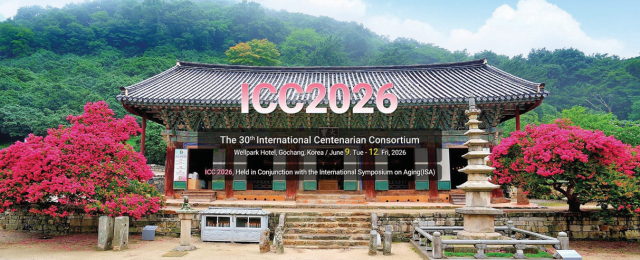
The discussion featured prominently at the 30th Annual Meeting of the International Centenarian Consortium (ICC) in Gochang, North Jeolla in Korea, where more than 50 researchers from 18 institutions across the United States, Japan, France, China, Brazil and other countries gathered to share the latest findings in genetics, precision medicine, nutrition, oral health and digital healthcare.
Researchers said the growing convergence of AI, genomics and longevity science is accelerating the shift from treating age-related diseases to preventing them before symptoms emerge.
"The goal of longevity research is no longer simply to add years to life, but to add healthy years to life," several speakers said throughout the conference.
Participants also highlighted South Korea's growing importance in global aging research. They pointed to the country's rapidly aging population and decades of centenarian studies, which have produced one of the world's most comprehensive datasets on people who have lived beyond the age of 100.
Researchers said Korean centenarians today tend to be better educated, smoke and drink less, and report higher levels of life satisfaction than previous generations. They also noted a sharp increase in the proportion of centenarians capable of managing daily household activities independently, suggesting that healthy aging is becoming increasingly attainable.
Traditional Korean fermented foods drew particular interest among international researchers.
Studies presented at the conference suggested that foods such as kimchi, doenjang and cheonggukjang — the latter two traditional Korean fermented soybean products — may contribute to healthy aging by supporting gut microbiome diversity and improving nutrient absorption. Researchers said the findings align with growing evidence linking gut health to immunity, inflammation, cognitive function and age-related diseases.
Among the keynote speakers, Suh You-sin professor of aging research and genetics at Columbia University described centenarians as "nature's best laboratory," arguing that rare genetic variants found among exceptionally long-lived individuals could provide clues to slowing biological aging.
"The future of aging research lies in understanding and slowing the aging process itself," Suh said. "Extending healthy lifespan is no longer a distant goal."
French demographer Jean-Marie Robine called for a broader approach to measuring longevity, emphasizing the importance of the modal age at death rather than average life expectancy alone.
"For decades, medicine has focused on what causes people to die early," Robine said. "The next challenge is understanding what allows people to live longer and remain healthy."
Researchers from Osaka University also presented findings from the SONIC project, a long-running study of older adults in Japan, showing that oral health plays a critical role in maintaining nutrition, muscle strength and cognitive function later in life.
Looking ahead, many participants identified AI-powered precision medicine as one of the most transformative developments in the field.
They said the integration of centenarian research, genomic data and digital healthcare platforms could help accelerate the development of personalized health management systems designed to extend healthy lifespan rather than simply prolong life.
As countries around the world confront the challenges of aging societies, researchers said the future of medicine will increasingly focus on helping people age well.
The message emerging from Gochang was clear: living to 100 is no longer the ultimate challenge. The greater challenge is staying healthy enough to enjoy those extra years.
Copyright ⓒ Aju Press All rights reserved.