

The North and Central American World Cup kicked off on June 11. However, once again, the Chinese national team is absent from the tournament. While China has established itself as a powerhouse in international sports like the Olympics, soccer remains an unresolved challenge for the country.
China has qualified for the World Cup only once, during the 2002 tournament co-hosted by South Korea and Japan. The team advanced through the Asian qualifiers but failed to score a single goal, losing all three matches.
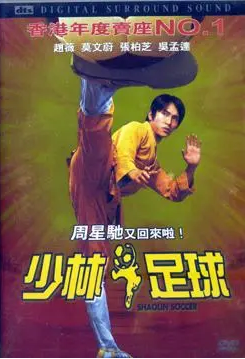
Ahead of the 2002 World Cup, a film captured the passion of Chinese soccer fans and provided a sense of vicarious satisfaction. "Shaolin Soccer," released in 2001 and directed, written, and starred in by Hong Kong actor Stephen Chow, tells the story of a local soccer team that combines Shaolin martial arts with the sport.
The film follows Sing (played by Chow), a young man who once trained in Shaolin kung fu. After the death of his master, he moves to the city and leads a lackluster life. He encounters former soccer star Mighty Steel Leg (played by Ng Man-tat), who, after suffering an injury, suggests forming a Shaolin soccer team. Sing recruits his old kung fu friends to compete in a national tournament.
In the film, soccer balls soar like spaceships, and players execute superhuman jumps and dazzling martial arts moves to defeat their opponents. The use of various computer graphics creates a fantastical atmosphere rather than a realistic sports setting.
Combining humor, action, and emotion, the film achieved global success, grossing approximately $50 million at the box office, a significant amount at the time.
More than 20 years later, it is still regarded as a masterpiece of soccer cinema. The memorable quote, "A person without dreams is no different from a salted fish," continues to resonate.
Ironically, the film was banned in mainland China, forcing viewers to rely on illegal copies. As a co-production between China and Hong Kong, it required prior approval from Chinese authorities. However, it was released in Hong Kong first, violating regulations, according to official explanations from the Chinese government.
Critics also pointed out that the film's comedic portrayal of Shaolin Temple undermined its religious image, while its social critiques of match-fixing and referee corruption reflected the issues plaguing the soccer world at the time, contributing to the ban.
* This article has been translated by AI.
Copyright ⓒ Aju Press All rights reserved.