

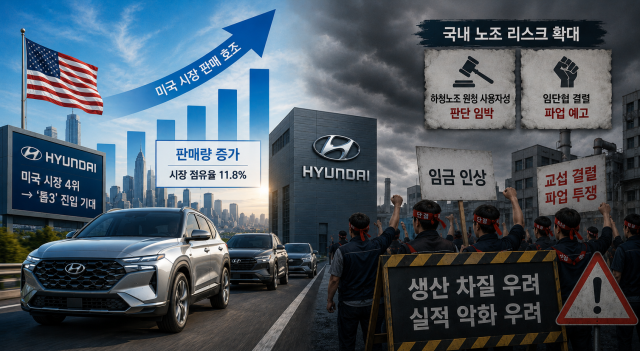
Hyundai Motor Company is experiencing strong sales in the U.S. market but faces significant labor challenges at home. As authorities prepare to rule on the user status of subcontractor unions, the primary union has also announced a potential strike, increasing uncertainty for the company’s management in the second half of the year.
According to market research firm Omdia, Hyundai and Kia sold a total of 589,936 vehicles in the U.S. from January to April this year. During this period, their market share reached 11.8%, surpassing last year's record high of 11.3% and placing them fourth in the market.
There are expectations that Hyundai and Kia could exceed a 12% market share in the U.S. by the end of the year, potentially securing a spot in the top three. This optimism is fueled by strong demand for hybrid electric vehicles (HEVs), which is expected to continue driving growth in the second half of the year.
In the first quarter of this year, Hyundai and Kia's sales of HEVs in the U.S. increased by 53.2% year-on-year, totaling 97,627 units. Last month, they also set a new monthly sales record with 43,392 units sold, a 74.4% increase compared to the same month last year.
The gap between Hyundai and Kia and third-place Ford is narrowing rapidly. From January to April, Ford's market share was 12.2%, just 0.4 percentage points ahead of Hyundai and Kia. This marks a significant reduction from the 1.9 percentage point difference during the same period last year.
Despite the positive sales abroad, labor risks are emerging as a critical issue domestically, potentially impacting management performance in the second half of the year. Hyundai is awaiting a decision from the labor committee regarding the user status of subcontractor unions, while a strike has been announced due to failed wage and collective bargaining negotiations.
On the 15th, the Ulsan Regional Labor Relations Commission will hold a hearing on a request from the Korean Metal Workers' Union regarding the announcement of negotiation demands against Hyundai. With the decision already postponed twice, there is a strong possibility that a conclusion will be reached during this third hearing. If Hyundai's user status is recognized, the company will face numerous negotiation demands, leading to increased management burdens.
The primary union at Hyundai has also declared a deadlock in wage negotiations, placing the company in a precarious situation. During the 11th round of negotiations on the 12th, the two sides failed to reach an agreement. The union plans to apply for mediation with the Central Labor Relations Commission on the 15th and conduct a strike vote among its members on the 25th.
As a result, Hyundai is now confronted with dual challenges: the increased burden of negotiations with subcontractor unions and the potential for a strike by the primary union. If labor disputes materialize, production disruptions and direct impacts on performance are likely unavoidable. An industry insider stated, "The outcome of the user status decision will significantly alter Hyundai's business environment in the second half of the year."
* This article has been translated by AI.
Copyright ⓒ Aju Press All rights reserved.