

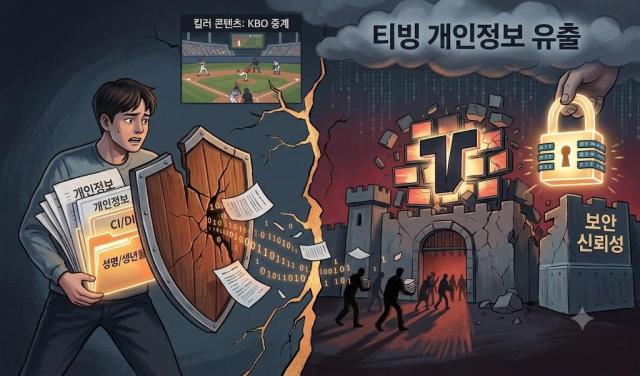
The fallout from a personal data breach at the online video service platform Tving is spreading rapidly. The breach includes not only user IDs, names, and birthdates but also linked information known as CI (Connecting Information) and DI (Duplicate Membership Check Information), raising concerns about potential secondary damage.
User confusion has reached a peak following a series of large-scale hacking incidents that began last year. Some users are exploring procedures to change their personal information, while others are pursuing collective lawsuits through law firms.
Immediately after the incident, Tving's weekly active user count (WAU) actually increased, surpassing 5.7 million, largely due to its exclusive content featuring Korean professional baseball (KBO). This increase may also reflect a general desensitization to security issues among users, given the frequent data breaches across major services. However, the loyalty of baseball fans, attracted by Tving's compelling content, plays a significant role in this trend.
Despite the uptick in traffic, Tving cannot afford to be complacent. The users remaining on the platform may simply be making a choice of last resort. A defining characteristic of the modern global market is the dominance of subscription-based service platforms in everyday life. While timely delivery of quality content is important, the trustworthiness of the service is even more critical.
The moment doubts arise about the platform's stability and security, all growth can come to a halt. Tving now faces the threat of legal penalties that could amount to hundreds of millions of won due to this incident. The financial burden of potential lawsuits has also raised red flags for the company's goal of achieving its first profit this year. Efforts to maintain partnerships with various businesses, including telecommunications companies, as well as expand new collaborations, are likely to face significant setbacks.
This situation indicates that the competitive landscape among platforms has entered a new paradigm. Whereas previous platform wars focused on securing exclusive and engaging content, the current battle centers on how effectively platforms can protect user assets, making security capabilities a core competitive advantage.
As technology advances, the value and density of personal data handled by platforms increase exponentially. Therefore, building a robust security infrastructure is not merely a defensive expenditure; it is a proactive investment and differentiation strategy crucial for a company's long-term survival. Regulatory authorities are also recognizing the seriousness of the situation, planning to expedite the implementation of mandatory encryption and separate storage of CI, originally scheduled for next year, to January.
For platforms, user personal information is a double-edged sword. The more data they can gather on content preferences and individual tastes, the more precise and tailored services they can offer, leading to higher customer satisfaction. However, if they fail to protect this information, it becomes worthless. If users feel their highly personal preferences could be leaked at any moment, even killer content won't prevent subscriber churn.
Building trust is difficult, but it can be easily shattered. The cost of lost trust is immense. The path to rebuilding trust is clear: companies must prioritize the security of the personal information users entrust to them. This is where the foundation must begin.
This issue is not unique to Tving. As a lesson from this incident, investments in security must increase. The "security trustworthiness" that allows users to confidently share and utilize their information will be a key competitive advantage in the fierce competition among platforms.
* This article has been translated by AI.
Copyright ⓒ Aju Press All rights reserved.