

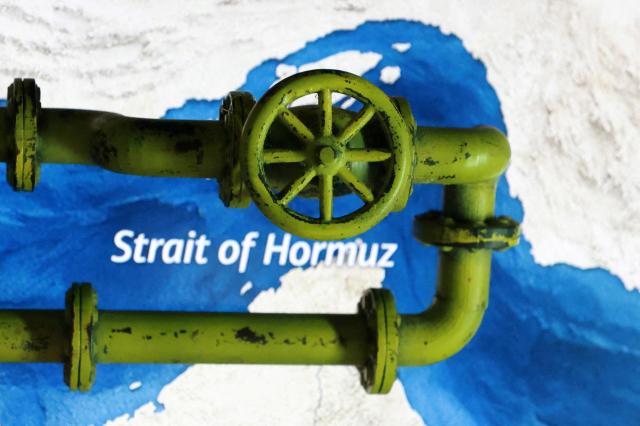
The United States and Iran have agreed to a ceasefire and the reopening of the Strait of Hormuz, but differences over shipping costs have emerged as a new point of contention. Both sides have reached consensus on guaranteeing free passage for vessels for 60 days following the signing of a memorandum of understanding (MOU), but whether this free passage will continue afterward remains a topic for further negotiations.
According to reports from Bloomberg and AFP on June 15, the U.S. and Iran agreed not to impose tolls or fees in the Strait of Hormuz for the initial 60 days. A senior U.S. official stated, "There will be no tolls or fees during the MOU period of 60 days." However, they added that "the issue of passage costs after 60 days will require separate discussions."
Confusion has increased as the final agreement has yet to be made public. A U.S. official indicated that the full text of the MOU could be released soon, but President Donald Trump mentioned it might be disclosed after the official signing ceremony in Geneva, Switzerland, on June 19. With the agreement not yet public, both the U.S. and Iran have provided differing explanations, raising concerns about the costs of passage after the 60-day period.
The U.S. is emphasizing long-term free passage through the Strait of Hormuz. President Trump stated, "The Strait of Hormuz will be permanently free." Vice President JD Vance also noted, "There was an understanding regarding long-term free passage with Iran," adding that this issue will be addressed in subsequent negotiations. The U.S. intends to incorporate the 60-day free passage clause into the final agreement.
However, Iran's position differs. The Iranian Foreign Ministry explained that the agreement does not impose a 'toll' on vessels but allows for a maritime service 'fee' for ships passing through the Strait of Hormuz. This indicates that Iran views the passage costs not merely as a toll but as fees for navigation management and safety services.
Iranian semi-official media have also reported that the agreement includes provisions for Iran and Oman to jointly manage maritime navigation services in the Strait of Hormuz. Iran interprets this as recognition of its authority to collect fees. While the U.S. highlights free passage as a key achievement, Iran has left the door open for future charges under the guise of maritime service fees.
As the U.S. and Iran prepare to sign the ceasefire MOU in Switzerland on June 19, clearer policies are expected to emerge from the final agreement. Since the outbreak of conflict, Iran has indicated plans to charge for passage through the Strait of Hormuz, with reports from the semi-official Fars news agency stating that Iran has been collecting tolls of $1.5 million to $2 million per vessel (approximately 2.3 billion to 3 billion won).
The timeline for normalizing access to the Strait of Hormuz remains uncertain. President Trump stated, "The Strait will be fully open starting June 19," but a senior U.S. official noted that even if traffic gradually increases, it may take more time to return to pre-war levels. Discussions on related matters are expected to take place at the ongoing G7 summit in France. Bloomberg reported that G7 countries are also looking to confirm the agreement's details and safety conditions before participating in mine removal and maritime patrol missions.
This MOU is a provisional agreement that defers key issues such as nuclear negotiations, sanctions relief, and the release of frozen funds to subsequent negotiations over the next 60 days. If the issue of costs in the Strait of Hormuz is not resolved during this period, it could continue to contribute to rising oil prices.
* This article has been translated by AI.
Copyright ⓒ Aju Press All rights reserved.