

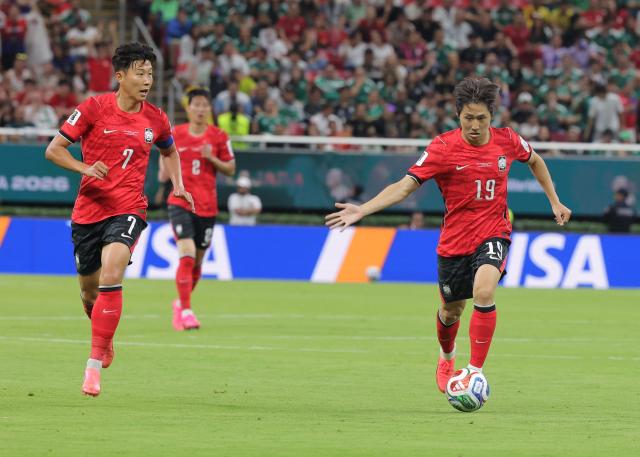
The early stages of the 2026 FIFA North America World Cup are witnessing a surprising shift. Asian teams, often considered underdogs, are making a strong impact, while traditional powerhouses from Europe and South America are struggling from the outset.
With the tournament expanding to 48 teams, it was initially expected that the stronger teams would easily secure their spots in the knockout rounds. However, the reality has been quite the opposite. Asian nations have shown resilience, recording 2 wins and 4 draws in their first six matches without a single loss.
South Korea opened the tournament with a thrilling 2-1 comeback victory over the Czech Republic, while Australia defeated Turkey 2-0. Japan managed a 2-2 draw against the Netherlands, one of Europe's top teams, and Qatar held Switzerland to a 1-1 draw. Saudi Arabia drew 1-1 with Uruguay, and Iran finished 2-2 against New Zealand.
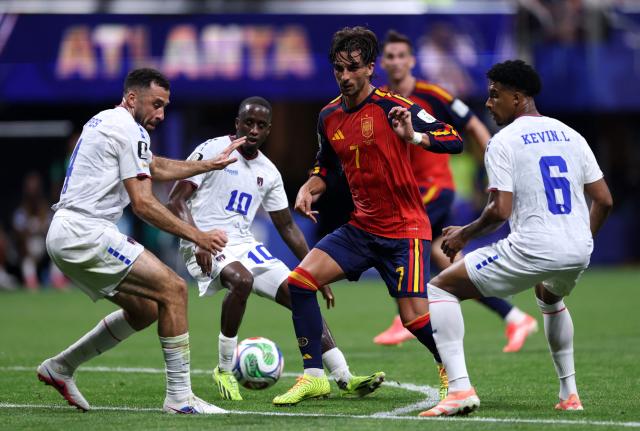
In contrast, European and South American teams have faced challenges. The ten European teams that played their opening matches managed only 3 wins, 5 draws, and 2 losses. Aside from Germany (7-1 victory over Curaçao), Sweden (5-1 win against Tunisia), and Scotland (1-0 win over Haiti), the remaining seven teams struggled to break through their opponents' defenses.
Spain, a top contender and ranked second by FIFA, drew 0-0 with Cape Verde, ranked 67th, despite fielding key players like Lamine Yamal and Pedri. They were thwarted by Cape Verde's goalkeeper, who made seven crucial saves.
South American teams have yet to secure a win, with 2 draws and 2 losses. Brazil, aiming to reclaim the title after 24 years since the 2002 World Cup, drew 1-1 with Morocco. Ecuador, considered a dark horse in the tournament, lost 1-0 to Ivory Coast after conceding a late goal.
Experts attribute the success of Asian teams and the struggles of European and South American teams to the unique conditions in North America. The extensive travel between the United States, Canada, and Mexico, combined with high humidity and temperatures nearing 37 degrees Celsius, were expected to challenge players' stamina.
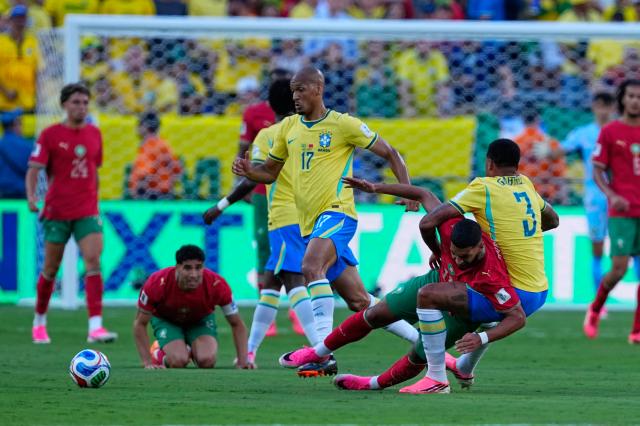
While Asian players are also affected by the harsh conditions, their tactical choices have proven effective. The ability of European and South American teams to dominate matches for 90 minutes has been hindered by fatigue due to the heat and humidity. Teams that maintained a high defensive line and applied strong pressure showed a significant drop in mobility after halftime, creating gaps in their defense.
In contrast, Asian teams, which adopted a more pragmatic approach by conserving energy, capitalized on these openings. They utilized their preserved stamina to launch quick counterattacks, effectively exploiting the weaknesses in their opponents' defenses. Notably, 7 of the 10 goals scored by Asian teams against European and South American opponents came in the second half, targeting the fatigued players.
KBSN analyst Kim Dae-gil noted in a recent interview, "This tournament involves a lot of travel and high heat. Therefore, the key point will be 'team stamina.' The pace of recovery will determine how the second half unfolds. It is crucial for coaches to monitor players' conditions and effectively utilize substitutions during matches."
KBS soccer analyst Park Chan-ha added, "European players, in particular, have limited experience playing in high humidity. They are most vulnerable to humidity. How quickly players adapt to the heat and long-distance travel will be the biggest factor in the group stage."
* This article has been translated by AI.
Copyright ⓒ Aju Press All rights reserved.