

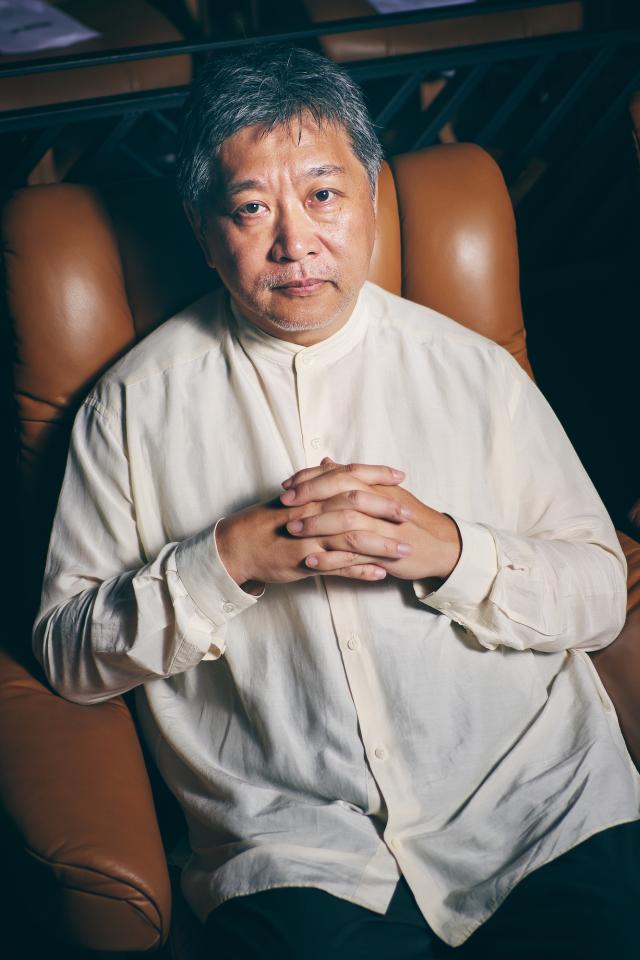
Kore-eda stated that the film began with the question, "Whose is the dead person?"
"Ultimately, it starts from the ethical question of whether it is acceptable to use and resurrect the dead for one's own comfort. I was reminded of things I wished I could have said to my suddenly deceased father. I understand the feelings of those who want to bring back the dead with such technology. However, I felt a sense of 'nevertheless.' I wondered if being drawn to technology might halt the true process of healing from grief. In the end, I thought this might stem from the selfishness of the living, believing that the dead belong to the dead. I think that even if humans use this technology, there will come a time when we must put a period and let go of it."
Set in the near future, the film depicts a world where drones deliver packages and refrigerators manage diets. In this advanced society, a couple, Otone and Kensuke, invite a humanoid that resembles their deceased son into their home. Kore-eda aims to address the human emotions and sensations that persist after loss, beyond the concept of the humanoid itself.
"When I first wrote the script, I considered a story where the humanoid and the couple lived together more. But I felt that wasn't right. As the child grows, they form relationships with others, eventually leaving their parents. So, I made it a story about the separation between parents and children, with the child eventually departing. I also thought about the humanoid as a being that could be perceived as more than just a simple replacement."
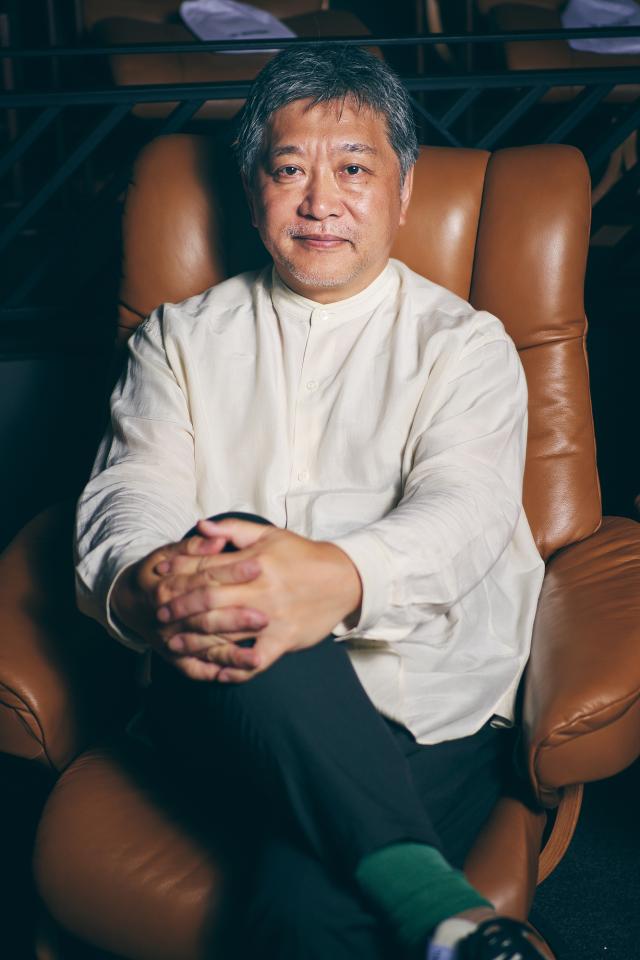
The film intentionally evokes discomfort and unpleasant sensations associated with the humanoid. For instance, the humanoid asks its indifferent mother, "Would you be happier if I weren't here?" and there is a scene where it kills a live insect. These moments blur the line between reactions typical of a humanoid and the cruelty sometimes found in children. Kore-eda explained that he intended to create confusion from a human perspective when viewing these beings.
"The scene with the insect was not in the script; I thought of it on set. Rimu Kuwaki kept looking for insects. Children sometimes act cruelly from an adult's perspective, and I wanted to express that. At the same time, that scene connects to the question, 'Would you be happier if I weren't here?' I wanted to evoke confusion about whether this is a humanoid's behavior or a cruelty inherent to children."
Kore-eda is more interested in the idea that humanoids can appear to have will when they form a collective rather than asserting that each one possesses a clear personality. Moments where non-human entities seem to form relationships and make choices prompt the film to question how far the concept of family can be extended.
"I wanted to express that rather than each entity having a personality, the humanoids could appear to have will when they are part of a group. I imagined a community formed by humanoids that includes not only humans but also machines and nature. I believe the child entering the film allowed us to showcase that aspect. I wanted to express a feeling that transcends our conventional understanding of family."
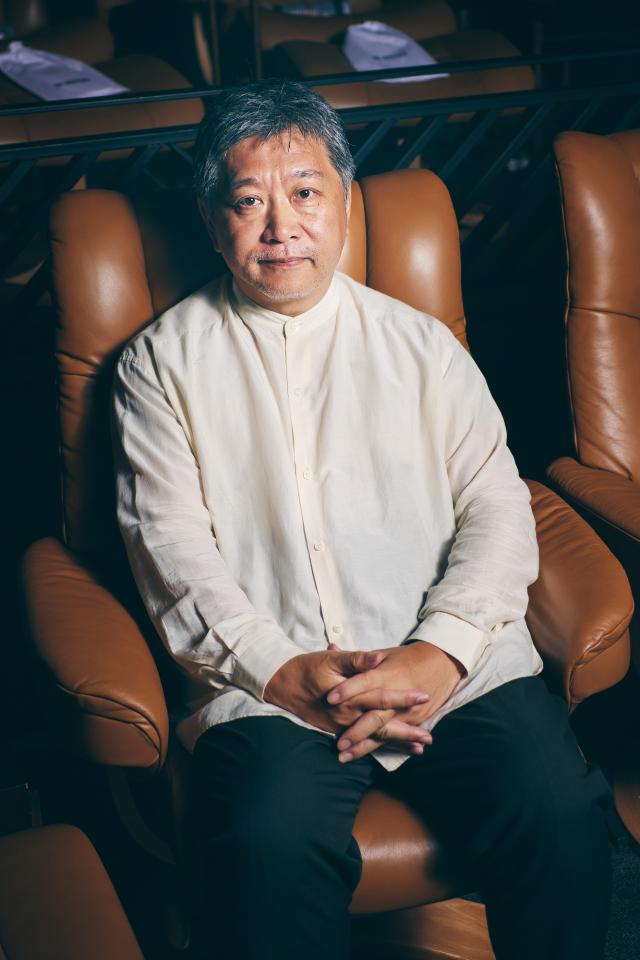
In this context, the forest that appears at the end of the film holds significant meaning. If it were a place solely inhabited by humanoids, it would have resulted in a conclusion that separates humans from humanoids. Kore-eda envisioned it as a space where machines and nature, the living and the dead, children and humanoids coexist.
"If the forest were only inhabited by humanoids, I believe it would lead to a conclusion that divides humanoids and humans. Therefore, I wanted to depict a forest with diverse beings. It would be a place where machines, nature, the living, and the dead come together. I wanted to create a story where the adults who see this return to where they originally belonged."
Kore-eda's invitation to the 79th Cannes Film Festival marks another milestone in his career. Since his first invitation with "Distance" in 2001, he has maintained a connection with Cannes for over 20 years, achieving his 10th invitation and 8th competition entry with this film. He reflected on the serious nature of the festival and the celebratory moments it brings, recalling a joyful encounter with directors Park Chan-wook and Bong Joon-ho during this year's opening ceremony.
"At the opening ceremony, the jury chair was Park Chan-wook. His experience as jury chair was introduced, and we applauded. At the end, when Peter Jackson received an award and everyone went on stage, I was in the audience. At that moment, I made eye contact with Park Chan-wook, and it seemed like he smiled at me. It reminded me of three years ago at Cannes when Park won Best Director for 'Decision to Leave' and I celebrated with Song Kang-ho, who won Best Actor for 'Broker.' But when I turned around, I saw Bong Joon-ho. I wonder if that smile was directed at me or at Bong Joon-ho. Haha."
Cannes is a space for competition but also a festival where filmmakers reunite. Kore-eda expressed that he reconnected with many filmmakers at this year's festival and felt a desire to collaborate with them on future projects.
"While there were serious moments during the world premiere at the Cannes Film Festival, there is also a festive aspect to the festival. It was a great time to meet people like Alfonso Cuarón, Bong Joon-ho, and Cate Blanchett. I believe we can have enriching experiences outside of serious work at the festival. Right now, I am focused on promotion, but I also feel a desire to create a good next project so I can meet with them again."
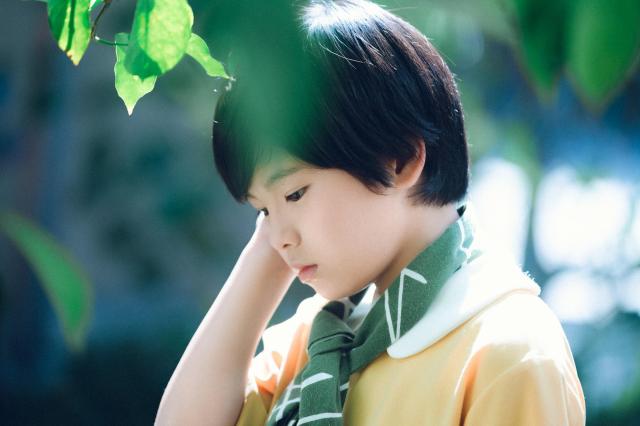
Kore-eda, currently engaging with audiences through "The Sheep in the Box," is preparing to adapt Tatsuki Fujimoto's manga "Look Back" into a live-action film, where he will serve as writer, director, and editor. However, he cautiously refrained from sharing too much at this stage.
"I can't say anything about 'Look Back' yet. It's a manga I personally love and respect. The differences between what is drawn on paper and what involves human actors are significant, and I think fans of the manga might feel anxious. Still, I want to ask them to wait. After that, I think I will make an English-language film with actor Eddie Redmayne. Right now, I am busy with promotional schedules, but once this is over, I need to prepare properly."
* This article has been translated by AI.
Copyright ⓒ Aju Press All rights reserved.