

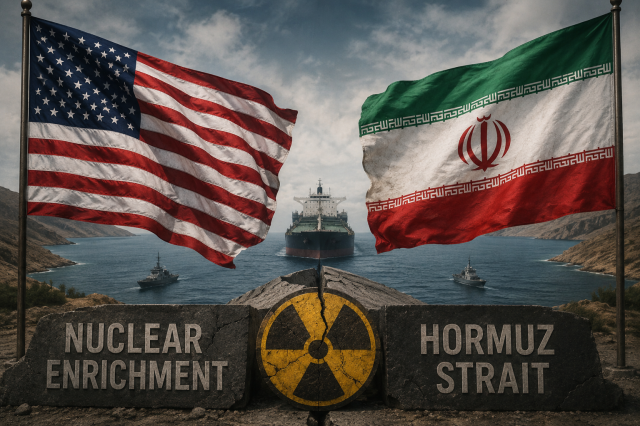
Internal disagreements have emerged within the Trump administration regarding the recently announced Memorandum of Understanding (MOU) between the United States and Iran. Some diplomatic and security officials have raised doubts about whether Iran will actually accept the concessions the U.S. is demanding in future nuclear negotiations.
According to Axios, CIA Director John Ratcliffe expressed concerns about Iran's negotiation intentions during a high-level meeting held on June 14, just before the MOU was announced.
U.S. intelligence officials believe that the way Iranian officials are discussing the agreement internally differs from the positions conveyed to the mediating countries and the United States.
Secretary of State Marco Rubio and Secretary of Defense Pete Hegseth have also reportedly voiced concerns about the MOU's contents. In contrast, Vice President JD Vance, Middle East Special Envoy Steve Witkoff, and Jared Kushner, President Trump's son-in-law, have expressed support for the agreement.
The White House has stated that despite the internal disagreements, the final decision rests with President Trump. A White House official told Axios, "President Trump listens to all opinions on any issue, but everyone knows who the final decision-maker is."
The official added that the MOU meets the Trump administration's key criteria of preventing Iran from acquiring nuclear weapons and high-enriched uranium, ensuring that it cannot use global energy supplies as leverage.
Axios reported, citing sources, that the MOU includes provisions for discussing Iran's handling of enriched nuclear materials and future enrichment activities in follow-up negotiations. During this period, Iran is expected to maintain the current status of its nuclear program, while the U.S. will refrain from imposing new sanctions or deploying additional troops in the region.
If a final nuclear agreement is reached, discussions may also include the withdrawal of U.S. forces related to Iran and the lifting of sanctions according to agreed procedures. While this MOU marks a starting point for peace and the reopening of the Strait of Hormuz, whether it will lead to a nuclear agreement will likely be determined in the upcoming 60-day follow-up negotiations.
* This article has been translated by AI.
Copyright ⓒ Aju Press All rights reserved.