

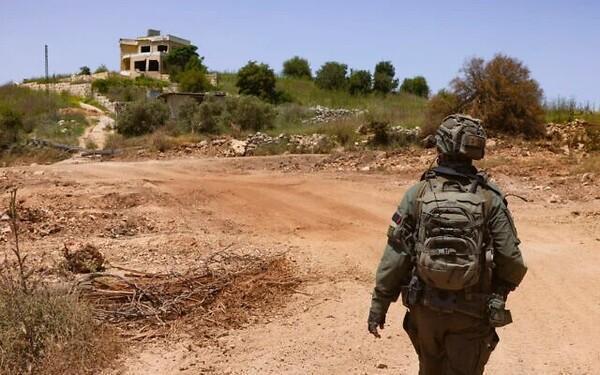
Despite a ceasefire agreement between the United States and Iran, clashes continue between the Israeli military and the Iran-aligned militant group Hezbollah in southern Lebanon. Iran has warned of a strong response, claiming that Israel is persisting in its attacks in the region.
On June 16, the Israeli military reported that it intercepted several rockets fired by Hezbollah at its troops stationed in southern Lebanon. Following the interception, Israeli air forces targeted and destroyed the rocket launch sites.
The Israeli military also stated that it discovered a suspicious vehicle in the operational area, which prompted warning shots before the vehicle was bombed. The military claimed the vehicle posed a threat to its forces.
Lebanon's National News Agency (NNA) reported that an Israeli drone attacked three vehicles in southern Lebanon, resulting in at least four fatalities and several injuries. According to NNA, after an initial drone strike in the village of Maifouq, two people were killed when the drone targeted the scene as people gathered. Another airstrike in the village of Shukrin also resulted in two deaths.
The Central Command of the Iranian military, known as the Khatam al-Anbiya Headquarters, issued a statement accusing Israel of violating the ceasefire dozens of times in southern Lebanon since President Donald Trump's declaration of a ceasefire. The command warned that if Israel does not cease its attacks, it will face a strong response from Iranian forces.
While the U.S.-Iran ceasefire agreement aims to halt military operations, including on the Lebanese front, Israel is not a party to this agreement. Reuters reported that although clashes in Lebanon have significantly decreased since the U.S.-Iran agreement, they have not completely stopped.
Hezbollah has stated that if Israel does not withdraw from southern Lebanon, it could impact future nuclear negotiations between the U.S. and Iran. Conversely, Israel maintains that it will continue operations in southern Lebanon as long as the threat from Hezbollah remains, leaving the Lebanese front as a potential point of instability in the ceasefire agreement.
* This article has been translated by AI.
Copyright ⓒ Aju Press All rights reserved.