

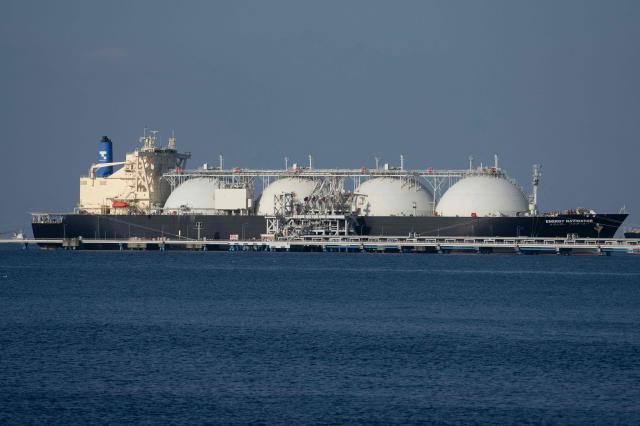
Power purchase agreements (PPAs) have been identified as a key component of the special law aimed at promoting the artificial intelligence data center (AIDC) industry. However, industry experts agree that the current pricing structure for domestic renewable energy PPAs makes it difficult to generate profits. Additionally, the option of directly purchasing liquefied natural gas (LNG) is also seen as impractical due to insufficient domestic LNG generation capacity.
According to political sources on June 16, some lawmakers from the ruling party are discussing the possibility of adding LNG PPAs to the 'Special Law on the Promotion of the Artificial Intelligence Data Center Industry,' which passed the National Assembly on May 7. Initially, the inclusion of LNG in the PPA provisions was considered, but it was excluded before the final vote.
While the proposal aims to alleviate the financial burden on AIDC operators, industry insiders believe that the overall electricity costs for AIDCs will not see significant reductions.
The 11th Basic Plan for Power Supply and Demand indicates that domestic LNG generation capacity is expected to grow from 43.2 gigawatts (GW) in 2023 to 69.2 GW by 2038. However, the share of LNG in total generation is projected to decline from 27.5% to 11.1% during the same period.
The disparity between the share of installed capacity (29.9% to 25.8%) and the share of generation indicates that while both figures are currently similar, by 2038, the installed capacity will exceed the generation share by more than double. This reflects a policy direction that aims to operate flexible resources with significant idle capacity.
Even with the addition of four new LNG power plants—Sejong Power Plant (0.54 GW), Ham-an Power Plant (0.5 GW), Boryeong Combined Cycle (1.35 GW), and Boryeong New Combined Cycle (0.5 GW)—set to begin commercial operations in December, the total capacity will only reach 2.89 GW. This capacity is already allocated to meet long-term LNG import contracts established by state-owned power companies like Korea Midland Power, leaving no surplus for new AIDC demand.
The Ministry of Science and ICT and the Ministry of Climate and Energy have also stated their intention to address AIDC power supply issues within the existing power grid framework, excluding LNG.
Renewable energy PPAs are also unlikely to provide a solution for AIDC power supply. Industry sources report that the current direct supply price for renewable energy, including solar power, is around 250 won per kilowatt-hour (kWh). For offshore wind, the price exceeds 300 won, according to AIDC operators.
This pricing is higher than the combined market price of the electricity transaction price (SMP) and renewable energy certificates (REC), which is approximately in the 190 won range. In actual contracts, additional costs such as site and transmission expenses further increase the price by over 100 won per kWh compared to the base cost.
Consequently, the high price of PPAs and the limitations in LNG capacity and supply stability leave few viable short-term alternatives.
Nuclear power generation is also not a feasible immediate solution due to the lengthy construction time required. There are calls for a dedicated pricing system similar to those in other countries to support the expansion of AIDCs in South Korea.
The absence of a power supply plan is also emerging as a significant issue. In the United States, OpenAI's 'Stargate' data center complex in Abilene, Texas, is expected to consume 1.2 GW of power upon its completion in mid-2026. The power infrastructure company Crusoe has secured contracts for 4.5 GW of gas turbine generation capacity specifically for Stargate by 2027. This is more than 1.5 times the total capacity of the four new LNG power plants being constructed in South Korea by the end of 2026.
While U.S. tech giants are addressing capacity issues by directly building or contracting dedicated power facilities for their data centers, South Korea's entire national increase in LNG capacity is insufficient to meet the demand of just one overseas AI data center.
* This article has been translated by AI.
Copyright ⓒ Aju Press All rights reserved.