

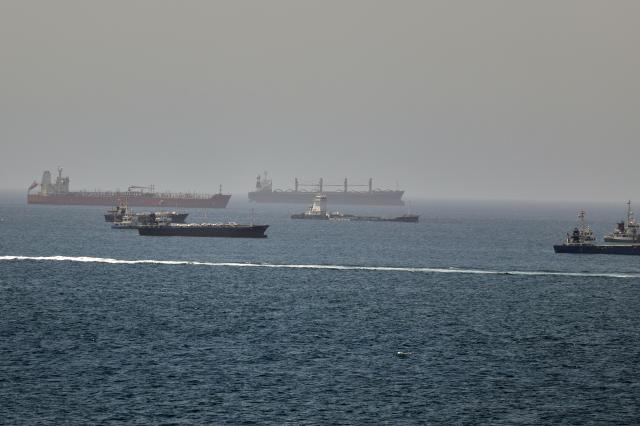
CNN, citing three sources on June 16, reported that U.S. intelligence officials believe Iran has the capability to control access to the strait at will.
According to one source familiar with the intelligence assessment, "We have effectively handed Iran control over the strait. This is a weapon more powerful than any nuclear weapon." The source explained that the ongoing conflict has fundamentally changed how Iran can leverage similar tactics in future negotiations.
U.S. intelligence agencies point to Iran's substantial stockpile of weaponry as a reason for their assessment. Despite the war, Iran continues to possess missiles, launchers, drones, and small fast boats, which could be used to lay mines or threaten vessels transiting the strait.
Concerns have also been raised about the rapid recovery of Iran's defense industry, which is progressing faster than U.S. expectations. CNN reported that Iran has already begun producing new drones.
However, U.S. intelligence officials believe that if Iran attempts to block the Hormuz Strait again, it would face significant consequences. As evidenced during the current conflict, China and Gulf nations may oppose such a blockade, which could pose challenges for Iran.
There are also analyses suggesting that Iran could target energy infrastructure in Gulf nations as an asymmetric strategy. One source noted that Iran has demonstrated the ability to disrupt the global energy market at relatively low costs by striking energy facilities in the Gulf region during the conflict.
CNN reported that Iran has considered mobilizing the Iran-aligned Houthi militia to block the Bab el-Mandeb Strait if negotiations with the U.S. collapse. The Bab el-Mandeb Strait is another critical maritime chokepoint connecting the Red Sea and the Indian Ocean.
Sources explained that Iran has refrained from launching large-scale operations with the Houthis so far due to concerns that diplomatic efforts could collapse. However, if negotiations with the U.S. fail and military conflict resumes, this option could resurface, according to CNN.
CNN noted that this intelligence assessment could lead to renewed controversy regarding President Donald Trump's decision to engage in military operations without fully considering Iran's willingness to block the Hormuz Strait, which has allowed Iran to demonstrate its ability to pressure the global economy.
The report raises new doubts about Iran's capacity to continue holding the global economy hostage, indicating that this issue extends beyond the scope of any memorandum of understanding between the U.S. and Iran regarding the reopening of the Hormuz Strait.
* This article has been translated by AI.
Copyright ⓒ Aju Press All rights reserved.