

The industrialization of South Korea was not solely the work of the Seoul metropolitan area. Pohang's steel industry, Gumi's electronics sector, and Gyeongju's nuclear power have all played significant roles. Gyeongbuk has been the root of South Korea's industrialization and the foundation of its manufacturing sector. However, the era of artificial intelligence (AI) is once again changing the fate of regions. Steel, electronics, automotive, and machinery industries can no longer maintain competitiveness through traditional methods. Data, AI, semiconductors, batteries, defense, and space industries are emerging as new growth drivers.
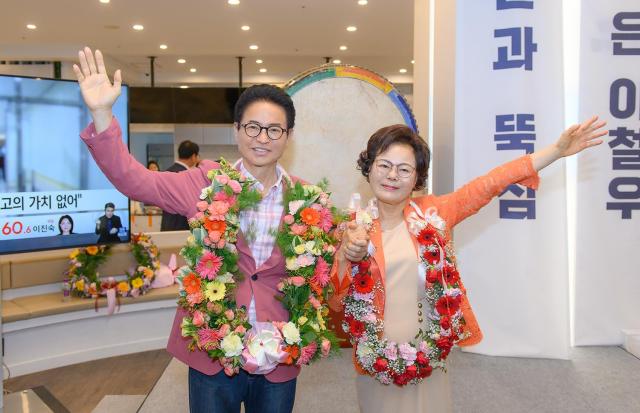
In the recent local elections, Governor Lee Cheol-woo declared his intention to transform Gyeongbuk from a simple local government into the 'Asia-Pacific AI Capital.' His vision is to connect AI with semiconductors, batteries, future vehicles, defense, and energy, positioning Gyeongbuk as the center of South Korea's industrial transformation.
The question remains.
Can Gyeongbuk, the root of South Korea's industrialization, also become a model for an AI industrial nation?
Is Gyeongbuk's dream of becoming the Asia-Pacific AI capital achievable?
Among Governor Lee's promises, the most striking phrase is 'Asia-Pacific AI Capital.' While Seoul envisions an AI city centered on finance and platforms, Gyeongbuk dreams of a vast experimental ground for implementing AI in industrial settings. He has announced plans to attract the Asia-Pacific AI Center and a global AI cooperation platform, establishing an AI innovation system centered around Pohang, Gumi, and Gyeongsan for research, demonstration, and commercialization. He also pledged to promote a Gyeongbuk-style AI initiative across all sectors, including administration, industry, welfare, and safety.
This vision is noteworthy because Gyeongbuk already has a solid industrial foundation. AI does not grow just anywhere; it requires semiconductors, data, and industrial sites. Gyeongbuk has long nurtured its steel, electronics, materials, and energy industries. AI is not a technology that replaces these traditional industries but one that upgrades them.
In fact, the global AI competition is shifting from a race over ChatGPT to a focus on industrial AI. Germany is developing manufacturing AI, Japan is focusing on robotics AI, and the United States is strategizing around data centers and semiconductors. Gyeongbuk's strategy is similar, aiming to utilize AI as a key engine for innovating existing manufacturing rather than viewing it as an independent industry.
Ultimately, the core of Governor Lee's administration is not just attracting a few AI companies but transforming the entire Gyeongbuk industry into an AI-based industrial structure. If successful, Gyeongbuk could become a microcosm of an AI industrial nation.
Can Gumi and Pohang become the twin engines of South Korea's industrial transformation?
Gyeongbuk's future hinges on Gumi and Pohang.
Gumi is the heart of South Korea's electronics industry. It is the city where Samsung Electronics and LG Electronics grew, and it is home to numerous electronics and component companies. Governor Lee has announced plans to establish a K-Semiconductor self-sufficient ecosystem centered in Gumi. His vision includes integrating semiconductor production, design, testing, and manufacturing data platforms to transform the national industrial complex into a hub for advanced manufacturing innovation.
Pohang represents another pillar.
Once known as a steel city, Pohang is now transforming into a hub for secondary batteries. With a concentration of cathode materials, recycling, and advanced materials industries, it is growing into a world-class battery cluster. Governor Lee has promised to further expand this initiative, developing Pohang into a global battery mega-cluster.
In the AI era, semiconductors and batteries are as essential as rice.
AI data centers require semiconductors, and future vehicles need batteries. Robots, drones, and autonomous vehicles all rely on these two industries. Gumi and Pohang can each serve as the brain and heart of AI.
What sets Gyeongbuk apart from other regions is its focus on the core industries driving AI. While Seoul discusses AI services and Daejeon focuses on AI research, Gyeongbuk emphasizes the essential industries that power AI. This is the significance of the industrial transformation that Governor Lee envisions.
The new Gyeongbuk shaped by future vehicles, defense, and the new airport
Governor Lee's vision extends beyond semiconductors and batteries.
He has announced plans to establish a future vehicle industrial belt connecting Gyeongsan, Yeongcheon, and Gyeongju, as well as to foster the defense semiconductor and advanced defense component industries. He also proposed creating a future energy capital that combines hydrogen, nuclear power, and small modular reactors (SMRs).
A significant variable in this equation is the Daegu-Gyeongbuk New Airport.
The new airport is not just an airport; it is a platform connecting logistics, industry, tourism, and international exchange. In the AI era, competitiveness stems from connectivity. The speed at which businesses, talent, capital, and data move is crucial.
Gyeongbuk has long been viewed as disadvantaged due to its distance from the capital region. However, the completion of the new airport could change that. The semiconductor industry in Gumi, the battery sector in Pohang, and the startup ecosystem in Gyeongsan could be integrated into a single economic zone.
The Gyeongbuk envisioned by Governor Lee is not merely an administrative region. It is a super-regional industrial nation where semiconductors, batteries, future vehicles, defense, energy, and logistics are interconnected.
Ultimately, industries are created by people.
No matter how advanced factories and industrial complexes are, they cannot grow without talent. Gyeongbuk's most significant challenge is the outflow of young people. Many talented graduates from local universities are leaving for the capital region.
In the AI era, this issue could become even more severe, as the AI industry is even more reliant on talent than semiconductors and batteries.
Governor Lee's commitment to establishing an innovation system connecting research, demonstration, and commercialization centered around Pohang, Gumi, and Gyeongsan reflects this understanding. It is not just about increasing the number of factories; it is about nurturing a research and development and startup ecosystem.
Ultimately, Gyeongbuk's future is likely to be determined by the number of talented individuals rather than the number of factories. The question is whether it can become a region that attracts young people rather than one that loses them. Whether Gyeongbuk can become the Asia-Pacific AI capital also depends on this.
South Korea's industrialization cannot be explained without Gyeongbuk.
Pohang's steel and Gumi's electronics have been pillars of South Korea's economic growth. However, the AI era demands new challenges.
Governor Lee has declared his intention to make Gyeongbuk the Asia-Pacific AI capital. He aims to integrate semiconductors, batteries, future vehicles, defense, energy, and logistics into a model for an AI industrial nation.
This is not merely a regional development strategy.
It is one answer to how South Korea can survive in the AI era.
If Gyeongbuk succeeds, it could become a model for South Korea's industrial transformation.
If it fails, the glory of the industrialization era may remain only a memory in history.
:Governor Lee Cheol-woo:
A former police officer, he has focused on regional development and industrial growth during his tenure as a lawmaker and Gyeongbuk governor. After serving two terms, he has returned to office and has been promoting initiatives such as the Pohang secondary battery specialized complex, the Daegu-Gyeongbuk New Airport, and the development of nuclear and hydrogen industries.
In this election, he presented 'Asia-Pacific AI Capital' as his main vision, announcing a strategy for industrial transformation that connects AI, semiconductors, batteries, future vehicles, defense, and energy industries. He specifically promised to establish an AI innovation system centered around Pohang, Gumi, and Gyeongsan, aiming to make Gyeongbuk the center of South Korea's industrial innovation.
* This article has been translated by AI.
Copyright ⓒ Aju Press All rights reserved.