

The newly established electric arc furnace will play a crucial role in reducing greenhouse gas emissions until hydrogen reduction steelmaking technology is commercialized. It is also expected to enhance POSCO's portfolio of carbon-reduced products. This completion is particularly significant as it is the first major molten iron production facility built since the commissioning of the No. 5 blast furnace at the Gwangyang Steelworks in 2000.
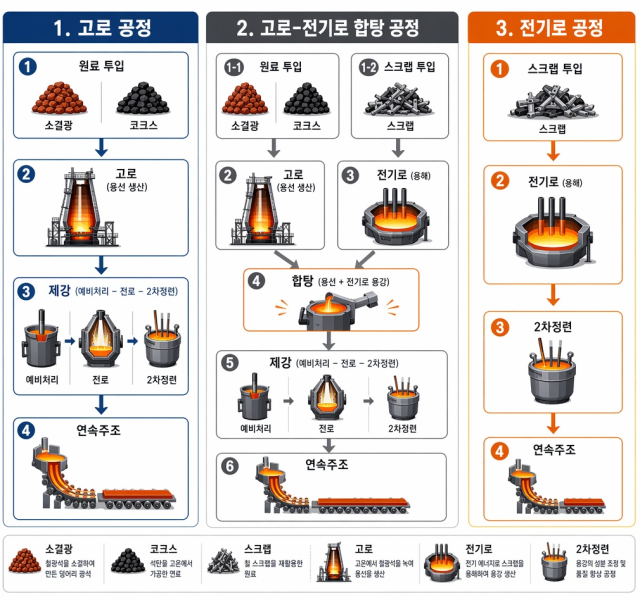
In February 2024, POSCO began the construction of this electric arc furnace in response to domestic and international decarbonization policies. The traditional blast furnace method, which uses iron ore and coal (coke) to produce molten iron, allows for mass production of high-quality steel but results in high carbon emissions. In contrast, the electric arc furnace can recycle scrap metal, achieving up to approximately 75% reduction in carbon emissions compared to blast furnaces.
POSCO aims to produce automotive steel and electrical steel by 2030, having secured additional key technologies for precise control of the composition during the sorting and refining processes of scrap metal, its main raw material.
To improve the quality of products produced in the electric arc furnace, POSCO is focusing on developing 'combined melting technology,' which involves mixing molten iron from both the electric arc furnace and the blast furnace. This technology aims to reduce carbon dioxide emissions while still producing high-quality steel.
Additionally, POSCO has designated high-quality steel produced from the electric arc furnace as one of its 'eight strategic products' and has formed an integrated project team to accelerate the development of specialized products encompassing research, production, and sales. The company will also continue to develop bridge technologies that contribute to carbon reduction within its existing production systems, such as injecting blast furnace gas and utilizing low-carbon raw materials.
As domestic demands for greenhouse gas reduction intensify, including national greenhouse gas reduction targets and the fourth phase of the emissions trading system, the EU's Carbon Border Adjustment Mechanism (CBAM) is also being implemented. POSCO aims to transition to a decarbonized production system through hydrogen reduction steelmaking, known as 'HyREX.'
POSCO is accelerating preparations for the commercialization of HyREX. In March, the Ministry of Land, Infrastructure and Transport approved changes to the national industrial complex plan in Pohang, paving the way for the development of a site utilizing approximately 1.35 million square meters (about 41 acres) of shared water surface near the Pohang Steelworks. POSCO plans to complete the development of commercialization technology by 2030 through a HyREX demonstration facility with an annual capacity of 300,000 tons, gradually transitioning to a decarbonized production system.
At the completion ceremony, Chairman Jang In-hwa stated, "The Gwangyang electric arc furnace is not just an addition of a single facility, but a strong declaration of our commitment to addressing the challenge of decarbonization and reshaping the global market landscape. We will actively respond to the low-carbon steel demands of our global customers and further solidify our position as a leading materials company for the future."
The completion ceremony was attended by Chairman Jang, Prime Minister Kim Min-seok, Members of the National Assembly Kwon Hyang-yeop and Jo Gye-won, Jeonnam Provincial Assembly Chairman Kim Tae-kyun, Gwangyang Mayor Jeong In-hwa, and Park Seong-hyeon, Mayor of Gwangyang.
* This article has been translated by AI.
Copyright ⓒ Aju Press All rights reserved.